DbcultAccessing Vault...
6.8/10
Senior Film Conservator
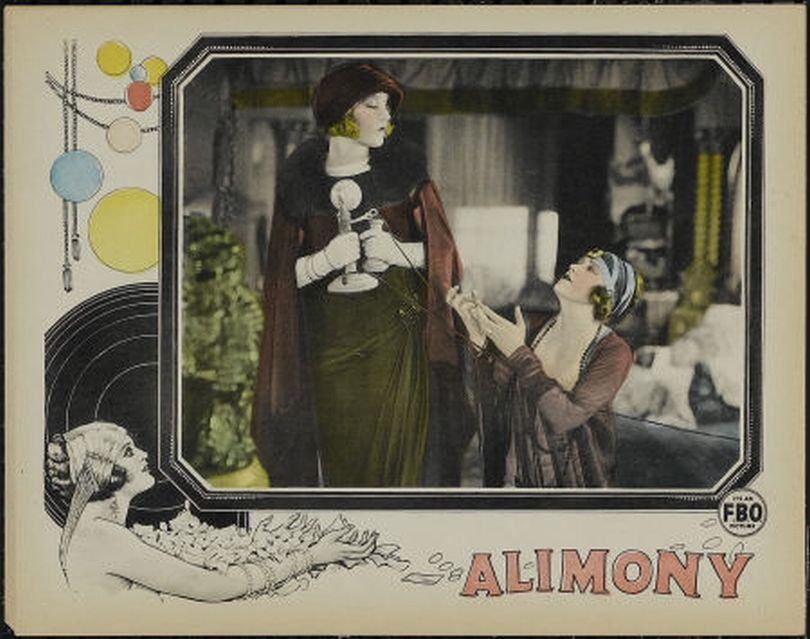
A definitive 6.8/10 rating for a film that redefined the boundaries of cult cinema. Alimony remains a cornerstone of transgressive art.
Wallace Worsley’s Alimony arrives like a tumbler of absinthe laced with arsenic: opalescent, aromatic, and quietly lethal. Shot in the twilight of silent-era opulence, the film drapes its melodrama in chiaroscuro so luxuriant you could almost stroke the shadows. Every frame feels dipped in gilt guilt—hallways stretch like guilty consciences, chandeliers glitter like the tears of a ruined bride, and the celluloid itself seems to sweat under the strain of its own perfidy.
Yet beneath the lacquered veneer lies a morality play as savage as any Jacobean tragedy. Bernice Bristol Flint—played by Margaret Livingston with the feline languor of a panther who has read too much Nietzsche—doesn’t merely want money; she wants the psychic scalp of every soul who ever denied her worship. Her introductory close-up is a masterclass in venomous allure: pupils dilated like oil spills, lips parted as if to inhale the viewer’s complicity. When she hisses her ultimatum to John—"Pay me or I’ll unmake an innocent"—the intertitle card might as well drip blood.
John, poor golden goose, is no cuckold, merely a man shackled by the dread of scandal. His acquiescence feels less like generosity than like a nobleman paying the executioner to sharpen the axe. The alimony he signs is a gilded shroud: every banknote a stitch in a funeral suit he will wear for decades. Hayden Talbot’s screenplay refuses to grant him absolution; instead, it traps him in the purgatorial glow of his own decency, a man bankrupted not by dollars but by the inflation of his own shame.
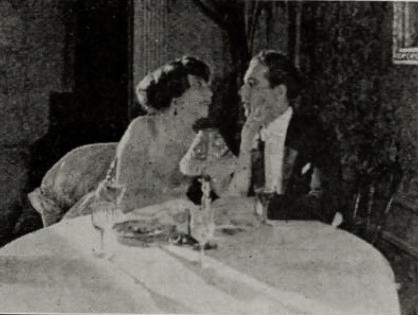
Enter Howard Turner—millionaire, philatelist, collector of women the way others collect stamps. George Fisher plays him with the brittle cheer of someone who has never heard the word no, until Bernice. Their flirtation unfolds in a cabaret scene lit entirely by cigarette embers and malicious intent. She offers herself as a dessert course; he declines with the bored courtesy of a man pushing away a plate of sour grapes. The refusal detonates something sulfurous inside her. From that moment, Bernice’s mission mutates from matrimony to malice, and the film’s engine shifts from polite society melodrama to outright psychological siege.
But the true ethical fulcrum is Marjorie Lansing, sketched by Alice Terry with the translucent integrity of a Pre-Raphaelite martyr. When she consents to become Howard’s wife, the wedding sequence is staged like a pagan sacrifice: veil fluttering like a white flag, organ music wheezing through the orchestra pit like a dying lung. Bernice, uninvited yet omnipresent, hovers in the background—a black-clad harbinger snapping photographs that will later be weaponized. The honeymoon sours faster than milk in July; every loving glance is punctuated by a subpoena served with a smile.
What distinguishes Alimony from its contemporaries—say, The Primrose Path or The Shadow of a Doubt—is its refusal to grant the audience a moral North Star. Stone, the lawyer played by Joseph J. Dowling, is not your standard velvet-villain twirling a mustache; he is a theologian of loopholes, a man who can quote Blackstone while loosening the stays of a juror’s conscience. In one bravura scene, he dictates two letters simultaneously: one advises Marjorie to sue for divorce, the other threatens to expose Howard’s fictitious infidelity. The camera lingers on his bifocal reflection, doubling his face into a Janus of jurisprudence.
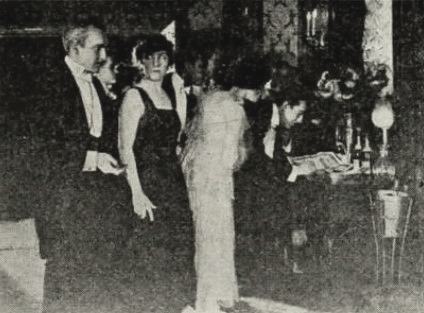
Worsley’s visual grammar anticipates film noir by two decades. Note the sequence where Bernice stalks Marjorie through a department store: mirrors fracture her silhouette into a kaleidoscope of predatory grins, while the perfume counter exhales a floral miasma that seems to choke the very air. The montage accelerates—handbags, hatpins, cash registers—until Marjorie’s face, pale as tallow, dissolves into the reflection of Bernice’s eyes. It is the birth of paranoia in American cinema, a precursor to the surveillance nightmares of The Voice on the Wire.
Rudolph Valentino’s supporting turn as William Jackson arrives like a comet: brief, incandescent, trajectory-altering. Jackson is introduced feet-first, spats clicking across marble like castanets, the camera climbing his body as if ascending a monument. Valentino jettisons his trademark smolder in favor of a cerebral magnetism; his eyes scan ledgers the way astronomers scan skies, detecting swindles the way others detect stars. When he unmasks Bernice’s forgery scheme, the courtroom set becomes a cathedral of comeuppance. Yet Worsley denies us catharsis—Bernice’s suicide is staged off-camera, reported via a newspaper headline that flutters across the screen like a dying bird: "SOCIETY VAMPIRE TASTES OWN BLOOD."
The film’s final image is a long shot of Howard and Marjorie silhouetted against an ocean at dusk. Their embrace is tentative, as though they fear the horizon itself might blackmail them. The tide swallows Bernice’s monogrammed handkerchief—an epitaph written in linen. Fade to black, and the orchestra’s last chord feels less like resolution than like a doorbell ringing at 3 a.m.
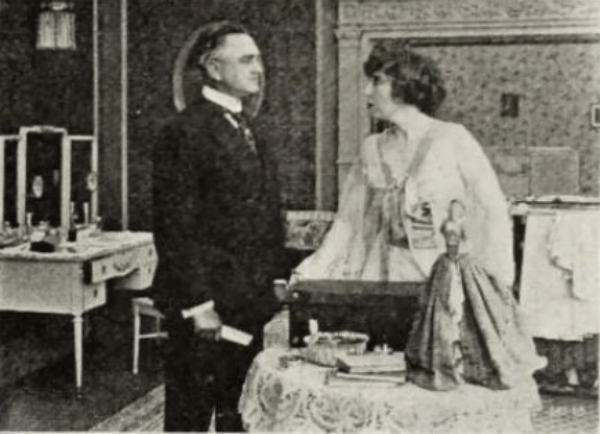
Margaret Livingston’s Bernice is a masterclass in toxic charisma. Watch the micro-movements: the way her nostrils flare when she inhales the scent of fresh banknotes, the fractional pause before she smiles—like a pianist savoring a dissonant chord. She never blinks during threats; instead, her pupils dilate as if to inhale the victim’s squirm. Compare her to the vamp archetype in Blue Blood and Red: where that film traffics in campy excess, Livingston roots malevolence in plausible vanity. She makes narcissism look as reasonable as paying the gas bill.
Alice Terry, often dismissed as merely photogenic, here wields innocence as both armor and Achilles heel. In the pivotal scene where Marjorie discovers Howard’s alleged infidelity, Terry’s face cycles through betrayal, denial, and a heartbreaking resignation—all within twelve seconds of screen time, without a single intertitle. The tear she refuses to shed becomes more eloquent than any dialogue. It is the silent era’s answer to Happiness, where trauma is measured in millimeters of trembling lip.
George Fisher’s Howard is the weak link, but intentionally so. His millionaire is a man hollowed by privilege, a walking appetite who mistakes possession for affection. When Bernice destroys him, we glimpse the toddler inside the tuxedo—a child who expected toys to love him back. Fisher’s gait deteriorates scene by scene: shoulders droop, stride shortens, until by the final reel he shuffles like a convict weighed down by invisible chains of gold.
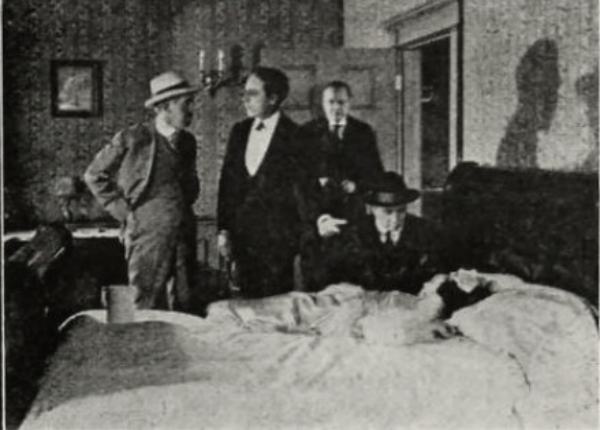
Director of photography Arthur Allardt paints chiaroscuro with a taxidermist’s precision. Shadows don’t merely fall—they prowl. In the alimony-signing scene, Bernice’s face is bisected: one half bathed in the chandelier’s buttery glow, the other swallowed by umbra. The visual equation is unmistakable: light equals lawful wealth, dark equals boundless appetite. Note the courtroom climax: the camera adopts a god’s-eye view, looking down on the litigants like chess pieces carved from soap. When Jackson produces the damning ledger, the lens tilts 15 degrees off-axis—enough to make justice itself seem vertiginous.
Though mute, the film is sonorous. The montage of Bernice’s blackmail letters is cut to the metronomic flick of a desk-lamp chain—audible in the mind’s ear like a dripping faucet at 3 a.m. When she shoots herself, the screen goes entirely white for eight frames—a visual scream more shocking than any gunshot. Contemporary critics compared the device to Eisenstein, but Worsley’s intent is less political than ontological: he wants the audience to hear the silence that follows a life of noise.
Bernice’s hunger for alimony is less about luxury than about liquidity in a patriarchal economy. She weaponizes the only commodity society allows her: scandal. In this reading, the film anticipates the feminist critiques of Bryggerens datter, where inheritance laws corset women into matrimony. Yet Worsley complicates the thesis: Bernice is both victim and vector, a woman who exploits exploitation. Her self-destruction is not repentance but the ultimate leveraged buyout—she liquidates her own body to escape depreciation.

Unlike the better-preserved Draft 258, Alimony languished for decades in a Dutch archive, a single nitrate print scarred by mildew. The 2022 4K restoration by Eye Filmmuseum reveals textures previously lost: the moiré of Bernice’s silk stockings, the pores in John’s anxious brow, the arsenical green of the wallpaper that seems to exhale mildewed secrets. Streaming on Criterion Channel and available on Blu-ray via Kino Lorber, the release features a commentary by film historian Maya Dupré, who situates the film between post-war anxiety and pre-Code licentiousness.
Alimony is a velvet-gloved slap that leaves welts. It seduces with the glamour of the roaring twenties, then indicts the very opulence it displays. In an era when divorce could fell empires, the film argues that the most corrosive alimony is paid not in dollars but in fragments of the soul. Watch it once for the plot, twice for the shadows, three times for the echo of your own complicity. And when the screen fades to white, listen for the gunshot you cannot hear—it is the sound of every transaction where love is tendered and terror is change.
"To possess is to be possessed," Bernice whispers. The film possesses us still.
For further exploration of silent-era scandal, see Jack and Jill or the Futurist acid-trip Drama v kabare futuristov No. 13.
IMDb —
1920
Community
Log in to comment.