DbcultAccessing Vault...
6.2/10
Senior Film Conservator
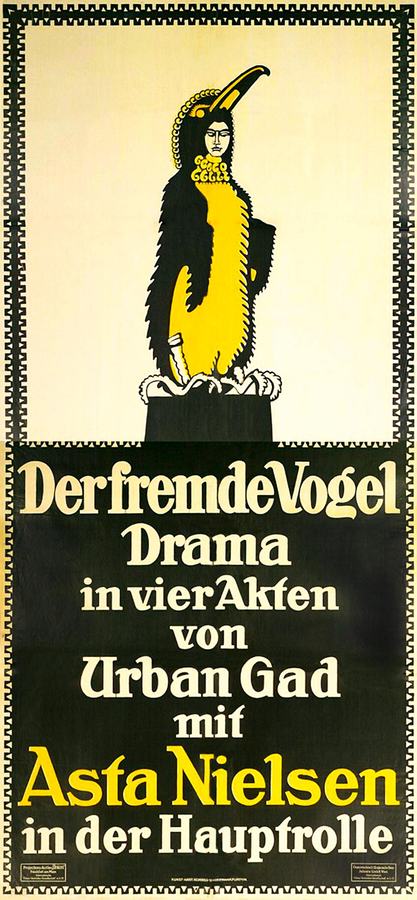
A definitive 6.2/10 rating for a film that redefined the boundaries of cult cinema. Der fremde Vogel remains a cornerstone of transgressive art.
A river that remembers more than it forgets
In the flicker of 1911 nitrate, Der fremde Vogel feels less like a relic than a wound still seeping. Urban Gad, that sly Danish navigator of the psyche, shoots the Rhine not as postcard scenery but as liquid jurisprudence: every ripple a clause in the contract of desire, every reflected cloud a witness for the prosecution. Into this aqueous courtroom drifts May—Asta Nielsen’s spine-tingling mix of porcelain and nitroglycerin—her parasol furled like a switchblade. She is the perennial stranger, the bird alighting where it pleases, yet the title hints she is also the caged one, foreign even to herself.
Gad’s framing is preemptive archaeology: he knows spectators will one day excavate this 24-minute whirlpool for proof that silent cinema could bruise. The evidence is there in the first close-up—Max’s sun-charred hand recoiling from May’s gloved fingers, a jolt that anticipates every bourgeois dad who ever bolted the bedroom window.
Hans Mierendorff’s Max is sinew and consonants, a man who punts boats the way other men play cello, throat buzzing with unsung Lieder. When he sings, it is only for May, and only off-screen; Gad withholds the voice, forcing us to imagine the timbre that topples dynasties. The courtship sequences are a master-class in negative space: the lovers share the stern of a skiff no wider than a coffin lid, yet the camera keeps its distance, as if proximity might scorch the lens. We catch them in prisms—Max’s striped shirt refracted in the river, May’s profile superimposed against a swan’s S-curve—until reality buckles into impressionism.
Louis Ralph’s paterfamilias arrives like a storm in waistcoat form, moustache bristling with fin-de-siècle righteousness. Watch how his cigar becomes a semaphore baton, each puff a dictum: my bloodline, my rules, my river. The confrontation scene—shot in a beer-garden bower—uses trellis shadows to cage the daughter while Max, framed through hop-vines, is already halfway to myth. Gad cuts on the splash of a stein hitting flagstones; match that with the later splash of a body, and you have cinema’s first aquatic rhyme of libation and death.
Eugenie Werner’s bit part as a barmaid doubles as the film’s Greek reeds: she watches May’s calamity with the blasé pity of someone who has seen every river claim every lover. Her shrug, captured in a single long shot, is the moral axis on which the tragedy pirouettes.
Then comes the night of no return. Cinematographer Axel Graatkjær (uncredited but indelible) floods the scene with magnesium moonlight so harsh it feels like interrogation. May’s dress, a diaphanous flag of rebellion, peels off reeds as she runs toward the dock. Max’s skiff bobs, a coffin awaiting its tenant. The lovers embrace—lips crushed, pulse audible—until the father’s lantern slashes the dark. What follows is not chase but choreography: three bodies weaving between barrels, ropes, moon-slick boards. Gad refuses to score it with intertitles; instead the editing itself gasps—six, seven, eight frames missing, as if the celluloid itself swallowed the scream. Max slips, or is pushed, or simply chooses the river over the cage; the camera lingers on the swirl of white foam that might be shirt, might be skin, might be soul.
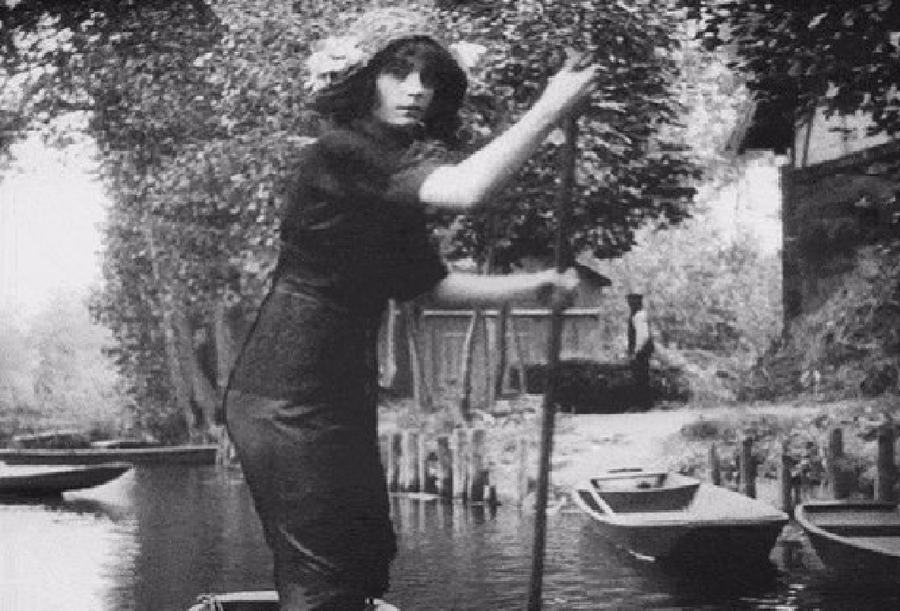
Nielsen’s response is a close-up for the ages: eyes widening like twin eclipses, mouth forming the silent syllable that invents the word never. No tears, just the hollow click of realization. Gad holds that shot until the audience feels water rising in its own lungs.
Post-script irony: the censor boards of 1911 demanded a variant ending for Anglo-American prints—Max rescued, May repentant, father magnanimous. That forgery is lost; only the German Ende survives, proving that even archives prefer tragedy to propaganda.
Contextual ghost: compare this aquatic doom to the boxing actualities of the era—The Corbett-Fitzsimmons Fight or Jeffries-Johnson—where men pummel under klieg suns for purse and pride. Gad moves the arena to water, the gloves to glances, the knockout to a kiss. The river is ring, referee, and rival all at once.
Stylistic seedlings: trace the DNA forward to Jane Eyre’s storm-blasted moors or The Mummy’s erotic-Thanatos swirl; backward to the Lumière ripples in 69th Regiment Passing in Review. Gad’s river is the missing link between actuality and mythopoeia.
Sound of silence: modern viewers conditioned to Dolby thunder may scoff at the quiet, but listen closer—there is the thrum of projector gears, the flutter of shutter, the collective inhale of a 1911 audience suddenly aware that love can be capital crime. Those ghosts still circulate; you can feel them brush your cheek when the screen goes white at the moment of submersion.
Restoration note: the 2018 Deutsche Kinemathek 4K scan restores the amber tinting of the father’s cigar glow and the cobalt of post-mortem twilight. The river’s surface—once a sludge of scratches—now glitters like obsidian, each ripple a stroboscopic dagger. What cannot be restored is the original perfume of nitrate and lake-rot that allegedly made early patrons faint; perhaps that is mercy.
Takeaway for today’s cineaste: if you crave a master-class in how to stage desire within the square of a 1911 frame, study the moment May balances on the prow, one foot on mooring-post, the other dangling like bait. The boat rocks, the camera does not. Stability versus vertigo—a visual syllogism that sums every first love.
Final verdict: Der fremde Vogel is not merely a film; it is a weather system. It arrives, it drenches, it leaves you shivering at how little the world has shifted since fathers feared daughters and rivers exacted what the law would not. Watch it at midnight, window open, rain tapping the sill—then try to tell yourself it is only a movie.
IMDb —
1918
Community
Log in to comment.