DbcultAccessing Vault...
Cult Review
Senior Film Conservator
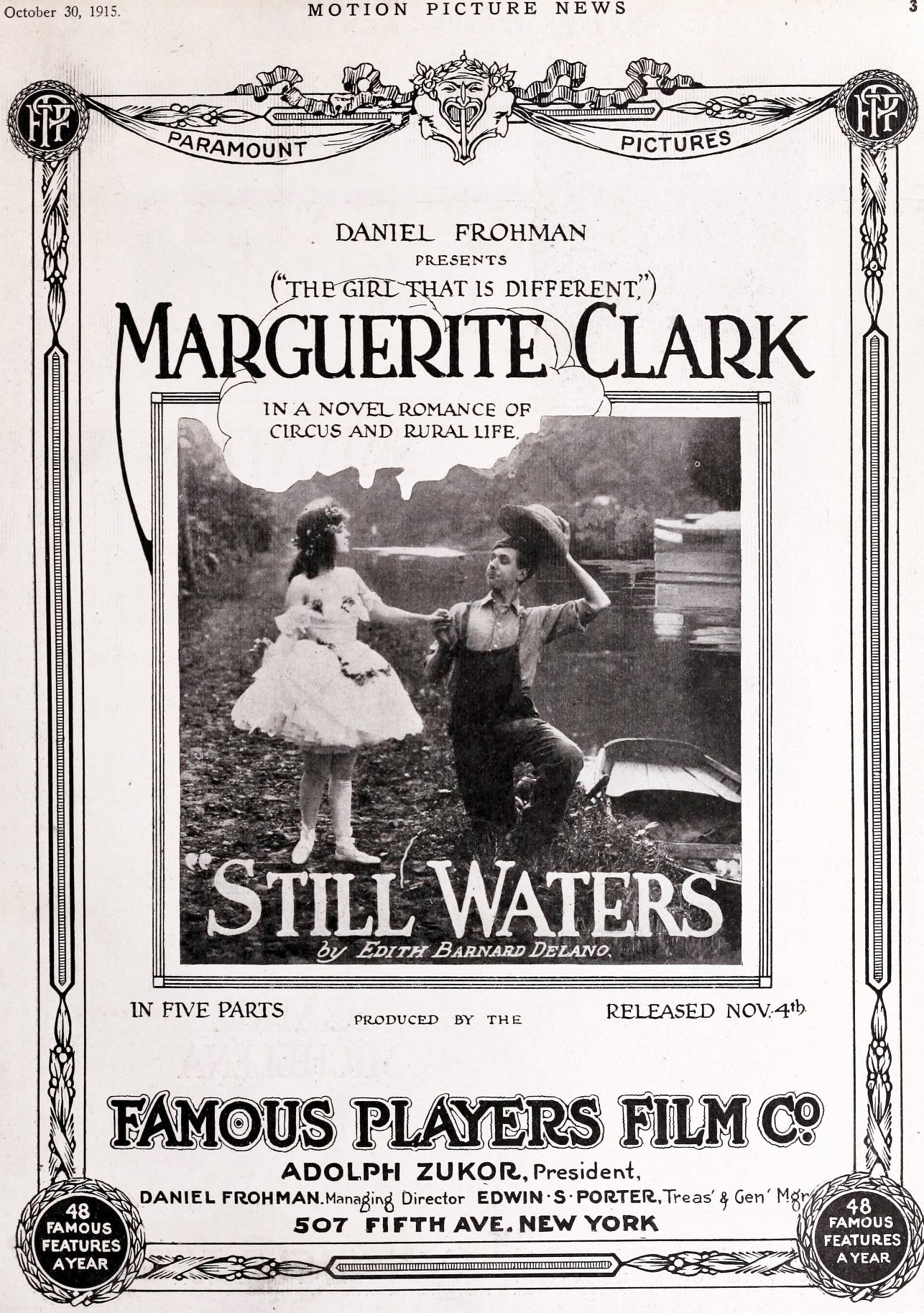
Few cinematic narratives resonate with the quiet, profound weight of familial estrangement quite like Still Waters. This film, a masterclass in understated emotional drama, delves into the enduring impact of a patriarch's unyielding pride and the ripple effects of a daughter's defiant pursuit of happiness. It's a story as old as time, yet rendered with a timeless poignancy that compels introspection long after the credits roll. The very title, Still Waters, evokes a deceptive calm, hinting at the profound depths and turbulent currents that lie beneath the surface of seemingly placid lives.
At its core, the film revolves around a canal boat captain, portrayed with formidable gravitas by Philip Tonge. Tonge imbues his character with an almost geological stubbornness, a man whose principles are as deeply entrenched as the riverbed itself. His world is one of order, predictability, and the steadfast adherence to tradition. When his daughter, played by the luminous Marguerite Clark, dares to break free from these confines by marrying a circus performer – an embodiment of transient, unconventional life – his reaction is swift, absolute, and tragically unforgiving. This isn't merely a disagreement; it's an ideological clash, a fundamental schism that tears at the very fabric of their relationship. The circus, a realm of ephemeral magic and fleeting wonder, stands in stark contrast to the captain's grounded, pragmatic existence, making the daughter's choice an unbearable affront to his ordered universe.
The performance of Marguerite Clark is particularly noteworthy. She navigates the complex emotional landscape of a woman torn between filial duty and personal yearning with remarkable sensitivity. Her portrayal of the daughter is not one of rebellion for rebellion's sake, but rather a quiet assertion of self, a desperate grasp for a life that feels authentically her own. This defiance, however, comes at an agonizing cost, a lifelong separation from her father's affection and, by extension, her past. The film masterfully explores the long shadow cast by such a definitive break, illustrating how a single, irrevocable decision can shape destinies across generations.
Years later, the narrative takes a poignant turn with the introduction of a granddaughter, a character who serves as both a catalyst for potential reconciliation and a living testament to the passage of time. The captain, now an older, perhaps lonelier man, is confronted with a tangible link to the daughter he disowned – a grandchild he never knew existed. This reunion, fraught with unspoken tensions and the weight of years of silence, forms the emotional crucible of the film. It's here that the narrative truly shines, exploring themes of forgiveness, regret, and the possibility of redemption. The innocence of the granddaughter, untainted by the bitter history, acts as a mirror, reflecting the hardened heart of the patriarch and forcing him to confront the consequences of his unwavering stance.
The supporting cast, including Harry LaPearl, Arthur Evers, Robert Broderick, Ottola Nesmith, Robert Vaughn, and Robert Conville, each contribute to the rich tapestry of the film's world. Their performances, though perhaps less central, add texture and depth, grounding the intense personal drama within a believable community. The writers, Hugh Ford and Edith Barnard Delano, deserve immense credit for crafting a screenplay that is both emotionally resonant and structurally sound. They avoid overly melodramatic flourishes, opting instead for a quiet, observational style that allows the characters' internal struggles to unfold organically. The dialogue, though sparse at times, carries significant emotional weight, each line carefully chosen to reveal character or advance the intricate plot.
In a broader cinematic context, Still Waters shares thematic DNA with other films that explore the painful repercussions of uncompromising pride and societal expectations. One might draw parallels to the enduring familial conflicts seen in films like May Blossom, where personal choices clash against the rigid conventions of the era, leading to profound personal sacrifices. Similarly, the long-term consequences of a single, life-altering decision echo the moral quandaries presented in Life's Shop Window, where characters grapple with the cumulative weight of their past actions. These comparisons highlight Still Waters' place within a rich tradition of dramatic storytelling that scrutinizes the human heart under duress.
The aesthetic choices in Still Waters further enhance its evocative power. The cinematography, even in its historical context, manages to convey both the expansive serenity of the canal landscapes and the claustrophobic confines of personal grief. The stillness of the water often mirrors the emotional stagnation of the characters, creating a powerful visual metaphor for lives held captive by unresolved conflict. The subtle use of light and shadow, characteristic of the era, adds an additional layer of psychological depth, often reflecting the characters' internal states without a single word being uttered. This visual storytelling is particularly effective in scenes where Philip Tonge's character is alone, his stoic facade occasionally pierced by a flicker of loneliness or regret, illuminated by a single, carefully placed light source.
What makes Still Waters truly remarkable is its refusal to offer easy answers or saccharine resolutions. The film understands that some wounds, once inflicted, leave scars that never fully fade, even with the balm of reconciliation. The arrival of the granddaughter, while offering a glimmer of hope, doesn't instantly erase decades of pain. Instead, it initiates a delicate, often uncomfortable process of re-evaluation, forcing the characters to confront the choices they made and the people they became as a result. This nuanced approach to human relationships is a testament to the film's maturity and its enduring relevance. It's a challenging watch, not because of overt spectacle, but because it holds a mirror to the often-messy realities of family dynamics and the profound difficulty of genuine forgiveness.
The film also subtly critiques the societal pressures and expectations that often dictate personal happiness. The canal captain's disapproval of the circus performer isn't just personal; it's rooted in a class-conscious, reputation-driven society that views certain professions as inherently less respectable. This societal judgment, internalized by the captain, becomes a powerful barrier to his daughter's happiness and, ultimately, to his own. It’s a theme that resonates with other stories of forbidden love and social stratification, such as the poignant struggles depicted in The Marble Heart, where fate and societal dictates intertwine to create tragic outcomes. The daughter's choice, then, is not merely romantic but also a courageous act of social defiance, a refusal to be confined by the narrow definitions of respectability imposed upon her.
The pacing of Still Waters is deliberate, almost meditative, mirroring the slow, steady flow of the canals themselves. This unhurried tempo allows the audience to fully immerse themselves in the characters' emotional journeys, to feel the weight of their unspoken words and the depth of their long-held grievances. It’s a style that might feel unfamiliar to contemporary audiences accustomed to rapid-fire editing, but it is precisely this measured approach that gives the film its profound impact. Each scene is given room to breathe, allowing the subtle nuances of performance and narrative to fully unfold. This deliberate rhythm creates an atmosphere of quiet intensity, where every glance and gesture carries significant meaning.
The central conflict, the disowning of a child, is a dramatic device that has been explored across countless narratives, from classical literature to modern cinema. Yet, Still Waters manages to imbue it with fresh urgency and raw emotion. It's not just about the act of disowning, but the subsequent years of silence, the gradual erosion of hope, and the profound void left in its wake. The film doesn't shy away from depicting the immense personal cost of such an unforgiving stance, showing how the captain's pride, while initially protecting his perceived honor, ultimately condemns him to a life devoid of a fundamental connection. This exploration of enduring consequences is what elevates the film beyond a simple domestic drama.
The character arcs, particularly that of Philip Tonge's captain, are deeply compelling. While he begins as an almost caricature of stubbornness, the film gradually peels back layers, revealing the vulnerability and perhaps even fear that underpin his rigid exterior. The arrival of his granddaughter forces him to confront not only his past actions but also the kind of legacy he wishes to leave behind. It's a slow, arduous journey towards potential introspection, one that is handled with remarkable subtlety by both the actor and the directorial vision. This nuanced character development prevents the film from descending into simplistic morality tales, offering instead a complex portrait of human fallibility and the arduous path to self-awareness.
The enduring power of Still Waters lies in its universal themes. While set against a specific historical backdrop and within a particular social milieu, the core struggles it portrays – pride versus love, tradition versus individuality, estrangement versus reconciliation – are timeless. Every family, in some form or another, grapples with these dynamics. The film serves as a potent reminder of the fragility of human connections and the immense courage required to bridge divides, whether they are born of misunderstanding, stubbornness, or deeply ingrained societal norms. It’s a testament to the power of storytelling that a narrative from this era can still resonate so profoundly with contemporary audiences, inviting us to reflect on our own relationships and the choices we make.
Ultimately, Still Waters is more than just a historical drama; it's a profound meditation on the complexities of the human heart. It asks us to consider the true cost of holding onto resentment, the quiet strength required to forge one's own path, and the transformative potential of unexpected connections. The film doesn't preach, but rather observes, allowing the audience to draw their own conclusions about the characters' choices and their inevitable consequences. It stands as a powerful example of how compelling drama can be crafted from the seemingly ordinary struggles of life, elevated by exceptional performances and a deeply sensitive screenplay. This film, with its quiet intensity and profound emotional depth, remains a significant entry in the annals of family dramas, a true gem that continues to ripple through the consciousness of those who encounter its enduring message.

IMDb 5.8
1931
Community
Log in to comment.