DbcultAccessing Vault...
7/10
Senior Film Conservator
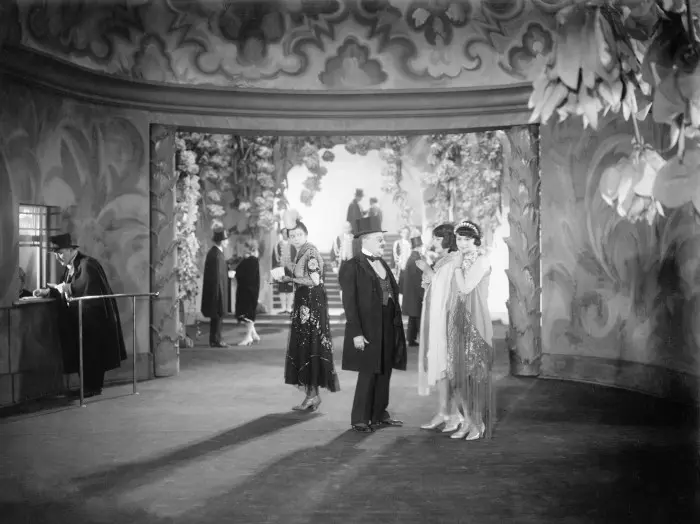
A definitive 7/10 rating for a film that redefined the boundaries of cult cinema. Der Himmel auf Erden remains a cornerstone of transgressive art.
Is Der Himmel auf Erden worth watching today? Short answer: Yes, but only if you have an appetite for the frantic, cynical wit of the Weimar Republic era.
This film is specifically for those who enjoy social satires that dismantle the 'moral majority' with a smirk. It is definitely not for viewers who find the exaggerated gestures of silent-era pantomime distracting or those who require a fast-paced modern edit to stay engaged.
This film works because it weaponizes hypocrisy as a comedic engine, creating a protagonist who is his own worst enemy. The film fails because it leans a bit too heavily on repetitive 'near-miss' gags in its second act. You should watch it if you want to see Reinhold Schünzel at the height of his powers both behind and in front of the camera.
In the landscape of 1920s German cinema, Der Himmel auf Erden stands as a fascinating counterpoint to the expressionist gloom of the era. While films like Le brasier ardent explored the surreal depths of the psyche, Schünzel was more interested in the surface—specifically, the polished, lying surface of the bourgeoisie.
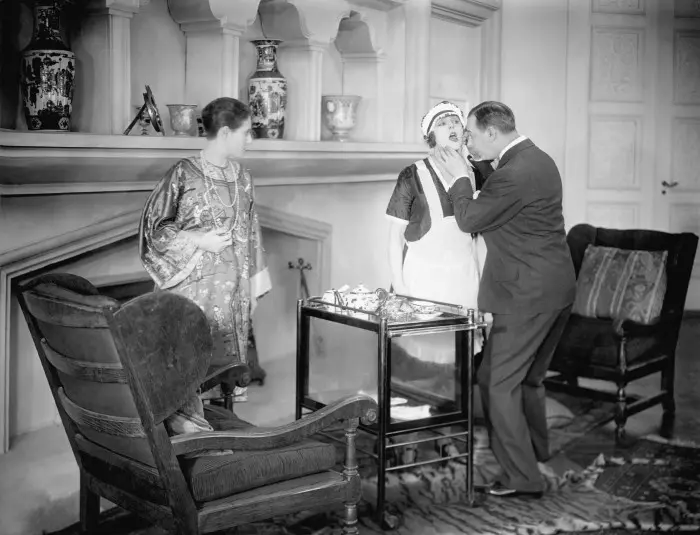
Traugott Bellmann is not just a character; he is a type. He represents that particular brand of public official who uses morality as a shield for a lack of personality. When we first see him, he is draped in the stiff collars and dark fabrics of a man who fears the sun, let alone the neon of a cabaret. The set design of his home is claustrophobic, filled with heavy furniture and the judgmental eyes of his wife.
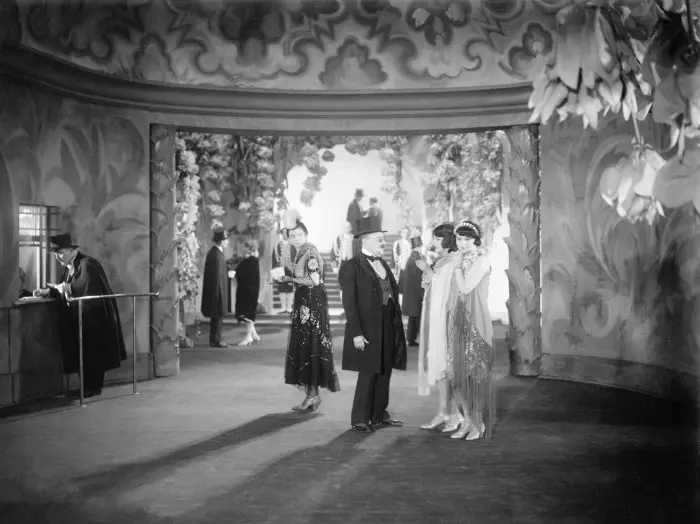
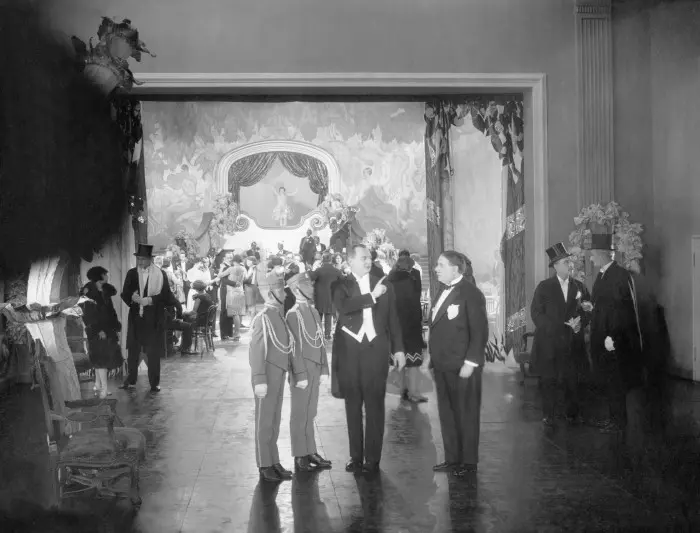
Contrast this with the 'Heaven on Earth' nightclub. The transition is jarring in the best way. Schünzel uses lighting to create a world of soft edges and shimmering surfaces. The club feels alive, a stark contrast to the graveyard of Bellmann’s domestic life. It’s a simple visual metaphor, but it works. It’s effective. It tells us everything we need to know about the two worlds Bellmann is trying to bridge.
Reinhold Schünzel’s performance is a masterclass in controlled panic. He has a way of making his face look like it’s about to slide off his skull whenever he’s in danger of being caught. In one standout scene, Bellmann has to hide behind a champagne bucket while his own father-in-law carouses just inches away. The way Schünzel uses his eyes—darting, terrified, yet strangely fascinated by the bubbling wine—is pure comedic gold.
He isn't just a comedian; he’s a director with a keen eye for framing. Unlike the slapstick seen in Cops, which relies on physical geometry, Schünzel relies on social geometry. He places characters in positions where their secrets are always one turned head away from exposure. It’s a high-wire act that keeps the tension palpable even when the jokes are broad.
The supporting cast is equally vital. S.Z. Sakall, long before he became the cuddly character actor of Hollywood’s Golden Age, shows a sharp, cynical edge here. His interactions with Otto Wallburg create a rhythmic back-and-forth that feels surprisingly modern. They treat the morality of the era like a joke they are both in on, leaving Bellmann as the only one struggling with the punchline.
The cinematography by Frederik Fuglsang deserves more credit than it usually receives in retrospectives of this period. While it doesn't have the experimental flair of Die weisse Wüste, it possesses a clarity and a warmth that makes the nightclub scenes feel inviting rather than tawdry. The camera moves with a certain elegance during the dance sequences, capturing the liberation that Bellmann so desperately fears.
There is a specific moment when the music—implied, of course, in this silent medium—seems to take over the frame. The editing picks up pace, and for a second, we see Bellmann’s foot tap. It’s a tiny movement, but in the context of his rigid character, it’s a seismic shift. It’s the moment the 'sinner' wins. It’s brilliant in its simplicity.
However, the film isn't perfect. The pacing in the middle section feels like it’s stalling for time. We get it: he’s in the club, he shouldn't be there, and he’s almost caught. After the third time this happens, the novelty wears thin. It’s a common flaw in silent features that try to stretch a short-story premise into a full-length runtime. It drags. But it recovers.
Yes, Der Himmel auf Erden is a vital piece of comedic history. It offers a window into the anxieties of a society caught between traditional values and the wild freedom of the 1920s. It’s a film that asks if we can ever truly be the people we pretend to be in the daylight.
If you are a student of film history, this is a required text. It shows the evolution of the 'comedy of errors' and how it was used to critique the social structures of Germany before the darkness of the 1930s set in. Even if you aren't a historian, the sheer charisma of Schünzel is enough to carry you through the slower moments.
Pros:
- Sharp, intelligent screenplay that avoids easy sentimentality.
- Beautifully realized nightclub sets that capture the era's energy.
- A standout performance by S.Z. Sakall.
- Relevant themes of public vs. private morality.
Cons:
- Some of the visual gags feel dated and over-explained.
- The ending is a bit too tidy given the chaos that precedes it.
- Pacing issues in the second act.
What makes this film more than just a dusty relic is its subversiveness. It doesn't just mock Bellmann; it mocks the entire audience that would agree with him. In 1927, there were many 'Bellmanns' in the seats of the cinema. Schünzel was essentially holding up a mirror and laughing at his own customers. That takes guts.
Compared to more romanticized versions of the era, like Die Zirkusprinzessin, Der Himmel auf Erden feels more grounded in human greed. Bellmann doesn't go to the club because he discovers a love for jazz; he goes because he wants the money. It’s a refreshingly cynical take on the 'change of heart' trope. He remains a bit of a jerk until the very end. I love that about this movie.
It’s also worth noting the film’s place among its contemporaries. While Three Weeks was pushing the boundaries of melodrama, Schünzel was refining the art of the 'wink to the camera.' He knew that the audience was in on the joke, and he played to that intimacy perfectly.
Der Himmel auf Erden is a sharp, albeit occasionally slow, comedy that proves hypocrisy has been a comedy goldmine for over a century. It’s a film that manages to be both a product of its time and a timeless critique of human nature. It works. It’s flawed. It’s essential. If you can handle the silence, you’ll find a very loud, very funny voice speaking to you from 1927.
IMDb 6.8
1926
Community
Log in to comment.