DbcultAccessing Vault...
Cult Review
Senior Film Conservator
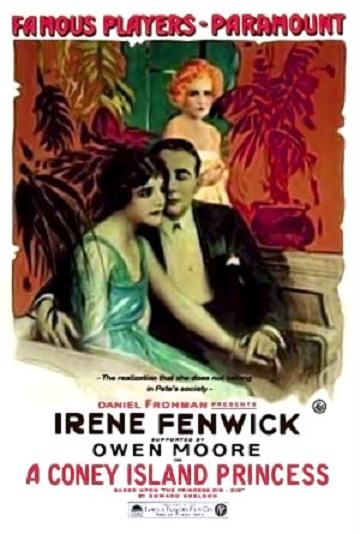
In the nascent days of cinema, when storytelling was often broad-stroke and emotion conveyed through exaggerated gesture, a film like A Coney Island Princess emerges as a surprisingly nuanced exploration of class, identity, and the redemptive power of self-sacrifice. Released in 1915, this silent drama, penned by Edward Sheldon, transports viewers into a world where the rigid societal expectations of "the Avenue" clash dramatically with the vibrant, uninhibited freedom of Coney Island. It's a narrative that, despite its century-old vintage, still resonates with themes of mistaken identity and the search for authentic connection, making it far more than a mere historical curiosity.
Our protagonist, Pete Milholland, portrayed with a compelling blend of youthful arrogance and underlying vulnerability by Owen Moore, is introduced as a quintessential man of his era's upper crust. A "good fellow" by superficial standards, his life is a carefully curated tapestry of polo matches and genteel social engagements, culminating in his engagement to the elegant Alice Gardner. Yet, this veneer of respectability shatters spectacularly when Pete, succumbing to the era's prevalent social lubricant, appears intoxicated on the polo fields. This egregious breach of decorum, an act of public disgrace, serves as the catalyst for his precipitous fall. Alice, a woman of principle, promptly returns his ring, severing their bond and casting Pete into a profound stupor that transcends mere intoxication. In a daze, he issues a vague command to his butler about traveling to Europe, only to awaken disoriented on the shores of Coney Island, clad in unfamiliar attire – a symbolic shedding of his former identity. This abrupt geographical and sartorial displacement is not merely a plot device; it underscores the profound psychological chasm opening beneath Pete's feet. He is, quite literally, a fish out of water, thrust from the gilded cages of high society into the boisterous, democratic melting pot of the amusement park. This journey mirrors, in miniature, the broader societal shifts occurring in America at the time, where the strictures of the Gilded Age were beginning to fray under the pressures of modernization and a burgeoning popular culture.
Coney Island itself, with its kaleidoscopic amusements and carnival barkers, functions as a character in its own right – a vibrant antithesis to the staid "Avenue." It's a realm of escapism and fantasy, perfectly encapsulated by "The Turkish Dream," a theatrical attraction promising exotic delights. It is here that Pete, drawn by both the captivating dancer and an overwhelming need for oblivion, smuggles himself in. He arrives at a moment of crisis for the establishment: the resident pianist has absconded. Mooney, the jovial proprietor, and his daughter Tessie, the very dancer who first caught Pete’s bleary eye, find themselves in a quandary. Pete, a man of surprising hidden talents despite his current predicament, steps into the breach, his impromptu musical performance a testament to his innate "good fellow" nature. This act of unexpected utility immediately places him at odds with Jan, the ardent boatman and Tessie's devoted suitor, whose simmering jealousy adds a layer of romantic tension to the unfolding drama. Tessie, brought to life with an infectious vivacity by Eva Francis, is no demure damsel; she is a woman of agency, deeply rooted in her community and fiercely loyal to her father. Her world, though seemingly less refined than Pete's, possesses an authenticity and warmth that his own society often lacks. This initial immersion allows Pete a glimpse into a life unburdened by the suffocating expectations of his class, offering him a temporary sanctuary from his self-inflicted exile. This narrative thread, where a privileged individual finds solace and purpose among those of a different social stratum, echoes thematic elements seen in films like The Child of Paris, where innocence navigates complex urban environments, or even The Millionaire's Double, which similarly plays with themes of identity and class fluidity.
As the initial shock of his Coney Island sojourn begins to wane, Pete, perhaps spurred by a rekindled sense of duty or a desire to restore his standing, resolves to return to his former life. Crucially, he decides to bring Tessie and Mooney with him. This decision, while seemingly magnanimous, is fraught with complications. The jovial Irishman and his daughter, accustomed to the free spirit of their "kingdom on the beach," are hesitant, their reluctance only overcome by the persuasive power of Pete's automobile – a symbol of the wealth and influence they are about to encounter. Their arrival at the Milholland mansion sends ripples of consternation through high society. Pete's aunt, a bastion of propriety, views Tessie with undisguised disdain, embodying the rigid class prejudices of the era. Tessie, the vibrant "belle of Coney Island," is a jarring anomaly in these rarefied circles, her very presence a challenge to established norms. Pete, meanwhile, grapples with his own conflicted feelings. He recognizes that Tessie, by societal standards, is "not suitable" for him, yet a misguided sense of obligation, coupled with a misleading newspaper report proclaiming Alice's engagement to his friend Tony Graves, hardens his resolve to marry Tessie. This period highlights the societal codes and expectations that bind individuals, much like the rigid honor systems explored in According to the Code, where characters are often trapped by unwritten rules. Pete's determination, born more of wounded pride and misinformation than genuine affection, sets the stage for a poignant confrontation of hearts.
The heart of A Coney Island Princess lies in the unfolding drama within the Milholland mansion, a crucible where true emotions are tested. Tessie, with an innate perceptiveness often found in those who observe from the periphery, notices the subtle cues: Pete's carefully controlled demeanor whenever Alice approaches, and the palpable heartache that registers on Alice's face when the two women meet. Irene Fenwick, as Alice Gardner, portrays a woman of quiet dignity, her sorrow a poignant counterpoint to Pete's bluster. The inevitable confrontation between Pete and Alice finally occurs, a moment charged with unspoken history and lingering affection. It is here that Pete learns the devastating truth: the newspaper report of Alice's impending marriage was a fabrication, a cruel twist of fate or journalistic error. The revelation shatters his illusion and, in a moment of raw emotion, he takes Alice into his arms, their reunion a powerful testament to enduring love. This tender embrace, however, is witnessed by Tessie. In a scene of remarkable emotional depth, Eva Francis masterfully conveys Tessie's internal struggle. Summoning a strength that belies her carefree exterior, she forces a smile, utters a selfless lie about never truly loving Pete, and returns his ring. It's an act of profound self-sacrifice, a deliberate choice to ensure the happiness of others at the expense of her own immediate desires. Pete, initially relieved, misinterprets her gesture, momentarily viewing her as a "young vampire" who almost snared him. This momentary lapse in judgment underscores his lingering immaturity, though Alice, with greater empathy, recognizes the immense sacrifice Tessie has made. This theme of a "concealed truth" and its dramatic impact on relationships is reminiscent of films such as The Concealed Truth, where deceptions, however well-intentioned, ultimately shape destinies. Tessie's act is not one of defeat, but of quiet triumph, demonstrating a moral compass far more finely tuned than those around her.
At its core, A Coney Island Princess is a rich tapestry of thematic explorations. The most prominent is undoubtedly the clash of social classes. The film vividly portrays the stark contrast between the rigid, often hypocritical world of the "Avenue" and the vibrant, unpretentious democracy of Coney Island. Pete's journey from one to the other is not just physical but symbolic, representing a challenge to the established social order and a search for authenticity. Coney Island itself serves as a powerful symbol of escapism, freedom, and a place where identities can be shed and reformed, a stark counterpoint to the suffocating expectations of high society. The film also delves into the nature of true love versus superficial attraction or obligation. Pete's initial engagement to Alice is genuine, but his later determination to marry Tessie is born of pride, misunderstanding, and a misplaced sense of duty. It is Tessie's selfless act that ultimately clears the path for true love to reclaim its rightful place. This exploration of the emotional forces driving characters, often to their own detriment or salvation, mirrors the central conflicts in a film like Love and Hate.
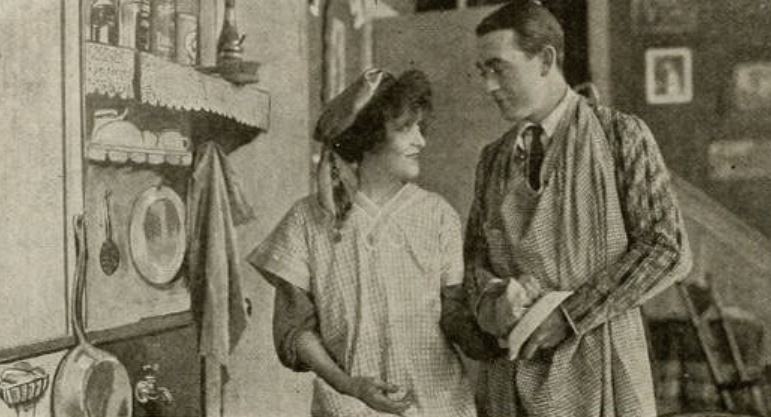
Identity and self-discovery are also crucial. Pete begins as a caricature of his class, loses his way, and only truly begins to understand himself through his experiences outside his comfort zone and the mirror held up to him by Tessie's actions. Tessie, too, undergoes a subtle transformation, demonstrating a profound inner nobility that transcends her humble origins. Her return to Coney Island, and her eventual union with Jan, symbolizes a return to her authentic self, enriched by her journey but ultimately finding happiness within her own world. The film subtly critiques the superficiality of high society, where appearances often trump genuine feeling, and where personal happiness can be sacrificed at the altar of social standing. The theme of redemption, particularly for Pete, is central, as he moves from a state of drunken disgrace and misguided intentions to a reconciliation rooted in genuine affection, a narrative arc comparable to The Redemption of White Hawk.
The success of A Coney Island Princess relies heavily on the nuanced performances of its lead actors, a testament to the evolving artistry of silent cinema. Owen Moore, as Pete Milholland, navigates a complex character arc, from the entitled scion to the bewildered outsider and ultimately to the repentant lover. His portrayal skillfully conveys Pete's initial arrogance, his drunken haze, his misplaced resolve, and finally, his genuine affection for Alice. Irene Fenwick's Alice Gardner is a study in quiet strength and enduring devotion. Her expressions, particularly her heartbreak and later her joy, are conveyed with a subtlety that speaks volumes without a single spoken word, making her a compelling figure of dignity and grace. However, it is arguably Eva Francis's Tessie who steals the show. Her character is a vibrant force of nature, embodying the free spirit of Coney Island. Francis imbues Tessie with an infectious vivacity, a sharp wit, and ultimately, a profound emotional intelligence that elevates the character beyond a mere romantic rival. Her final act of sacrifice is rendered with such moving sincerity that it elevates the film's emotional impact considerably.
Edward Sheldon's screenplay, adapted for the screen, demonstrates a sophisticated understanding of narrative structure and character development for its time. While silent films often relied on broad strokes, Sheldon crafts a plot rich in mistaken identities, class conflict, and emotional turning points. The pacing, typical of early features, allows for character motivations to unfold gradually, building to the climactic moments of truth and sacrifice. The direction, though uncredited in the provided synopsis, effectively utilizes the contrasting settings of opulent mansion and bustling amusement park to underscore the film's central themes. The visual language of silent cinema, with its reliance on tableau, expressive gesture, and intertitles, is employed to convey the intricate emotional landscape of the story, making it accessible and engaging to contemporary audiences and offering a fascinating glimpse into the storytelling conventions of over a century ago.
A Coney Island Princess stands as a compelling example of early American silent cinema, showcasing the industry's burgeoning ability to craft engaging narratives with complex characters. It operates within the popular melodramatic conventions of its era but transcends them through its thoughtful exploration of social dynamics and personal growth. The film's depiction of class divides, societal expectations, and the pursuit of genuine happiness resonates with themes explored across cinematic history. The narrative's reliance on chance encounters and the unpredictable nature of fate, as seen in Pete's journey to Coney Island, bears a thematic kinship with films like The Whirlpool of Destiny, where characters often find themselves caught in forces beyond their immediate control. Similarly, the initial societal disgrace suffered by Pete, and the subsequent pressure on him, mirrors the strictures of social codes found in other dramas of the period. This film, though not as widely celebrated as some of its contemporaries, offers a valuable window into the social mores and romantic ideals of the 1910s.
The enduring appeal of A Coney Island Princess lies in its universal themes. Who hasn't felt the sting of a broken heart, the pressure of societal expectations, or the profound impact of a selfless act? The film's resolution, where true love finds its way not only for Pete and Alice but also for Tessie and Jan, provides a satisfying sense of symmetry and justice. Tessie's return to her "kingdom on the beach" and her eventual happiness with Jan underscores the idea that authenticity and genuine connection are not exclusive to any social stratum. It's a heartwarming conclusion that suggests happiness can be found where one truly belongs, free from the artifice of societal pretense. This narrative arc, focusing on personal redemption and the triumph of sincere affection, ensures its place as a charming and insightful piece of early cinematic history.
A Coney Island Princess is more than just a period piece; it's a beautifully crafted silent drama that offers a poignant commentary on class, identity, and the transformative power of love and sacrifice. With strong performances, particularly from Eva Francis, and a narrative that expertly juggles melodrama with genuine emotional depth, it remains a captivating watch. For enthusiasts of early cinema or anyone seeking a story that transcends its era with timeless human themes, this film is a delightful discovery. It reminds us that even in a world of rigid social codes and grand gestures, the quiet nobility of the heart can shine brightest. Highly recommended for those who appreciate the artistry and storytelling prowess of the silent film era.

IMDb —
1935
Community
Log in to comment.