DbcultAccessing Vault...
Cult Review
Senior Film Conservator
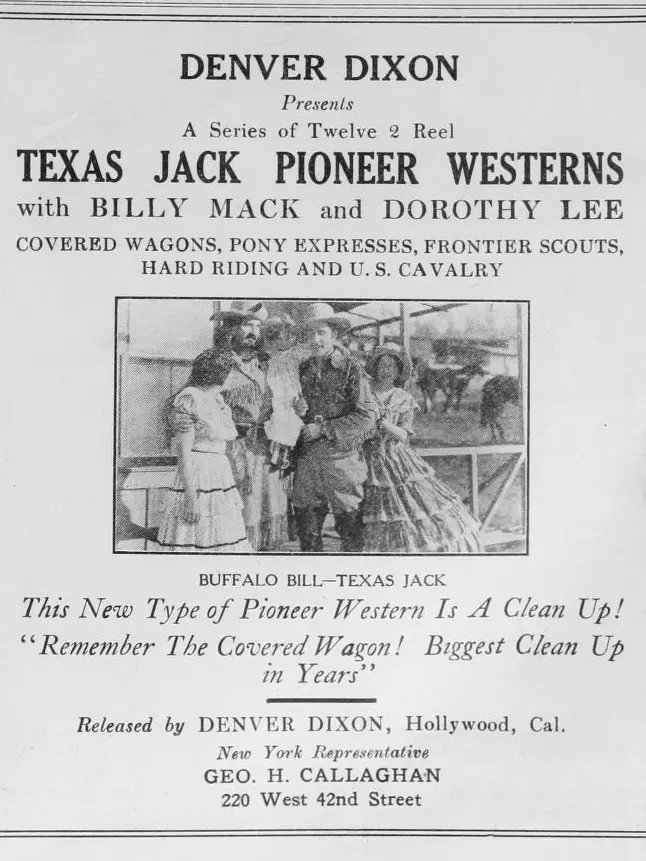
Is The Buckskin Texan a film worth unearthing from the annals of silent cinema? Short answer: yes, but with significant caveats. This early Western offers a fascinating glimpse into the genre's formative years, presenting a narrative that, while familiar, possesses a certain earnest charm that can still resonate with patient viewers.
This film is absolutely for cinephiles, historians, and dedicated fans of silent-era Westerns who appreciate the foundational elements of the genre. It is decidedly not for casual moviegoers accustomed to modern pacing, complex dialogue, or elaborate special effects. Expect a different rhythm, a different language of storytelling.
This film works because of its surprisingly effective characterizations, particularly Billy Mack's understated heroism and Dorothy Lee's spirited independence, which transcend the limitations of silent acting conventions. The core conflict, though simple, is universally resonant, tapping into timeless themes of justice and community.
This film fails because its pacing can feel glacially slow by contemporary standards, and its reliance on broad villainy for William Ryno's character occasionally borders on caricature, undermining some of the more nuanced performances. The resolution, while satisfying, feels somewhat inevitable and lacks genuine suspense.
You should watch it if you are deeply interested in the evolution of the Western genre, appreciate the unique artistry of silent film, or seek to understand the origins of cinematic archetypes. It’s a historical artifact that still offers emotional beats if you’re willing to meet it on its own terms.
The Buckskin Texan, a silent Western from an era long past, stands as a curious artifact. It embodies many of the nascent genre's conventions: the lone rider, the imperiled community, the dastardly villain, and the virtuous damsel. Yet, within this familiar framework, there are moments of genuine emotional resonance and surprising directorial choices that elevate it beyond mere historical curiosity.
The film's strength lies in its ability to tell a compelling story without a single spoken word, relying instead on the power of visual storytelling, expressive acting, and well-placed intertitles. It's a testament to the talent of its creators that they could evoke such clear narratives and emotional arcs with the tools available to them at the time.
Billy Mack, as the titular Buckskin Texan, Jess Harper, delivers a performance that is both restrained and commanding. His portrayal is a masterclass in silent film acting, where every gesture, every shift in his gaze, communicates volumes. He doesn't need to speak to convey a world-weariness or a simmering sense of justice.
Dorothy Lee, playing Martha 'Marty' Callahan, provides a much-needed counterpoint to Mack's quiet intensity. Her character is not merely a damsel in distress; she possesses a fiery spirit and a resilience that makes her an active participant in her own fate. This portrayal was arguably ahead of its time, offering a female lead with agency, a stark contrast to some more passive roles seen in films like The Eternal Magdalene.
The casting of Billy Mack as Jess Harper was, in retrospect, a stroke of genius. Mack embodies the archetype of the stoic Western hero with an effortless grace. His presence fills the screen, whether he’s riding across the vast, arid landscapes or engaging in a tense standoff. He isn't overtly expressive, a common pitfall in silent cinema, but rather internalizes Harper's struggles, allowing the audience to project their own understanding onto his subtle facial cues.
Consider the scene where Harper first witnesses Silas Kincaid’s men intimidating Marty. Mack's face, partially obscured by the brim of his hat, registers a flicker of concern, then a hardened resolve. It’s a quiet moment, yet it powerfully signals his turning point from observer to protector. This kind of nuanced performance is what separates memorable silent film actors from the merely theatrical.
Dorothy Lee’s Marty Callahan is equally compelling. She avoids the saccharine innocence that often plagued female leads of the era. Marty is strong-willed, fiercely protective of her land, and possesses a believable vulnerability. Her moments of defiance against William Ryno's Kincaid are genuinely impactful, showcasing a character who refuses to be simply a victim. Her interactions with Harper feel less like a typical romance and more like a partnership forged in adversity.
William Ryno, as the villainous Silas Kincaid, delivers a performance that is, unfortunately, a mixed bag. While he effectively conveys menace through his imposing physicality and sneering expressions, his portrayal occasionally veers into overt mustache-twirling territory. This isn't entirely Ryno's fault; the conventions of silent villainy often demanded such exaggerated gestures. However, compared to the more grounded performances of Mack and Lee, Kincaid feels a little too much like a stock character, lacking the psychological depth that could have elevated the conflict.
The direction of The Buckskin Texan, while not revolutionary, is remarkably competent for its time. The director (uncredited in the provided context, but clearly with a vision) understands the power of wide shots to establish the desolate beauty of the Western landscape. The parched earth and endless skies become characters in themselves, amplifying the struggle for survival in Redemption Gulch.
There's a particular sequence involving a dust storm that, despite the limitations of early filmmaking, manages to convey a tangible sense of chaos and danger. The swirling practical effects, combined with frantic editing, create a genuinely harrowing experience for the characters and a surprisingly immersive one for the audience. It’s a moment that truly pushes the boundaries of silent film spectacle, far surpassing the more static compositions found in something like Common Sense Brackett.
The cinematography, though black and white, makes excellent use of light and shadow to create mood. Close-ups are employed sparingly but effectively, often reserved for moments of intense emotional revelation or dramatic tension. The way the camera lingers on Harper’s eyes during his internal conflict, for instance, speaks volumes without the need for an intertitle. This deliberate pacing and shot selection contribute significantly to the film’s narrative clarity.
However, the film occasionally falls into the trap of static camera work, particularly during dialogue-heavy (intertitle-heavy) scenes. While this was common, a little more dynamism could have prevented certain moments from feeling staged. The action sequences, particularly the climactic showdown, are generally well-staged, though they lack the kinetic energy we associate with later Westerns. It works. But it’s flawed.
The pacing of The Buckskin Texan is, without a doubt, its biggest hurdle for modern audiences. Silent films operated on a different temporal logic. Scenes often linger, allowing the audience to fully absorb the visual information and the emotions conveyed through exaggerated performance. Intertitles, while crucial for exposition, inevitably break the flow, requiring the viewer to pause and read.
This deliberate pace, however, also contributes to the film's unique tone. There's a pervasive sense of quiet desperation and simmering tension that builds gradually. The film doesn't rush its emotional beats, allowing the audience to truly feel the weight of Marty's struggle and Harper's moral dilemma. It’s a slow burn, but one that eventually ignites.
The tone oscillates between gritty realism (for its time) and classic Western romanticism. The struggle for water and land feels authentic, grounding the narrative in tangible stakes. Yet, the clear-cut good-versus-evil dynamic and the hero's ultimate triumph tap into the genre's inherent idealism. This duality is one of the film’s more surprising observations; it manages to be both stark and hopeful.
One unconventional observation: the film’s depiction of community, even under duress, feels surprisingly robust. The townspeople of Redemption Gulch aren't just faceless extras; their collective suffering and eventual rallying behind Harper lend a powerful, almost spiritual weight to the narrative. It's a subtle but effective way of making the stakes feel grander than just one rancher's property.
As with any film of this vintage, The Buckskin Texan comes with a distinct set of strengths and weaknesses that must be weighed by the contemporary viewer.
The Buckskin Texan is more than just a relic; it’s a foundational text for the Western genre, imbued with a quiet power that still resonates if you’re willing to meet it on its own terms. While its pacing and some of its performances might feel antiquated to a modern viewer, the compelling central performances by Billy Mack and Dorothy Lee, coupled with effective visual storytelling, make it a worthwhile watch for those with an appreciation for cinema history.
It’s a film that demands patience but rewards it with a glimpse into the raw, earnest beginnings of a beloved genre. It may not redefine cinema, but it certainly defines a crucial moment within it. Don't expect a thrilling ride like Flashing Steeds, but rather a thoughtful journey into the past. It’s a film that deserves to be seen, pondered, and appreciated for its enduring spirit, even if it feels like a journey back in time.
IMDb —
1915
Community
Log in to comment.