DbcultAccessing Vault...
Cult Review
Senior Film Conservator
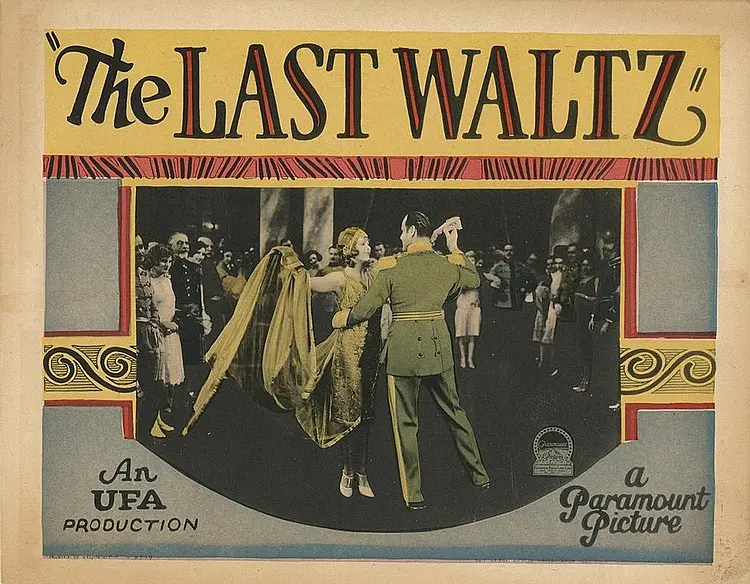
Is Der letzte Walzer worth watching today? Short answer: yes, absolutely, especially if you appreciate the intricate dance of mistaken identity in classic cinema. This film is a delightful, if slightly dated, romp for fans of early romantic comedies and European court dramas, but it might test the patience of those accustomed to modern pacing and narrative complexity.
Released in 1926, Der letzte Walzer (The Last Waltz) stands as a testament to the silent era's capacity for charm and dramatic flair. Directed by Arthur Robison, it weaves a tale of love, honor, and royal intrigue that, while predictable in its broad strokes, finds its strength in the execution of its familiar tropes. For those who cherish the expressive power of silent acting and the elegant simplicity of early storytelling, this film offers a rewarding experience. However, if your cinematic palate leans exclusively towards contemporary narratives, you might find its conventions a hurdle.
At its heart, Der letzte Walzer is a meticulously crafted farce of mistaken identity, set against the backdrop of a fictional Balkan kingdom. The narrative begins with a deliciously rigid, elderly queen, whose iron will governs all, save for her soft spot for the Crown Prince Alexis. Alexis, portrayed as a boisterous, almost cavalier figure, is the epitome of youthful exuberance—a skilled sportsman and the finest shot in the land. His betrothal to the unseen Princess Elena of Avonia is a political arrangement, a fact that sets the stage for the film’s central conflict.
The catalyst for the ensuing romantic entanglement arrives when Princess Elena, afflicted by pre-wedding nerves, orchestrates a clandestine identity swap with her spirited friend, Countess Vera Anuscheff. This seemingly innocuous act, intended to afford Elena a day of anonymity and observation, inadvertently plunges the court into delightful chaos. It is into this meticulously constructed web of deception that Dimitri, Prince Alexis’s aide, stumbles. His immediate, almost visceral attraction to the 'Princess' (who is, in fact, Vera) after a chance encounter on horseback, sets the romantic machinery into motion.
The film excels in illustrating the immediate, almost impulsive nature of silent film romance. Dimitri’s declaration, following a flimsy pretense of injury—"thanks; your eyes are really brown-that's all I wanted to know"—is both impertinent and utterly charming, perfectly capturing the era’s blend of melodrama and wit. This moment, while brief, establishes the raw, unadulterated passion that will drive much of the plot forward.
The informal dance that follows is a masterclass in silent storytelling, with Dimitri sweeping Vera off her feet, his impassioned declarations contrasting sharply with Prince Alexis’s oblivious flirtation with the real Princess Elena. The subsequent sleigh ride, a classic cinematic device, serves not only to escalate the romantic entanglements but also to introduce a dramatic external threat: a terrifying snowstorm. This storm, far from being mere spectacle, becomes the crucible in which identities are finally revealed, leading to a cascade of revelations that propel the narrative towards its dramatic climax.
The sequence where the Prince and the 'blonde' (Elena) take refuge in an inn, and the 'blonde' confesses her true identity, is particularly effective. It’s a moment of genuine vulnerability and narrative ingenuity. Simultaneously, Dimitri's realization that the woman he loves is lost in the storm, and not the Princess, injects a desperate urgency into his character. The film handles these parallel reveals with considerable skill, maintaining clarity despite the complex identity swaps.
The dramatic tension ratchets up considerably when Prince Alexis, feeling duped and perhaps a touch entitled, attempts to force his affections upon Vera. Dimitri’s timely intervention, leading to a challenge and subsequent arrest, transforms the romantic comedy into a high-stakes drama. The death sentence, a surprisingly grim turn for a film of this genre, underscores the rigid codes of honor prevalent in such fictional monarchies. The Princess’s plea for Dimitri’s life, and his subsequent internal struggle between escape and his word of honor, forms the emotional core of the film’s final act. It’s here that the narrative truly earns its dramatic weight, moving beyond mere farce to explore deeper questions of integrity and love.
The strength of any silent film rests heavily on the shoulders of its performers, and Der letzte Walzer is no exception. The cast, led by Willy Fritsch, Suzy Vernon, and Fritz Rasp, delivers performances that are both era-appropriate and surprisingly nuanced.
Willy Fritsch as Crown Prince Alexis embodies the 'hefty laughing cavalier' with an almost effortless charm. He projects an air of carefree royalty, making his initial obliviousness to the identity swap genuinely amusing. Fritsch’s physicality and expressive face convey Alexis’s good-natured spirit, but also his underlying entitlement. His transformation from a jovial prince to a vengeful, then finally repentant, figure is handled with commendable skill. A particularly strong moment is his shift from playful flirtation to aggressive pursuit of Vera, showcasing a darker, more complex side to his character that adds necessary friction to the plot.
Suzy Vernon, in the dual role of Princess Elena and Countess Vera, is the film's undeniable heart. Her ability to subtly differentiate between the nervous, demure Princess and the spirited, independent Countess is a quiet triumph of silent acting. As Vera, she exudes a captivating vivacity, particularly in her initial horseback encounter with Dimitri. Her portrayal of Vera’s defiance against Alexis’s advances is particularly compelling, conveying strength and vulnerability without a single spoken word. It’s a performance that grounds the more outlandish elements of the plot in genuine emotion.
Fritz Rasp as Dimitri delivers a performance that oscillates between impetuous romance and stoic honor. His initial brazen flirtation, followed by the passionate declaration of love, establishes him as a compelling romantic lead. Rasp effectively communicates Dimitri’s internal conflict when faced with the choice between escape and keeping his word. The scene where he removes the cigarette case, a gift from the Prince, before the duel, is a powerful, understated gesture that speaks volumes about his character’s integrity. His quiet dignity in the face of death is a highlight, making his eventual reprieve all the more satisfying.
The supporting cast, particularly Sophie Pagay as the iron-willed Queen, adds significant depth. Her stern demeanor, softened by an almost imperceptible affection for Alexis, is conveyed through subtle gestures and powerful presence. Her performance reminds us that even silent film monarchs can possess complex inner lives. The chemistry, or lack thereof, between the various pairings is crucial, and here, the film largely succeeds, particularly between Dimitri and Vera, whose connection feels both immediate and earned.
Arthur Robison's direction in Der letzte Walzer is marked by a clear understanding of silent film conventions, utilizing visual storytelling to its fullest. He deftly balances the comedic elements of mistaken identity with the escalating drama, ensuring that neither overshadows the other for too long. The pacing, while occasionally feeling deliberate by modern standards, generally serves the narrative well, allowing moments of emotional intensity to resonate.
The cinematography is functional and effective, making good use of the varied settings. The opulence of the royal court and Castle Anuscheff is conveyed through elegant set design and costuming, contrasting nicely with the more rugged, naturalistic shots of the snowy countryside. The "terrific snow storm" sequence is particularly noteworthy, creating a palpable sense of danger and isolation that directly impacts the plot. Robison uses close-ups judiciously, highlighting key emotional reactions and ensuring the audience is never lost in the intricacies of the plot. For example, the reactions of the characters as the identities are revealed at the inn are captured with precision, conveying shock, anger, and confusion.
The film's tone shifts quite effectively throughout. It begins as a lighthearted romantic comedy, transitions into a more serious drama with the duel and arrest, and then resolves with a sense of romantic triumph. This tonal agility is a testament to Robison’s control over the material. While some might find the shift abrupt, it feels earned within the melodramatic framework of silent cinema. The final scene, with Dimitri and Vera dancing in the empty ballroom to the lonely strains of a violin, is a poignant and memorable closing image, perfectly encapsulating the film’s blend of romance and wistful charm.
Absolutely, Der letzte Walzer is worth seeking out. It offers a charming glimpse into silent-era romantic drama.
This film is best for viewers who appreciate the unique artistry of silent cinema, especially those with a fondness for romantic comedies featuring mistaken identities and courtly intrigue. It’s also a good choice for anyone interested in early German filmmaking and the expressive performances of the period.
However, it is likely not for audiences who require rapid pacing, complex dialogue, or CGI spectacle. If you struggle with the conventions of silent film, such as exaggerated facial expressions and intertitles, this might not be your entry point into the genre.
This film works because of its engaging premise, the undeniable chemistry between its leads, and its ability to deliver both comedic moments and genuine dramatic tension.
This film fails because some of its plot resolutions rely on convenient contrivances and certain character motivations feel underdeveloped, particularly in the rapid shifts of Prince Alexis’s temperament.
You should watch it if you're a silent film enthusiast, a romantic at heart, or simply curious about the evolution of cinematic storytelling.
Der letzte Walzer is a delightful relic, a silent film that, while showing its age in certain aspects, retains an undeniable charm and emotional resonance. It’s a testament to the enduring appeal of classic romantic narratives, proving that a good story, well-acted, transcends the limitations of its medium. The film works. But it’s flawed. Its strength lies in its ability to transport you to a bygone era of cinematic romance, where gestures spoke louder than words and honor was a matter of life and death. While perhaps not a film for everyone, those willing to embrace its unique language will find a genuinely captivating experience. It offers a surprising depth for a film of its type, especially in its exploration of duty versus personal desire. If you’ve enjoyed other silent era films like Anna Karenina or even lighter fare such as A Close Shave, then Der letzte Walzer deserves a place on your watchlist. It’s a beautifully crafted piece of cinematic history that, despite its occasional narrative bumps, leaves you with a warm, lingering feeling, much like the final notes of a cherished waltz.

IMDb —
1936
Community
Log in to comment.