DbcultAccessing Vault...
6.3/10
Senior Film Conservator
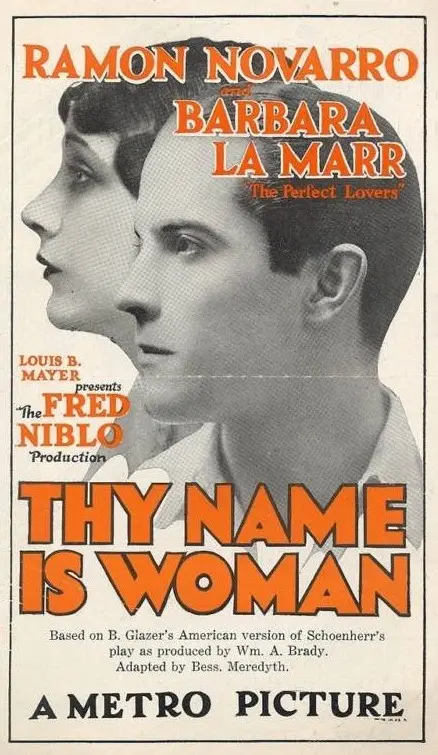
A definitive 6.3/10 rating for a film that redefined the boundaries of cult cinema. Thy Name Is Woman remains a cornerstone of transgressive art.
In the realm of silent cinema, 'Thy Name Is Woman' (1927) stands as a testament to the enduring power of romance and deception. Directed by Karl Schönherr and Bess Meredyth, this film tells the story of Juan Ricardo, a Spanish soldier played by Ramon Novarro, who is tasked with capturing the elusive smuggler, Pedro the Fox.
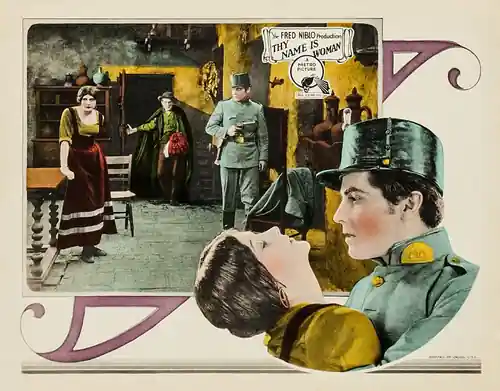
The narrative unfolds with Juan's assignment to gather evidence against Pedro, leading him to cross paths with Pedro's wife, Guerita, portrayed by Barbara La Marr. As their acquaintance ripens into a passionate affair, Juan finds himself torn between his duty and his desire. This tumultuous love triangle serves as the film's emotional core, expertly navigating themes of loyalty, betrayal, and the complexities of the human heart.
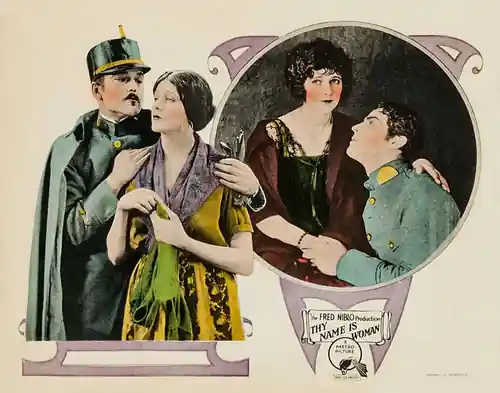
The cinematography in 'Thy Name Is Woman' is noteworthy, capturing the picturesque Spanish landscape in a way that immerses the viewer in the world of the film. The use of light and shadow adds depth to the narrative, often foreshadowing the characters' actions and emotions. This visual storytelling, characteristic of silent films, enhances the overall viewing experience, making 'Thy Name Is Woman' a captivating watch.
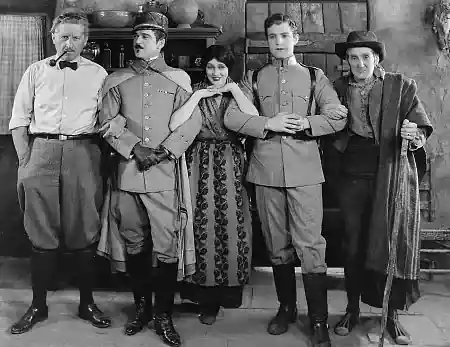
Ramon Novarro, known for his roles in Cameo Kirby (1923) and Juan José, delivers a compelling performance as Juan Ricardo. His portrayal of a man caught between duty and passion is nuanced, bringing a level of authenticity to the film. Barbara La Marr, as Guerita, complements Novarro's performance with her own depiction of a woman trapped in a life of deception and desire.

The supporting cast, including William V. Mong, Robert Edeson, and Wallace MacDonald, add depth to the narrative, each contributing to the film's exploration of morality and consequence. The character development in 'Thy Name Is Woman' is a significant aspect of its storytelling, with each character facing their own struggles and dilemmas.
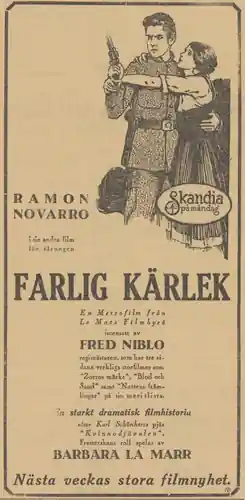
In comparison to other films of its era, such as The Lotus Eater and A Lady of Quality, 'Thy Name Is Woman' stands out for its unique blend of romance and drama. While films like The Bugle Call and This Way Out (1922) also explore themes of love and duty, 'Thy Name Is Woman' does so with a distinct sense of urgency and passion.
The film's score, though not discussed in detail here, undoubtedly plays a crucial role in enhancing the emotional impact of key scenes, much like in The Rescue and Teeth. The art of silent filmmaking, as seen in 'Thy Name Is Woman,' relies heavily on the score to convey emotion, and this film is no exception.
Upon reflection, 'Thy Name Is Woman' is a remarkable example of silent cinema, offering a rich tapestry of themes, characters, and visual storytelling. Its exploration of love, duty, and deception continues to resonate with audiences, making it a timeless piece of cinematic history. For those interested in the evolution of film and the art of storytelling, 'Thy Name Is Woman' is a must-watch, offering insights into the techniques and themes that have shaped the medium.
In conclusion, 'Thy Name Is Woman' is a film that not only entertains but also invites reflection on the human condition. Its place in the canon of silent films is well-deserved, and it remains a fascinating study for both film enthusiasts and scholars. As cinema continues to evolve, works like 'Thy Name Is Woman' remind us of the power of storytelling and the enduring appeal of the silver screen.
The film's influence can be seen in later works, such as The Golden Wall and Trimmed, which also explore complex themes and character dynamics. 'Thy Name Is Woman,' in its own right, has become a landmark in the history of cinema, a testament to the artistry and vision of its creators.
Ultimately, 'Thy Name Is Woman' is a cinematic treasure that continues to captivate audiences with its timeless story of love, deception, and the human condition. Its significance in the world of silent cinema is undeniable, and it remains a vital part of film history, offering a glimpse into the evolution of storytelling on the silver screen.
IMDb 2.2
1928
Community
Log in to comment.