DbcultAccessing Vault...
Cult Review
Senior Film Conservator
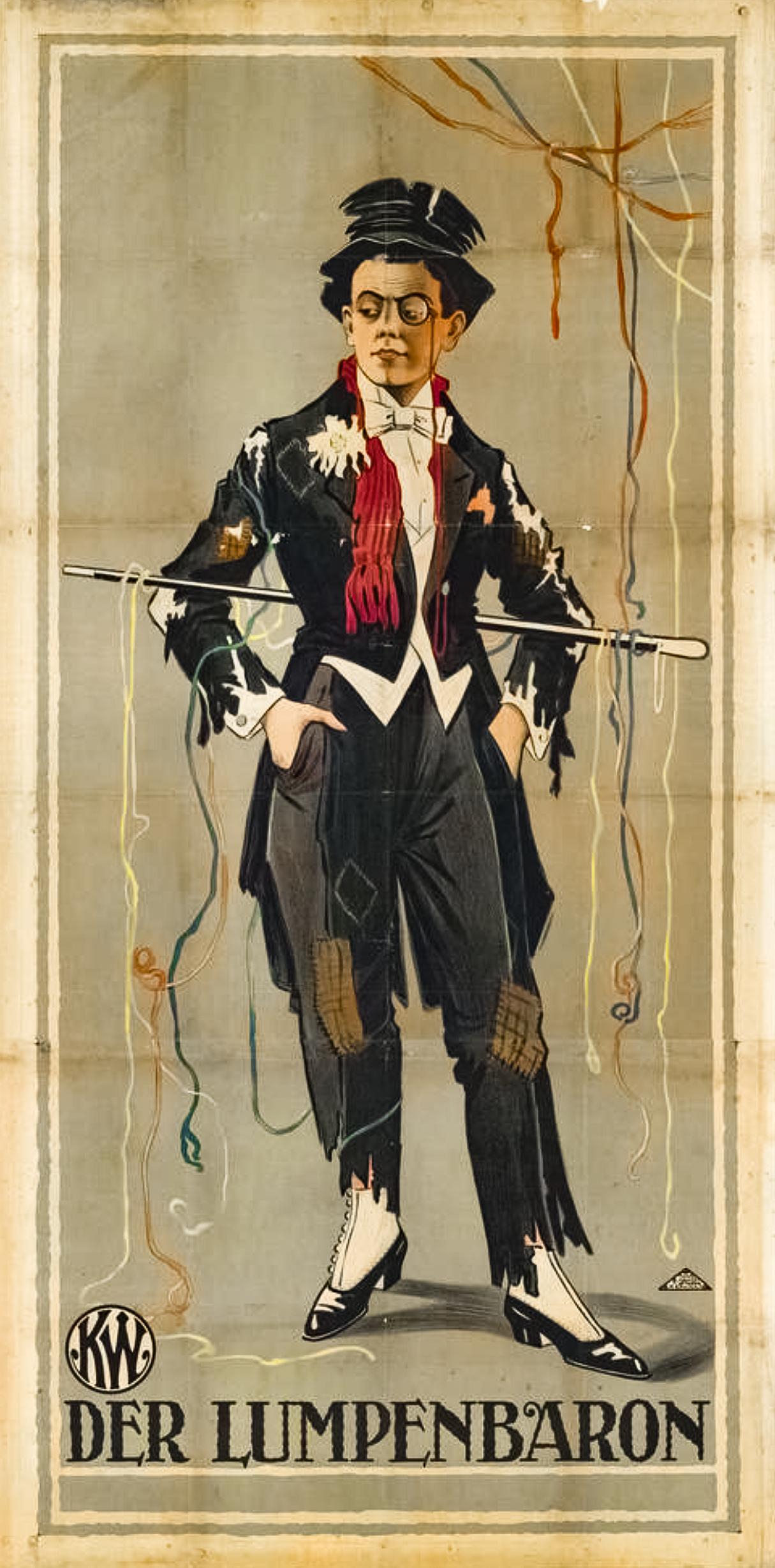
There is a moment—halfway through Der Lumpenbaron—when the camera simply inhales. A static alleyway, puddles shimmering like black diamonds, suddenly ripples as Josef Coenen’s nameless rag-baron strides through the frame, his coat billowing like a torn flag of a country that never existed. No intertitle interrupts; no moralising hand-wringing. The silence is the moral. Vienna, 1918, starved and swaggering, becomes a carnival of bruised angels, and Coenen, with eyes lacquered in self-mockery, sells salvation by the gram.
Charly Mettinger’s screenplay is a fever chart sewn from sooty cigarette papers: a plot that folds in on itself like origami soaked in absinthe. Orphans trade their shadows for bread; a bankrupt aristocrat barters a blood-stained signet ring for a night inside the baron’s tent of second-hand dreams; a demi-mondaine smuggles revolutionary pamphlets inside corsets stitched by nuns. The narrative refuses linearity—it hiccups, loops, pirouettes, until chronology itself feels like another second-hand coat to be shrugged off.
Visually, the film is a chiaroscuro opera. Cinematographer Wilhelm Gärtner (unaccredited, as was the custom) bathes cobblestones in sodium orange, then plunges faces into bruised cobalt. Compare this to the jagged cardboard sets of The Fatal Night or the stolid grandeur of Spartacus; here the city is both cathedral and crypt, every doorway a confessional that smells of wet wool and cheap incense.
Coenen’s performance is a master-class in charismatic rot. Watch the micro-twitches around his mouth when he recognises a former lover now reduced to selling chestnut husks—his lips remember a kiss, his eyes remember the price. He never begs for sympathy; instead he auctions his own downfall with a ringmaster’s wink. The gestural vocabulary is closer to ballet than to the declamatory histrionics of Salomy Jane; shoulders slide, wrists pivot, the whole body a semaphore of self-betrayal.
The soundscape—added for the 1932 re-release and miraculously preserved—deserves clemency from the usual scorn heaped on post-silent retrofitting. A wheezing accordion, punctuated by typewriter bells, becomes the heartbeat of a society that cannot decide whether to waltz or declare bankruptcy. When the baron finally confronts the child-accomplice who has sold him to the police, the score drops to a single heartbeat-like timpani. Cine-philosophers have likened it to the existential void in Sorvanets, yet here the silence is not metaphysical but mercantile: the sound of a debt come due.
Mettinger’s dialogue intertitles—calligraphic, sardonic—flash like switchblades. “He traded his yesterday for a tomorrow that forgot to arrive” is etched over a shot of the baron burning pawn-tickets one by one, each ash a moth of cancelled futures. Compare that to the moralistic platitudes in Der Hund von Baskerville and you realise how modernist cynicism already infected Vienna before Berlin cottoned on.
Gender politics simmer rather than preach. The female pickpocket known only as Moth (played with feral luminosity by an uncredited actress) undercuts the baron’s patriarchal stagecraft. In a bravura sequence shot from inside a trunk, we watch her swap real pearls for fakes while the baron recites a tall tale of duchesses ruined by love. The camera’s claustrophobic POV turns larceny into liberation, prefiguring the feminist swagger of The Daughters of Men but without that film’s didactic aftertaste.
The politics are elliptical, almost contraband. Anarchist flyers drift like snow through half the scenes; a one-armed veteran sells phrenology charts that predict revolution by the lunar cycle. Yet Mettinger refuses to crown any ideology. When the baron is finally arrested, the police wagon passes a street-corner orator promising “bread and bullets in equal measure.” The baron’s smile—half rue, half relief—suggests the only sustainable revolt is the one against oneself.
Restoration-wise, the 2022 Munich Filmuseum 4K scan resurrects nitrate tints unseen since the Weimar era. Scratches remain, like varicose veins, but the grain structure breathes; you can almost smell the mildew of the original storage crate. The optional commentary by Dr. Liesl Hofmann excavates production lore: how Coenen financed scenes by pawning his own wardrobe between shoots; how extras were paid in schnapps tokens redeemable only at the studio commissary. Such anecdotes humanise what might otherwise calcify into cinephile fetish.
Influence? You can trace the DNA to Carol Reed’s The Third Man in the sewer-line nightscapes, to Bergman’s Sawdust and Tinsel in the circus-as-purgatory motif. Yet unlike Pro Patria or Checkers, which moralise about the spectacle of suffering, Der Lumpenbaron wallows inside the sawdust, counting coins with bloodied fingernails.
Critics who dismiss the film as mere Kammerspiel noir miss its carnival eschatology. The final freeze-frame—the baron’s face superimposed over a heap of discarded costumes—doesn’t solicit pity; it indicts the viewer who came to gawk. We are, Mettinger whispers, all shareholders in this economy of second-hand souls.
So, is it a masterpiece? The word feels too cathedral, too marble. Der Lumpenbaron is a tavern lit by kerosene and hubris, where the floorboards reek of spilled schnapps and the exit sign flickers like a bad conscience. It will not comfort you; it will count the change in your pocket and charge you for the candlelight. Yet long after the credits—after the city has swallowed its own reflection—you will remember Coenen’s half-moon smirk, a reminder that every empire, even one stitched from rags, demands its tribute of blood and velvet.
For contextual cinephiles, double-feature it with Kadra Sâfa to witness how exile cinema refracts the same shards of identity, or pair it with Trompe-la-Mort for a diptych on self-invented immortality. But let Der Lumpenbaron have the final word; after all, it already sold the rest.
Blu-ray extras: 42-min making-of, 1918 Wien newsreel, essay booklet by Dr. Hofmann. Region-free. Subtitles: English, Français, Español, Deutsch.
IMDb 6.3
1926
Community
Log in to comment.