DbcultAccessing Vault...
6.3/10
Senior Film Conservator
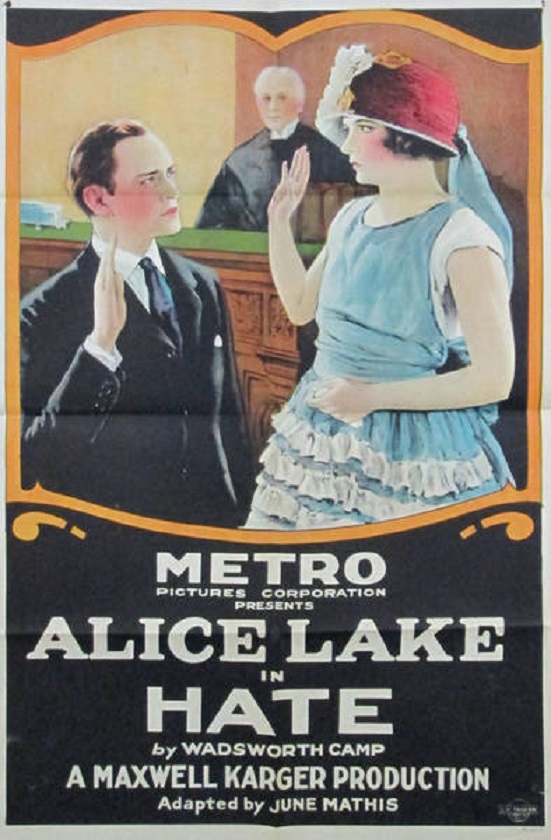
A definitive 6.3/10 rating for a film that redefined the boundaries of cult cinema. Hate remains a cornerstone of transgressive art.
Stepping back into the hallowed, hushed halls of early 20th-century cinema, one encounters a fascinating tapestry of human emotion, often rendered with a stark, expressive clarity that transcends the absence of spoken dialogue. The year 1922, a vibrant epoch for the burgeoning art form, gifted audiences with a myriad of narratives, from grand historical epics to intimate psychological dramas. Among these, a film titled "Hate" emerges as a particularly potent artifact, a testament to the era's ability to weave intricate webs of human failing and ultimate vindication without uttering a single word. This isn't just a motion picture; it's a profound exploration of the darkest corners of the human heart, a silent symphony of obsession, jealousy, and the serpentine path to justice.
At its core, "Hate" is a compelling character study, a narrative propelled by the volatile dynamic between two men, Dave Hume and Ed Felton, whose lives become inextricably entwined by their shared affection for the enchanting chorus girl, Babe Lennox. It’s a classic love triangle, certainly, but one that quickly devolves into a desperate struggle for dominance, fueled by a corrosive cocktail of envy and resentment. Hume, portrayed with a sinister intensity that must have been palpable even through the silent screen, epitomizes the destructive power of unchecked passion. His initial act of betrayal – informing on Felton – sets in motion a chain of events that spirals irrevocably towards tragedy, demonstrating how a singular act of malice can unravel an entire existence. The immediate consequence, Felton’s arrest, serves as a stark reminder of the fragile balance of reputation and freedom, particularly in a society quick to judge.
What elevates "Hate" beyond a mere melodrama is the sheer audacity of Hume's subsequent machinations. Plagued by ill health and a mind warped by his animosity, Hume conceives a plan of such breathtaking cruelty and complexity that it borders on the theatrical. He resolves to commit suicide, not out of despair for his own condition, but as a final, devastating act of revenge against Felton. The brilliance, or rather the chilling depravity, lies in his intent to frame Felton for his 'murder.' This isn't just a simple act of self-destruction; it's a meticulously crafted performance, a final, fatal gesture designed to utterly destroy his rival's life and reputation. The detail of concealing his morbid plans within a small statuette is a stroke of narrative genius, transforming an inert object into a ticking time bomb of truth, silently awaiting its moment to explode.
The wager Hume makes with Felton, a chilling dare that he can indeed take his own life, adds another layer of psychological torment to the unfolding drama. It’s a perverse challenge, a dark twist on a gentleman's agreement, forcing Felton into an unwitting complicity in his own impending doom. This scene, though silent, must have crackled with an almost unbearable tension, the unspoken words heavier than any dialogue. When Hume is inevitably found dead, the stage is perfectly set for the tragic misdirection. Attorney Talbot, a figure of uncompromising legal rectitude, steps in to prosecute Felton, his conviction in Felton's guilt unwavering. The film masterfully builds suspense around the legal proceedings, drawing the audience into the grim reality of a man facing the ultimate penalty for a crime he did not commit. In this regard, "Hate" echoes the profound injustices explored in other cinematic works of the era, where the legal system, for all its noble intentions, could become a blunt instrument of fate. Films like The Price of Silence or even the more allegorical The Eternal Law often grappled with similar themes of wrongful accusation and the arduous struggle for truth, though perhaps none with such a personal, venomous vendetta at its core.
The narrative's ticking clock becomes terrifyingly apparent as Felton's execution looms. It's a classic silent film trope, the race against time, but rarely executed with such emotional stakes. At this critical juncture, the character of Babe Lennox, initially presented as the object of desire, transforms into the story's true catalyst for justice. Her journey is one of profound realization and courageous action. Having initially denounced Talbot for what she perceived as his ruthless conviction of Felton, her eyes are slowly opened to the possibility of a deeper, more insidious truth. This shift in perspective is crucial, highlighting the film’s nuanced portrayal of perception versus reality. Her eventual discovery of the statuette, and the damning evidence it contains, is the pivotal moment, the narrative's fulcrum upon which everything balances. Without her intervention, Felton would undoubtedly meet an unjust end. This element of a last-minute revelation, often hinging on a physical object, was a powerful device in early cinema, capable of delivering immense dramatic impact without a single spoken word. One might find parallels in the dramatic eleventh-hour disclosures in films like The Heart of Midlothian, where a similar urgency for truth against a backdrop of impending doom drives the narrative forward.
The resolution of Babe's emotional arc is equally compelling. Her initial animosity towards Talbot, born of her belief in Felton's innocence and Talbot's perceived villainy, gradually gives way to an acknowledgment of her love for him. This twist, while perhaps leaning into the melodramatic conventions of the era, provides a satisfying emotional conclusion. It suggests that even amidst such profound hatred and injustice, love can blossom, and understanding can bridge the deepest divides. The ending, where "all ends well," is a testament to the era's preference for moral clarity and a sense of cosmic balance, even after navigating the darkest human impulses.
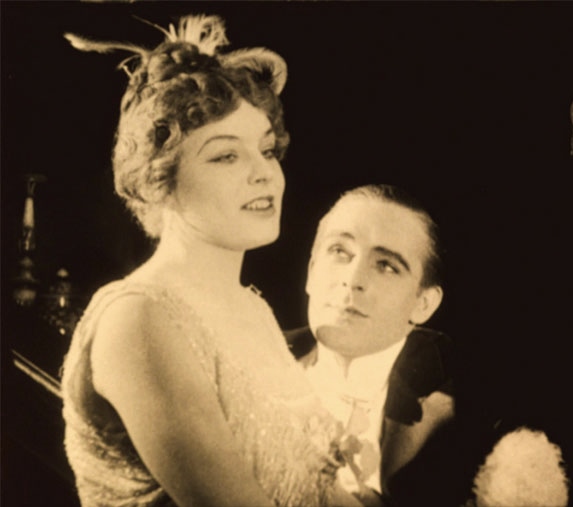
The success of "Hate" in conveying such intricate emotional and narrative complexity rests squarely on the shoulders of its cast. In the silent era, actors were masters of physical expression, their faces and bodies becoming the primary conduits for dialogue and inner turmoil. Alice Lake, as Babe Lennox, must have brought a compelling blend of vulnerability and burgeoning strength to her role. Her transformation from a woman caught between two rivals to the decisive agent of truth would have required a nuanced performance, using subtle gestures and intense gazes to communicate her shifting emotions. Conrad Nagel, as the wrongfully accused Ed Felton, would have conveyed the anguish and despair of a man facing an unjust fate, his silent pleas for understanding resonating deeply with audiences. Harry Northrup's portrayal of Dave Hume, the architect of such elaborate malice, would have been crucial. His ability to project venomous jealousy and a calculating intelligence without uttering a word is a testament to the power of silent acting. The supporting cast, including John Ince and Charles Clary, would have contributed to the film’s rich tapestry, each playing their part in the unfolding drama with the exaggerated yet effective expressiveness characteristic of the period.
These performances, often seen today as overly theatrical, were in fact a highly refined art form, demanding immense discipline and an intuitive understanding of human psychology. Without the aid of spoken words, actors had to communicate entire paragraphs of emotion through a single glance, a tremble of the hand, or a sudden slump of the shoulders. The close-ups, a technique still evolving in 1922, would have been vital in conveying the internal struggles of these characters, allowing the audience to glimpse the turmoil behind their silent facades. The film's writers, Wadsworth Camp and June Mathis, crafted a scenario that provided ample opportunity for such powerful, non-verbal storytelling, demonstrating a keen understanding of the silent medium's unique strengths.
Beyond the immediate thrills of its plot, "Hate" delves into profound thematic territory. The titular emotion itself is explored in its most destructive form, showcasing how it can consume an individual and ripple outwards, devastating innocent lives. It's a stark warning against the perils of obsession and the corrosive nature of vengeance. The film also examines the fragility of justice, highlighting how easily truth can be obscured by appearances and how precarious an individual's fate can be within the legal system. The theme of sacrifice, particularly Babe's willingness to act against her initial judgment, adds a layer of moral complexity, suggesting that true courage lies in seeking and upholding truth, even when it challenges one's preconceived notions.
From a cinematic perspective, "Hate" would have employed the developing techniques of the silent era to maximum effect. Lighting would have been crucial in establishing mood, with stark contrasts perhaps used to emphasize Hume's dark intentions or Felton's despair. Set design, though often minimalist, would have effectively communicated the social strata and emotional landscape of the characters, from the smoky confines of a gambler's den to the austere grandeur of a courtroom. Editing, still a relatively nascent art, would have been used to build suspense, particularly during the climax, cross-cutting between Babe's desperate race and Felton's impending doom. Intertitles, the textual 'dialogue' of the silent film, would have been carefully crafted to convey key plot points, character thoughts, and emotional beats, guiding the audience through the narrative without ever breaking the immersive spell.
Comparing "Hate" to other films of its time, one can appreciate its unique blend of psychological drama and thrilling suspense. While other films like Clay Dollars might have explored the gritty realities of urban life, or Unprotected delved into moral quandaries, "Hate" carves out its own niche by meticulously dissecting the anatomy of a personal vendetta. It demonstrates the profound impact that individual choices, driven by intense emotions, can have on the lives of many. The film, in its quiet intensity, holds up a mirror to the timeless human struggles of jealousy, justice, and the often-elusive nature of truth.
In conclusion, "Hate" (1922) stands as a powerful testament to the enduring artistry of silent cinema. Its narrative, rich with psychological depth and dramatic tension, continues to resonate, proving that the absence of sound does not equate to a lack of voice. Through compelling performances, astute direction (though details are scarce, the plot's execution speaks volumes), and a thematic core that grapples with universal human emotions, the film transcends its historical context. It reminds us that stories of love, betrayal, and the relentless pursuit of justice are timeless, capable of captivating audiences across generations, even when conveyed through the eloquent silence of the silver screen. It’s a compelling piece of cinematic history, inviting contemporary viewers to appreciate the foundational artistry upon which the entire edifice of modern film was built.
IMDb 4.3
1931
Community
Log in to comment.