DbcultAccessing Vault...
Cult Review
Senior Film Conservator
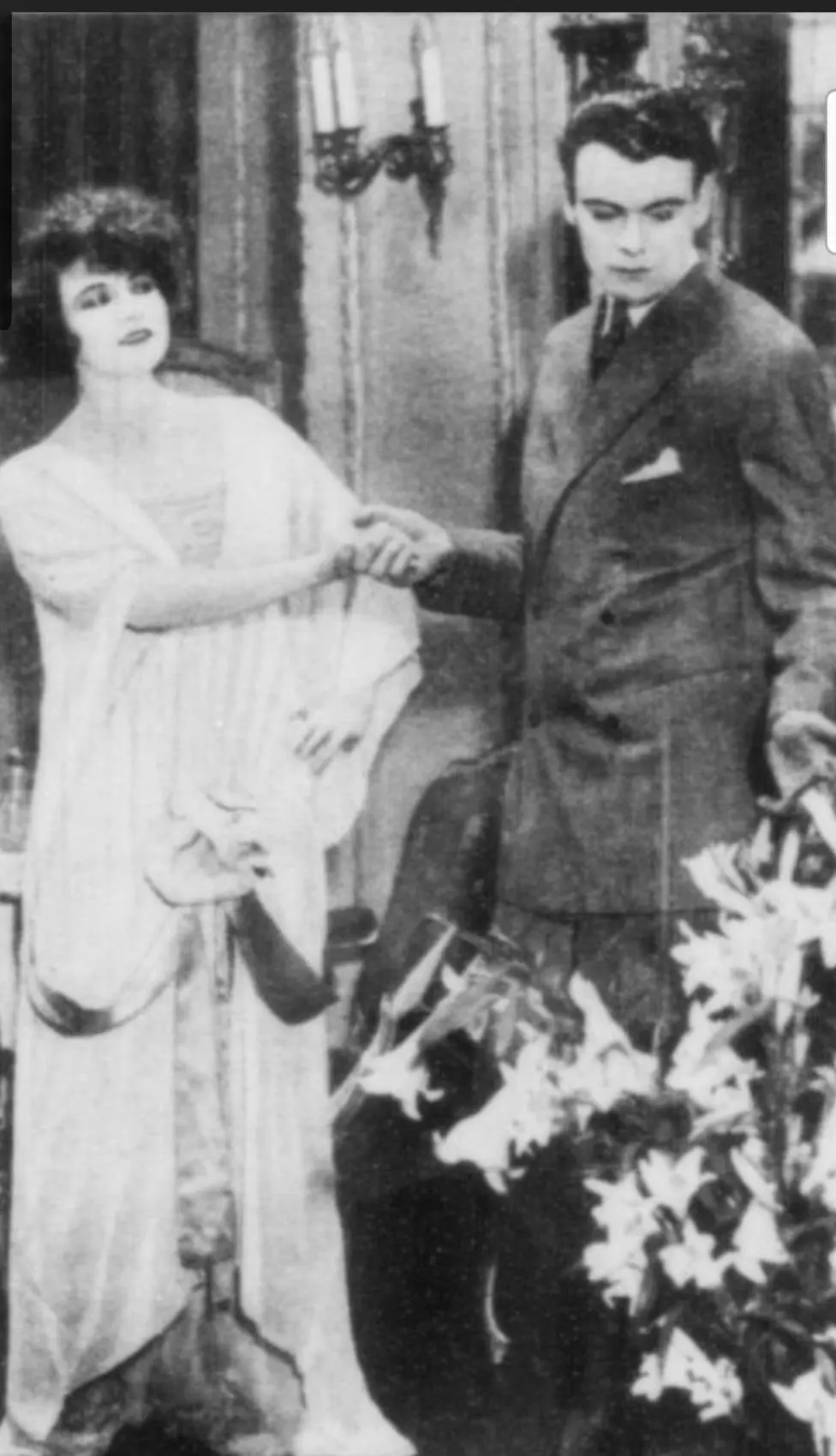
Is Der Mann seiner Frau worth watching today? Short answer: yes, but with significant caveats that demand a specific kind of viewer. This silent drama, a fascinating relic from 1922, will deeply resonate with enthusiasts of early cinema, particularly those drawn to intricate character studies and the burgeoning narrative techniques of the era.
However, it will likely prove a challenging, perhaps even frustrating, experience for casual viewers accustomed to modern pacing and explicit storytelling. It’s a film that requires patience, a willingness to engage with its unique visual language, and an appreciation for the historical context of its creation.
This film works because of its surprisingly nuanced character motivations and its bold exploration of moral ambiguity, particularly through the character of Yvonne. It's a remarkably layered melodrama for its time.
This film fails because its pacing can be excruciatingly slow in places, and some plot resolutions feel abrupt or underdeveloped, undermining the meticulous build-up.
You should watch it if you are a dedicated silent film scholar, a fan of early German cinema, or someone who appreciates psychological melodramas that hint at darker human impulses beneath a veneer of societal decorum.
Alfred Halm and Bobby E. Lüthge’s screenplay for Der Mann seiner Frau, while ostensibly a traditional melodrama, possesses a surprising undercurrent of moral complexity. The central conflict, Helen’s unwitting entanglement with the predatory James Hartley, is standard fare for the silent era. What elevates it, however, is the role of Yvonne, Hartley’s wife and Helen’s old friend.
Yvonne is not merely a neglected spouse; she is a calculating participant in Helen’s potential downfall. Her willingness to expose Helen to Hartley’s advances, all to clear the path for her own affair with Vogel, introduces a layer of cynical manipulation that feels remarkably modern. This isn't just a story of a virtuous woman resisting temptation; it's a commentary on the corrosive nature of self-interest and the subtle betrayals that can occur within seemingly innocuous relationships.
The setup is classic: two friends, diverging paths, one rich, one poor. But the film immediately subverts expectations by making the 'rich' marriage a casual, almost transactional affair, while the 'poor' one is steeped in genuine affection. This contrast isn't just a plot device; it's a thematic declaration, suggesting that true wealth lies not in material possessions but in emotional bonds.
Helen’s journey is less about resisting physical seduction and more about navigating a labyrinth of unspoken intentions and social pressures. Her pride, a character trait often lauded in heroines, becomes both her shield and her Achilles' heel, particularly in the film’s climax with Charles.
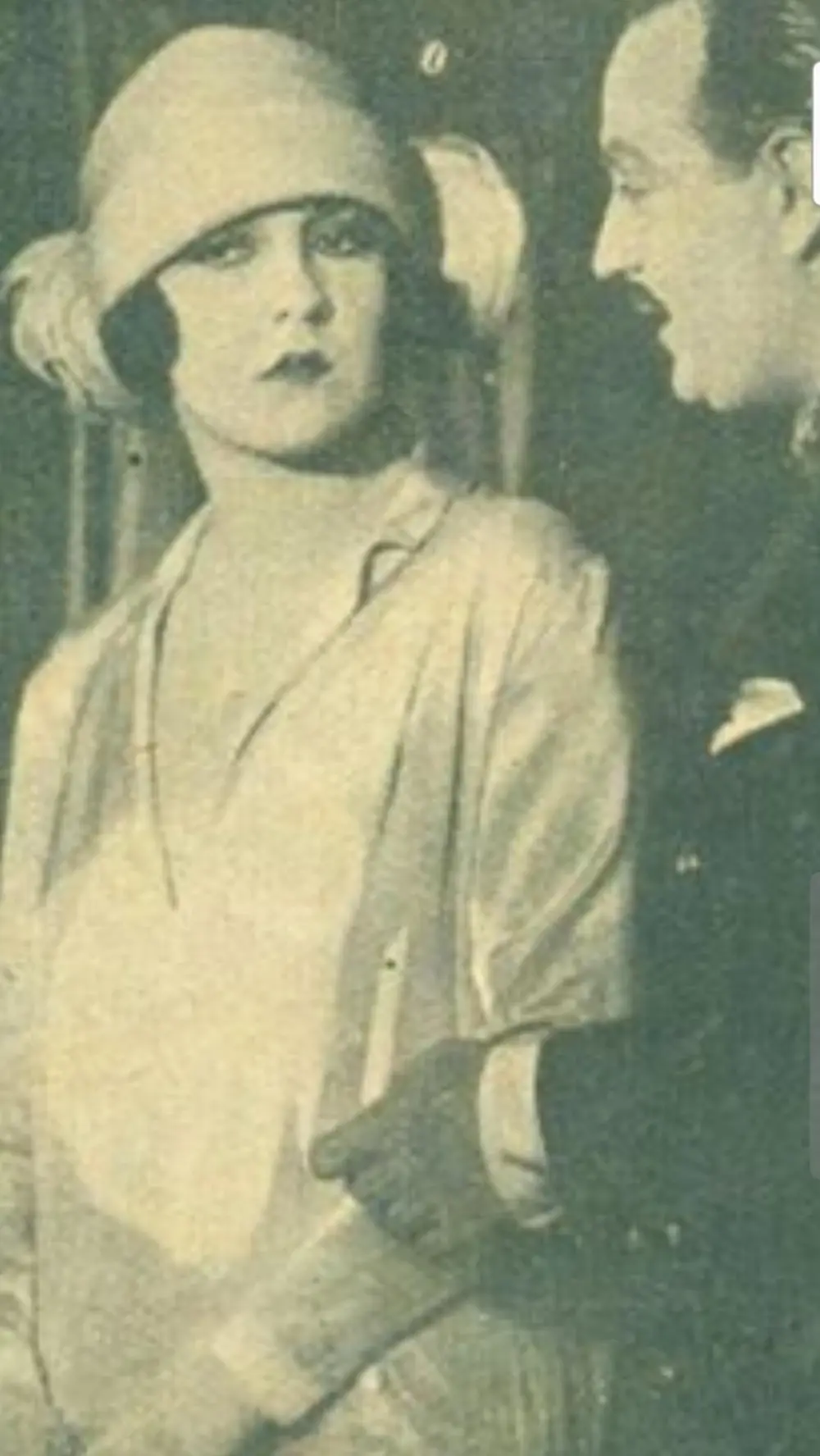
The narrative, while occasionally meandering, is at its best when it focuses on these psychological chess matches. The scene where Helen confronts Hartley, her innocence clashing with his thinly veiled lust, is a masterclass in silent storytelling, conveying tension through subtle gestures and shifting gazes rather than overt dialogue.
The inclusion of Sir William Charteris, a seemingly minor character, as Helen's protector, and even his dog, adds an almost fairy-tale element to the proceedings. It suggests that while human intentions can be dark, there are also forces of benevolent intervention at play, however serendipitous.
The success of any silent film hinges entirely on the expressive capabilities of its cast, and Der Mann seiner Frau largely delivers, albeit with varying degrees of impact. Lucy Doraine, as Helen, carries the emotional weight of the film with a commendable blend of vulnerability and quiet strength. Her performance relies heavily on nuanced facial expressions and graceful gestures, particularly in scenes where she must convey her internal struggle without spoken words.
Consider the moment Helen first realizes Hartley’s true intentions in his opulent office. Doraine doesn’t resort to histrionics; instead, a subtle tightening of her jaw, a slight widening of her eyes, and a barely perceptible recoil of her posture communicate her dawning horror and resolve. It’s a performance built on restraint, making her eventual moments of despair or joy feel earned.
Rudolf Klein-Rogge, a familiar face from Fritz Lang's oeuvre (e.g., Dr. Mabuse in The Branded Woman, though a different film, his villainous turn here is equally compelling), embodies James Hartley with a chilling, understated menace. His gaze is often predatory, his smiles thin and insincere. Klein-Rogge excels at conveying villainy through sheer presence, his every movement radiating a sense of entitlement and insidious intent. His scenes with Doraine are electric, a clash of innocence and experience that drives much of the film's tension.
Sophie Pagay, as Yvonne, is arguably the film's most fascinating, albeit reprehensible, character. Pagay’s portrayal injects Yvonne with a cold, calculating intelligence that is both unsettling and captivating. She doesn't chew scenery; she observes, she plots, and she executes her schemes with a detached elegance. Her performance is a masterclass in passive aggression, using subtle smirks and deliberate movements to convey her manipulative nature, rather than overt displays of malice.
Nils Asther, as the aviator Charles Barclay, has a less complex role, primarily serving as the object of Helen's affection and the catalyst for the film's climactic drama. His performance, while earnest, occasionally lacks the depth seen in Doraine or Klein-Rogge. However, his angry departure for the trial flight, fueled by suspicion and pride, is effectively communicated through a rigid posture and sharp, decisive movements, conveying his wounded honor.
Alfred Halm’s direction, while at times uneven, showcases moments of genuine cinematic flair. He understands the power of the close-up in silent film, frequently utilizing it to amplify emotional states and draw the audience into the characters' inner worlds. The framing of Helen, often placed in grand, imposing sets when in Hartley’s presence, physically emphasizes her vulnerability and isolation against the backdrop of his power.
The cinematography, though uncredited, plays a crucial role in establishing the film's atmosphere. Lighting is often used to great effect, particularly in scenes involving Hartley or Yvonne, where shadows might subtly creep across their faces, hinting at their darker intentions. Conversely, Helen is frequently bathed in softer, more diffused light, reinforcing her purity and innocence.
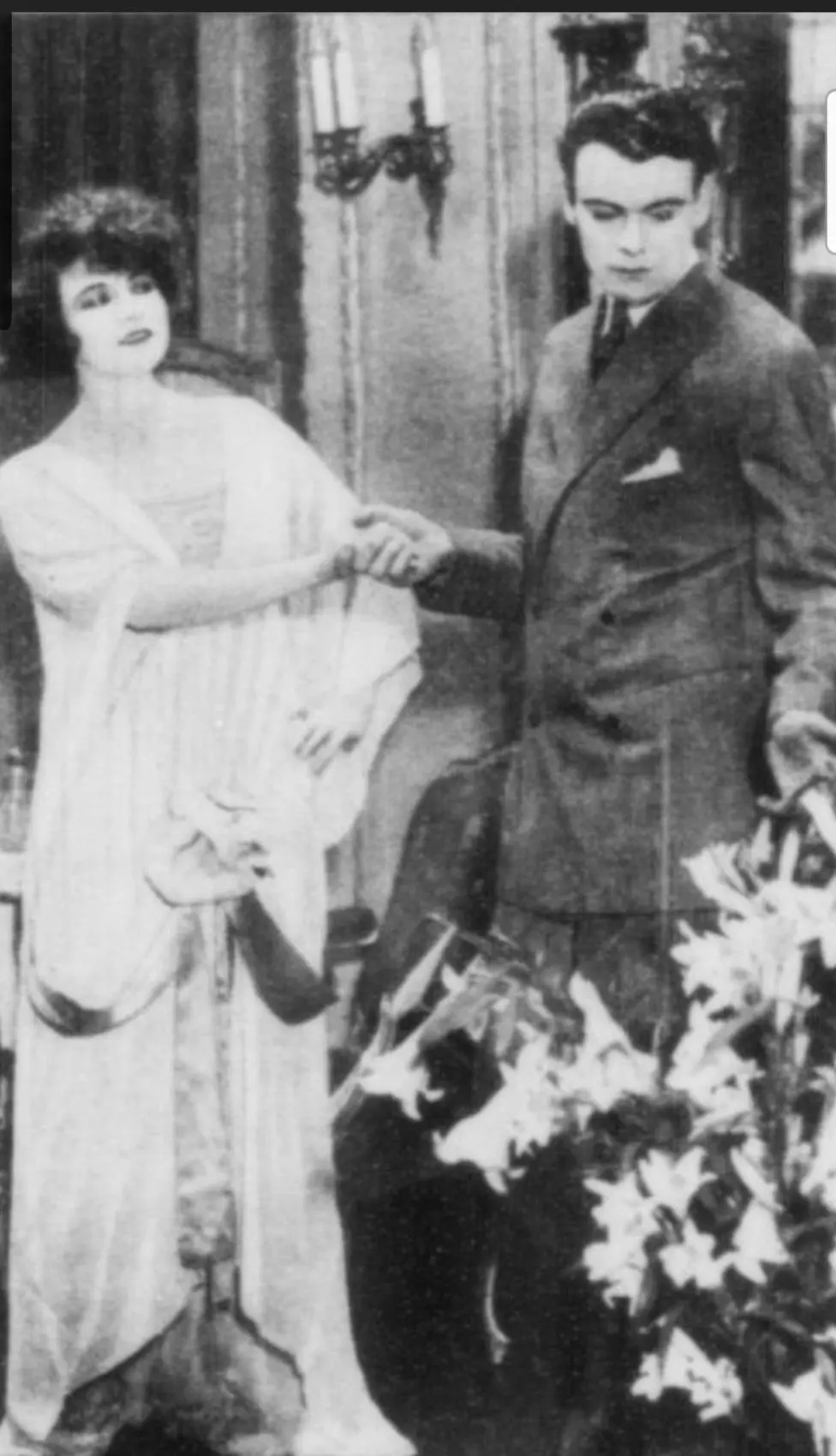
One particularly effective sequence involves the clandestine meetings between Yvonne and Vogel. The use of low-key lighting and confined spaces enhances the sense of secrecy and illicit passion, creating a visual shorthand for their affair without needing explicit intertitles. This visual storytelling is a hallmark of strong silent cinema.
The film’s production design, while not extravagant, is competent, creating believable environments that range from the cozy domesticity of Helen and Charles's home to the opulent, yet morally corrupt, world of the Hartleys. The aircraft itself, Charles's invention, is given a sense of tangible realism, grounding the more melodramatic elements of the plot in a world that feels somewhat authentic.
The pacing of Der Mann seiner Frau is undeniably a product of its time, and herein lies both its charm and its most significant challenge for modern audiences. The film takes its time. It lingers on moments, allowing emotions to slowly unfurl and situations to develop organically. This deliberate pace can be deeply rewarding for those willing to surrender to it, offering a more contemplative viewing experience than contemporary cinema.
However, for viewers accustomed to the rapid-fire editing and constant narrative propulsion of today's films, this leisurely tempo can feel ponderous. There are stretches where the narrative momentum flags, and certain scenes, while visually engaging, contribute little to advancing the plot. This is particularly true in the early exposition, which meticulously establishes character dynamics but often at the cost of immediate engagement.
The tone oscillates between earnest melodrama and a more cynical, almost proto-noir sensibility, especially in its depiction of Yvonne's machinations. The moralistic undertones are clear, but the film doesn't shy away from exploring the ugliness of human nature, making it more complex than a simple tale of good versus evil. The final act, with its dramatic flight and reconciliation, shifts back firmly into classic melodramatic territory, perhaps a little too abruptly for some.
The film’s emotional landscape is rich, spanning from the tender affection between Helen and Charles to the cold, calculating ambition of Yvonne and the predatory lust of Hartley. This tonal variety keeps the film from becoming monotonous, despite its often slow progression.
Yes, Der Mann seiner Frau is worth watching for specific audiences. It offers a fascinating window into early German silent cinema. The film provides valuable insights into narrative construction of the era. Its character work, especially Yvonne's, is surprisingly progressive. It's a challenging but rewarding experience for film historians.
Der Mann seiner Frau is a fascinating, if imperfect, artifact from the silent era. It’s a film that demands a specific kind of engagement, rewarding patient viewers with a surprisingly nuanced exploration of human nature, ambition, and betrayal. While its deliberate pace and occasional narrative shortcuts might deter some, its strong performances, particularly from Lucy Doraine and Rudolf Klein-Rogge, and the subversive character of Yvonne, cement its place as a noteworthy piece of early German cinema.
It works. But it’s flawed. This isn't a universally accessible classic, but for those with a deep appreciation for the artistry and historical context of silent film, it offers a rich and thought-provoking experience. It’s a reminder that even in the nascent years of cinema, filmmakers were grappling with complex moral questions, often with more subtlety than credited.
IMDb —
1935
Community
Log in to comment.