DbcultAccessing Vault...
Cult Review
Senior Film Conservator
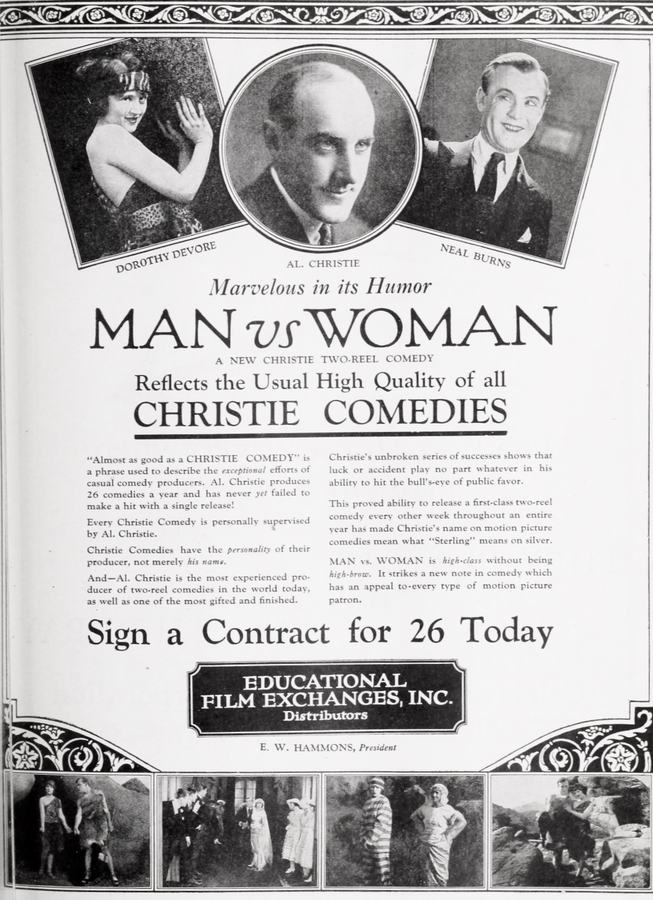
Man vs. Woman
is not merely a relic of 1930s Americana; it is a grotesque carnival of gendered pantomime, where the boundaries between courtship and combat dissolve into a haze of slapstick absurdity. At its core, the film is a study in performative masculinity, with Jimmie’s journey from neglected suitor to self-fashioned alpha-male serving as a warped allegory for the era’s patriarchal anxieties. The narrative’s abrupt pivot—from wedding chaos to prison labor—functions as a masterstroke of tonal dissonance, evoking the same existential unease as the dissonant score of Den sorte drøm, yet filtered through a distinctly American lens of moral ambivalence.The film’s opening act is a masterclass in visual irony. Jimmie’s pursuit of his distracted love interest is rendered in a series of staccato close-ups, his facial expressions oscillating between wounded pride and feral determination. When he opts to 'treat'em rough,' the sequence that follows is a surreal ballet of furniture-pummeling and over-enunciated grunts, a pantomime so overwrought it borders on a parody of The Primitive Woman’s ethnographic pretensions. Here, the camera lingers on the texture of his sweaty brow, the exaggerated swell of his chest, as if documenting a ritual rather than a romantic misadventure.
The wedding sequence is where the film’s thematic contradictions reach a boiling point. Amidst the floral chaos of the ceremony, Jimmie is snatched away by shadowy figures and forced into a convict’s uniform—a sartorial transformation that is as much symbolic as it is literal. This abrupt shift from matrimony to incarceration echoes the existential traps explored in Tess of the D’Urbervilles, though with none of Thomas Hardy’s literary gravitas. The prisoners, a ragtag ensemble of grotesques, are rendered in chiaroscuro lighting that evokes German Expressionism, their faces half-shadowed, half-illumined, as if caught between the moral binaries of the narrative.
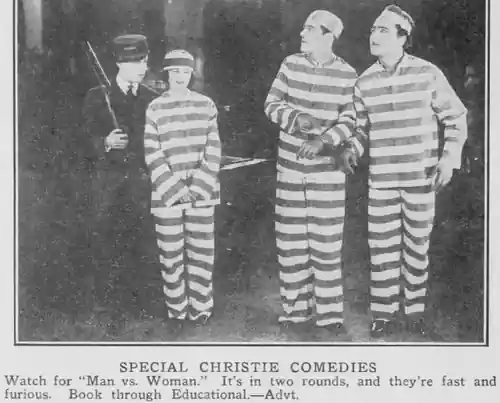
Dorothy Devore’s performance as the elusive bride is a study in calculated indifference, her eyes perpetually glazed with a boredom that borders on cruelty. It is a role that demands a delicate balance of allure and detachment, and Devore delivers with a precision that recalls the icy poise of When a Woman Sins’s heroine. Yet, the film’s most arresting performance comes from Gino Corrado, whose turn as the enigmatic prison overseer is laced with a sardonic charm that suggests a man intimately familiar with the ironies of power.
The film’s technical execution is equally noteworthy. The cinematography, with its frequent use of Dutch angles and canted frames, creates a sense of disorientation that mirrors the characters’ psychological states. One particularly haunting scene—where Jimmie, now in prison garb, gazes through a porthole-like prison window—calls to mind the claustrophobic aesthetics of Deep Waters, though here the metaphor is more overt: the prison is not merely a physical space but a state of mind, a condition imposed by societal expectations.
Walter Graham’s script is a patchwork of conflicting impulses. At times, it leans into the slapstick tradition of The Grouch, with its broad physical comedy and over-the-top characterizations. Yet, beneath the surface, there is a subtext of existential dread, a suggestion that the film’s characters are trapped in a narrative they did not choose. This duality is perhaps most evident in the prison subplot, where the laborers toil under a sun that seems perpetually on the verge of setting, their faces etched with the same weary resignation that defined the industrial workers of Das Grand Hotel Babylon.
The score, a curious blend of waltz melodies and discordant strings, further amplifies the film’s tonal whiplash. During the prison scenes, the music swells into a mock-epic grandeur, as if attempting to elevate the absurdity into something resembling tragic opera. This juxtaposition of form and content is reminiscent of Leaves From Satan’s Book, where the gravitas of narrative structure is used to cloak moral ambiguity.
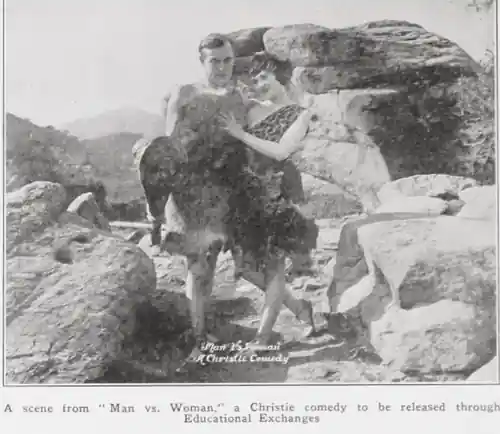
One cannot ignore the film’s dated sensibilities—its treatment of women as both objects of desire and sources of humiliation is as cringe-inducing as it is historically illustrative. Yet, there is a perverse brilliance in how the film lays bare the performative nature of gender roles. The scene where Jimmie, in his convalescent stage of the plot, rehearses courtship techniques in front of a mirror is a standout moment, a silent comedy interlude that feels plucked from a Marx Brothers film. Here, the camera lingers on his exaggerated gestures, his face a canvas of self-conscious machismo, as if he is acting out a script written by someone else’s delusions.
The film’s final act, where the wedding is presumably resolved and the prison subplot is hastily sewn into the fabric of the narrative, is a masterclass in narrative evasion. Just as the viewer begins to ponder the deeper implications of Jimmie’s transformation, the film veers into a resolution that is as unsatisfying as it is predictable. It is a denouement that feels like an afterthought, a narrative cop-out that suggests the filmmakers were more invested in the spectacle than the substance. This hollowness is perhaps best encapsulated in the final shot—a lingering close-up of the bride’s indifferent eyes, reflecting nothing but the void behind them.
In the pantheon of pre-code cinema, Man vs. Woman occupies a peculiar niche. It is neither a masterpiece nor a complete failure, but rather a curious artifact of a time when Hollywood was still grappling with the complexities of gender, power, and identity. Its value lies not in its narrative coherence, but in its unflinching exposure of the absurdities it seeks to entertain. For film scholars, it is a rich tapestry of contradictions; for casual viewers, a cautionary tale of what happens when slapstick meets social critique.
In conclusion, Man vs. Woman is a film that defies easy categorization. It is a slapstick farce with a tragic core, a patriarchal manifesto cloaked in irony, a narrative that is as much about the act of watching as it is about the story being told. Its legacy is one of paradox, a film that is both a product of its time and a prescient critique of the very structures that birthed it. For those willing to look beyond the surface-level absurdities, it offers a glimpse into the fragile, often grotesque, architecture of human relationships.
IMDb —
1926
Community
Log in to comment.