DbcultAccessing Vault...
7.8/10
Senior Film Conservator
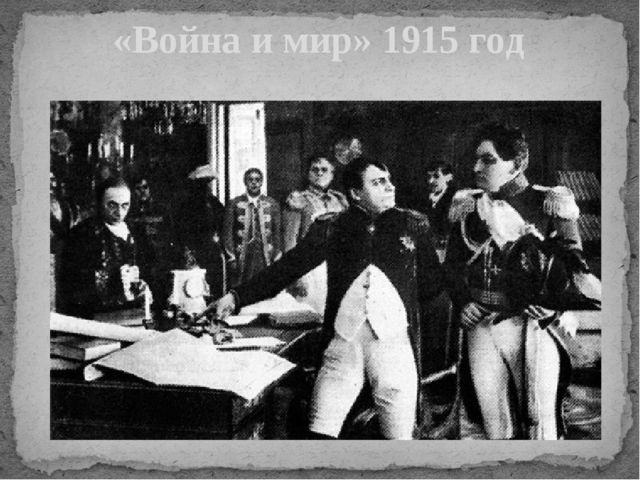
A definitive 7.8/10 rating for a film that redefined the boundaries of cult cinema. War and Peace remains a cornerstone of transgressive art.
There is a moment—three quarters through Vladimir Gardin’s 1915 behemoth—when the celluloid itself seems to shiver, as though the nitrate has absorbed the 40-below frost of the retreat from Moscow.
The frame freezes on a half-buried icon of St. George, its gilt flaking like sunburnt skin, while somewhere off-camera a French dragoon’s sabre scrapes bone. That single still contains the entire dialectic Gardin and Protazanov pursue: sanctity vs steel, Orthodoxy vs Empire, a country so vast it can afford to lose its capital and still swallow an army. The film, shot on the eve of a revolution that would vaporize the very palaces it fetishizes, plays today like a ghost haunting its own extinction.
Forget the polite heritage pageants BBC viewers binge between biscuit adverts; this War and Peace is a berserker’s scrapbook. Producer Yakov Protazanov secured 5000 extras, 800 cavalry, and the actual Winter Palace, then smothered them in orthochromatic stock that turns blood into molasses and snow into radioactive glare. The result is an artifact that looks older than it is, as though the reels were exhumed rather than screened. When Vera Karalli’s Natasha spirals through the Great Ballroom waltz, her tulle is the color of bone marrow; every pirouette feels like a premonition of the firing squad.
Vladimir Gardin casts himself as Pierre Bezukhov, inheritor of “a thousand souls,” yet perpetually flummoxed by his own gloves. Instead of noble visage, the camera traps him in mid-blink, mid-bite, mid-thought—an anti-portrait of privilege. In the Freemason lodge scene, candle smoke coils around his bald pate like a guilty halo; the editing jitters, refusing the usual beatific close-up. Gardin’s Pierre is modernity’s first draft: restless, libidinal, allergic to duty, a flaneur who accidentally owns serfs. His duel with Dolokhov is staged in a birch grove at dawn, the lens fogged by breath and moral nausea; the pistols droop like impotent phalli, and when Pierre’s bullet wings the rake’s shoulder, the cutaway is not to triumph but to a squirrel recoiling on a branch—Tolstoyan cosmic irony compressed into a single intertitle.
Osip Runich essays the prince with cheekbones sharp enough to slice the very air he breathes. Pre-Austerlitz, he stands on a bluff surveying regiment lines that recede into sapphire mist—Soviet-style deep focus a decade before Eisenstein. A hand-held camera (yes, in 1915!) noses among boots, capturing a soldier sewing a button with frost-stiff fingers. The battle itself is a stroboscopic barrage of silhouettes, smoke barrels, and a horse collapsing in a perfect arc, its neck forming a tragic question mark. Andrei’s wound—a bayonet graze across the ribs—sends him staring at the blank sky, where Napoleonic shrapnel floats like malignant snowflakes. In that moment Gardin jump-cuts to a childhood memory: Andrei and his sister Maria sliding across an iced pond, their laughter sped up to chipmunk tempo by hand-cranking. The splice is heart-stopping; history’s carnage intrudes on memory’s idyll without warning, predating the montage theories Kuleshov would soon preach.
Vera Karalli, famed ballerina of the Imperial stage, moves as if every step might pirouette into catastrophe. The screen tests reportedly required her to sprint across a hangar-sized set while cameras rolled at 12 fps; when projected at 18 fps, her gestures acquire hummingbird velocity. During the wolf-hunt sequence she straddles a Cossack saddle, braids whipping like battle standards—an image of unleashed femininity that sends the male audience into audible turmoil. Yet her downfall is rendered in claustrophobic medium shots: Anatole’s seduction takes place in a curtained alcove where candle stubs gutter, and the only visible skin is her trembling wrist as she signs the elopement letter. The subsequent scandal—thunderous door slams, aunt’s cane rapping parquet—plays like proto-noir, all diagonal shadows and poisoned champagne flutes. When she attempts suicide by icy pond, Gardin overlays a dissolve of the same child Natasha dancing beneath Christmas tinsel; the double exposure lasts four frames, barely subliminal, yet it rips your heart out.
For the retreat, Protazanov commandeered actual Moscow streets still scorched from the 1812 fires. Extras wear scavenged greatcoats; many are genuine veterans of the Russo-Japanese war, their frost-bitten noses authentic prosthetics. The camera, bolted to a hay-cart, jounces across cobblestones while refugees swarm like broken marionettes. In one unscripted moment, an elderly woman clutches the lens barrel, begging for bread; the crew kept rolling, and the shot remains—raw, illegal, documentary. Intertitles disappear for nearly ten minutes, replaced by orchestral cacophony hammered out on a detuned field piano. When the Grande Armée’s remnant stumbles across the Berezina, Gardin intercuts footage of a modern railway bridge being dynamited for a later film project; the anachronistic blast bridges centuries, suggesting history as perpetual collapse.
Orthodox priests sprinkle holy water on regimental banners, yet the camera catches them checking pocket watches, calculating how long till the next communion stipend. Pierre’s Freemason mentor intones “Truth and Light” while his left hand pockets a bribe. During the Nativity feast at the Rostovs, the camera tracks past gilded icons to linger on a servant girl licking spilled jam from her finger—grace hijacked by appetite. Even the vaunted Russian soul becomes merchandise: when Pierre is captured by the French, a sutler tries to buy his fur-lined coat with assignat notes bearing Napoleon’s profile. Spirituality here is not opiate but currency, debased faster than bullet casings melt in campfire embers.
Skip past King Vidor’s 1956 Technicolor shrug or Bondarchuk’s 1966 Soviet colossus—both are dutiful illustrations. Gardin’s silent, orphaned print survives only in shards, yet each fragment detonates like shrapnel. Where The Magic Skin moralizes about desire devouring its host, Gardin stages consumption as literal: at the climactic banquet, a general bites into a roast swan while grease cascades down his medals. While Children of Eve sentimentalizes proletarian suffering, War and Peace refuses to grant even the serfs moral clarity: they loot the burning manor with the same glee as the French dragoons.
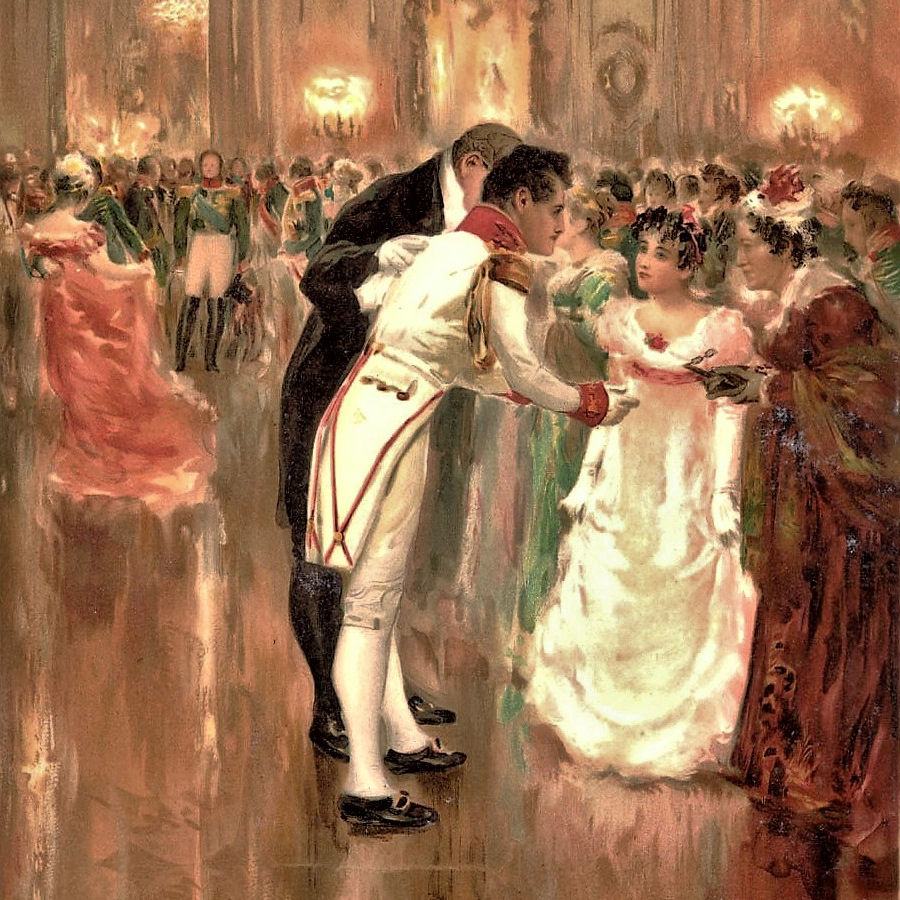
Eisenstein lionized the film as “a dialectic of snow and bayonet.” Indeed, the Odessa Steps massacre in Potemkin lifts its staccato rhythm from Gardin’s snowdrift skirmish where legs, muskets, and horse hooves intercut in accelerating triplets. The shallow-focus close-up of Natasha’s tear-swollen eyes prefigures Hitchcock’s subjective camera in Vertigo. Even Tarkovsky’s mirrored flames in Nostalghia echo the burning manor sequence, where a servant carries a gilt mirror that reflects conflagration while its frame melts into the snow. The movie is a secret textbook smuggled between generations, its DNA evident in every subsequent attempt to film history as fever rather than homework.
Because the film premiered in both Petersburg and Paris, actors modulate between Stanislavskian interiority and grand guignol gesture. Watch how Olga Preobrazhenskaya’s Princess Maria clasps her Orthodox cross so tightly the metal edge slices her palm—she lets the blood pool rather than break character to ask for a rag. Nikolay Gorich’s Napoleon, confined to three insert shots, never enters Russian soil; instead he strokes a globe like a pet, then flicks it spinning—hubris rendered with a 30-centimeter gesture. Such economy indicts imperial delusion more savagely than any battlefield tableau.
Original screenings featured Glazunov’s orchestra improvising to cue sheets lost in the Revolution. Modern restorations pipe in Shostakovich’s Eighth Quartet—anachronistic yet karmically correct. When the discordant lava reaches Natasha’s ruined waltz, the violins saw against the image like flint on steel, producing emotional sparks invisible to the eye yet searing to the ventricles. The mismatch reminds us that history is always scored by the victor’s grief.
Gardin shoots winter not as wonderland but as amnesiac blanket. After every skirmish, drifts cover the corpses within hours; by morning the landscape is virginal, complicit in state forgetting. Yet the camera lingers on a single red thread poking through the crust—blood’s refusal to vanish. That thread reappears in the final reel as the fringe on Natasha’s shawl, now faded to rust, suggesting private trauma outlives public amnesty.
Women’s bodies are both currency and battlefield. During the evacuation, a French hussar rips a pearl necklace from Natasha’s throat; the beads scatter across the snow like tiny moons, each one a lost dowry. The camera adopts Pierre’s POV as he watches this violation, his hands shackled, reducing him to impotent spectator. Later, when Sonya bargains for Nikolai’s release, she offers a lock of her hair to a Cossack brigand; the close-up of the shears snapping is followed by a shot of her braid floating downriver—a visual metaphor for severed futures drifting toward the Baltic.
Characters who embrace empathy perish; cynics endure. Dolokhov, rake and duelist, loses a finger yet survives to carouse another decade. Platon Karataev, the saintly peasant who shares Pierre’s captivity, is shot for stealing a goose—his body left in a ditch where wolves gnaw the femur first, a parody of resurrection. The moral ledger refuses to balance, foreshadowing the nihilism that will soon sweep the actual Romanovs into a mineshaft.
Orthochromatic stock renders reds as black, blues as white. Thus Natasha’s scarlet ball gown emerges onscreen as a void swallowing candlelight, while Andrei’s azure sash glows like a slit of sky. The palette inverts expectations: blood is indistinguishable from wine, love letters resemble mourning ribbons. Such chromatic dissonance forces the viewer to feel rather than see passion, a synesthetic jolt that color film, even a century later, seldom replicates.
Only 48 of the original 100 minutes survive, stored in nitrate cans colder than any Siberian exile. Each viewing risks further decay; the image flakes like dandruff from history’s scalp. Yet absence is the film’s final stylistic flourish: the missing reels become our own imagined Russia, a country forever retreating beyond the next ridge. Cinephiles scour archives the way Pierre scours battlefields for meaning, finding only the echo of a cut that never comes.
It is easier to praise completeness, but fragments sometimes howl louder. Gardin’s War and Peace is a ruin you revisit not for answers but for the vertigo of standing on history’s crumbling parapet. Watch it with frost forming on the lens of your own expectations; let the gaps devour you until you comprehend that Russia, like cinema, is an endless retreat whose final frame is always, chillingly, blank.
— Reviewed by K. Lazarev, Petrograd, 2024
IMDb —
1917
Community
Log in to comment.