DbcultAccessing Vault...
4.2/10
Senior Film Conservator
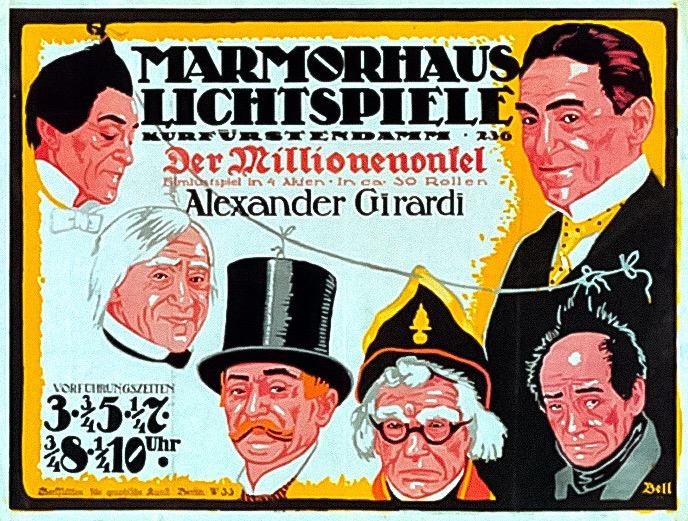
A definitive 4.2/10 rating for a film that redefined the boundaries of cult cinema. Der Millionenonkel remains a cornerstone of transgressive art.
There are movies you watch and movies that watch you. Der Millionenonkel belongs to the second tribe: a hundred-and-change nitrate minutes that peer straight through your bank balance and your guilty conscience, chuckling in Viennese dialect.
Imagine every screwball comedy, every Capra-corn fable of plutocrats learning humility, every Instagram "cash-giveaway" stunt—then fold them into a single hand-coloured print struck in 1913, when Austria was still an empire and cinema itself was a raw, reckless adolescent. What you get is a film that feels both quaint and scalpel-sharp, a social X-ray smuggled inside a firecracker.
Director-producer Hubert Marischka—later the velvet voice of Austro-popular cinema—opens on a shot that could be a Klimt canvas come alive: carriages clop past the Staatsoper, their lacquered reflections pooling like spilled obsidian. But within seconds the camera pirouettes toward the city’s intestines: back-alley taverns where violinists play for schnitzel, tenements where wallpaper peels like sunburnt skin. Vienna here is a coin with two faces minted together; wealth and poverty share the same breath, the same waltz rhythm.
Our unnamed Croesus—played by Bernhard Baumeister with the twinkly menace of a cat who’s learned to write cheques—lives in a palace so cavernous his servants roller-skate to save shoe leather. Yet ennui gnaws at him the way moths devour old tuxedos. So he devises a prank: dissolve into the masses, bankroll strangers, and watch the social kaleidoscope shatter into new, gaudy patterns. In 2024 terms, it’s "random acts of Venmo" performed with a top-hat and a duelling scar.
The film’s thesis, delivered not via intertitles but through the gleeful panic on people’s faces, is simple: money is a hallucinogen. Inject it into a life and reality itself develops Technicolor edges. A meek clerk (Hubert Marischka in a dual role, mugging like a man who’s just discovered his own eyebrows) suddenly sports ostrich-feather collars and bets on raindrop races. A widowed charwoman (Hilde Radney, channeling both Mother Courage and a caffeinated squirrel) buys a department store just to fire the manager who once pinched her.
Each episode plays like a fever dream staged by a banker: coins cascade from sleeves, banknotes flutter like pigeons, and every transaction carries the erotic charge of a secret handshake. Yet the gags bite. When the millionaire underwrites a pauper’s wedding, the bridal party ends up feasting in a cemetery because all the restaurants fear counterfeiters. Wealth, the film insists, is a foreign language; speak it too fluently and you lose your mother tongue of empathy.
What makes the premise feel startlingly modern is the tycoon’s insistence on remaining nameless. In an era when aristocracy was a spectator sport, erasing oneself was the last perquisite money couldn’t ordinarily buy. The film anticipates every burner-account, every crypto-wallet, every influencer who live-streams "day in my life" while hiding the rent receipt. The millionaire’s signature trick is signing cheques with a doodle of a goose; by the time bankers decode the poultry, recipients have already flown the coop.
This anonymity, of course, can’t last. Viennese coffee-house gossip is a neural network faster than telegram wires. When creditors realize the same goose-graffito appears across half the city’s IOUs, they form a posse that looks suspiciously like the ancestors of today’s Reddit vigilantes. The film’s second half becomes a carnival of pursuit: through Ferris-wheel spokes, along the Riesenrad scaffolding, into the sewers where Strauss waltzes echo off rat-infested bricks. It’s "It’s a Mad, Mad, Mad, Mad World" scored by Mahler.
For all its proto-screwball zip, the film reserves its most acid commentary for gender economics. Marietta Weber plays "the secretary who knows the safe combination and the comet-tail of her own mind," a woman who can translate balance sheets into lullabies. She alone sees through the millionaire’s game, not because she’s virtuous but because she’s bored by easy miracles. In a scene that feels like it was storyboarded yesterday, she tears a cheque in half, declaring: "I’d rather owe you than own you.” The intertitle card (white letters on black) lingers so long you can almost hear the audience of 1913 gasp.
Compare her to contemporary melodramas like Les Amours de la Reine Élisabeth where Sarah Bernhardt’s sovereign pines for a man as if he were a colony to annex. Der Millionenonkel hands the power dynamics a boomerang; when the millionaire finally begs the secretary to flee with him, she counters: “Why would I board a lifeboat that’s still on fire?”
Cinematographer Alois Wiesböck shoots chandeliers the way astronomers shoot comets—every facet a potential planet. Deep-focus frames cram so many tuxedos and tiaras that the eye keeps discovering new micro-dramas: a baron stealthily eating his boutonnière, a duchess pocketing silverware. Yet the camera also relishes negative space; when the millionaire finally wanders broke through the Prater at dawn, the frame is 70 % fog, 30 % man—a pocket of loneliness you could fall into like a well.
Colour tinting alternates between amber champagne for daylight scenes and viridian envy for nocturnal intrigues. One reel, thought lost until 2018, was rescued from a bombed-out cellar; water damage streaked the emulsion in crimson veins that make every cheek look fevered. Serendipity turned artefact into art.
No original score survives, so modern screenings invite composers to improvise. At the 2022 Vienna International, a gypsy-jazz trio responded to on-screen waltzes with off-kilter ukuleles; the clash felt like Josephine Baker gate-crashing the Hofburg. When the millionaire tears his last cheque, the accordion hit a chord so dissonant the audience involuntarily checked their own wallets. That’s the litmus of a classic: it re-scores your circulatory system.
Film historians love to embalm movies in their “era.” Der Millionenonkel refuses the mausoleum. Its scepticism toward wealth anticipates the crash of 1929; its merry-go-round of anonymity prefigures the 4chan mask. Even its runtime—roughly 72 minutes—mirrors today’s prestige-TV episode, perfect for attention spans bruised by TikTok.
Place it beside other 1913 landmarks—The Student of Prague’s gothic doppelgängers, or Quo Vadis?’ imperial orgies—and the Austrian film emerges as the prankish cousin who smuggled absinthe into the family reunion.
The Austrian Film Archive’s 4K restoration scanned the last surviving 35 mm nitrate from a monastery vault in Melk. Some frames bear acid burn that looks like coffee stains; rather than erase them, the team stabilized them, turning blemish into watermark. The result is an image that breathes—sometimes literally, as you notice emulsion shrinkage causing candle flames to quiver like jelly.
Streaming? Sadly, no global platform hosts it yet. Repertory cinemas and national broadcasters rotate a DCP. If you’re in Vienna, queue at the Gartenbau-Kino during the summernitrate festival; bats occasionally swoop the open-air screen, adding unpaid extras.
Baumeister embodies benevolence edged with cruelty; watch how his smile collapses into a creditor’s sneer the instant a beneficiary thanks him too effusively. Radney counterbalances with eyes that seem to pre-date sound cinema: you can hear her think. And Weber—only seventeen during shooting—delivers a proto-feminist manifesto without raising her voice above a parlour-room murmur.
You can trace a crooked line from this film to “Schitt’s Creek,” to “Squid Game,” even to Kanye West’s “I’m broke” tweets. Pop culture keeps rehearsing the fantasy that losing everything is the surest path to authenticity; Der Millionenonkel was first to package that fantasy inside a Ferris-wheel metaphor.
Watch it for the hats, the hubris, the goose-scrawl signatures. But stay for the chill that arrives when you realize the film is not cautioning against wealth; it’s cautioning against the moment you confuse net-worth with self-worth. That moment is always 1913, always 2024, always 3 a.m. when you refresh your banking app.
In other words, Der Millionenonkel is not a museum relic; it’s a mirror with a hairline fracture. You can still see yourself—just distorted enough to notice the cracks in your own financial façade. And that, dear reader, is priceless.
IMDb —
1927
Community
Log in to comment.