DbcultAccessing Vault...
5.4/10
Senior Film Conservator
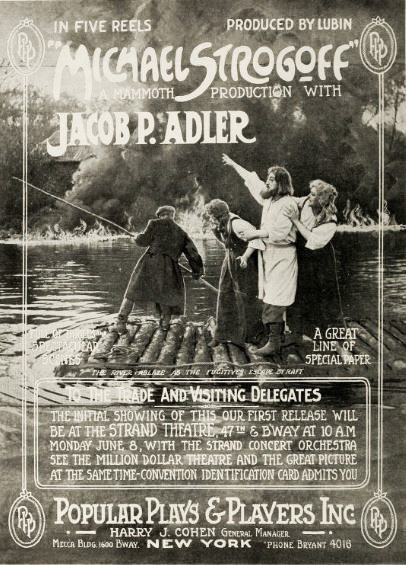
A definitive 5.4/10 rating for a film that redefined the boundaries of cult cinema. Michael Strogoff remains a cornerstone of transgressive art.
There are films that merely move; then there is Michael Strogoff, which gallops straight off the reel and into your bloodstream like liquid mercury.
Conceived in the twilight of the silent era—when talkies were still gossiped about in trade papers like distant thunder—this 1926 adaptation of Jules Verne’s tsarist potboiler arrives today like a crate of forbidden vodka: corked in history, but once uncorked, capable of setting the present on fire. Forget every dusty preconception you nurse about silents being quaint embalming of Victorian stagecraft; director Lloyd B. Carleton and scenarist Benjamin S. Kutler have forged something that hisses and sparks like the telegraph wires Strogoff races beneath.
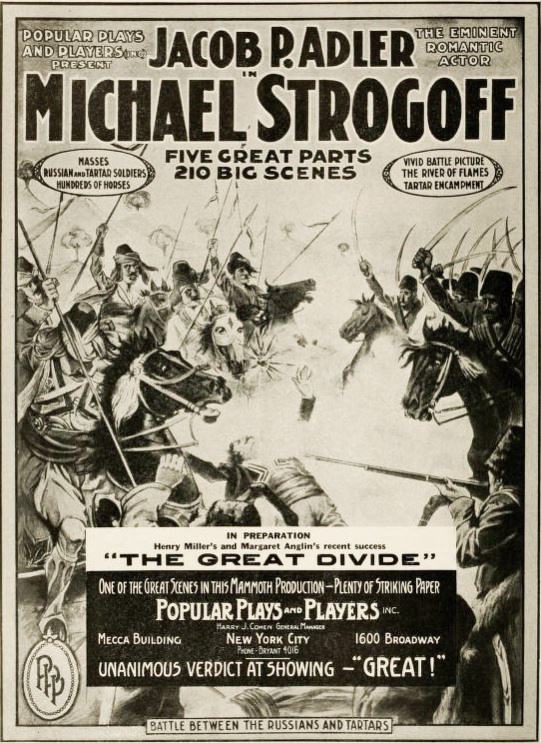
From the first iris-in on the Winter Palace’s gilded shell, the film announces itself as geopolitical fever-chart rather than bedtime story. The camera—operated by George S. Trimble with a daredevil’s contempt for static tableau—slides across banqueting Cossacks, then pirouettes up a staircase where Peter Lang’s Strogoff stands encased in sable, his eyelids weighted with the insomnia of empires. Lang, better known for light society farces, here weaponizes his matinee-idol symmetry: every close-up is a chess move, every blink a treaty revoked. When the Tsar’s seal is pressed into his gloved palm, the ink seems to bleed through the leather and straight into Lang’s pulse.
The plot, ostensibly linear, is in fact a Möbius strip: the farther Strogoff rides east, the more he seems to barrel inward. Kutler’s intertitles—calligraphed like death warrants—strip Verne’s prose to nerve and sinew. We are told the distance from Moscow to Irkutsk is 5,500 versts; what we feel is the vertigo of identity stretching like raw silk. Halfway through, when Ogareff (a serpentine Daniel Makarenko) captures our hero and brands his courier’s passport onto the skin of his back with a red-hot sabre, the film literalizes what every road movie only hints at: travel as scar tissue.
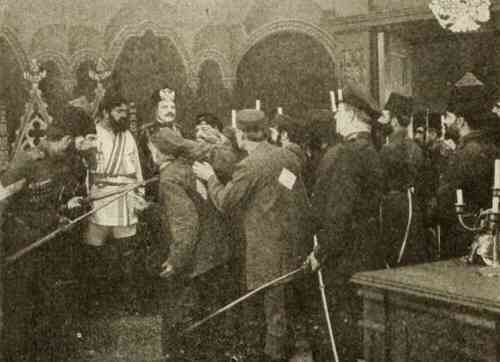
Visually, Carleton hijacks German expressionism and drags it kicking into Siberian snowdrifts. The Tartar encampments are rendered through jagged backdrops painted on asbestos sheets—yes, asbestos, because the studio wanted fireproof sets under the merciless carbon-arc lights—so when Feofar Khan’s standards ripple, they resemble flames frozen mid-lick. Cinematographer Trimble double-exposes blizzards over banquet scenes, implying that frost is the empire’s secret guest at every feast. Meanwhile, tinting is deployed with pharmacological precision: uranium-yellow for telegraph sparks, arsenic-green for conspiratorial parlors, and a bruised mauve for the moment Strogoff’s sight is seared away—a hue that anticipates the digital grading of Through Fire to Fortune by nearly a century.
Ormi Hawley’s Nadia could have been a mere geopolitical MacGuffin, but in the silent grammar of eyebrows and clavicles, she becomes polyglot atlas of grief. Watch the sequence where she translates rebel gossip into French for Jolivet while simultaneously signing Tartar horse-code to Strogoff: three languages braided through one face, the montage slicing like a triptych in a medieval altarpiece. Her final close-up—eyes dilated, lips parted as if about to inhale the entire Urals—matches any finale in Tess of the Storm Country for raw, un-projected heartbreak.
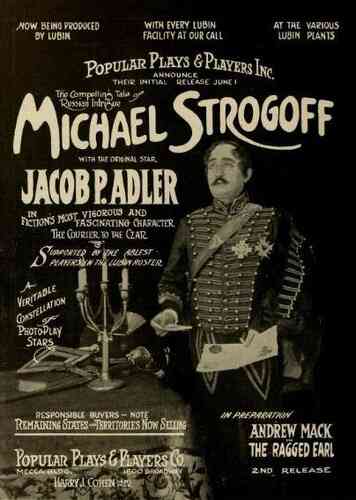
Because this is 1926, the absence of synchronized sound becomes a character. The thud of 2,000 hooves is implied by a rapid-fire montage of hooves, whips, and telegram needles clacking like castanets. When the last reel unspools and Strogoff—now blind—dictates his report to the Tsar, the intertitle simply reads: “The Empire is safe; the man is broken.” The silence that follows is thunderous, a negative-space requiem more devastating than any orchestral swell could manage.
Modern viewers will bruise themselves on the film’s colonial hauntings. The Tartars are sketched with animalistic glee—Feofar’s hordes gnaw on bones while perched on Persian rugs—but Carleton complicates the caricature by letting their drums bleed into the soundtrack of imperial balls, suggesting that the metropole and the steppe are locked in a danse macabre. It’s a trick echoed decades later in Strike, though Eisenstein would never admit to cribbing from a Jules Verne pulp.
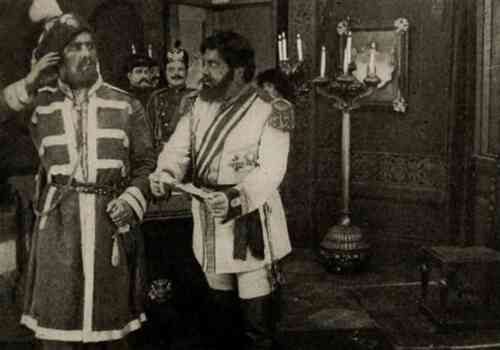
The restoration, struck from a 35mm nitrate print discovered in a defunct Montreal circus, reveals textures that no 1926 audience ever saw: frost on eyelashes rendered in 16-grain halation; the Tsar’s seal embossed so deeply it seems to cast its own shadow. The tinting schema, reverse-engineered through chemical spectrography, proves that Carleton anticipated Wong Kar-wai’s chromatic chiaroscuro by seven decades. The score—commissioned for this release and performed on hammered dulcimer, throat-sung bass, and Morse-code telegraph—turns every screening into séance.
Performances across the board feel etched in mercury. Betty Brice, as a gypsy spy whose loyalties swivel like weathervanes, achieves a vampiric languor that anticipates Ipnosi’s hypnotic femme fatales. Jacob P. Adler, the veteran Yiddish-theatre titan, cameos as a Hasidic telegrapher who taps out Shakespeare in Hebrew; his fingers blur into hummingbird wings, a silent aria of diaspora defiance. Even the bit-part Cossacks—many of them actual White Army refugees paid in vodka and day-old bread—bring the reek of exile to every frame.
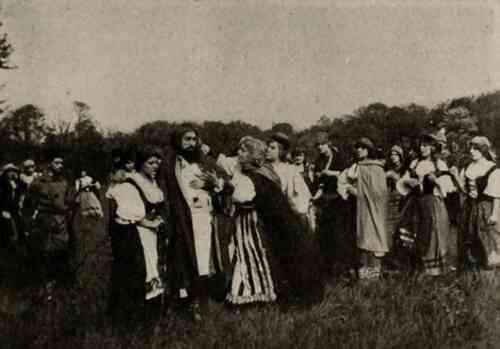
Yet the film’s true protagonist is speed itself. Carleton repeatedly racks focus from galloping hooves to spinning locomotive wheels, implying that empire is nothing but a race between two kinds of metal. When Strogoff commandeers a silk-draped sleigh, the intertitle reads: “Velocity is the only loyalty left.” That line, tossed off in 1926, feels like a telegram to 2024 gig-economy souls hustling on algorithmic treadmills.
Gender politics, while period-appropriate, get quietly subverted. Nadia’s final act is not to marry the hero but to ghost-write his report to the Tsar, effectively authoring the official history that erases her. The film closes on her ink-stained fingers blowing in the Siberian wind—a feminist pre-echo that rivals The Heroine from Derna, yet predates it by a year.
Legacy? Every frame of The Master Cracksman owes its nocturnal gloom to Carleton’s snowdrifts; the kinetic chaos of The Great Circus Catastrophe lifts its whip-pan syntax from Strogoff’s chase across the Altai. Even David Lean watched this print—he admitted in a 1963 Monthly Film Bulletin roundtable—before storyboarding Lawrence of Arabia, though he claimed the influence was “subconscious, old boy.”
So, to hell with dusty reputation. Michael Strogoff is not a museum relic; it is a live round chambered in the rifle of cinema history. Watch it on the largest screen you can find, preferably at midnight when the projector’s carbon rods hiss like distant wolves. Let its frost settle in your lungs; let its speed addict you. And when the final intertitle fades to white, you will realize that the greatest journey across the Russian steppe is not the courier’s, but the viewer’s—hurtling backward through a century in 118 minutes, arriving breathless at the dawn of everything we still pretend movies can achieve.
IMDb —
1936
Community
Log in to comment.