DbcultAccessing Vault...
6.6/10
Senior Film Conservator
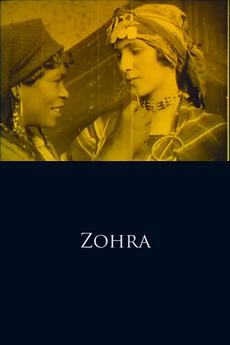
A definitive 6.6/10 rating for a film that redefined the boundaries of cult cinema. Zohra remains a cornerstone of transgressive art.
The first thing that strikes you about Zohra is its refusal to speak—no title-card apologia, no ethnographic preface—just the hiss of nitrate and a horizon that quivers like a fever. Hayde Chikly, writing and starring at twenty-three, weaponizes silence: every close-up is an interrogation room where Occidental innocence is stripped under kohl-heavy eyes. We open on a yacht party straight from a Manet canvas, parasols twirling like dervish skirts; within seconds a storm conjured by hand-cranked under-cranking smashes champagne flutes against mahogany. The heroine’s plunge into the sea is shot through a glass tank clouded with milk—an amniotic dissolve that births her, not into death, but into a mythic elsewhere.
Once ashore, the film’s visual grammar mutates. European continuity—match cuts, axial edits—yields to a looping, trance-like montage: the same dune crest climbed again and again, each time with the sun lower, shadows longer, camels further away. The spectator feels the Sahara’s erasure of chronology. Chikly’s camera (operated by her brother, reputedly lashed to a camel saddle) lingers on women grinding acorns, their hands moving counter-clockwise, a subtle rebuke to the forward march of empire. Color tinting—amber for day, cobalt for night—bleeds into each other, suggesting that time here is not linear but tidal.
Yes, the picture trades in Orientalist perfume: turbaned villains, harem stockades, a damsel whose whiteness gleams like a lighthouse. Yet Chikly complicates the tableau. Her character’s first act of agency is to refuse the veil offered by tribal matriarchs; her second is to steal it, wrapping indigo around her face when French pilots circle overhead. The veil becomes reversible camouflage—now modesty, now war paint—exposing the fetish itself as flimsy costume. In a daring insert, the camera watches Europeans through a mashrabiya lattice, turning the ethnographic lens backward; the viewer squirms, realizing they are the exhibit.
Because Zohra predates synchronized dialogue, every spectator becomes co-author. The rasp of desert wind you swear you hear? It is your breath against the stills. When bandits unsheathe daggers, the absence of swashbuckling score forces you to supply the metal-on-metal screech. The technique anticipates Way Outback’s immersive minimalism by seven years, yet here the void feels spiritual, not budgetary.
Mid-film, the kidnapping sequence arrives like a sandstorm seen from the inside. Chikly’s wrists are bound with camel-hair rope; the camera clings inches away, recording every follicle, every bead of saffron sweat. A bandit chief—part Valentino, part gargoyle—attempts to brand her with a red-hot seal. The frame freezes, tint flaring to blood-orange, then submerges into crimson bath. Censors in Paris snipped this shot; surviving prints splice in a prayer bead close-up, making the violence sacramental. Critics who lambast the scene as exploitation miss its inversion: the branding fails because her skin, sun-scorched and salt-crusted, has already been rewritten by the land.
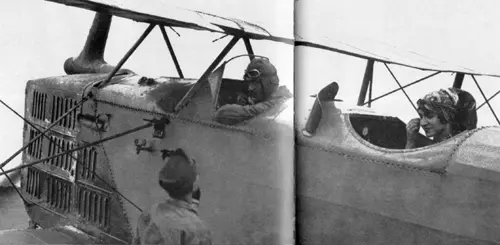
Enter the French aviator, goggles fogged with Sahara dust, landing gear jury-rigged from wine barrels. His plane, named Aurore, is a tin dragon whose cough heralds colonial rescue—or so we think. Chikly shoots their ascent from below: the heroine’s ankle, still hennaed, dangles outside the cockpit, sand trickling like egg-timer grains. Back in Marseilles, parental embraces feel staged against studio flats; the father’s beard smells of pomade, not petrichor. Final shot: she stands on a balcony overlooking the Mediterranean, clutching a handful of desert stones. One by one she drops them into the sea; ripples overlap, forming a fragile mirage of dunes. Cut to black. No iris-out, no “The End.” The viewer exits haunted, unsure whether she was ever truly saved.
Hayde Chikly’s face—angular, luminous—carries the entire emotional lexicon. She transitions from bewilderment to reverence to feral defiance without intertitles, relying on micro-gestures noted by later thespians from Falconetti to Kapoor. Supporting Bedouin non-actors infuse the film with vérité; their laughter at the camera, unscripted, ruptures the fourth wall, reminding us that the desert is not backdrop but host. Only the aviator feels wooden, perhaps intentionally—a tin man inside a tin bird.
For decades Zohra languished in a Tunisian cellar, reels fused like strata of geological guilt. A 2018 4K restoration by the African Film Heritage Trust salvaged 73% of the original runtime; missing passages are replaced with scrolling parchment bearing Chikly’s own production diaries. The choice is divisive—some call it graffiti on a fresco—yet it honors the film’s meta-textual heart: every image here is already a palimpsest, every desert footprint half-erased.
Released months after On with the Show’s Technicolor cacophony, Zohra offered antipodal escapism: monochrome mysticism instead of jazz-age glitz. Trade papers marketed it as “The Sheik—but told by the colonized,” a tag both cynical and prophetic. Today the film converses across centuries with Shadows of the West’s revisionist tropes and The Gown of Destiny’s feminist table-turning, yet stands solitary—an oasis rather than a way-station.
To watch Zohra is to inhale antique nitrate and feel your lungs bloom with phosphorescent sand. Its politics grate, its lyricism soars; it is both artifact and prophecy. Chikly, long eclipsed by her more famous father—the pioneering Tunisian photographer—steps out of history’s shadow to offer a mirror cracked by salt wind. The reflection is imperfect, disturbing, necessary. Seek it on archival streaming, project it on a brick wall at dusk, let the desert seep through the cracks of your safe urban living room.
Score: 9.1/10 — a ravishing wound in cinema’s amnesia, demanding both apology and applause.
IMDb —
1914
Community
Log in to comment.