DbcultAccessing Vault...
Cult Review
Senior Film Conservator
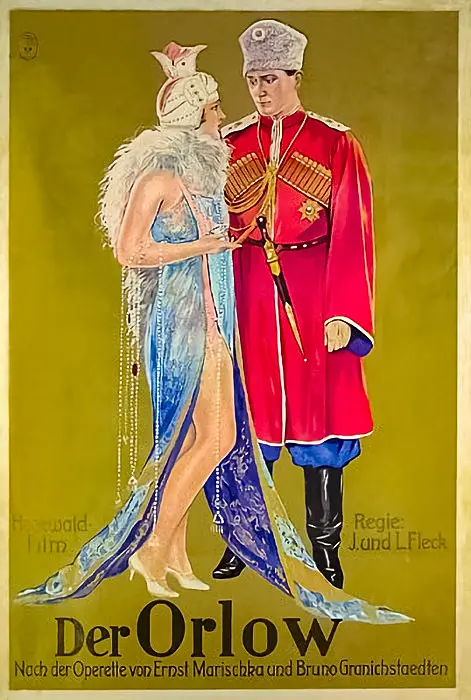
Is 'Der Orlow' worth watching today? Short answer: yes, but with significant caveats that demand a particular kind of viewer. This 1927 silent feature, a fascinating relic from an era long past, offers a window into early German cinema's dramatic prowess, yet it undeniably requires patience and an appreciation for its unique historical context. This film is unequivocally for silent film aficionados, film historians, and those with a profound interest in the expressive capabilities of early cinematic storytelling. It is emphatically *not* for viewers seeking modern pacing, clear dialogue, or conventional narrative structures without an accompanying willingness to engage with its particular language.
Early in its runtime, 'Der Orlow' establishes itself as a compelling artifact, but one whose brilliance is often obscured by the sands of time. Its strengths lie in its visual storytelling and the raw, unadorned performances of its lead actors.
This film works because: It leverages the expressive potential of silent cinema, utilizing dramatic lighting, evocative set pieces, and a cast capable of conveying profound emotion through gesture and gaze alone.
This film fails because: Its narrative, while intriguing, can feel somewhat obtuse to modern sensibilities, and its pacing often meanders, demanding a different kind of audience engagement.
You should watch it if: You are captivated by the historical evolution of film, appreciate the nuanced art of silent acting, and are prepared to immerse yourself in a world where visual poetry supersedes spoken dialogue.
The very premise of 'Der Orlow'—a priceless jewel, a beautiful woman, and a tangle of ambition and deceit—is classic silent film fodder. The writers, Alfred Schirokauer, Bruno Granichstaedten, and Ernst Marischka, craft a narrative that, while perhaps not groundbreaking in its core elements, is executed with a certain period elegance. The theft of the titular Orlow Diamond serves as a robust catalyst, immediately plunging the audience into a world of high stakes and moral ambiguity. This isn't just a simple heist story; it’s a character study draped in the finery of melodrama.
The film’s strength lies in its ability to build an atmosphere of suspense and intrigue without relying on exposition. Instead, it uses visual cues and the palpable tension between characters to drive the plot forward. The visual language speaks volumes, often more eloquently than any intertitle could. This is a testament to the directorial vision, which, despite the constraints of the era, manages to create a coherent and often captivating world.
One might argue that the film’s reliance on archetypes is a weakness, but I contend it’s a deliberate choice, allowing the audience to quickly grasp character motivations through familiar lenses. The femme fatale, the relentless pursuer, the charming rogue—these roles are not merely filled but inhabited, providing a clear dramatic framework for the unfolding events. This approach, while not revolutionary, effectively serves the film's dramatic ambitions.
The heart of any silent film beats through its actors, and 'Der Orlow' is no exception. Vivian Gibson, as Countess Elena, delivers a performance that is both restrained and intensely expressive. Her eyes, often shadowed or dramatically lit, convey a complex inner life—a mix of vulnerability, cunning, and resignation. There’s a particular scene, early in the film, where a close-up on her face after the diamond's disappearance reveals a flicker of something beyond mere shock; it's a subtle hint at her deeper involvement, a masterclass in silent screen acting. She doesn't just react; she embodies the enigma.
Georg Alexander, as Baron von Sternberg, perfectly embodies the suave, morally ambiguous antagonist. His physical presence is commanding, his gestures precise, conveying authority and a latent menace. The way he manipulates a cigarette holder, or the subtle shift in his posture when facing Inspector Voronov, speaks volumes about his character’s calculated nature. He's not a mustache-twirling villain; he's far more insidious, making him genuinely compelling to watch.
Iván Petrovich, as Inspector Voronov, provides the film’s moral compass, albeit one frequently tested. His portrayal of the determined detective is imbued with a quiet intensity. While Alexander’s performance is about outward charisma, Petrovich’s is about inner resolve. His moments of frustration or dawning realization are portrayed with a subtle furrowing of the brow or a tightening of the jaw, allowing the audience to connect with his methodical pursuit of truth. The interplay between these three leads forms the undeniable emotional core of the film, elevating it beyond a simple genre piece.
The supporting cast, including Ernst Behmer, Weinau-Schallay, and Max Ralph-Ostermann, provides solid grounding for the main drama. While their roles are less central, their contributions to the film’s atmosphere and the intricate dance of suspicion are palpable. Evi Eva, Hans Junkermann, and Bruno Kastner further flesh out the world, each bringing a distinct, if brief, presence to the screen. It is a collective effort, typical of the era, where even minor characters contribute to the overall texture of the narrative.
The directorial choices in 'Der Orlow' are particularly fascinating, reflecting the burgeoning sophistication of silent filmmaking in the late 1920s. There’s a clear emphasis on visual storytelling, utilizing dramatic chiaroscuro lighting that hints at German Expressionism without fully succumbing to its stylization. Shadows are not merely absences of light; they are characters in themselves, obscuring motives and heightening suspense. Consider the scene where Elena meets Baron von Sternberg in a dimly lit salon; the play of light and shadow across their faces speaks volumes about their clandestine relationship and the secrets they share.
The use of set design is another standout element. The opulent interiors, from grand ballrooms to claustrophobic studies, are meticulously crafted to convey wealth, power, and the suffocating pressure of societal expectations. These aren't just backdrops; they are active participants in the drama, influencing character movement and mood. The filmmakers understand that the environment can be as expressive as any actor.
Camera work, while perhaps not as fluid as later eras, is remarkably effective. Static shots are often composed with an artist's eye, framing characters within their environments to emphasize their isolation or their entanglement. When the camera does move, it’s usually to draw the viewer into a moment of heightened tension, such as a slow pan across a room to reveal a hidden detail. The editing, too, is purposeful, using cuts to build suspense and convey rapid shifts in narrative perspective. It’s a masterclass in making every visual element count.
The pacing of 'Der Orlow' is a significant point of contention for modern viewers. It adheres to the rhythm of silent cinema, which often feels deliberate, almost languid, by today's standards. Scenes are allowed to breathe, expressions to linger, and moments of dramatic weight are given ample space to unfold. This can be a challenge for those accustomed to rapid-fire editing and constant narrative propulsion. However, for those willing to adjust, this slower pace allows for a deeper appreciation of the visual nuances and the subtle performances.
The tone is predominantly one of high drama and suspense, tinged with romantic intrigue. There are moments of genuine tension, particularly during the investigation sequences, where the threat of discovery looms large. The film never fully descends into pure noir, maintaining a certain melodramatic sensibility that was characteristic of many European silent films of the period. This balance of drama and intrigue is well-maintained throughout, preventing the film from becoming overly grim or saccharine.
A crucial, yet often overlooked, element of silent film is its accompanying score. While the original score for 'Der Orlow' may be lost to time, modern restorations often feature newly composed or compiled scores. These musical interpretations are vital in guiding the audience's emotional response, providing the emotional cues that dialogue would later deliver. A well-crafted score can elevate the entire viewing experience, transforming a series of images into a symphony of feeling. Without it, the film's emotional impact is undeniably diminished, making the quality of the live or recorded accompaniment paramount.
'Der Orlow' stands as a compelling example of an era’s storytelling. It may not be as widely celebrated as some of its contemporaries, nor does it possess the overt experimentalism of, say, The Bar Sinister or the stark social commentary of Kan Kvinder fejle?, but its quiet competence and powerful performances secure its place in the annals of film history. Its legacy lies in its demonstration of how effectively a complex narrative could be conveyed without a single spoken word, relying entirely on the universal language of human emotion and visual artistry. It's a reminder that compelling cinema existed long before synchronized sound.
The film’s relative obscurity today is a shame, as it offers invaluable insights into the technical and artistic ambitions of its time. It’s a film that demands to be seen by those who wish to understand the foundations upon which modern cinema was built. While it might not have sparked a revolution, it certainly refined the tools of its trade, demonstrating a mastery of visual grammar that is still impressive almost a century later. It works. But it’s flawed. Its true value is often in its historical context.
Absolutely, if your interest lies in the historical development of cinema and the unique artistry of the silent era. 'Der Orlow' is a well-crafted piece of its time, showcasing strong performances and thoughtful direction. It provides a fascinating glimpse into a period of cinematic transition, offering lessons in visual storytelling that remain relevant. For casual viewers, its slower pace and lack of dialogue might be a hurdle, but for the dedicated cinephile, it’s a rewarding experience. It’s a film that resonates not with a shout, but with a persistent, intriguing whisper from the past.
'Der Orlow' is more than just a forgotten film; it's a testament to the power of visual storytelling in an age before sound. While it demands a certain commitment from its audience, the rewards are substantial for those willing to engage with its unique language. It offers compelling performances, atmospheric direction, and a narrative that, despite its period trappings, still manages to intrigue. It's an important piece of cinema, deserving of rediscovery and appreciation, not just as a historical document, but as an example of the enduring art of silent film. Seek it out if you dare to delve into the rich, expressive world of early cinema.
IMDb —
1925
Community
Log in to comment.