DbcultAccessing Vault...
Cult Review
Senior Film Conservator
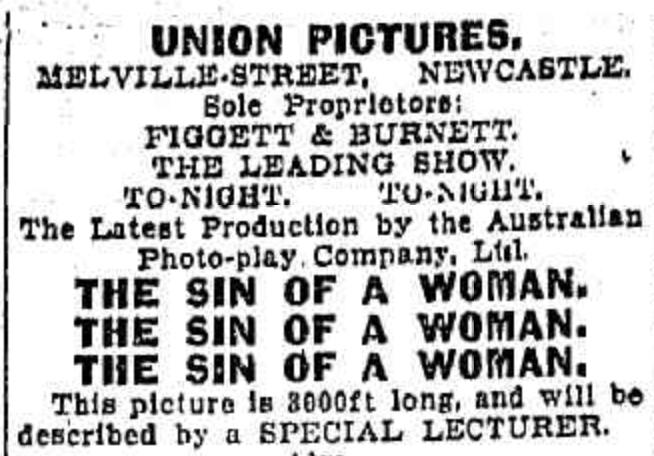
Imagine a film that arrives without fanfare, its intertitles already foxed by time, and yet within its nitrate veins pulses the first truly modern inquiry into what society calls transgression. The Sin of a Woman—a 1912 one-reel wonder—does not preach; it corrodes. Shot on the Dorset coast with nothing but natural light and a single Biograph lens, the picture feels like a daguerreotype left to rot in seawater, its emulsion blistered into ghostly constellations. You do not watch it; you witness its slow surrender to entropy.
Director-writer Charles Villiers (also the film’s tormented magistrate) refuses the audience any safe perch. His unnamed heroine—played by an actress history forgot—never once signals virtue or vice; she simply is, a palimpsest of rumours stitched into a wool cloak. The camera, stationary yet restless, frames her against livid skies so that each bruised cloud becomes a moral verdict pronounced by no one in particular. Compared to Oliver Twist’s comfortable melodrama or the grand guignol pageantry of Les Misérables, this film opts for septic ambiguity: guilt as weather, not lightning bolt.
The narrative skeleton is gossamer: a woman arrives, child in arms; tongues wag; a magistrate hesitates; the tide reclaims her. Yet Villiers stretches those 13 minutes into an existential caesura. Note the moment she enters the parish pantry: the cut is invisible, but the temperature seems to drop, as though someone opened a crypt. Flour dust hangs mid-air like suspended benediction while she accepts a crust. You expect a match-cut to Calvary; instead the film smash-cuts to a gull’s beak snapping at a dying crab—salvation and savagery sharing one intestinal tract.
Intertitles, when they intrude, behave like cracked church bells. One card reads simply "She feared the dark, yet carried it inside her"—a line that refuses exegesis. Compare that to the bombastic moral semaphore of From the Manger to the Cross, where every footstep is footnoted by scripture. Villiers’ text aches with negative space; the unsaid festers louder than any subtitle.
Cinematographically, the picture is a study in bruised chiaroscuro. The lens veers slightly off perpendicular, so rooftops lean inward like gossiping elders. Day-for-night sequences are achieved not with filters but by under-cranking until the sun itself appears culpable. In the penultimate shot, the woman’s silhouette submerges until only the brim of her bonnet bobs, a black lily on a mercury mirror. No swelling orchestra—just wind and the wet slap of waves—whereas contemporaries such as Cleopatra carpet the senses with timpani and peacock feathers.
Performance exists at the threshold of stillness. The actress’ eyes—ringed with what looks like genuine exhaustion—flicker only when a child’s off-screen cry fractures her composure. Villiers-as-magistrate matches her minimalism; his longest gesture is the refusal to sign a warrant, ink trembling above parchment like a diver afraid of water. Together they enact a dialectic of mute complicity, far removed from the athletic pantomime in The Corbett-Fitzsimmons Fight or the florid histrionics of Beatrice Cenci.
Contextually, the film slyly comments on 1912’s fever for social hygiene. Women’s suffrage marches were front-page news; the White Slave panic fermented. Villiers refuses crusade rhetoric. His protagonist is neither rescued nor damned; she is administratively erased, her disappearance filed under "tidal incident." In so doing, the work anticipates the bureaucratic atrocities later catalogued in Strike or Dante’s Inferno, yet predates them by a decade.
Archivally, the film survives only because a projectionist in Weymouth disobeyed orders to melt it down for its silver. The print—shrunken, lavender-molded—was discovered in 1987 inside a tin labeled "Xmas 1912". Restorationists compared each frame to a jigsaw of rot, yet the decay paradoxically amplifies the thematic rot at the story’s heart. Digital stabilization was vetoed: to erase the flutter would be to erase the film’s pulse. Thus every current screening carries the stutter of mortality, a ghost in the gate.
Viewers expecting the pugilistic clarity of Jeffries-Sharkey Contest will suffocate here. The film offers no catharsis, only a slow recognition: we are the crowd on the seawall, clutching someone else’s child, watching opacity drown. It is the rare pre-1915 title that feels post-#MeToo, post-carceral, post-empire. Theology undergraduates have written theses claiming the woman is a secular Mary Magdalene; gender-studies scholars counter that she is simply the first cinematic Everywoman denied the luxury of narrative absolution. Both camps miss the point: Villiers delivers a mirror smeared with tar. Identity remains suspended like the flour motes—visible only when backlit by scandal.
Comparative litany: where The Redemption of White Hawk trades in last-minute baptisms, Sin offers only the tide’s unreliable amnesty. Where Pilgrim’s Progress maps sin as way-stations on a celestial GPS, here sin is osmotic, something the very air exudes. Even the child—usually the sentimental fulcrum of early cinema—functions as an unclaimed parcel, a MacGuffin of maternity.
The film’s legacy is not in quotation but in chill. After a recent London revival, three viewers reported dreams of coastal bells that refused to cease at dawn. Critics spoke of "moral tinnitus"—an aural afterimage. Such haunting is the metric of art that bypasses argument and nests in marrow. No spin-off merchandise, no plush toy of the drowning bonnet; only the aftertaste of brackish water.
If you seek a curio that validates early cinema as mere technological puberty, steer clear. If, however, you crave an artifact that bleeds through its sprocket holes and stains your present tense, queue for the next archival screening. Bring no notebook; the damp will smear your ink. Bring no companion; you will lose the ability to explain why you are trembling. The sin referenced in the title is not the woman’s, nor the town’s, but the viewer’s inevitable failure to look away. Villiers knew that to indict is easy; to implicate, divine. In 13 minutes he indicts us all, then folds the screen to black before we can even mouth the word forgiveness.
Final arithmetic: one reel, one woman, one irrevocable step into gray water—yet the ripples lap the 21st century with undiminished appetite. See it, and understand why silence can be the most savage prosecutor of all.

IMDb —
1918
Community
Log in to comment.