DbcultAccessing Vault...
Cult Review
Senior Film Conservator
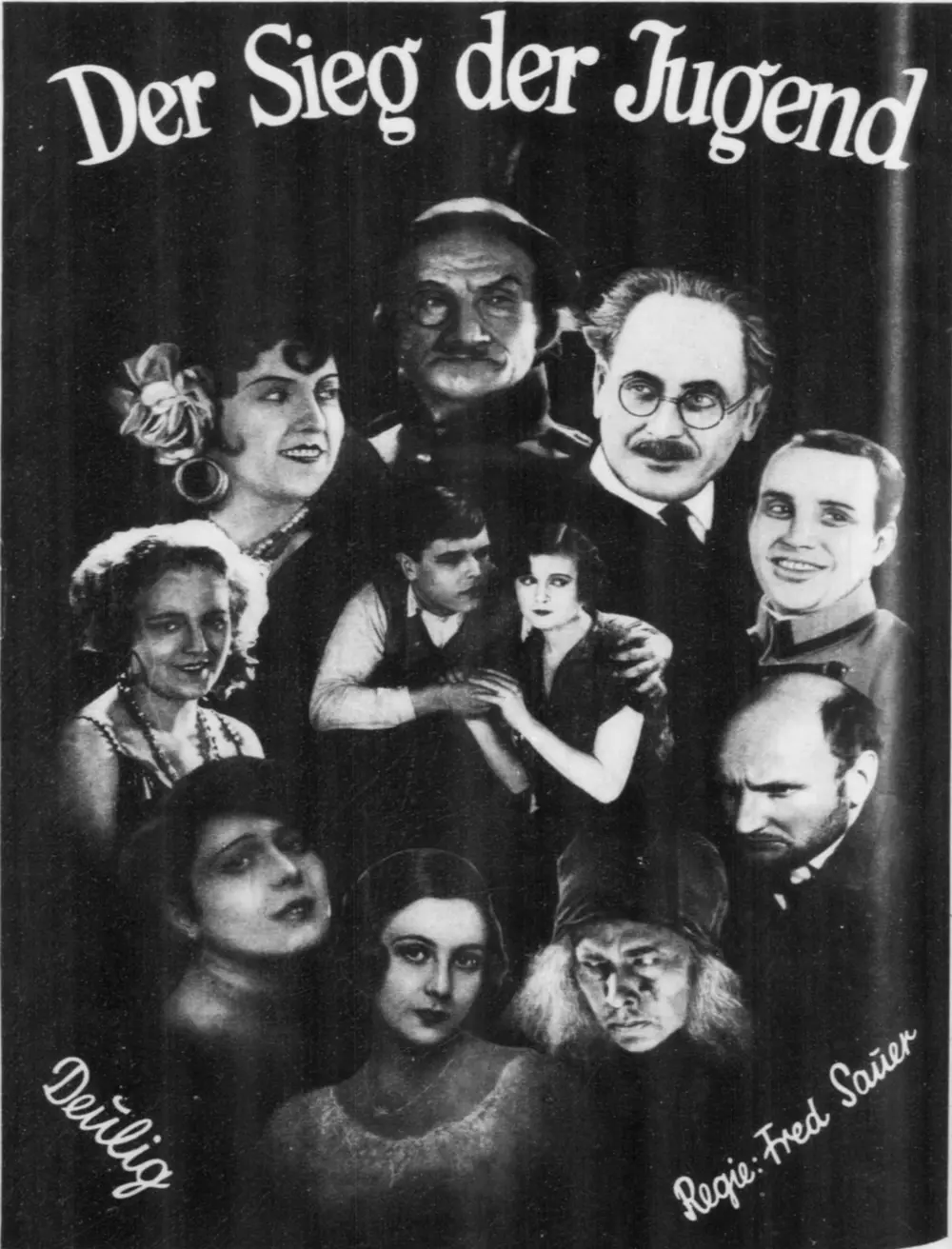
Is "Der Sieg der Jugend" worth watching today? Short answer: yes, but with significant caveats. This early German drama offers a fascinating glimpse into a particular era of filmmaking and societal concerns, making it a valuable historical artifact, yet its narrative conventions might test the patience of contemporary viewers accustomed to modern pacing. It's a film for those who appreciate the foundational elements of cinematic storytelling and have an affinity for period pieces steeped in social commentary, but it will likely not resonate with audiences seeking fast-paced plots or highly stylized visuals.
This film works because it crafts a compelling, if somewhat melodramatic, exploration of class struggle and artistic ambition, anchored by strong performances that transcend the limitations of its production era. It fails because its pacing can feel sluggish by today's standards, and some narrative beats lean heavily into archetypal scenarios that might feel predictable to modern sensibilities. You should watch it if you are a cinephile interested in the development of German cinema, a student of social history, or simply someone who appreciates a heartfelt story of individual triumph against systemic odds, delivered with earnest conviction.
"Der Sieg der Jugend" emerges from an era when cinema was still finding its voice, yet it speaks with remarkable clarity on themes that remain evergreen. The film, penned by Alfred Zeisler and Victor Abel, isn't just a simple tale of a girl and her violin; it's a meticulously observed social drama, a testament to the human spirit's capacity for aspiration despite overwhelming adversity. It captures the very essence of youthful dreams colliding with the harsh realities of a stratified society.
From the outset, the film establishes a stark contrast between Lotte’s humble, often grim, surroundings and the luminous world of classical music she yearns to inhabit. This visual and thematic dichotomy is not merely background dressing; it’s an active participant in the narrative, shaping characters' motivations and the emotional landscape of the story. The directorial hand of Alfred Zeisler, subtle yet firm, guides us through Lotte's journey with a genuine sense of empathy.
One could argue that the film's strength lies in its unvarnished portrayal of the working class, a perspective often romanticized or demonized in contemporary cinema. Here, it feels authentic, almost documentary-like in its depiction of the daily grind and the quiet despair that can settle upon a family. This grounding in reality elevates what could have been a simplistic 'rags-to-riches' narrative into something far more resonant.
"Der Sieg der Jugend" is a testament to the enduring power of dreams, even when whispered against the din of a world determined to silence them. Its narrative, while rooted in its time, offers a timeless reflection on ambition and the courage required to pursue it.
The ensemble cast of "Der Sieg der Jugend" delivers performances that are, by turns, nuanced and powerfully expressive, a hallmark of the era's acting styles. Agnes Mueller, as Lotte, is the undeniable anchor of the film. Her portrayal is a masterclass in silent emotion, her eyes conveying a world of hope, frustration, and unwavering resolve. We see the subtle trembling of her hands during practice, the determined set of her jaw when confronted by her father's skepticism, and the radiant joy when she finds a kindred spirit in Professor Schmidt.
Jaro Fürth, as Lotte's weary father, provides a compelling counterpoint. His performance is one of quiet resignation, a man burdened by life's hardships who struggles to understand his daughter's seemingly impractical dreams. There's a particular scene where he watches Lotte practice, his face a complex tapestry of fatigue, love, and a flicker of bewildered pride. It's a deeply human portrayal that prevents him from becoming a one-dimensional antagonist.
Hermann Picha, as the reclusive Professor Schmidt, brings gravitas and warmth to his role. His initial gruffness slowly peels away to reveal a man deeply scarred by his past, yet still capable of profound mentorship. The scenes between Picha and Mueller are among the film's most touching, a beautiful depiction of a bond forged through shared passion and mutual respect. Picha's subtle gestures, the way he holds his violin, the almost imperceptible nod of approval, speak volumes.
Hans Brausewetter, as Klaus, navigates the tricky terrain of the wealthy suitor with admirable restraint. He avoids caricature, instead presenting a character whose initial aloofness gives way to genuine curiosity and admiration for Lotte's spirit. His transformation feels earned, not simply a plot device, and adds a layer of romantic complexity that avoids saccharine sentimentality. Valerie Boothby, as Lotte's rival, injects a necessary dose of antagonist energy, her haughty demeanor and subtle machinations providing a clear obstacle for Lotte to overcome, often with just a glance or a dismissive turn of the head.
Alfred Zeisler's direction, while adhering to the cinematic language of his time, demonstrates a keen eye for visual storytelling. The film effectively uses framing and composition to emphasize the social disparities inherent in the plot. The cramped, shadowed interiors of Lotte's home starkly contrast with the grand, often brightly lit, spaces of the music academy or Klaus's opulent residence. This isn't just stylistic; it's narrative. It visually reinforces the barriers Lotte must overcome.
The cinematography, though perhaps not groundbreaking for its era, is functional and often evocative. There's a particular sequence where Lotte practices her violin in a quiet corner of her tenement building, the light from a single window illuminating her intense concentration. This moment, simple yet powerful, encapsulates her dedication against a backdrop of urban struggle. It’s a quiet visual poem.
Zeisler's pacing of the narrative is deliberate, allowing moments to breathe and emotions to simmer. While some might find it slow, this measured approach allows the audience to fully absorb Lotte's journey, feeling every setback and every small victory. The build-up to the final competition is particularly well-handled, creating a palpable sense of anticipation without resorting to cheap thrills. The film trusts its audience to invest in the characters' emotional arcs rather than relying on rapid-fire plot developments.
Compared to more frenetic narratives of the same period, such as perhaps My Hero!, "Der Sieg der Jugend" opts for a more grounded, character-driven approach. It’s a choice that pays off in emotional depth, even if it sacrifices some immediate kinetic energy.
At its core, "Der Sieg der Jugend" is a powerful commentary on the restrictive nature of class structures and the transformative power of art. Lotte's ambition isn't merely personal; it's a symbolic challenge to a system that dictates who has access to culture, education, and upward mobility. Her violin becomes a weapon against the quiet tyranny of circumstance, a voice for those who are rarely heard.
The film bravely tackles the idea that talent, regardless of its origin, deserves recognition. It’s a surprisingly progressive stance for its time, especially within a narrative framework that could easily have devolved into simple romantic escapism. Instead, it posits art as a democratizing force, a universal language that can bridge the widest social divides. This is where its true strength lies. It works. But it’s flawed.
The relationship between Lotte and Klaus, while providing a romantic subplot, also serves to highlight the complexities of navigating class boundaries. Their burgeoning affection is tested not by personal failing, but by the unspoken rules and expectations of their respective worlds. It's a nuanced look at how societal pressures can shape even the most intimate human connections, a theme that resonates just as strongly today.
One unconventional observation is how the film subtly critiques the very institutions it celebrates. The music academy, while a beacon of opportunity, is also portrayed as an exclusive bastion, its halls populated by those who can afford its tuition and patronage. Lotte's struggle is not just to master her instrument, but to gain entry to a world that was never designed for someone like her. It's a quiet but potent indictment.
Absolutely, for the right audience. "Der Sieg der Jugend" offers a window into early 20th-century German society and filmmaking. It provides a rich, emotional narrative that, despite its age, still holds significant thematic weight. Its exploration of class, ambition, and the pursuit of art remains relevant. It's a slow burn, not a blockbuster, but its quiet power endures.
The pacing of "Der Sieg der Jugend" is reflective of its era, a more deliberate and contemplative rhythm than what modern audiences are accustomed to. Scenes are allowed to unfold at a natural pace, giving ample time for character reactions and emotional development. This can be both a strength and a potential hurdle for contemporary viewers. It requires patience, but rewards with depth.
The tone is predominantly earnest and dramatic, with moments of heartfelt tenderness and genuine struggle. There's a prevailing sense of hope that underpins even the most challenging sequences, reinforcing the film's central theme of youthful victory. The absence of an explicit spoken soundtrack (assuming this is a silent film or early talkie with minimal dialogue) places a greater emphasis on visual storytelling and the expressive power of the actors.
The hypothetical score, which would have accompanied screenings, would have been crucial in amplifying the film's emotional beats, guiding the audience through Lotte's highs and lows. Without it, modern viewers might need to consciously engage more with the visual and performative cues, much like experiencing a live performance where the music is integral. This unique aspect of early cinema adds a layer of appreciation for the artistry involved.
It's a different kind of cinematic experience, one that demands a different kind of engagement. If you can adjust to its rhythm, you'll find a profound and moving story. The narrative isn't about shocking twists, but about the steady, inexorable march of a determined spirit. This methodical approach might feel like a struggle at times, but it eventually pays off, much like Lotte's own journey. It’s a film that asks for your investment and largely earns it.
"Der Sieg der Jugend" is more than just a historical curiosity; it is a genuinely affecting drama that speaks to the timeless human desire for self-expression and recognition. While its deliberate pacing and period-specific conventions might not appeal to every palate, for those willing to immerse themselves in its world, it offers profound rewards. Agnes Mueller's performance alone makes it a worthwhile viewing experience, elevating the narrative beyond mere melodrama into something truly compelling. It is a testament to the power of early cinema to tackle complex social issues with both grace and conviction.
This film isn't designed to compete with the spectacle of modern blockbusters, nor should it be judged by those metrics. Instead, it invites reflection, offering a quiet yet powerful narrative that resonates long after the credits roll. If you cherish cinema's formative years and appreciate stories that champion the human spirit against daunting odds, then "Der Sieg der Jugend" is a film that deserves your attention. It’s a quiet victory, beautifully rendered, and a valuable piece of cinematic heritage that continues to inspire.

IMDb 5.2
1936
Community
Log in to comment.