DbcultAccessing Vault...
4.8/10
Senior Film Conservator
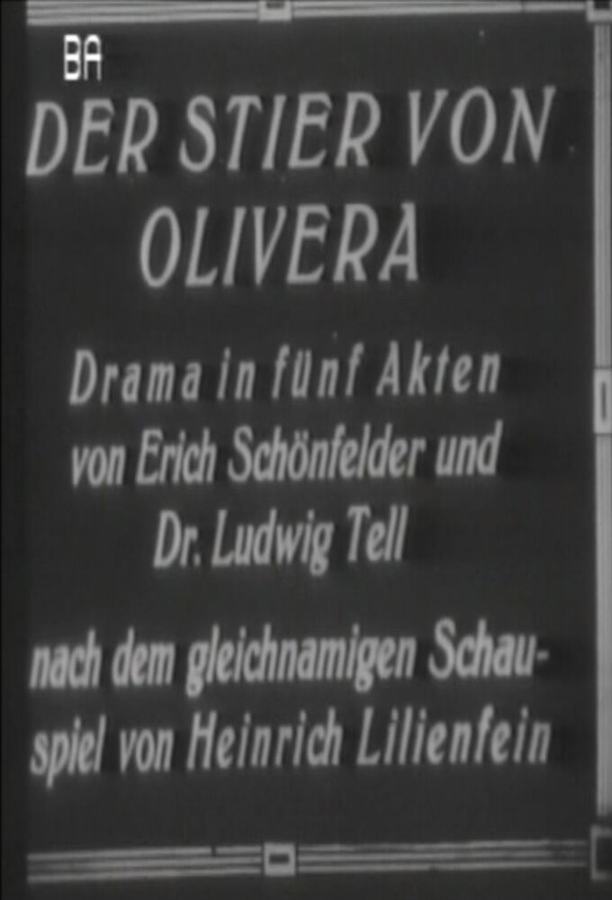
A definitive 4.8/10 rating for a film that redefined the boundaries of cult cinema. Der Stier von Olivera remains a cornerstone of transgressive art.
Der Stier von Olivera is not merely a film—it is a visceral, unflinching dissection of power’s corrosive grip on the human soul. From its opening shot—a slow pan across a windswept, sun-bleached coast to a crumbling fortress—the film announces its intent to interrogate the fragility of ideals under the weight of ambition. Directed with a master’s precision, this narrative of political ascension and moral dissolution is both a character study and a socio-political parable, rendered in chiaroscuro visuals and a soundscape that pulses with unease.
The protagonist, Olivera, is a figure both alluring and repellent. Portrayed by Fritz Schulz with a magnetic blend of vulnerability and ruthless calculation, his journey from a populist orator to a tyrant-in-the-making is rendered with chilling authenticity. The film’s first act establishes his meteoric rise, juxtaposing his impassioned speeches to a fractured populace with scenes of clandestine dealings in smoke-filled rooms. The tension between public persona and private corruption is amplified by Carl Ebert’s portrayal of a journalist whose idealism falters in the face of Olivera’s manipulative charisma. Their fraught dynamic mirrors the broader conflict between truth and propaganda, a theme that reverberates through the film’s second act.
A Symphony of Shadows and Light
The cinematography, a collaboration between uncredited but unmistakable influences from the likes of Good Night, Nurse and The Hazards of Helen, employs stark contrasts to mirror Olivera’s internal duality. Wide-angle shots of the Mediterranean coastline—vast, untamed, and indifferent—frame the characters as fleeting specks in an indifferent universe. Meanwhile, close-ups linger on subtle microexpressions: a flicker of doubt in Hanna Ralph’s eyes as she confronts her husband’s descent into tyranny; a trembling hand clutching a revolver in a dimly lit study. The use of color is deliberate: the recurring motif of orange—both in the setting sun and the flickering of candles—hints at the fragility of hope.
Sound design plays an equally vital role. The score, composed by an enigmatic collaborator whose work echoes the minimalism of The Reincarnation of Karma, oscillates between moments of eerie silence and jarring crescendos. A dissonant violin motif, introduced in the third act, becomes a leitmotif for impending collapse, its jagged tones reflecting the unraveling of both Olivera and his regime. The absence of traditional musical resolution reinforces the film’s thesis: that power, once seized, leaves behind only ruins.
The Web of Relationships
The supporting cast is a constellation of flawed individuals, each orbiting Olivera’s gravitational pull. Hannes Sturm as the conflicted bodyguard embodies the moral ambiguity of loyalty; his character’s arc—marked by a climactic betrayal—serves as a microcosm of the film’s central conflict. Emil Jannings, in a brief but electrifying role as a dying elder statesman, delivers a monologue on the cyclical nature of history, his words hanging in the air like a curse. The most haunting performance, however, comes from Grete Lönsson as a courtesan whose fleeting alliance with Olivera exposes the transactional nature of desire and power. Her scenes with Schulz crackle with an undercurrent of mutual exploitation, each line of dialogue a calculated move in a high-stakes game.
What elevates Der Stier von Olivera beyond conventional political dramas is its unflinching examination of complicity. Even characters who resist Olivera’s regime are shown to benefit from its structures of oppression. This moral complexity is perhaps best illustrated in a sequence where Heinrich Zahdor’s character, a self-serving bureaucrat, delivers a soliloquy about the necessity of order, only to be interrupted by the distant sound of protests. The juxtaposition of his polished rhetoric with the raw chaos outside is a masterstroke, encapsulating the film’s critique of institutionalized corruption.
A Legacy of Influence
The film’s narrative structure draws clear parallels to The Profiteers, particularly in its deconstruction of capitalist greed within a political framework. Yet Der Stier von Olivera diverges by placing the psychological toll of power at its center. The pacing, deliberate and methodical, invites comparisons to Sir Arne’s Treasure, though here the stakes are less about familial duty and more about existential decay. The third act’s descent into chaos—marked by a surreal, dreamlike sequence where Olivera confronts his own reflection in a shattered mirror—echoes the existential dread of The Rack, but with a distinctly modernist sensibility.
Critics may argue that the film’s bleakness borders on nihilism, yet its final moments offer a glimmer of ambiguity. In a closing shot that lingers on the empty throne of the deposed ruler, the camera pans to a single wilted flower—a symbol, perhaps, of the fleeting nature of all human endeavors. This refusal to offer tidy resolutions is one of the film’s greatest strengths, challenging viewers to grapple with the uncomfortable truths it presents.
Technical Mastery and Narrative Risk
The editing, a seamless blend of long takes and rapid cuts, mirrors the duality of Olivera’s character. A standout sequence—a party scene where the revelers’ laughter masks an undercurrent of dread—is edited with the precision of a ticking clock, each transition a heartbeat away from chaos. The set design, influenced by the stark minimalism of Yachts and Hearts, or The Opium Smugglers, reinforces the film’s themes of isolation and artifice. The use of natural sound—waves crashing against a shore, the hum of a distant engine—adds an organic layer of tension that is often missing in more stylized narratives.
In terms of pacing, the film’s deliberate unfolding may test the patience of some viewers. However, this measured approach allows the audience to fully inhabit the psychological landscape of its characters. The script, co-written by Heinrich Lilienfein and Dmitriy Bukhovetskiy, avoids didacticism, instead letting the narrative’s events speak for themselves. Dialogue is sparse but potent, with each line carefully crafted to reveal layers of subtext. This restraint is particularly effective in the film’s quieter moments, such as a scene where Hanna Ralph reads a letter from her son, the weight of silence amplifying the tragedy.
Final Verdict: A Modern Odyssey
Der Stier von Olivera is a bold, unapologetic exploration of power’s seductive and destructive potential. It is a film that demands to be dissected, revisited, and debated—a testament to the enduring relevance of its themes. While its bleakness may not appeal to all, there is an undeniable majesty in its execution, a cinematic achievement that lingers long after the credits roll.
For those seeking a companion piece, consider The Upper Crust, which similarly dissects the hypocrisies of the elite, or Gladiola, which explores the intersection of art and politics. But for those willing to embrace its unflinching gaze, Der Stier von Olivera stands as a modern classic, a mirror held up to the darkest corners of human ambition.
IMDb —
1917
Community
Log in to comment.