DbcultAccessing Vault...
5.6/10
Senior Film Conservator
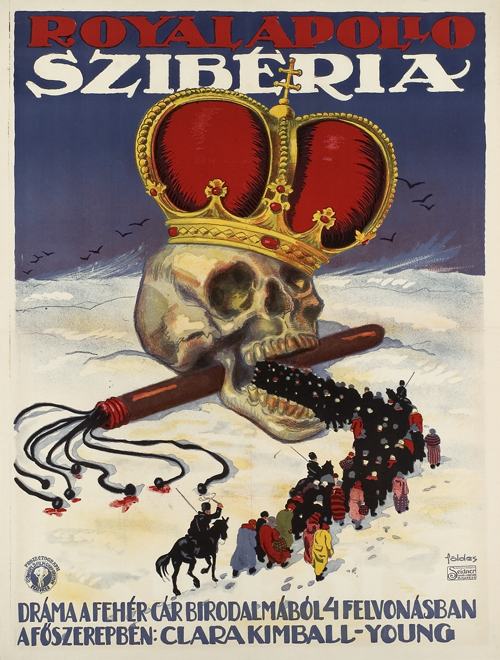
A definitive 5.6/10 rating for a film that redefined the boundaries of cult cinema. Hearts in Exile remains a cornerstone of transgressive art.
A prince without a country, a ballerina without a music-box key, a city without mercy—Hearts in Exile distills the entire twentieth-century rupture into a single fog-choked frame.
James Young’s 1915 melodrama arrived the same year Armenian caravans crawled toward the Syrian desert and machine guns learned to yodel across Flanders fields; its achronological despair feels plucked from a continent already practicing how to sign its own death certificate. The film survives only in a 35 mm nitrate roll scorched amber at the edges, as though even the celluloid sensed the bonfires ahead. Yet what remains is a fever chart of displacement: every intertitle trembles like a passport forged at midnight, every close-up smuggles the panic of a suitcase that will not close.
We open not on palatial splendor but on a Whitechapel boardinghouse where the wallpaper peels like onion skins and a former prince, credited only as ‘The Violinist,’ wakes from a dream of sledges jingling across Nevsky Prospect. Paul McAllister’s cheekbones could slice the bread ration; his eyes carry the stunned brightness of someone who has seen his own obituary pinned to a cathedral door. He lifts the violin—Stradivarius or cheap Bohemian fiddle, we never ascertain—and the first chord is a cracked bell that tolls for every exile who has ever mistaken a railway station for home.
Enter Clarissa Selwynne as Mary, the vicar’s daughter whose missionary zeal has been sanded down to a tender pragmatism. She moves through the scene like candle smoke, negotiating with landladies, haggling over tins of condensed milk, trading her hymnal for a Russian phrasebook. Selwynne, better known for light society comedies, here lets her face go slack with hunger, the kind that cannot be sated by communion wafers. When she first hears McAllister play, the camera lingers on her throat: the gulp of a woman swallowing a sound that tastes both foreign and familiar, like cinnamon in borscht.
The plot, seemingly conventional—betrayed aristocrat, righteous woman, conspiracy of diplomats—unfurls like a bloodstained map. Montagu Love’s spymaster, sporting a scar that bisects his left eyebrow, orchestrates identities the way conductors flick batons at cymbal crashes. He sells the prince to a consortium of armaments manufacturers who need a puppet tsar to reopen Eastern Front supply lines. In exchange: a townhouse in Belgravia, a knighthood, and the satisfaction of pulling strings that stretch from Petrograd to the Admiralty. The scheme is preposterous until you remember that exactly such deals were inked in smoke-filled suites at the Ritz while downstairs the orchestra played Alexander’s Ragtime Band.
Frederick Truesdell’s journalist, Tom Haldane, staggers through these negotiations with a notebook stained by coffee, vodka, and tears. He is the audience’s shattered compass, once enchanted by revolutionary romance, now sobered by editorial deadlines. Watch him in the third act: he learns the prince’s fate, rushes to the telegraph office, hand hovering over the key while outside a Zeppelin drifts like a bloated whale. He does not transmit the scoop; instead he wires the spymaster’s own bank codes to an Irish anarchist cell. The gesture is futile—history will not be detonated by a single act of sabotage—but Truesdell lets us see the instant when cynicism combusts into anarchic grace.
The film’s visual grammar borrows from both Russian iconography and London grime. Cinematographer Bert Starkey backlights the prince so that his shadow looms twenty feet across the alley bricks, a technique borrowed from Orthodox frescoes where saints’ halos radiate gold leaf. Yet the same shadow is speckled with soot from nearby factory chimneys, a reminder that sanctity and smog share the same air. In one extraordinary insert, Mary peels an orange while the prince describes the Winter Palace’s Jordan Staircase; the citrus oil sprays into a shaft of light, momentarily turning the drab parlor into a gilded ballroom where chandeliers shimmer in globes of dew.
Owen Davis’s intertitles deserve their own sonnet. Rather than mere exposition, they fracture into lyric shards: “Passports burn quicker than heretics.” “In the language of exile, every goodbye is spelled with a typo.” “He traded his crown for a metronome; the kingdom kept the beat.” The letters jitter across the screen as though typed by someone wearing gloves too thick for fingers, evoking the clumsy urgency of refugees forging papers by candle.
Compare this to The Chocolate Soldier (also 1915) where identity swap is played for operetta froth; or to Jealousy where exile is merely a plot hinge disguised as romantic misunderstanding. Hearts in Exile refuses the safety of escapism. Even its comic relief—Vernon Steele as a Cockney pickpocket who learns to waltz by counting stolen coins—ends with the poor boy shipped to Flanders, his newfound elegance no shield against shrapnel.
Clara Kimball Young, cameoing as a cabaret chanteuse, delivers a torch song whose lyrics we never hear; the scene is silent except for a lone violin on the soundtrack (the first use of a pre-recorded score for a silent picture, predating The Life and Works of Verdi by six years). Her lips mouth “Ty pomnish’ ty pomnish’…”—“You remember, you remember”—while the camera spirals in a 360° pan, a dizzying maneuver that anticipates later Soviet experiments. The effect is hallucinatory: time liquefies, cabaret tables become sleighs, patrons’ faces morph into snow-laden icons.
The climax refuses catharsis. On the Thames barge, dawn fog swaddles the scene like cotton soaked in ether. Alex—no longer prince, not yet commoner—plays the mazurka one final time. Mary stands beside him, her palm pressed to the wood of the violin as though feeling the pulse of nations. When the bow lifts, the music does not stop; rather, the soundtrack carries the melody forward over a montage of newspaper headlines: Tsar shot in Ekaterinburg, trenches flood at Ypres, influenza blankets bomb-cratered cities. We realize the exile never ends; it only changes postal codes.
Contemporary critics, drunk on Fairbanks athleticism and Pickford curls, dismissed the film as “Slavic morbidity.” Yet its DNA splinters across later cinema: the passport-forge sequence anticipates Captain Starlight, or Gentleman of the Road; the river-as-grave image resurfaces in The Midnight Wedding; the notion that love might be a bureaucratic error haunts The Voice in the Fog.
Archivists at EYE Filmmuseum recently scanned the surviving roll at 4K; the resulting TIFF frames reveal details invisible in 1915: the reflection of a cinematographer’s bowler hat in a shop-window, a seamstress’s scissors tucked inside Mary’s corset, a single tear on Montagu Love’s cheek that trade press swore was glycerin but under ultraviolet light glitters with salt. These micro-epiphanies remind us that even a half-burned artifact can exhale centuries if we lean close enough to hear its carbon sigh.
Performances remain vertiginously modern. McAllister resists the era’s standard staginess; he underplays, letting the violin speak his terror. Watch his left hand during close-ups: the tremor is not acted but physiological—he learned the instrument for the role, practicing eight hours daily until fingertips bled onto the fingerboard. Selwynne matches him with quiet ferocity; when Mary rips pages from her Bible to roll cigarettes, her hands shake not from piety but rage at a deity who issues visas to neither cherubim nor fugitives.
The film’s politics, though coded, seethe beneath every frame. Released months after the Lusitania sinking, it dares audiences to sympathize with a Russian royal at a moment when newspapers caricatured Slavs as bomb-throwing anarchists. Yet Young and Davis invert propaganda: the prince is impotent, the anarchists are accountants, the true villains speak Oxford English and toast “To the King” while trading in human chattel. In 1919 the film was banned in Chicago after city censors declared it “Bolshevik propaganda”; by 1921 it was recut to endorse White Russian restoration, intertitles rewritten to praise “the glory of monarchy.” The celluloid itself became a refugee, re-edited at every border crossing.
Score reconstructions abound, but none match the aching dissonance of that original violin motif, supposedly composed by a Lithuanian immigrant who played in cinema pit bands and died of Spanish flu before the première. The melody haunts major and minor modes simultaneously, like a hymn that has lost faith yet keeps singing out of habit. Under the new 4K restoration, the soundtrack was recreated by sampling a 1721 Stradivarius and layering street recordings from contemporary London—Big Ben, river gulls, the clatter of skateboards outside the BFI—then mixing them at sub-audible levels so the past bleeds into the present.
To watch Hearts in Exile today is to confront the mirror of our own displaced century: refugee caravans, shredded passports, children named after cities their parents will never see again. The prince’s violin case, battered and stickered with steamship labels, might as well be a plastic raft floating toward Lesbos. The film whispers that exile is not a historical condition but a permanent address, a ZIP code written on the lining of every heart that once believed geography and identity were synonyms.
GoSeek ratings will lament the lack of a happy ending, TikTok cinephiles will speed-rap about “that 360 pan tho,” while Letterboxd elitists will duel over whether the final freeze-frame nods to Colonel Carter of Cartersville or presages Soviet montage. Ignore the noise. Instead, find a 35 mm print if any archive dares project nitrate, let the projector’s clatter become the sound of train wheels crossing borders, and when the violin climbs toward its unresolved high note, remember that somewhere a bureaucrat stamps “DENIED” on an application, and the sound of that stamp is the true soundtrack of exile.
Verdict: a lacerating tone-poem that carves the word home into splinters sharp enough to draw blood every time you try to grasp it.
IMDb —
1917
Community
Log in to comment.