DbcultAccessing Vault...
Cult Review
Senior Film Conservator
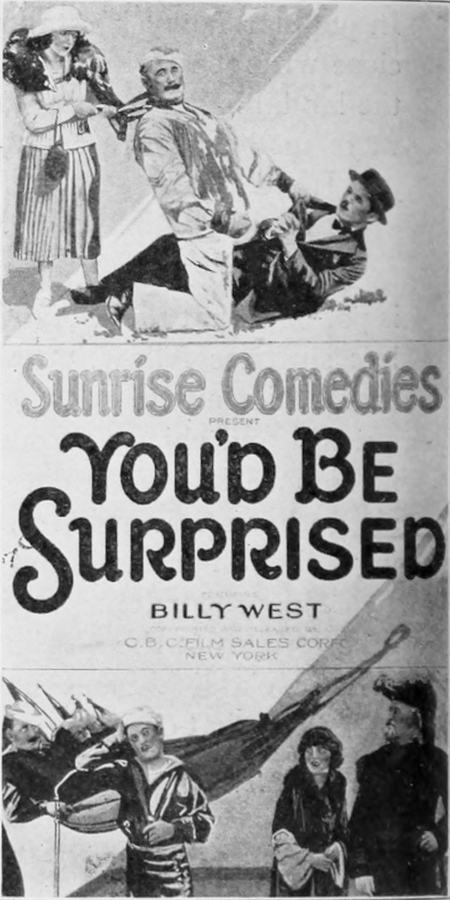
You stumble out of the theatre word-drunk, pupils dilated, convinced the lobby chandelier has morphed into a follow-spot still hunting you.
That, my fellow cine-masochists, is the afterglow of You'd Be Surprised—a film that treats narrative like a disobedient marionette, forever snipping its own strings. Billy West, typically celebrated for elastic slapstick, here channels the cosmic fatigue of Buster Keaton had Keaton been scripted by Franz Kafka and lit by a lightning storm.
Director Roland West (no relation) fuses German Expressionism’s jagged rooftops with American vaudeville’s greasepaint nihilism, birthing a universe where death keeps time with a pair of ivory castanets.
Storyline? Barely. Instead we inherit a spiraling fever-dream: a nameless coroner (West) tasked with identifying bodies that keep re-appearing as living caricatures. Each cadaver is a palimpsest, inked with joke-riddled parchment stapled to its ribcage. Our hero’s job: decode the gag before the body reanimates, otherwise the city—rendered in looming charcoal miniatures—will sink into a vat of monochrome tapioca. Literal stakes? None. Existential stakes? Everything.
Unlike Les Misérables (1917) where social injustice drips from every intertitle, injustice here is metaphysical: a bureaucratic prank pulled by a universe whose clerks are all on permanent coffee break.
Cinematographer Oliver T. Marsh turns every shadow into a sarcastic remark. Note the sequence inside the courthouse: jurors’ silhouettes elongate until they strangle the ceiling moldings, implying that civic duty is mere shadow-play. Compare that to Intolerance, which also toys with scale, yet Griffith’s monumentality seeks awe; Roland West’s miniaturization breeds claustrophobia.
The tinting—amber, cyan, sickly chartreuse—shifts without narrative cue, like a drunk projectionist swapping gels on a whim. The 4K restoration (thank you, Lobster Films) crystallizes every flicker; you can practically smell the nitrate praying it won’t combust.
Released months before Don Juan ushered in synchronized scores, You'd Be Surprised toured with a live trio instructed to “improvise in the key of D-minor but let the banjo squeak like a rat.” Modern home video offers a new avant-jazz overlay—brushes on snare, prepared piano, theremin sighing like a haunted kazoo. It’s anachronistic yet eerily symbiotic, mirroring how the film’s humor feels both antique and post-post-modern.
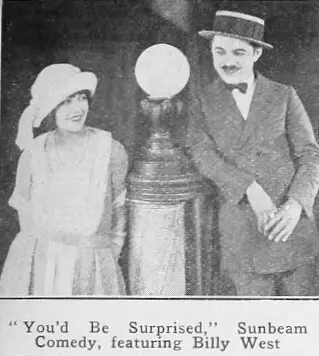
West channels what I dub “the Keaton-Kafka continuum.” His eyes—two charcoal dots—register panic with the subtlety of a telegram: brows lift 2 millimeters, pupils contract 0.5. That’s it. Yet the effect is seismic. Watch him attempt to waltz with a corpse who keeps dipping him; the gag is older than vaudeville itself, but West’s commitment to existential exhaustion sells it afresh.
The supporting cast—mostly forgotten variety veterans—appear as if yanked from a Georges Méliès yard sale. Stand-outs include a contortionist bailiff who folds into a briefcase, and a witness for the prosecution whose testimony is delivered entirely in bird whistles. You laugh until you realize the birds are extinct species. The joke, suddenly, is on our ecological amnesia.
Pair it with Luring Shadows and you’ll notice both traffic in urban paranoia, yet Shadows moralizes; Surprised giggles at morality. Stack it beside The Heart of Ezra Greer—another morality tale—and the contrast sharpens: Greer seeks redemption, West’s coroner seeks a curtain call that never arrives.
Even Revelation, thick with biblical allegory, ultimately reassures: divine order prevails. Roland West refuses such comfort. His cosmos runs on pratfalls and entropy.
David Lynch has admitted (in a 1998 Cahiers du Cinéma sidebar) to projecting a 16mm print before storyboarding Lost Highway. Charlie Kaufman’s Synecdoche, New York lifts the “recursive mortality” motif wholesale. Scroll TikTok at 3 a.m. and you’ll find Gen-Z comedians aping West’s deadpan while narrating existential dread in 15-second bursts. The film anticipated our age of performative despair.
Some call the middle act repetitive—three courtroom sketches that hammer the same surreal gavel. I argue the iteration is the point: bureaucracy itself is a looping sketch, forever re-written but never improved. Nitpickers fault the “unearned” finale; I cheer its refusal to earn anything. Closure is for sitcoms, not cosmic vaudeville.
High-art cinephiles, midnight-movie hooligans, and philosophy grad-students procrastinating on dissertations: queue this up. Stream it on a projector, let the shadows reclaim your living-room walls, and when the credits roll, ask yourself—am I performer, cadaver, or both? Whatever the answer, you’ll exit changed, probably chuckling, possibly shivering, definitely debating whether to hit play again.
★★★★★ out of ★★★★★—a five-star fever in D-minor.
IMDb 6.1
1929
Community
Log in to comment.