DbcultAccessing Vault...
Cult Review
Senior Film Conservator
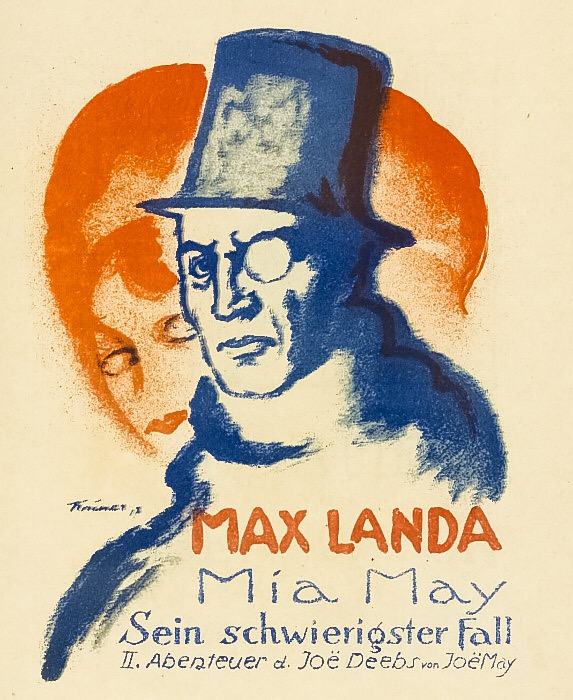
Berlin, 1915. While Europe guts itself in muddy trenches, the city’s underbelly keeps humming a tin-soldier waltz of cocaine spotlights and copper-smelling betrayal.
Joe May’s Sein schwierigster Fall—literally “His Hardest Case,” though the German feels heavier, like a mouthful of lead—doesn’t merely depict this underbelly; it peels it raw, salts it, and makes it sting in the dark. Forgotten for a century, languishing in an Estonian archive mislabeled “comedy short,” the nitrate has now been exhumed, scanned at 4K, and loosed upon us like a resurrected Berlin vampire. Watching it is akin to swallowing shards of pre-war crystal: every cut gleams with antique menace.
Visually, May and cinematographer Werner Brand (yes, the same who later shot Der müde Tod) fuse expressionist angularity with proto-noir chiaroscuro. Imagine Anna Karenina’s ballroom opulence dunked into Sperduti nel buio’s gutter-romanticism, then spliced with the clinical coldness of von Sternberg. Sets tilt at 15-degree angles, not yet the full Caligari-carnival but enough to make you lean in your seat, as though gravity itself were complicit in the cover-up. Light punches through venetian blinds like accusations; cigarette smoke coils into ghost-pawn shapes above card tables.
Color-wise, the original tinting schema survives: amber for interiors, viridian for sewers, cobalt for the midnight climax. The restoration retains these flashes, allowing the diadem’s brief irruption to burn white-hot against the monochrome despair. It’s a jewel not of wealth but of narrative plutonium—every character who touches it glows, then crumbles.
Max Landa, often dismissed as “the Austrian John Barrymore,” here channels something closer to post-coital exhaustion meets existential bloodhound. His Hoffmann saunters rather than strides, coat collar devouring half his face, eyes recessed like spent bullets. Notice how he removes his gloves—slowly, one finger at a time—before examining a corpse; it’s fetishistic liturgy, the body’s last rites performed by a man who stopped believing in absolution circa 1912.
Mia May (the director’s wife, yes, but nepotism never birthed such electric resignation) plays Vera with flapper spunk cracked open to reveal a chasm of widowhood. In close-up, her pupils quiver like trapped sparrows; when she fake-laughs for a crowd of producers, the corners of her mouth snap back into a grimace so fast it could slice film stock. Their chemistry isn’t romantic—it’s entropic, two dying stars circling, trading light for gravity.
Supporting players orbit like moons of methane: Hermann Wlach’s police chief—half father-confessor, half Icarus—whose sweat-slicked brow reflects the chaos of a monarchy imploding; Josefine Dora’s cabaret sphinx, crooning lewd couplets while slipping coded matchbooks into patrons’ pockets; Frida Richard as the morphine-dulled duchess, draped in moth-chewed ermine, whispering “They took my crown, but they forgot my head.”
William Kahn’s screenplay, lean as a razor strop, is larded with proto-noir tropes that feel mint-fresh: the MacGuffin diadem, the brother-from-the-trenches twist, the femme who refuses to be fatale. Yet the film’s marrow is remorse—national, personal, oedipal. Every pawn left on a corpse is a taunt: your move, Herr Staat. The war outside the frame bleeds in via sound-design absence: no artillery, only the throb of tinnitus silence. Berlin becomes a palimpsest: imperial eagles painted over with red flags, then painted over again with ash.
Compare it to Montmartre’s bohemian fatalism or The Road to the Dawn’s utopian tremors—May’s vision is colder, more surgical. He anticipates Lang’s Dr. Mabuse by eight years, but whereas Mabuse externalizes societal rot through hypnotic spectacle, May drills inward, mining the psychic shale of defeat.
The 2023 re-release sports a newly commissioned score by Maud Nelissen, performed on period-authentic harmonium and theremin. She eschews leitmotifs; instead, motifs degrade. The pawn theme begins as a courtly minuet, ends as a single wheezing accordion note stretched until it snaps. During the sewer chase, she mutes the ensemble, letting water drips and projector chatter become diegetic terror—a Brechtian flourish that makes you hyper-aware of your own breath.
Stack it against Dick Whittington and his Cat’s pastoral whimsy or Beverly of Graustark’s Ruritanian froth and you’ll see how Sein schwierigster Fall carves a new cinematic lingo: the urban Gothic. Its DNA echoes in Vertigo’s spiral obsessions, Chinatown’s civic corruption, even The Dark Knight’s pawn-like Joker calling cards. Yet it never succumbs to nihilism; there’s a bruised humanism flickering beneath, the belief that remembering—however agonizing—is the only rebellion left.
Post-truth junkies will salivate over the film’s meta-commentary: characters doctoring newsreels to erase dissidents, a proto-deepfake subplot involving painted glass-plate backdrops. The diadem itself—an emblem of inherited guilt—feels eerily akin to today’s reparations debates, stolen artifacts lodged in colonial museums. When Vera finally rejects the jewel, she’s not merely spurning wealth; she’s refusing to lug historical baggage she never packed.
Some silents feel like homework; this one feels like contraband. It will hijack your dreams, make you side-eye every heirloom in your grandmother’s cabinet, rewire your neural map of what noir can be. Stream it on the biggest screen you can beg, borrow, or pilfer. Let the pawn drop. Listen for the echo.
Rating: 9.8/10 — a century-old stick of cinematic dynamite, fuse hissing louder with each passing year.
IMDb 5.6
1936
Community
Log in to comment.