DbcultAccessing Vault...
6.6/10
Senior Film Conservator
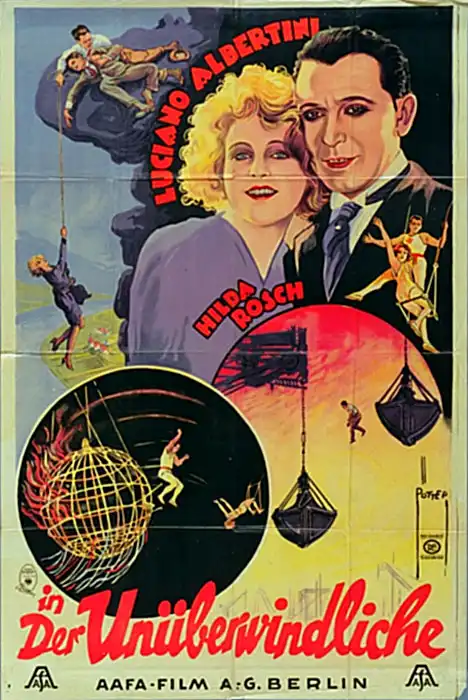
A definitive 6.6/10 rating for a film that redefined the boundaries of cult cinema. Der Unüberwindliche remains a cornerstone of transgressive art.
Okay, so, Der Unüberwindliche. Is it worth tracking down today? Probably not for everyone, no. If you’re a dyed-in-the-wool silent film enthusiast, especially one with a soft spot for early action heroes and physical performers like Luciano Albertini, then absolutely, give it a shot. You'll find things to appreciate. But if your idea of a good time involves crisp dialogue, tight plotting, or subtle character work, you'll likely find it a bit of a slog.
The film kicks off with Albertini’s Silvio Spaventa, the titular "Invincible" escape artist, doing his thing at the circus. And "his thing" is genuinely impressive. He's clearly a formidable physical presence, all muscle and agility, throwing himself into these elaborate, very real-looking stunts. There’s a cage sequence early on that, even through the flickering print, makes you wince a little. You can see the effort, the danger. It’s a pure spectacle, and the camera lingers on Albertini’s physique, almost admiringly. It’s a good, strong opening, setting up his character as someone truly extraordinary.
Then the plot properly kicks in. A jeweler and a criminologist, watching Spaventa perform, make a bet: can he open *their* super-secure safe? This feels a little… arbitrary. Like the writers needed a reason to get our hero from the circus tent to the world of high-stakes crime, and "a bet" was the easiest path. The criminologist, by the way, has a mustache that deserves its own credit. It practically acts alongside him.
When Spaventa takes on the safe, the scene goes on about 20 seconds too long. Maybe more. He fiddles, he listens, he concentrates. We get close-ups of his hands, his intense brow. The silence here, usually a strength of the medium, just stretches. It goes from building tension to just... existing. You understand the challenge, you see his focus, but after a while, you’re just waiting for the click. Or for something else to happen. It’s a moment where you can almost feel the movie trying to convince you this matters more than it actually does.
Grace Chiang plays Rina Pera, Spaventa's partner. She's elegant, always looking concerned or proud, depending on the scene. Her presence is a nice counterpoint to Albertini’s sheer physicality, but her character doesn't get much to *do* beyond react. Her costumes are quite striking, though perhaps a little too pristine for someone working in a circus environment. A small thing, but it caught my eye.
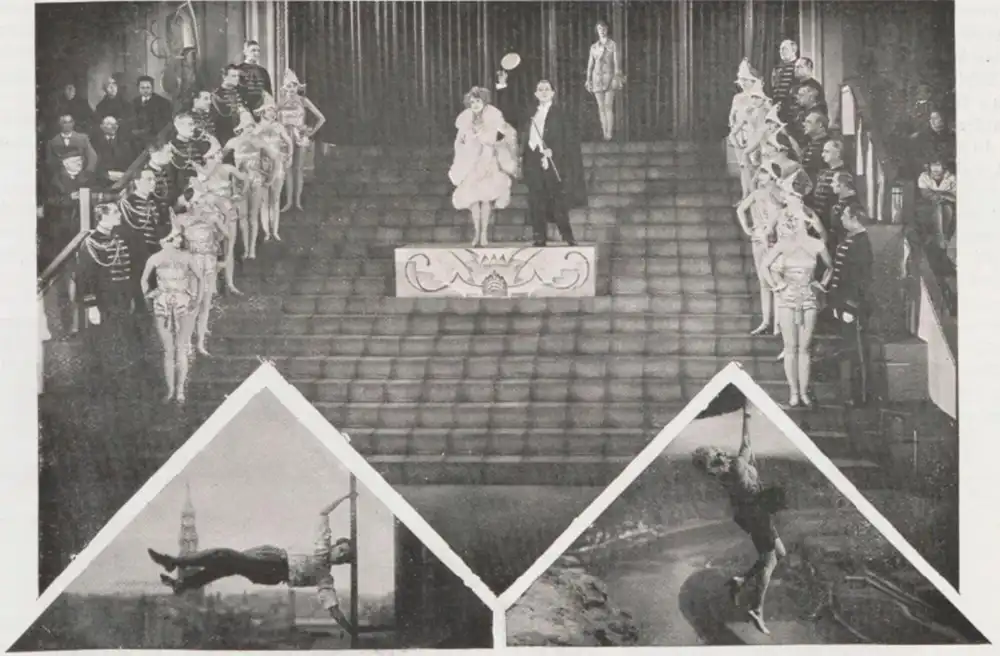
Naturally, once Spaventa proves his knack for safes, a gang of crooks gets wind of it. These villains are straight out of central casting for 1920s cinema. Exaggerated expressions, shifty glances, one guy with a perpetually twitching eyebrow. They're not menacing so much as they are broadly theatrical. Their hideout is exactly what you'd expect: a smoky room, everyone leaning in conspiratorially. The intertitles for their dialogue are wonderfully blunt: "He will be ours!" "We need his skill!" No room for ambiguity there.
The film’s pacing is a strange beast. Some sequences, like the safe-cracking or certain dramatic pauses, feel drawn out. Then, when the action really gets going – particularly when Spaventa is escaping from the crooks – the cuts become incredibly fast, almost disorienting. There’s a chase across rooftops that, while impressive in terms of stunts, is edited so choppily it’s hard to follow the geography. He'll be on one roof, cut, then suddenly he's three roofs over, and you're left wondering how he got there so quickly. It’s a weird kind of whiplash.
But then there are moments that genuinely work. Spaventa at one point needs to infiltrate a place and pretends to be wildly drunk. Albertini absolutely sells it. His physical comedy here is surprisingly effective, a real highlight amidst the more serious melodrama. He stumbles, he sways, he makes these exaggerated gestures. It’s a brief, unexpected burst of humor that feels very human and earned, and it provides a welcome shift in tone.
The crowd scenes sometimes have this oddly empty feeling. Like half the extras wandered off for a coffee break. Or maybe they just weren't instructed to do much beyond stand still. It adds a slight, almost uncanny valley effect to some of the wider shots, making the world feel a little less lived-in.
The climax involves more of Albertini’s incredible acrobatics – climbing walls, leaping across gaps. It’s all very much his show. The problem is, because he’s "the invincible," the stakes never feel truly high. You know he’s going to get out of whatever predicament he’s in. The film never quite manages to inject a genuine sense of peril, relying instead on the spectacle of his escape. It’s entertaining, sure, but you’re not on the edge of your seat.
The ending, when it comes, feels a little rushed, a little neat. All the threads are tied up, but there isn’t a grand, satisfying conclusion so much as a gentle fade out. It leaves you with the sense that you’ve watched a solid, if uneven, showcase for an exceptional physical performer, rather than a fully fleshed-out narrative masterpiece. It’s a curio, a piece of film history, and for that alone, it has value. Just don’t go in expecting more than that.
IMDb —
1926
Community
Log in to comment.