DbcultAccessing Vault...
6/10
Senior Film Conservator
A definitive 6/10 rating for a film that redefined the boundaries of cult cinema. An Eye for Figures remains a cornerstone of transgressive art.
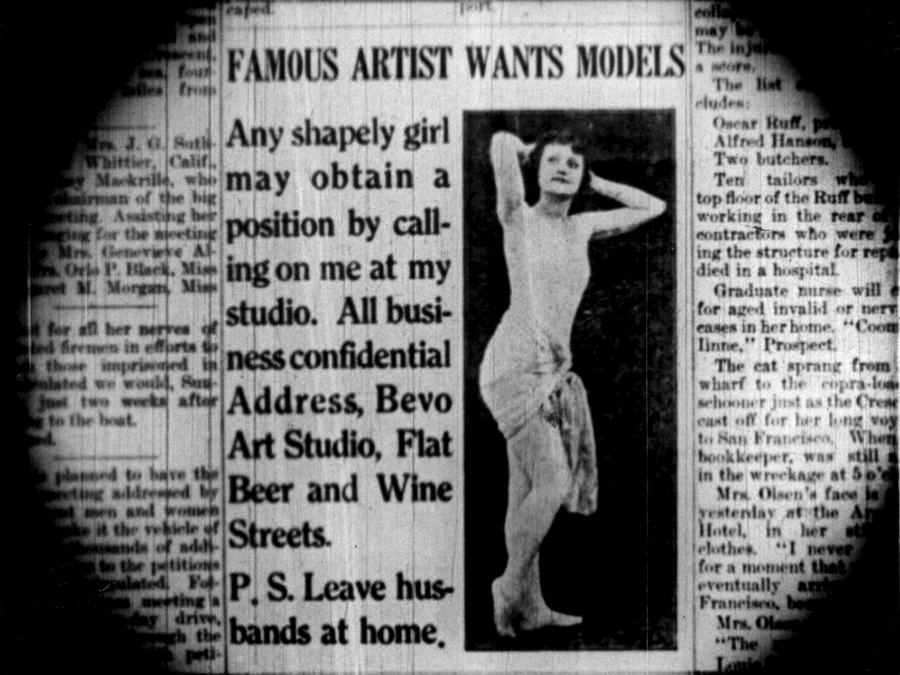
Beauty, the old saying goes, is in the eye of the beholder—unless the beholder happens to run a seaport art studio in 1916 and wields calipers like a bouncer at an exclusive club. An Eye for Figures lands its punchline there, then spends ten uproarious minutes detonating every gilt frame it can find.
What sounds like a trifle—custodian Hank minding the shop while painter-paragon Vernon Dent fawns over hourglass muses—balloons into a carnival of retribution once Madge Kirby’s rejected ingénue swivels from tears to tactical warfare. She doesn’t merely want an apology; she wants the whole edifice of curated flesh to wobble on its pedestal. Cue her beach battalion, a tanned cadre whose idea of justice involves counterfeit badges, flour-bomb contraband, and enough chaotic energy to make the Keystone Cops look like a Buddhist retreat.
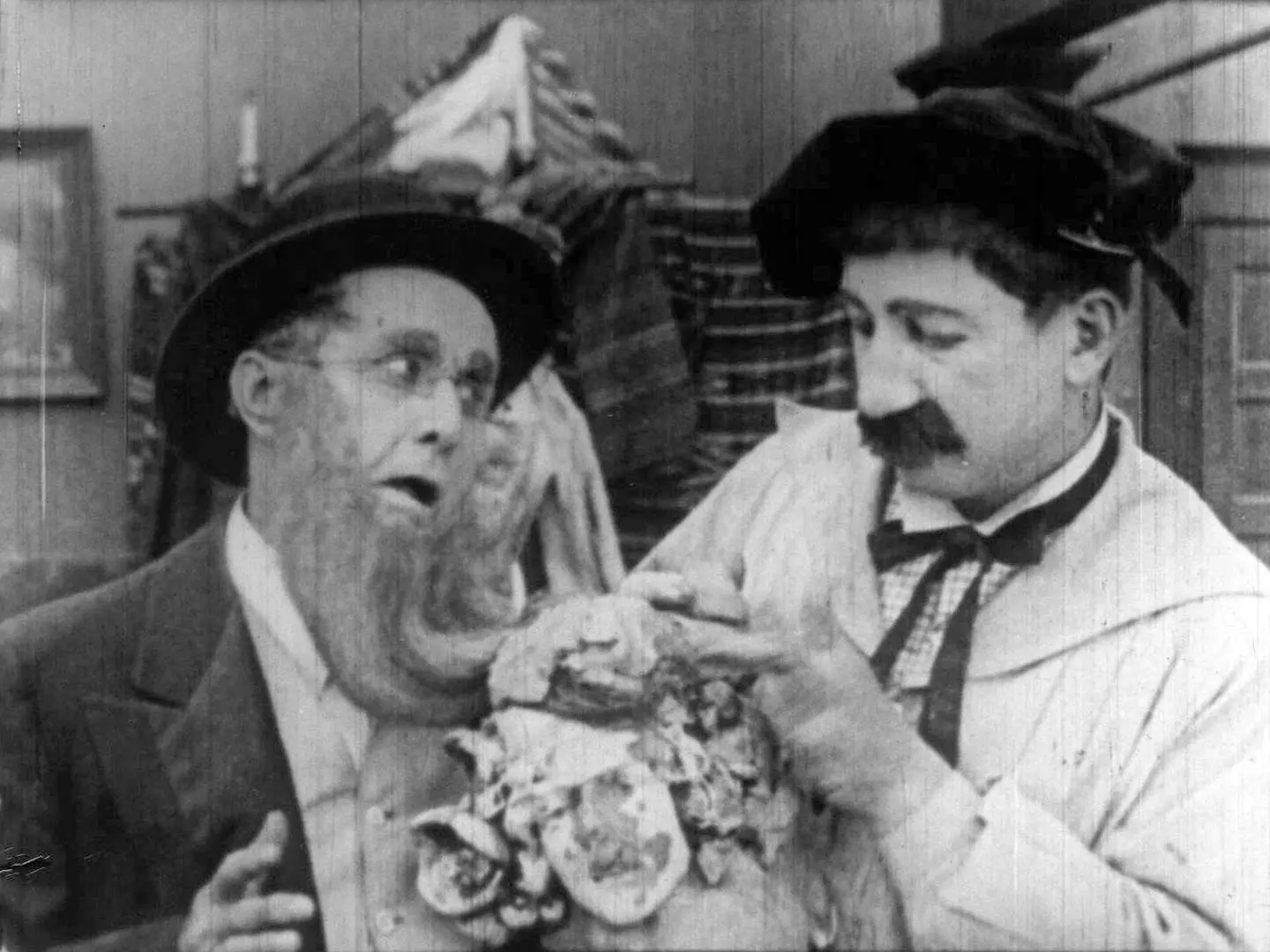
The raid itself—half morality play, half pie-fight symposium—splays across the screen like a stroboscopic mural. Tripod cameras topple; a marble Venus takes a custard facial; Hank Mann, everyman pawn in greasepaint domino mask, ricochets between flying palette knives and easels that sprout legs. He embodies the audience’s warring impulses: mortification at public humiliation, vicarious thrill at watching the gatekeepers of beauty get their comeuppance.
In the annals of silent slapstick, sabotage usually targets banks, bakeries, or bridegrooms. Rarely does it storm the citadel of aesthetics itself. By aiming its custard pies at the very commerce of corporeal approval, the film prefigures a century of body-politics discourse. The studio becomes panopticon and playground, a place where men assign numbers to ribcages and women requisition those numbers for revolutionary arithmetic.
Director-writer (and rumored one-man circus) James T. Kelley orchestrates mayhem with a metronomic sense of escalation. Each reel tightens like a catapult: first the casual dismissal, then the wounded close-up on Kirby’s dewy eyes, then the beach posse’s conspiratorial huddle filmed against rolling surf that looks positively Bacchanalian. Finally—sproing!—the trap springs, and every sculptural ideal is violated by airborne pastries and flailing limbs.
The comic syntax is unmistakably Sennett-adjacent—wide shots to map the arena, followed by staccato inserts of impact—but Kelley adds a mordant undertow. Watch how the camera lingers, half a beat too long, on a defaced canvas: a once-idealized nina now sporting a cartoon mustache in chocolate frosting. That pause is satire’s inhale before the next gale of laughter. We’re implicated; we’ve ogled bodies for sport, too.
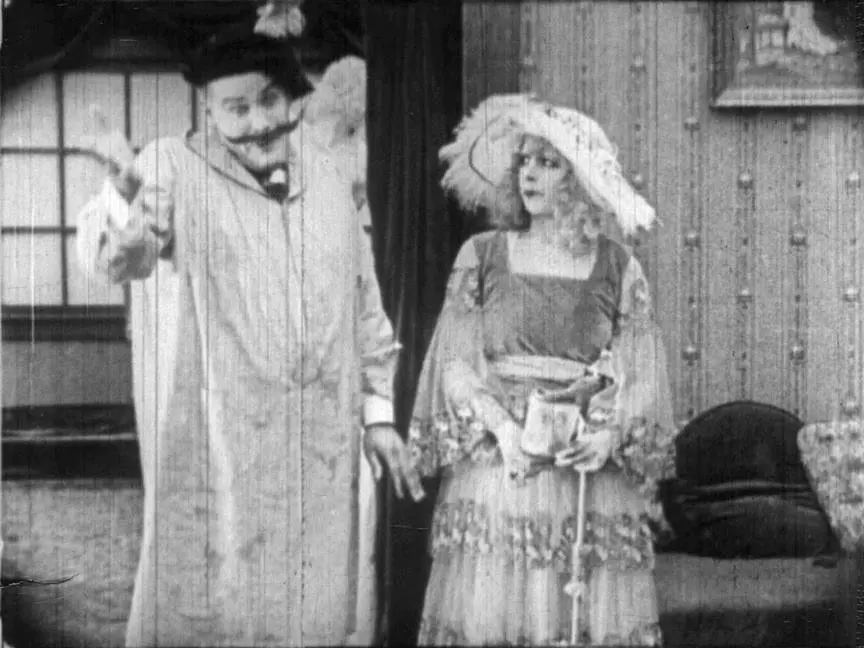
Hank Mann, rubber-limbed laureate of the downtrodden, here operates less like a protagonist than a pinball. His eyebrows semaphore perpetual disbelief, yet the pathos leaks through when he rescues a cracked statuette, cradling plaster limbs with the same tenderness Chaplin would reserve for a flower girl. The moment lasts three seconds but perforates the farce: we remember that custodians, too, dream of creation.
Vernon Dent, pre-moustache and already a human exclamation point, plays the artist like a man convinced the universe issued him a lifetime license to judge. His gait—chest thrust forward, hips lagging a half-second behind—signals someone who has spent years appraising others yet never faced audit himself. The raid forces that audit, and Dent’s slow-burn from hauteur to soot-smudged helplessness is a miniature master-class in physical hubris.
Madge Kirby, too often relegated to wide-eyed decor in other shorts, here seizes narrative authorship. Notice how she never overplays vengeance; instead, her smile tightens by incremental degrees until it achieves the serenity of a guillotine. In close-up, the seaside sun coruscates off her tresses, haloing her as both avenging angel and PR agent for every body type the casting couch discarded.
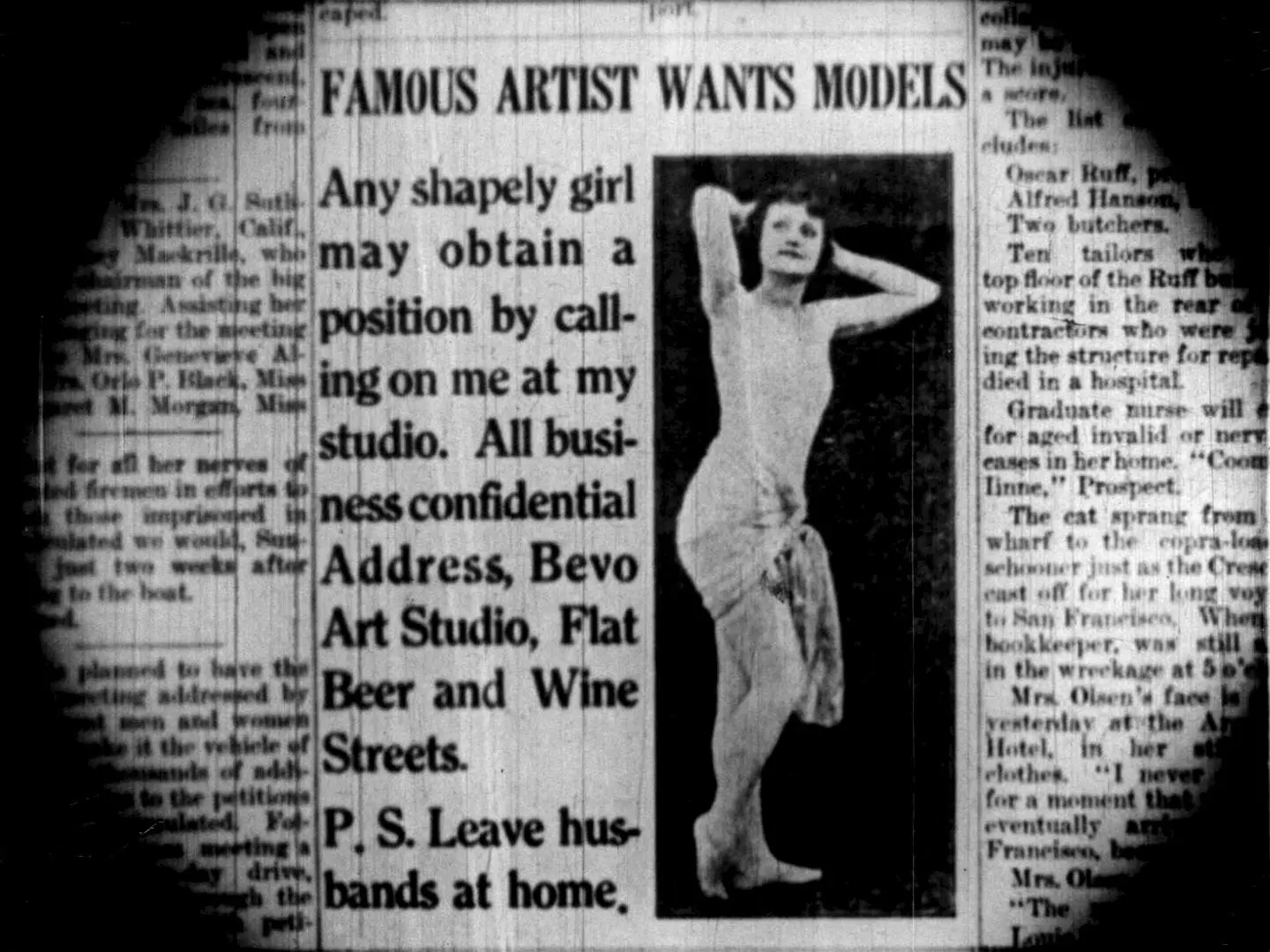
The cinematographer—name lost to nitrate amnesia—bathes the early frames in overexposed whites, turning the studio into a surgical theater where bodies are dissected by gaze alone. Once the raid commences, he pivots to chiaroscuro: dust motes ignite in projector beam, pigment clouds swirl like nebulae, and shadows lengthen into carnivalesque claws. The tonal swing mirrors the thematic coup; the very light sources seem to defect from the aesthetes to the insurgents.
Color tinting survives in the best extant print: amber for exterior frolic, sea-green for moments of conspiratorial tension, rose for the fleeting romantic détente between custodian and crusader. These flashes, rather than quaint, feel like synesthetic commentary—emotions coded in chromatic shorthand.
Released months before Margaret Sanger opened America’s first birth-control clinic, while Europe still dug trenches for the war to end wars, An Eye for Figures smuggles subversion inside a custard pie. The obsession with measurement—bust, waist, hip—mirrors Taylorist mania for efficiency. To literalize that obsession, the film furnishes calipers, tape measures, even a carnival “Guess Your Weight” contraption repurposed for studio auditions. By staging a raid that renders those metrics absurd, the film anticipates later feminist agitprop like Britain’s Bulwarks, where women’s labor value eclipses decorative value.

Yet the short refuses monolithic sanctimony. The beach brigade’s tactics—false warrants, simulated gunfire—parody state authority itself, hinting that yesterday’s objectified may become tomorrow’s oppressor if power remains the only currency. The film’s final shot, a slow dissolve from trashed studio to unbroken ocean, suggests measurement itself is the villain, not any gendered custodian thereof.
Where The Varmint (1914) channeled classroom chaos and Der Alchimist (1915) transmuted occult mysticism into sight gags, An Eye for Figures grafts social satire onto custard warfare. The DNA overlaps: speed ramped pratfalls, authority figures dethroned. But the tonal marrow diverges. In The Poor Little Rich Girl, reversal hinges on class; here, corporeality is the contested throne.
Equally illuminating is the contrast with The Married Virgin, where female virtue is bargained like bearer bonds. Both films indict transactional sexuality, yet Eye opts for carnival restitution rather than melodramatic martyrdom. Its prankster ethos aligns more comfortably with Das wandernde Auge, that Teutonic thought-experiment about surveillance and voyeurism, though Kelley’s lens is more sand-dusted than expressionistic.
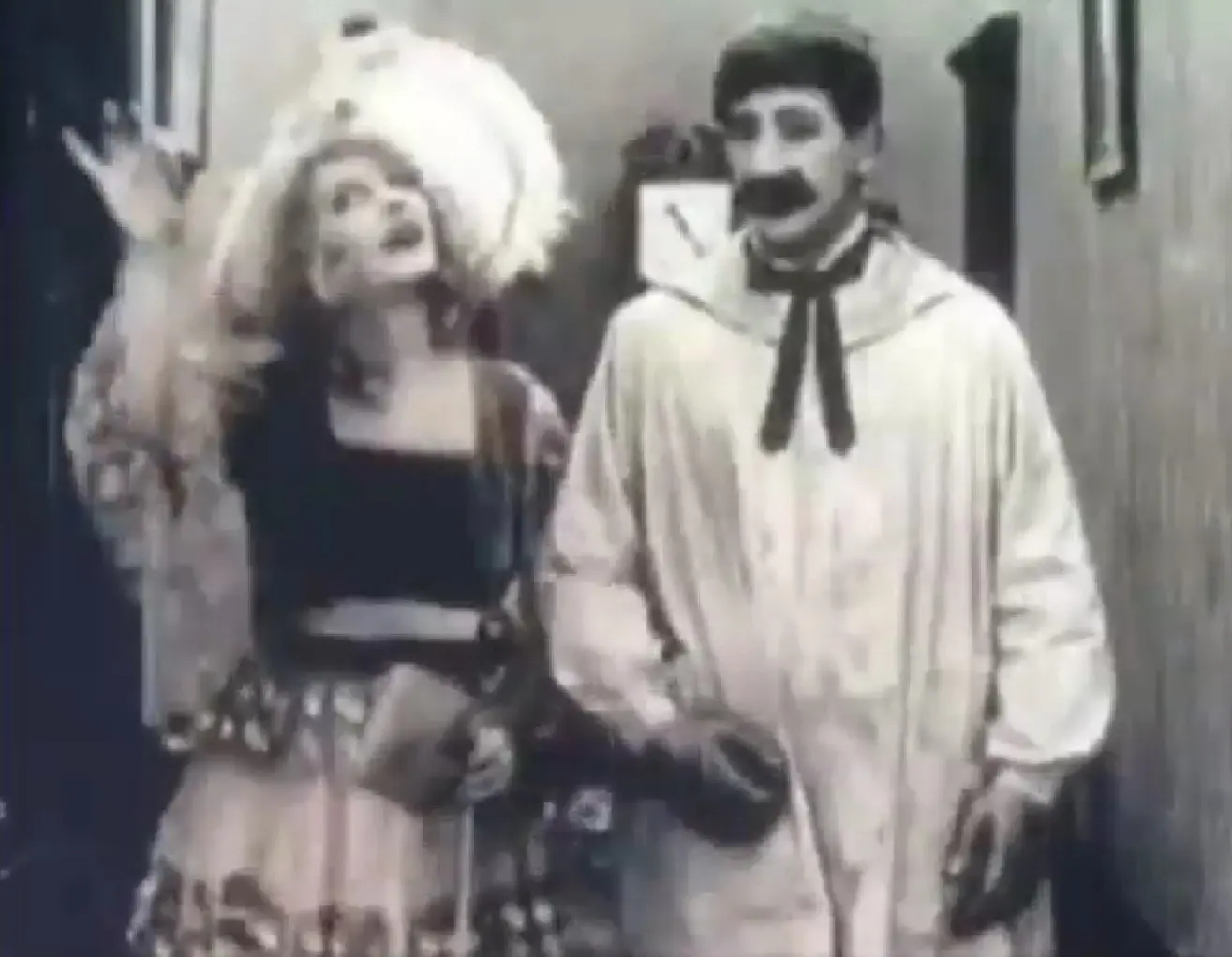
Modern revival houses often score this short with ukulele skiffle or ragtime piano, both choices perfectly serviceable. Yet the film’s thematic spine—body fascism under siege—cries out for something more contrapuntal. Imagine a cello drone punctuated by typewriter clacks, the aural equivalent of calipers snapping shut. Such dissonance would amplify the tension between visual slapstick and ideological subtext, transforming laughter into nervous hiccup.
Today, when Instagram filters recalibrate jawlines and dieting apps gamify hunger, the film’s lampoon of aesthetic gatekeeping feels prophetic. Meme culture has, in effect, turned us all into Hank—custodians of curated personas, sweeping up after each digital raid. Yet the film’s closing image—waves erasing footprints—offers anarchic comfort: no metrics survive the tide.
Archivists at MoMA cite An Eye for Figures as an early example of “riotous body politics,” while Tumblr activists GIF Kirby’s triumphant smirk into infinite loops tagged #MeasureThis. The circle, like the film’s own final dissolve, refuses closure; instead it ripples outward, challenging each generation to define beauty less by the eye that measures, more by the hand that refuses to caliper.
Ten minutes of nitrate, nearly bristling with celluloid acne, yet the anarchy vibrates louder than most prestige miniseries. For its prescient skewering of beauty industrial complex, for Hank Mann’s balletic klutziness, for the simple joy of watching yardsticks weaponized into boomerangs of poetic justice—An Eye for Figures earns 4.5 out of 5 sea-salt kisses.
Where to watch: 2K restoration available via MoMA’s digital collection; DCP tours with live score by Devil’s Fiddle quartet. Home viewers: dig through Kino’s “Slapstick Vanguard” box set—disc 3, right after the more famous but less biting Hands Across the Sea.
IMDb —
1915
Community
Log in to comment.