DbcultAccessing Vault...
Cult Review
Senior Film Conservator
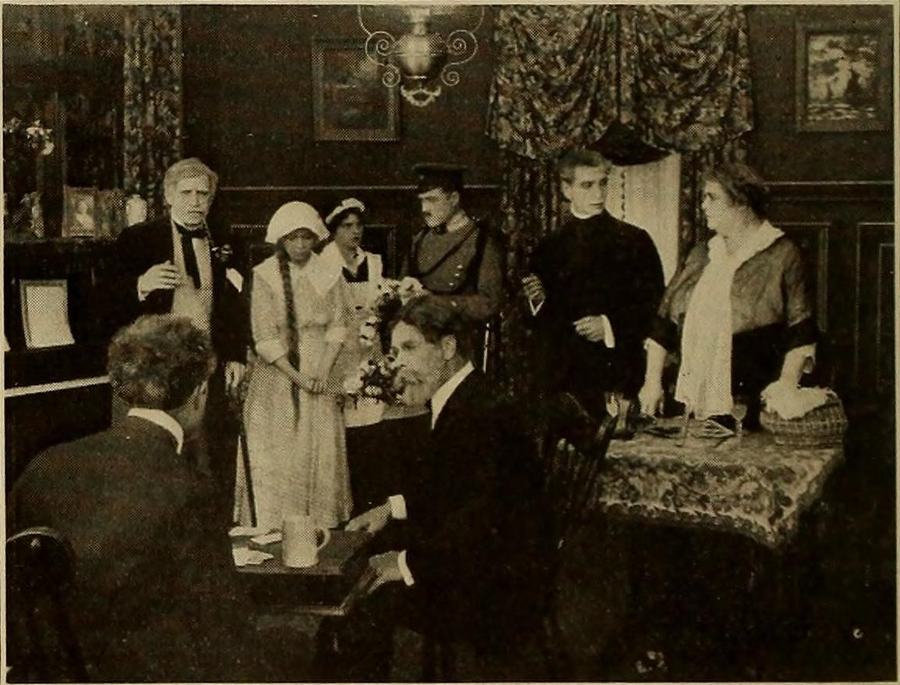
In the grand tapestry of early 20th-century cinema, there are narratives that resonate with an almost primal force, tales that, despite their age and the silent medium through which they speak, articulate the timeless anguish and triumph of the human spirit. Such is the profound power of "Revelation," a cinematic experience that transcends its historical context to deliver a searing indictment of societal hypocrisy and a poignant exploration of sacrifice, ambition, and the unbreakable, yet often devastating, bonds of family. Far from a mere relic, this film stands as a testament to the dramatic potency of the silent era, a period often dismissed but rich with artistic innovation and emotional depth. It beckons contemporary audiences to reconsider the profound artistry and narrative sophistication that flourished long before the advent of synchronized sound, proving that true drama needs no spoken word to stir the soul.
At the heart of "Revelation" beats the formidable and ultimately tragic figure of Magda, portrayed with a raw, visceral intensity by Constance Crawley. Her journey commences in the rigid, patrician confines of her German home, a gilded cage presided over by her stern, unyielding father, Colonel Schwartz. Magda's initial act of defiance – her flight to Paris, driven by the siren call of the opera stage – is not merely a youthful rebellion; it is a declaration of self, a desperate yearning for an identity beyond the one prescribed by her lineage. This audacious leap, however, carries a devastating immediate consequence: her father's paralytic stroke, a stark physical manifestation of his broken heart and wounded pride. The subsequent decree, forbidding even the utterance of her name, casts Magda into a familial purgatory, severed from her roots before her ascent has even begun. This early exposition immediately establishes the film's thematic bedrock: the often-irreconcilable conflict between personal aspiration and filial duty, between individual liberty and societal expectation. The camera often frames Magda in contrast to her opulent yet suffocating surroundings, visually underscoring her desire to break free from the traditional roles imposed upon women of her station.
Paris, the fabled city of lights and dreams, quickly proves to be a crucible of despair for Magda. The dazzling promise of operatic stardom dissolves into the stark reality of abject poverty. Her artistic ambitions, once so vibrant, wither under the relentless assault of hunger and homelessness. The film unflinchingly depicts her degradation, her transformation from aspiring diva to a common street beggar, her honor a fragile, beleaguered fortress against the encroaching tide of desperation. This harrowing descent is reminiscent of the trials faced by characters like Fantine in Les Misérables, Part 2: Fantine, where societal structures and personal misfortunes conspire to strip a woman of her dignity, forcing impossible choices for survival. Magda's plight is not romanticized; it is presented as a brutal consequence of a world that offers little quarter to those who fall from grace, particularly women who dare to defy convention. The stark contrast between the vibrant Parisian street scenes and Magda's increasingly desperate countenance serves as a powerful visual metaphor for her internal struggle and external defeat, a masterclass in silent film's ability to convey profound psychological states without dialogue.
It is in this nadir of her existence that fate intervenes, albeit with a cruel twist. In a humble Bohemian café, where Magda, starving, sings for the meager price of a meal, she is recognized by Karl Von Kellar, a ghost from her childhood. Karl, studying law in Paris, offers her a lifeline, pulling her from the gutters into the precarious comfort of his apartment. Yet, this rescue comes with a heavy price: Magda becomes his mistress, trading one form of precarity for another. Their initial happiness, however, is fleeting, a fragile illusion built on convenience rather than genuine affection. Von Kellar, a character embodying a casual male indifference, soon tires of her, his affections as ephemeral as the Parisian spring. His abrupt departure for Germany following his father's death leaves Magda once again abandoned, pregnant, and utterly alone, a poignant echo of her earlier abandonment by her family. This narrative beat underscores the precariousness of female existence in an era where societal judgment often left women with limited choices, particularly those who had strayed from prescribed paths.
The birth of her child adds another layer of profound tragedy and unwavering resolve to Magda's character. Pride, that double-edged sword, prevents her from informing Von Kellar of his paternity, a decision that seals her fate once more. Cast out by a heartless landlord, she wanders the highways, her infant clutched to her breast, a modern-day Madonna of the streets, her voice, once destined for grand opera houses, now a plaintive lament for survival. The film masterfully conveys the stark, almost unbearable weight of her maternal love. It is this love, this fierce desire to protect her child from starvation, that compels her to make the ultimate sacrifice. She enters into another liaison, this time with Antony D'Arcy, a rising operatic manager. This decision is not born of passion but of grim necessity, a calculated exchange of her body and spirit for her child's future and, paradoxically, for the very musical career that was her initial ambition. This pivotal moment underscores the film's central thesis: for women in this era, agency often came at a profound, personal cost, particularly when navigating the treacherous waters of societal judgment and economic hardship. The director's use of close-ups during Magda's moments of despair and resolve are particularly effective, drawing the audience into her internal world.
Years transmute Magda into Maddalina Dall Orto, a name that reverberates through the grand opera halls of Europe. She returns to her home city not as a disgraced daughter but as a celebrated diva, draped in the trappings of wealth and fame. This triumphant return is visually stunning, a dazzling display of her newfound status, yet beneath the shimmering surface lies the indelible scar of her past. The film's use of visual contrast here is particularly effective: the opulent gowns, the glittering jewels, the retinue of servants and pets, all serve to highlight the chasm between the woman she has become and the girl who once fled in desperation. At the governor's ball, the past finally collides with the present. Von Kellar, now a distinguished counselor of state, recognizes her, a moment charged with unspoken history and palpable tension. Simultaneously, her father, Colonel Schwartz, is persuaded to forgive her, his initial intransigence softened by the glare of her public acclaim. This forced reconciliation, however, is built on a foundation of unspoken truths and simmering resentments, a fragile truce that is destined to shatter. The camera lingers on Magda’s expressions, revealing the complex mixture of triumph, trepidation, and deep-seated pain that her public persona meticulously conceals.
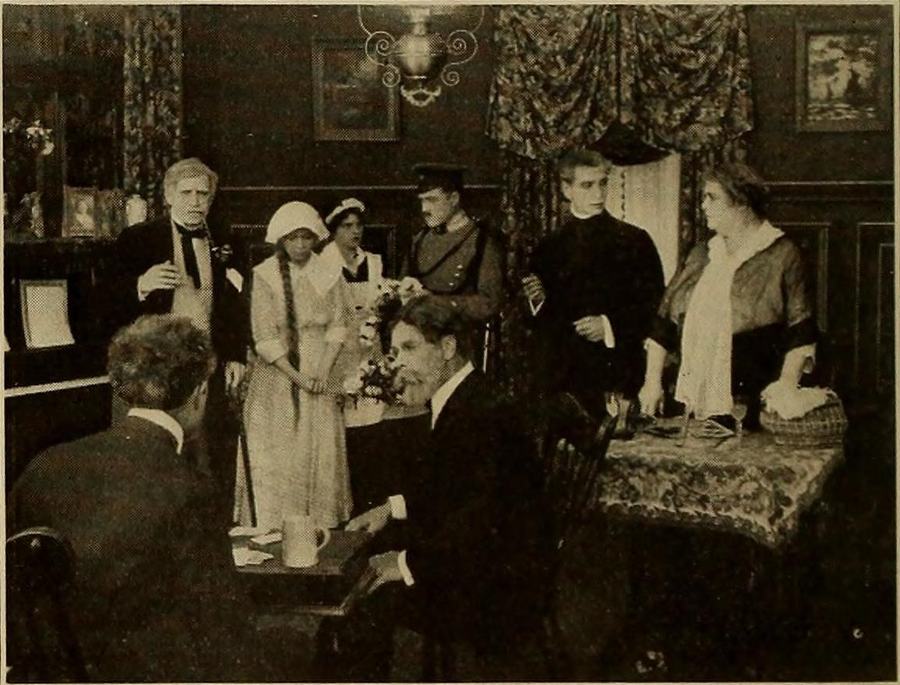
Magda's return to the ancestral home, with its stark contrast between her humble origins and her current splendor, sets the stage for the film's agonizing denouement. Her father, initially awestruck by her magnificence, quickly succumbs to suspicion, his patriarchal instincts overriding any sense of paternal pride. His persistent questioning regarding her past in Paris creates an atmosphere of suffocating tension, a slow-burning fuse leading to an inevitable explosion. The arrival of Von Kellar, ostensibly a social call, unwittingly ignites this fuse. The revelation of their seven-year-old child, attending a private academy in Paris, shatters the fragile façade Magda has meticulously constructed. Her furious denunciation of Von Kellar, a visceral outpouring of years of suppressed pain and indignation, is a powerful moment of catharsis, yet it is also the catalyst for her ultimate undoing. The silent medium, in these intense confrontations, relies heavily on the actors' physicality and the director's staging to convey the profound emotional stakes, a technique masterfully employed here to build unbearable dramatic pressure.
Overhearing enough to confirm his darkest suspicions, Colonel Schwartz confronts Magda, brutally forcing a confession from her. This scene is particularly harrowing, a stark depiction of patriarchal power wielded with devastating force. The Colonel, his sense of family honor irrevocably stained, descends into a towering rage. His subsequent attempt to coerce Von Kellar into marriage, threatening violence unless he complies, is a desperate, misguided attempt to restore a semblance of respectability. Von Kellar, ever the pragmatist, agrees, recognizing the political advantages of marrying a celebrated artist, a cynical calculus that further highlights his moral bankruptcy. However, his condition – that all knowledge of their child be kept a secret from the world – is the final, unbearable affront to Magda's dignity and her maternal love. Her indignant refusal, a defiant assertion of her child's existence and her own integrity, sets in motion the film's tragic climax. The rigid social mores of the early 20th century are laid bare, showcasing how a woman's reputation, once tarnished, could be "redeemed" only through the most demeaning sacrifices, particularly within the confines of a patriarchal society obsessed with appearances.
The final confrontation between Magda and her father is a masterclass in silent film melodrama, delivered with an almost unbearable intensity. Colonel Schwartz, locking the doors and arming himself with a revolver, presents Magda with an unthinkable ultimatum: marry Von Kellar and abandon her child's public acknowledgment, or face a double suicide. The scene is imbued with a suffocating sense of claustrophobia and impending doom, heightened by the tight framing and the relentless build-up of tension. Magda's unwavering refusal to abandon her child, even under the most extreme duress, elevates her from a mere victim of circumstance to a figure of immense moral fortitude. As her father slowly raises the pistol, his hand trembling with a mixture of rage and despair, he is seized by a final, fatal stroke, collapsing dead at her feet. This sudden, violent end to the Colonel's tyranny is both shocking and tragically ironic, a bitter "revelation" of the destructive power of pride and unyielding patriarchal control. Magda's final act, flinging herself upon her father's lifeless body, sobbing out her misery and grief, is a heart-wrenching tableau that encapsulates the film's profound emotional weight. It is a conclusion that offers no easy answers, no comforting resolution, only the raw, unvarnished pain of a life irrevocably shaped by sacrifice and loss, leaving the audience to ponder the ultimate cost of a life lived at the intersection of societal expectation and personal conviction.
"Revelation" is more than a simple narrative; it is a profound commentary on the societal constraints imposed upon women, particularly those who dare to pursue unconventional paths. Constance Crawley's performance as Magda is nothing short of mesmerizing. Her ability to convey a vast spectrum of emotions – from youthful idealism to crushing despair, from fierce maternal protectiveness to defiant pride – without uttering a single word, is a testament to her skill as a silent film actress. The film's visual storytelling, characteristic of the era, relies heavily on exaggerated gestures, expressive facial movements, and meticulously crafted mise-en-scène to communicate the inner turmoil and external conflicts. The director's keen eye for composition ensures that every frame contributes to the overarching emotional landscape, drawing the viewer deeper into Magda's harrowing world. While the pacing might feel deliberate to a modern audience accustomed to rapid-fire editing, it allows for a sustained emotional intensity, building tension with a slow, inexorable dread that culminates in the devastating finale. This deliberate rhythm is not a flaw but a strength, inviting viewers to immerse themselves fully in the emotional currents of the story, appreciating the nuances of each character's journey.
The supporting cast, though perhaps overshadowed by Crawley's magnetic presence, delivers credible performances that flesh out the intricate web of relationships. Robert Klein as Colonel Schwartz embodies the rigid, ultimately destructive force of traditional patriarchy, his character arc a tragic descent into the very consequences of his own intransigence. Arthur Maude's Karl Von Kellar serves as a compelling antagonist, a man whose superficial charm masks a calculating opportunism and a profound lack of empathy, making his eventual proposal all the more repulsive. Even the fleeting presence of Madeline Fordyce as Magda's child, though silent, powerfully symbolizes the innocent life for which Magda makes her ultimate, heartbreaking sacrifices. The film, in its exploration of a woman forced to make impossible choices, resonates with the thematic echoes found in other silent era melodramas, where the struggle against societal norms and the pursuit of personal fulfillment often led to tragic ends. The ensemble's collective effort creates a believable, if often bleak, world, where personal desires frequently clash with the unyielding demands of an unforgiving society.
From a technical standpoint, "Revelation" exemplifies the artistic craftsmanship prevalent in the silent film era. The use of intertitles is judicious, providing necessary narrative clarity without disrupting the visual flow, often appearing with elegant typography that enhances the film's aesthetic. The cinematography, while perhaps not groundbreaking for its time, effectively captures the contrasting worlds Magda inhabits – the austere German home, the bustling, yet unforgiving streets of Paris, and the opulent, yet emotionally barren, world of the celebrated diva. Lighting, too, plays a crucial role, often casting Magda in shadows during her moments of despair and illuminating her dramatically during her stage performances, visually charting her emotional and professional trajectory. The film’s dramatic structure, moving from initial defiance to profound degradation, then to a deceptive triumph, and finally to a crushing personal catastrophe, is meticulously constructed, ensuring that the emotional stakes are continually heightened. The choice to conclude with Magda's raw grief over her father's body, rather than a tidy resolution, speaks volumes about the film's commitment to portraying the harsh realities of its protagonist's life. It leaves the audience with a lingering sense of pathos, a deep empathy for a woman who, despite achieving her professional dreams, finds her personal life shattered by an unyielding world, a testament to the enduring power of classic storytelling.
In conclusion, "Revelation" stands as a powerful and enduring work of silent cinema, a compelling drama that delves into the profound sacrifices made in the pursuit of ambition and the devastating consequences of societal judgment. It is a film that challenges viewers to consider the true cost of 'honor' and 'respectability,' particularly when measured against the unyielding demands of survival and maternal love. Constance Crawley's tour-de-force performance anchors this narrative, transforming a melodramatic plot into a deeply affecting human tragedy. It is a film that deserves to be rediscovered, not just as a historical artifact, but as a vibrant and emotionally resonant piece of storytelling that speaks to universal themes of struggle, resilience, and the often-unbearable weight of personal choice. Its "revelation" is not merely of plot points, but of the enduring strength and fragility of the human heart, demonstrating how the silent screen could articulate complex narratives with a compelling eloquence that transcends spoken dialogue. The film, in its stark portrayal of a woman's journey through societal judgment and personal sacrifice, is a poignant reminder of the enduring power of classic cinema to explore complex human experiences with unflinching honesty. It leaves an indelible mark, urging contemplation on the unseen burdens carried by those who dare to forge their own path, particularly when that path is fraught with the perils of a unforgiving world. The resonance of Magda's journey, from defiant aspiration to celebrated, yet tormented, artist, ensures that "Revelation" remains a compelling and essential watch for anyone interested in the rich heritage of early filmmaking and its timeless capacity for profound emotional impact. Its poignant narrative, deeply human characters, and masterful silent storytelling cement its place as a significant, albeit often overlooked, classic that continues to provoke thought and stir emotion in equal measure. This is a film that demands to be seen, experienced, and remembered for its raw honesty and its unflinching look at the price of ambition and love in a world of rigid expectations.

IMDb 6.4
1936
Community
Log in to comment.