DbcultAccessing Vault...
Cult Review
Senior Film Conservator
The first thing that strikes you about Der Weltspiegel is the smell: a ghost of nitrate, warm brass, and cheap violet soap drifting across the auditorium like an afterthought of the dead. The second thing is the silence—an engineered absence that makes every perforation clatter of the passing film sound like teeth chattering in a freezer. This is 1920 Berlin, a city chewing its own tail, and the Weltspiegel Kino is the open mouth.
Forget the Expressionist cardboard alleys of Caligari; here the pathology is celluloid. Directors Felix Josky, Gerhard Lamprecht, and Lupu Pick—three feverish minds trading reels like kids swapping marbles—deliver a film that is less narrative than infection. The plot, if you insist on such antiquities, loops like a Möbius strip: a projectionist threads the world into the machine and the machine re-threads the world back into us.
Fritz Richard, face as cracked as Dürer’s self-portrait, plays the anonymous projectionist with the solemnity of a priest who no longer believes in resurrection. His fingers, gnarled from years of re-threading broken dreams, move across the apparatus as if caressing the throat of a sleeping lover. Each reel he mounts is a confession: executions, suffrage parades, the mutilated returning from Verdun, chorus girls kicking up legs like exclamation marks. He splices them together until the newsreel becomes a séance.
Gertrude Welcker drifts down the aisles in a usherette’s jacket two sizes too large, pockets stuffed with discarded snippets. She bargains: a childhood birthday party for your last cigarette; a shot of your own burial for the tram fare home. Her eyes are twin projectors already running—whatever they fall upon develops and fixes. Welcker’s performance is pure ectoplasm; she never quite touches the ground, and when she finally sits inside the beam, the light passes through her, throwing no shadow.
Reinhold Schünzel’s banker—tailored in pre-war wool, now frayed like nerve endings—arrives clutching a can labeled “Zukunft.” Inside is tomorrow’s bourse; he intends to front-run fate. But the strip buckles, bubbles, ignites, and the flaming numbers become a swarm of black moths that clog the projector’s gate. In close-up, we watch his pupils dilate as the fire licks toward the lens; the reflection of his burning fortune superimposes onto his cornea until eye and empire become one collapsing star.
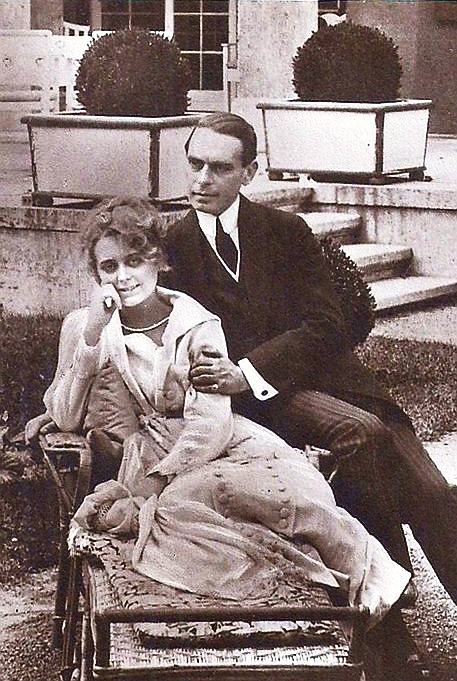
Meanwhile, a boy (Bertold Reissig) finds a tin misfiled under “Alternativ-Berlin.” The footage shows boulevards without amputees, cafés where newspapers report only carnivals. He pockets it, hides in the lavatory, cranks the hand viewer. With every loop he ages: ten, twenty, forty, eighty—until he emerges stooped, mustache sprouting like soot, now the janitor who nightly sweeps the lobby. The lost reel devoured his linear life; what walks out is the echo wearing his clothes.
Bernd Aldor’s inspector pursues an anarchist said to have spliced a bomb into the newsreel. The explosive is not nitro but montage: a frame of the Kaiser’s wink, four frames of a worker’s clenched fist, six of a child’s balloon popping—cut together they spell detonation. The investigation becomes a frantic hunt through strips hung like drying laundry. Each time he thinks he’s found the lethal splice, the reel rewinds itself, the cut migrates, the conspiracy multiplies like a virus in a bloodstream of silver halide.
Adolf Klein’s industrial magnate books the grand salon for a private matinee. Onscreen he witnesses his own factory gates, the strike he thought he’d crushed, his villa torched by silhouettes wearing his own monogrammed gloves. The camera lingers on his profile as recognition curdles into something colder than fear: the realization that history is a film he can edit but never direct. When the projector flares, his shadow burns into the wall, a permanent still that the janitor will sweep around for years.
Technically, the film is a cauldron of innovations that make The Devil’s Double look quaint. Multiple exposure stacks ten translucent Berlins atop one another; prismatic lenses bend streetlights into halos that resemble bruised galaxies. The cinematographer, rumored to be a defamed physicist, fitted the camera with a spinning gyroscopic shutter that varies exposure frame-by-frame, birthing a stuttered temporality where rain hangs like comma splices and laughter arrives a second before the mouth moves.
The score, long vanished, survives only in anecdote: a live trio scraping gramophone needles across washboards, a soprano looping the word “Morgen” until it becomes “Mord,” then “Geld,” then “Null.” Viewers reported hearing sirens that weren’t in the soundtrack, seeing flashes between frames that contained their own faces. The censors demanded a disclaimer: “Images are not reality.” The filmmakers retorted by inserting a title card that read: “Reality is not reality,” then set that card on fire, filming the curling ember and splicing it back into the same reel.
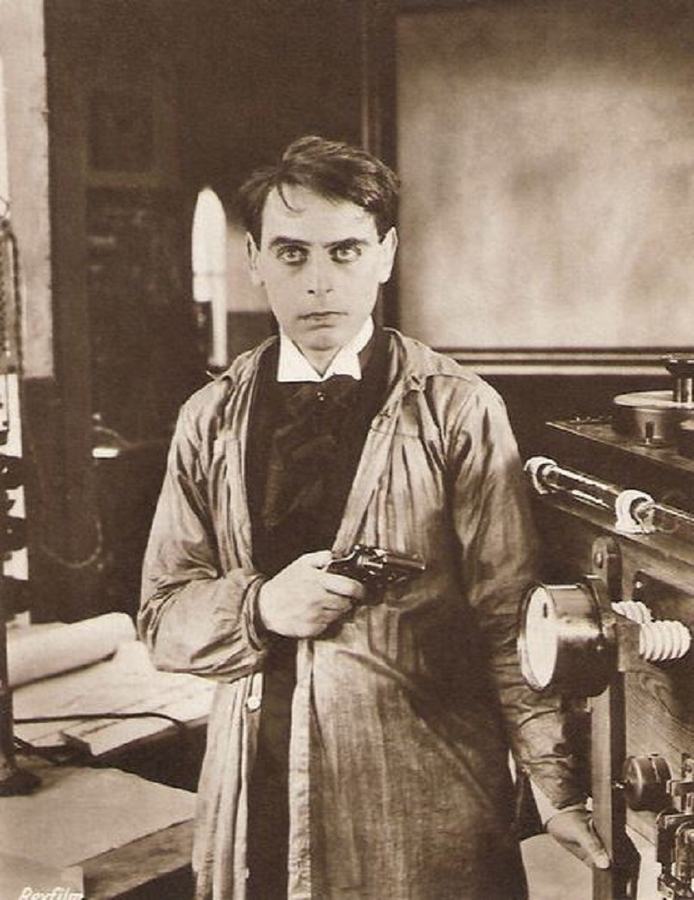
Comparisons? Imagine The Strange Case of Mary Page cross-bred with The Woman in the Web, then fed through a shredder and reassembled by a sleep-deprived archivist. The Weltspiegel anticipates the surveillance vertigo of Fides and the class-carnival of Dodging a Million, yet it predates both, as if history itself were stealing from it rather than the reverse.
Critics of the era dismissed it as “Kino-Kaleidoskopische Fiebertraum”—a fever dream for intellectuals who couldn’t afford cocaine. Yet its DNA coils through every found-footage essay, every TikTok supercut, every deepfake that makes a president waltz with a dictator. The film intuits that montage is not just aesthetics but ethics: every cut is a moral judgment, every splice a possible murder.
What lingers longest is the final sequence. The projectionist, fed up with the hunger for illusion, climbs a ladder, opens the carbon-arc housing, and turns the lamp to full solar fury. The film itself combusts; frames buckle, perforations scream. Instead of extinguishing the blaze, he threads the burning ribbon back through the gate. The audience sees itself reflected in the flames, then the mirror-shard of the city, then nothing but white. The screen becomes a retina overexposed to history. When the smoke clears, the theater is an aquarium of drifting ash; each flake bears a half-image—a Kaiser mustache, a dancer’s ankle, a stock ticker, a child’s eye.
Outside, Berliners lift their faces to a sky transformed into a vast rear-projection; captions hover in the clouds like Zeppelins. Their own shadows have been replaced by intertitles: “Er wollte die Welt verstehen” (“He wanted to understand the world”). Nobody can remove them; laundry is washed, children born, wars signed beneath these floating sentences. The Weltspiegel achieved what every film secretly desires—not to represent life but to replace it, frame by frame, with its own burning echo.
Restoration efforts are rumored—an 8K scan from a sole surviving 28mm print discovered inside a hollowed-out piano in Leipzig. But each time archivists re-scan, the file corrupts differently: new frames appear of cities yet unbuilt, faces yet unborn. They’ve coined the term “entropic generation,” as if the film refuses stasis, as if it metabolizes its own future spectators.
So the Weltspiegel remains what it always was: a promise and a warning soldered into one shimmering strip. Watch it if you dare, but know this—you will exit the theater unsure whether you are audience or footage, whether your next blink is a cut or a fade-out, whether the credits rolling overhead are someone else’s life—or merely the intertitles of your own.

IMDb —
1918
Community
Log in to comment.