DbcultAccessing Vault...
6.2/10
Senior Film Conservator
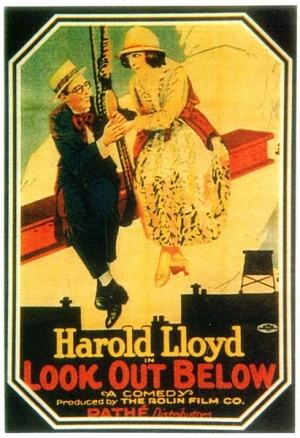
A definitive 6.2/10 rating for a film that redefined the boundaries of cult cinema. Look Out Below remains a cornerstone of transgressive art.
The year 1919 stood as a pivotal meridian in the evolution of cinematic language, a moment where the crude antics of the nickelodeon began to coalesce into a sophisticated grammar of movement and space. Harold Lloyd, often overshadowed in contemporary discourse by the pathos of Chaplin or the stoicism of Keaton, was arguably the most astute navigator of this transition. In Look Out Below, we witness the nascent flicker of the 'Thrill Comedy'—a subgenre Lloyd would eventually perfect. This isn't merely a film about a boy meeting a girl; it is a film about the spatial relationship between the human body and the terrifying expanse of the modern metropolis.
While many films of the period, such as the earnest A Hoosier Romance, sought to capture the pastoral sentimentality of a fading America, Look Out Below leans aggressively into the future. The setting—a skyscraper under construction—is not merely a backdrop; it is a structural antagonist. The youth, played by Lloyd with that signature blend of optimism and frantic energy, finds his romantic aspirations literalized by the ascent. Every girder represents a hurdle in the social hierarchy; every missed step a potential descent into the anonymity of the masses below.
The chemistry between Lloyd and Bebe Daniels is palpable, crackling with a vitality that many of their contemporaries lacked. Unlike the heavy-handed drama found in A Soul Without Windows, the stakes here are visceral rather than purely moralistic. When they ride the steel beams toward the heavens, the audience isn't just watching a stunt; they are observing the elevation of the romantic comedy into a realm of physical existentialism. The camera work, though primitive by modern standards, captures the genuine vertigo of the Los Angeles streets, providing a documentary-like glimpse into the city's skeletal growth.
The brilliance of Look Out Below is amplified by its supporting ensemble. The presence of 'Snub' Pollard and Bud Jamison ensures that the film never loses its footing in the fertile soil of comedy, even as the characters lose theirs on the girders. The interplay between these performers suggests a clockwork precision. While a film like Two Little Imps relies on the chaotic energy of its protagonists, Lloyd’s production feels calculated, every fall and every recovery timed to maximize the audience's respiratory distress.
One must appreciate the technical audacity required to film these sequences in 1919. There were no green screens, no digital composites. The danger was, to a significant degree, authentic. This authenticity creates a tension that is absent in the more stylized fantasies of the era, such as The Gates of Doom. In Lloyd’s world, the threat of gravity is the ultimate arbiter of truth.
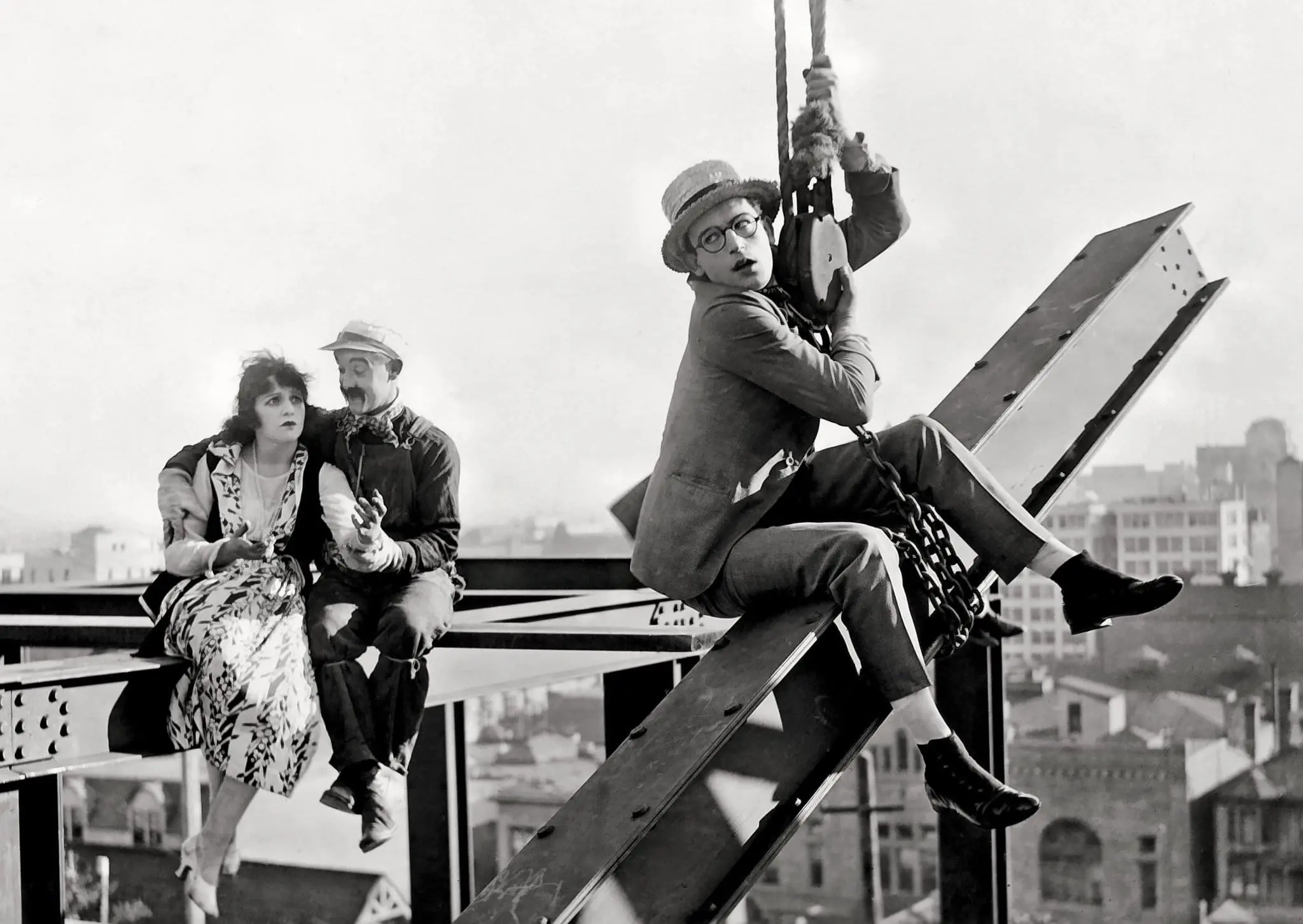
To fully grasp the significance of Look Out Below, one must contrast it with the prevailing cinematic trends of the late 1910s. While Veritas vincit attempted to span centuries with its epic moralizing, and War As It Really Is sought to capture the grim reality of global conflict, Lloyd’s work remained stubbornly, brilliantly focused on the individual’s struggle against the immediate environment. There is a purity in this focus. The film doesn't ask us to contemplate the fall of empires, but rather the fall of a single man from a wooden plank.
Furthermore, the film avoids the domestic claustrophobia seen in All for a Husband or the societal constraints of The Wife He Bought. Instead, it offers an expansive, outward-looking perspective. The skyscraper serves as a phallic monument to the American Dream, and Lloyd’s character is the everyman attempting to claim his stake at the summit. It is a narrative of upward mobility in the most literal sense possible.
Visually, the film is a masterclass in using verticality to create depth. The directors and cinematographers of the Rolin Film Company understood that the frame could be expanded not just horizontally, but through the layering of foreground action against a distant, bustling background. This technique provides a sense of scale that makes the comedy feel monumental. It is a stark contrast to the more theatrical, flat staging found in contemporary works like Die Maske.
The editing rhythm is equally noteworthy. The cuts between the lovers' faces and the precarious drops below create a psychological loop of desire and fear. This is the essence of the 'thrill'—the juxtaposition of a human connection with the threat of its sudden, violent termination. Even in the quieter moments, the film maintains a kinetic pulse, a sense that at any second, the world could tilt on its axis.
In Look Out Below, we see Harold Lloyd refining the 'Glasses' persona—the earnest, resilient young man who succeeds through perseverance rather than superhuman strength. This character was a radical departure from the grotesque caricatures that dominated early silent comedy. He was relatable. He was the audience. When he dangles from a beam, we aren't just laughing at a clown; we are rooting for ourselves. This empathy is what separates Lloyd from the more detached irony of Pride or the darker themes of Restless Souls.
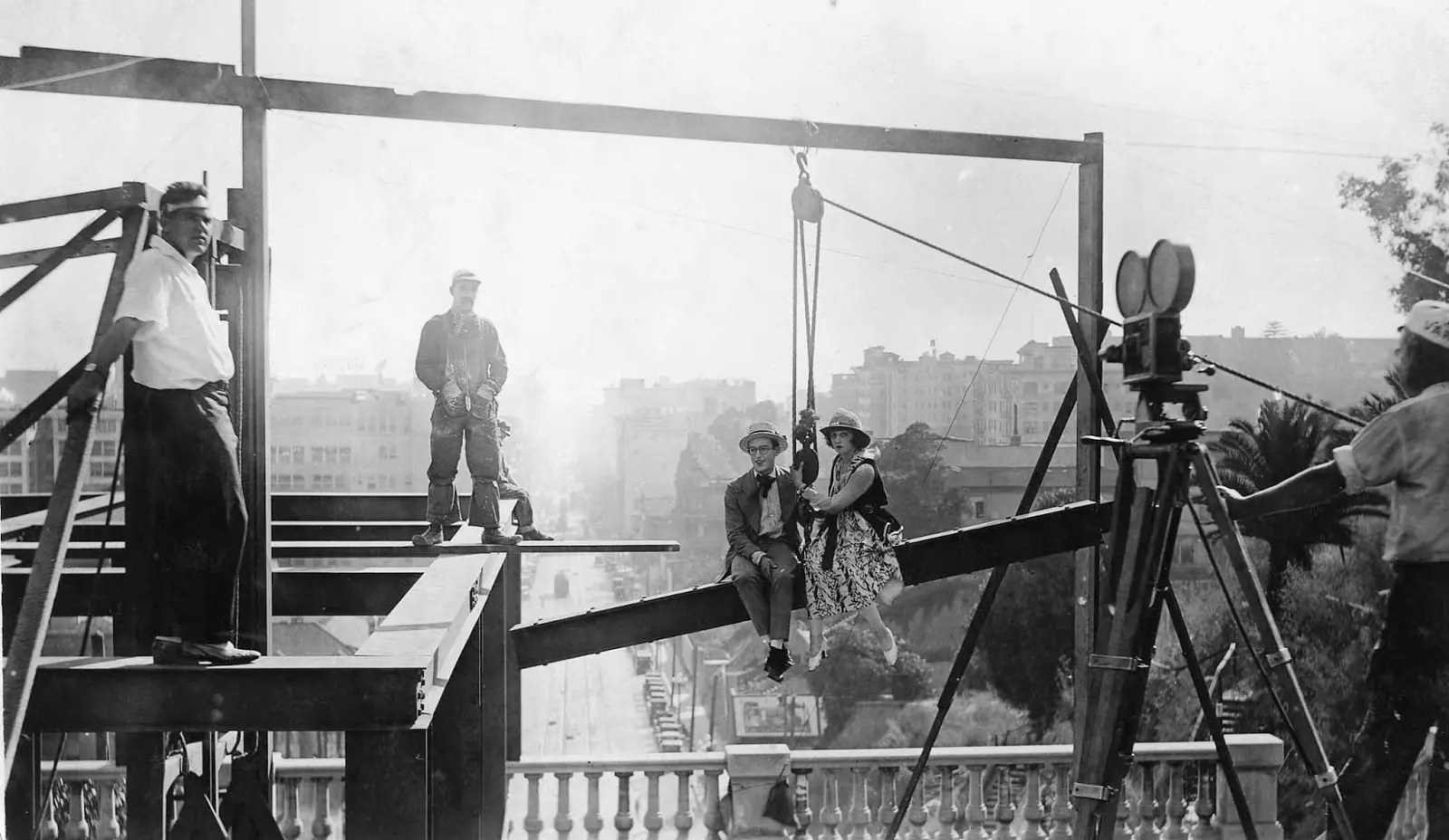
The film also highlights the burgeoning stardom of Bebe Daniels. Her role here is a precursor to the vibrant, independent women who would define the 1920s. She matches Lloyd’s energy step for step, girder for girder. Their partnership was a cornerstone of the Rolin output, providing a romantic core that grounded the more outlandish stunts. In a landscape often filled with the grim determinism of Are They Born or Made?, the Lloyd-Daniels shorts were a beacon of optimistic vitality.
One cannot discuss Look Out Below without mentioning the silent, looming presence of Los Angeles. The city in 1919 was a canvas of dirt roads and rising steel. The film captures this metamorphosis with an inadvertent documentary power. The skyscraper is a symbol of the transition from the Victorian era to the Jazz Age. It represents a move away from the mystery-laden corridors of Mysteries of the Grand Hotel and into the bright, dangerous clarity of the modern world.
The youth’s adventure is a microcosm of the American experience at the dawn of the 20th century: a climb toward an uncertain future, fueled by love and a reckless disregard for the safety net. The film suggests that the only way to navigate this new world is with a sense of humor and a firm grip. It is a philosophy that resonates as much today as it did a century ago.
As we look back at Look Out Below, we must see it as more than a relic of a bygone age. It is a foundational text of physical cinema. It predates the epic scale of Come Through and the whimsical charm of Joy and the Dragon, yet it contains the seeds of everything that would make the 1920s the golden age of comedy. It is a film that demands to be seen not just with our eyes, but with our equilibrium.
Lloyd’s genius lay in his ability to make the impossible feel inevitable. In the hands of a lesser artist, the skyscraper sequence would be a mere curiosity. In Lloyd’s hands, it becomes a metaphor for the human condition. We are all, in some sense, riding around on pieces of steel, overlooking the streets of our own lives, hoping that the maiden will smile and the girders will hold. Look Out Below is a testament to that precarious, beautiful struggle.
A cinematic ascent that remains unparalleled in its joyous defiance of gravity.
IMDb —
1927
Community
Log in to comment.