DbcultAccessing Vault...
5.2/10
Senior Film Conservator
A definitive 5.2/10 rating for a film that redefined the boundaries of cult cinema. The Dumbwaiter remains a cornerstone of transgressive art.
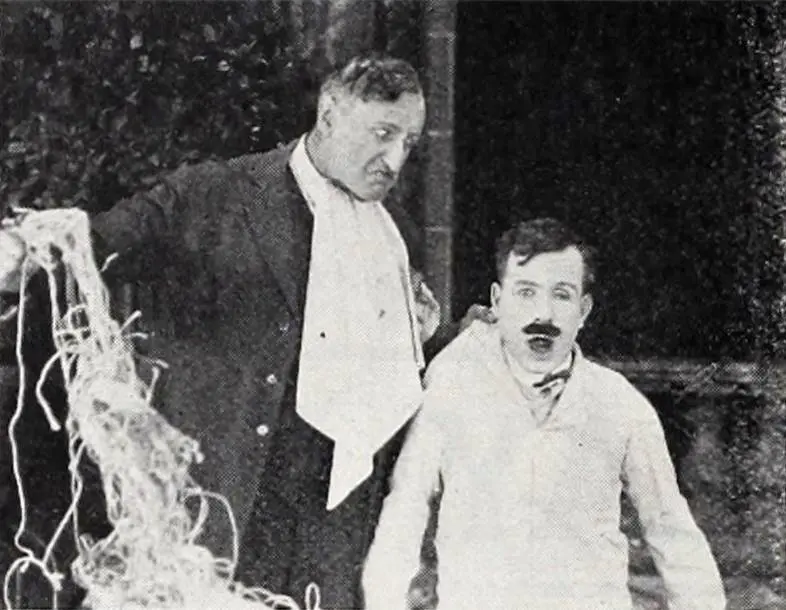
The year 1920 stands as a pivotal junction in the evolution of cinematic language, a moment when the primitive curiosities of the previous decade began to coalesce into sophisticated, albeit often ribald, narrative structures. At the heart of this transformation was the short-form comedy, a genre that demanded an almost mathematical precision in its execution. The Dumbwaiter, featuring the seasoned chemistry of Eddie Lyons and Bobby Dunn, is a fascinating specimen of this era. It lacks the heavy-handed moralizing found in contemporary dramas like The Price of Her Soul, choosing instead to find its truth in the velocity of a well-timed pratfall and the architectural constraints of an urban apartment building.
What strikes the modern viewer immediately is the film's reliance on verticality. While many films of the period, such as the evocative Havsgamar, utilized sweeping landscapes to convey isolation or peril, The Dumbwaiter compresses its universe into a narrow shaft. This spatial restriction acts as a pressure cooker for the comedic tension. Eddie Lyons, often the more refined of the duo, provides a necessary foil to Bobby Dunn’s more erratic, rubber-faced antics. Their interaction is not merely a dialogue of words—rendered through intertitles—but a visceral conversation of limbs and leverage. Unlike the surrealist leanings of Capitan Groog and Other Strange Creatures, the humor here is rooted in a tangible, if exaggerated, reality.
The dumbwaiter itself is the silent protagonist of the piece. In the hands of a lesser director or writing team, such a device would be a mere prop. Here, it is a conduit for fate. It facilitates the kind of accidental voyeurism and mistaken identity that would later become staples of the screwball comedy genre. Consider the way the characters interact with the lift; it is a source of sustenance, a hiding place, and a weapon. This mechanical unpredictability mirrors the social anxieties of the post-war period, where technology was perceived as both a boon and a bewildering burden. When we compare this to the vehicular focus of Double Speed, we see a recurring theme in the 1920s: the human struggle to master the machines we have created to serve us.
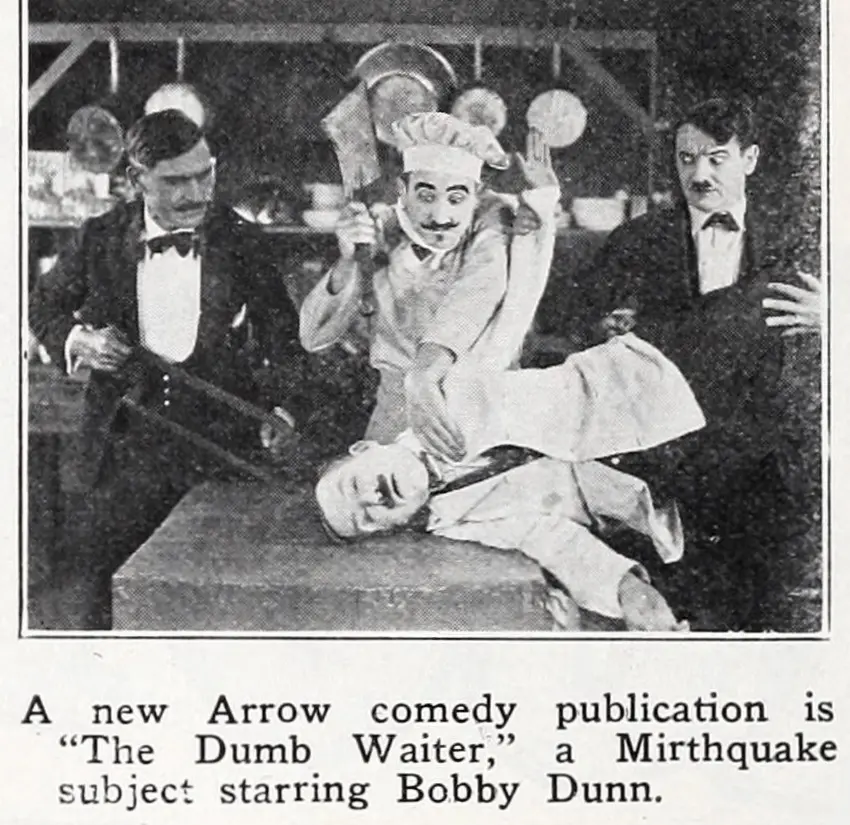
The pacing of the film is relentless. There is a rhythmic quality to the editing that suggests an early understanding of montage as a comedic tool. The cuts between the various floors of the apartment building create a sense of simultaneity that was quite advanced for its time. It lacks the brooding atmosphere of The Tiger, yet it possesses a kinetic energy that is equally captivating. Every time the rope is pulled, the audience feels the weight of the impending disaster. It is this tactile connection to the physical world that distinguishes the work of Lyons and Dunn from the more theatrical, stage-bound productions of the late 1910s.
In the broader context of silent cinema, The Dumbwaiter occupies a space between the raw slapstick of the early Keystone era and the more sophisticated feature-length comedies that were beginning to emerge. While it doesn't strive for the epic scale of Tess of the D'Urbervilles (1924), it shares a certain obsession with the consequences of human error. However, where Tess finds tragedy in the gears of fate, Lyons and Dunn find a resilient, almost defiant joy. Their characters are perpetually battered by their environment, yet they possess an elasticity that allows them to bounce back from every collision.
The film also touches upon social dynamics in a way that is surprisingly nuanced. The apartment building is a microcosm of society, where different classes and temperaments are forced into proximity by the dumbwaiter shaft. This is a far cry from the rural simplicity of The Ranch Romeo or the rugged frontier of Canyon of the Fools. In The Dumbwaiter, the humor arises from the friction of urban density. It is the comedy of the 'neighbor,' a figure who is simultaneously a stranger and an intimate participant in one's daily life. This theme is explored with a lighter touch than the grim social critiques of Damaged Goods (1918), yet the underlying observation of human interconnectedness remains potent.
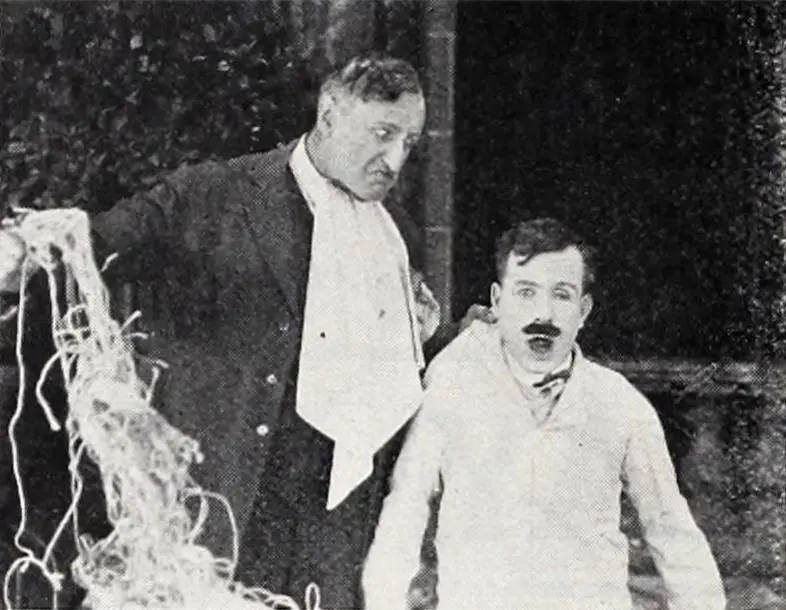
Technically, the film is a testament to the ingenuity of the era's cinematographers. Lighting a vertical shaft in a way that maintains clarity without sacrificing the sense of enclosure is no small feat. The use of shadows to emphasize the depth of the dumbwaiter well adds a layer of visual interest that elevates the film above standard two-reelers. The performances are equally noteworthy. Bobby Dunn, with his background in circus and vaudeville, brings a level of physical control that is breathtaking. His ability to take a fall or react to a sudden movement is so precise it borders on the balletic. He is the perfect counterpoint to Eddie Lyons’ more grounded presence. Together, they create a comedic friction that is as effective here as it was in their numerous other collaborations.
When we look at other works from this period, such as the enigmatic El rompecabezas de Juanillo or the suspenseful Flirting with Terror, we see a common thread: a fascination with puzzles, both literal and metaphorical. The Dumbwaiter is essentially a physical puzzle. The characters must figure out how to navigate the space, how to retrieve lost items, and how to avoid being crushed by the very mechanism meant to assist them. It is a game of logic played at breakneck speed.
The influence of films like The Dumbwaiter cannot be overstated. The DNA of this vertical comedy can be found in everything from the works of Buster Keaton to the modern-day sitcom. It understands that comedy is often a matter of logistics. If a character is at point A, and the object of their desire is at point B, the most entertaining path is the one that involves a pulley, a misunderstanding, and a third party at point C. This film masterfully executes that formula. It avoids the melodramatic pitfalls of Die Verführten or the lyrical melancholy of Lucciola, remaining steadfast in its commitment to pure, unadulterated entertainment.
Even when compared to the procedural humor of Sleepy Sam, the Sleuth or the high-stakes adrenaline of Thrills, The Dumbwaiter stands out for its economy of storytelling. It doesn't need a sprawling plot or a cast of thousands. It needs a box, a rope, and two men who are experts at being in the wrong place at the right time. The film is a celebration of the 'small' moment—the blink of an eye, the slip of a hand, the sudden realization that the floor is no longer where it was a second ago. In the grand tapestry of 1920 cinema, it is a bright, vibrant thread that continues to shine over a century later.
Ultimately, 'The Dumbwaiter' is more than a relic of a bygone era; it is a masterclass in the utilization of space and the choreography of chaos. Lyons and Dunn remind us that while technology may change, the fundamental comedy of the human condition—our clumsiness, our curiosity, and our incredible capacity to make a mess of things—is eternal. Whether it's a manual lift in 1920 or a glitchy app in 2024, the spirit of the dumbwaiter lives on in every moment where the tools of our own making turn the tables on us.
IMDb —
1926
Community
Log in to comment.