DbcultAccessing Vault...
Cult Review
Senior Film Conservator
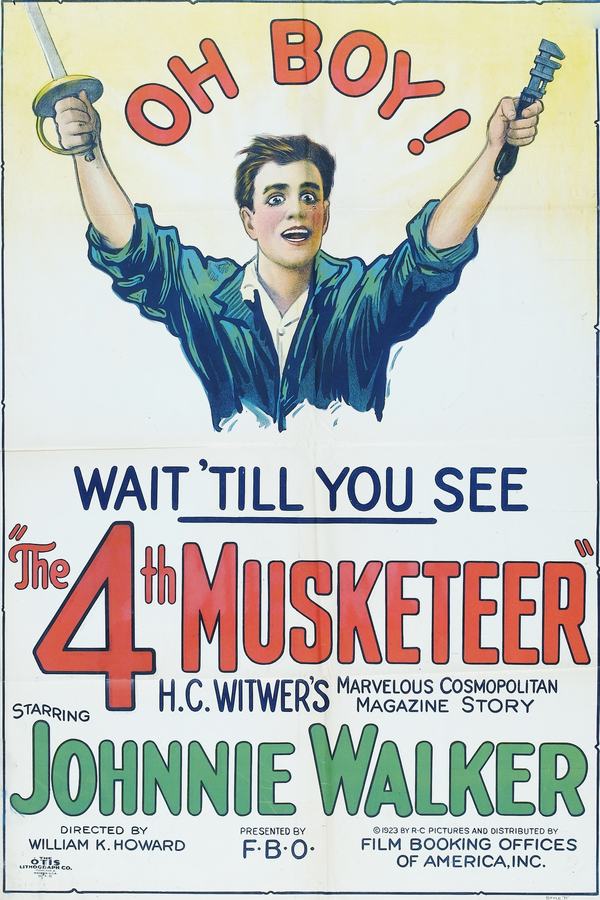
Stepping back into the annals of cinematic history often reveals forgotten treasures, films that, despite their age and the technical limitations of their era, still resonate with universal human experiences. The Fourth Musketeer, a 1923 production penned by H.C. Witwer and Paul Schofield, stands as one such artifact. It's a narrative that eschews the swashbuckling heroics its title might playfully suggest, instead delving into the more grounded, yet equally dramatic, struggles of a man navigating the treacherous waters of ambition, domestic discord, and societal expectations. At its core, this silent drama is a testament to the enduring power of character, the subtle nuances of marital commitment, and the quiet heroism found not in grand gestures of war, but in the steadfast pursuit of integrity and familial well-being.
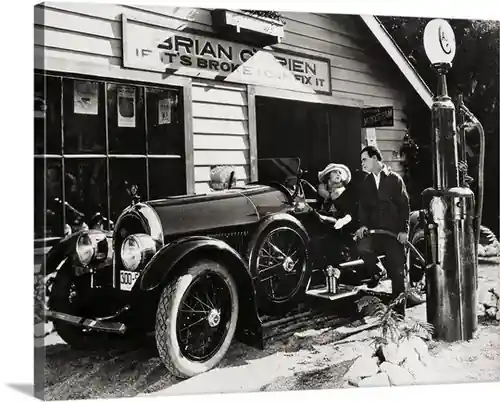
The film introduces us to Brian O'Brien, portrayed with a commendable blend of earnestness and vulnerability by Frank Coghlan Jr., a pugilist at the zenith of his career. The boxing ring, a crucible of raw physicality and fleeting glory, has been his domain. Yet, in a decision that speaks volumes about his character, Brian chooses to retire, trading the roar of the crowd for the quiet hum of an engine. This pivot from celebrated athlete to humble mechanic is more than a mere career change; it's a symbolic shedding of a public persona for a more private, perhaps more authentic, existence. It’s a theme not entirely unfamiliar in cinema, as seen in other narratives exploring the transition from public life to personal endeavor, though rarely with such a stark contrast in social standing. His initial act of generosity, lending his hard-earned winnings to a rival, immediately establishes Brian as a man of uncommon principle, perhaps even a touch naive in his idealism, a quality that will test him repeatedly throughout the narrative. This gesture, while noble, leaves him reliant on a bank note to establish his garage, an early foreshadowing of the financial tightrope he will walk.
While Brian endeavors to build a new life with the sweat of his brow, his domestic world begins to fray. His wife, captivated by the superficial glamour and perceived prestige of high society, finds herself increasingly drawn to a more sophisticated, albeit morally ambiguous, socialite. This subplot is a poignant exploration of marital neglect and the seductive power of social climbing, a common societal tension that found frequent expression in silent cinema. The contrast between Brian's blue-collar integrity and his wife's yearning for an elevated social status is sharply drawn. It evokes a similar societal critique found in films like West of the Water Tower, where the aspirations of small-town life clash with the allure of perceived urban sophistication, or the challenging domestic dynamics present in The Good Provider. The film meticulously charts her gradual disengagement from Brian, a silent, yet palpable, emotional distance that underscores the fragility of their bond. Her character arc, initially driven by a desire for a life beyond her husband's humble aspirations, serves as a critical mirror reflecting the societal pressures of the era.
Beyond Coghlan Jr.'s central performance, the film benefits from a robust ensemble cast. Johnnie Walker, Kate Lester, and James McElhern contribute significantly to the narrative's texture, each embodying roles that either support or challenge Brian's journey. Philo McCullough, often cast as the debonair villain or rival, likely embodies the 'high society type' who draws Brian's wife away, presenting a polished, yet ultimately empty, alternative to Brian's honest grit. The nuances of silent acting, relying heavily on exaggerated expressions, body language, and intertitles, are competently handled by the cast. Eddie Gribbon and William Scott, often associated with comedic roles or supporting tough-guy types, would have lent a certain authenticity to the working-class milieu of the garage or the boxing world Brian leaves behind. Georgie Stone and Billy Seay, likely portraying younger characters, might have offered moments of innocence or served as catalysts for Brian's protective instincts. Eileen Percy and Edith Yorke round out the cast, their roles undoubtedly adding layers to the social fabric and emotional stakes of the story. The effectiveness of silent film often hinges on the ability of its actors to convey complex emotions without dialogue, a skill demonstrated throughout by this experienced cohort.
The narrative's turning point arrives with the recovery of stolen jewels, an event that thrusts Brian into an unexpected role of heroism. This act is not born of a desire for glory, but rather from an innate sense of justice and perhaps a desperate need to reclaim his standing, both in his community and, crucially, in his wife's eyes. It's a classic cinematic trope – the underdog's moment of triumph – but here, it's infused with a quiet dignity. His actions serve as a stark contrast to the superficiality that had drawn his wife away, revealing the true substance of his character. This moment of valor allows his wife to finally see beyond the social facade and recognize the profound worth of the man she married. Her realization is depicted as a return to fundamental values, a rediscovery of love and loyalty over fleeting social status. This arc of a character straying and then returning to their moral compass is a timeless theme, mirrored in the journey of protagonists in films like Jilted Janet or even the broader societal commentary found in The Salvation Army on the Job, which often highlighted moral rectitude.
The screenwriters, H.C. Witwer and Paul Schofield, craft a narrative that, while perhaps conventional in its broader strokes, is effective in its emotional impact. Witwer, known for his sports-themed fiction, brings an authentic understanding of the pugilistic world, which underpins Brian's initial characterization. Schofield's contribution likely rounds out the domestic drama and societal critique, creating a balanced script. The challenge of silent film writing lies in conveying complex plot points and character motivations through visual cues and succinct intertitles. They manage to build tension through Brian's financial struggles and marital estrangement, culminating in a satisfying resolution. The pacing, a critical element in silent cinema, is well-managed, allowing for both character development and plot progression without feeling rushed or unduly protracted. This careful construction of narrative, relying on visual cues and the power of suggestion, is a hallmark of effective silent film direction, much like the compelling visual narratives found in epics such as The Glorious Adventure or the intricate character studies of Der Kaufmann von Venedig.
Cinematically, The Fourth Musketeer offers a valuable glimpse into the visual aesthetics of early 1920s American cinema. The camera work, while not as experimental as some European counterparts of the era, is competent and serves the story effectively. The sets, whether depicting the gritty realism of a boxing arena, the bustling environment of a mechanic's garage, or the opulent, if somewhat hollow, grandeur of high society gatherings, are all meticulously designed to anchor the narrative in its specific social contexts. The costumes, too, play a crucial role in delineating character and class, from Brian's humble work clothes to his wife's more fashionable, aspirational attire. The use of light and shadow, a cornerstone of silent film cinematography, would have been employed to heighten dramatic moments and emphasize emotional states, creating a visual language that transcends the absence of spoken dialogue. These visual elements are crucial in conveying the story's themes, much like the careful staging and visual humor in films such as Billy Blazes, Esq. or the everyday life captured in Short Orders.
The film offers a compelling examination of masculinity in the early 20th century. Brian O'Brien's journey from a celebrated fighter to a working-class entrepreneur, and ultimately to a quiet hero, challenges conventional notions of success. His strength is not solely in his fists, but in his integrity, his perseverance, and his unwavering commitment to his principles, even when faced with personal betrayal and financial hardship. This portrayal of a nuanced, evolving masculinity stands in contrast to more simplistic heroic archetypes, aligning it with deeper character studies seen in films like Ben Blair, which also explored a man's journey through various societal strata. Furthermore, the film subtly critiques the illusion of social mobility, especially for women, where upward aspiration could lead to a neglect of more fundamental values. Brian's wife's arc serves as a cautionary tale, illustrating that true contentment and respect are not found in superficial societal advancements but in genuine human connection and shared purpose. The film's resolution champions the virtues of hard work, loyalty, and intrinsic worth over the fleeting allure of status and wealth.
While The Fourth Musketeer may not possess the epic scope of some of its contemporaries, nor the revolutionary cinematic techniques of avant-garde works like The Log of the U-35, its strength lies in its accessible, emotionally resonant narrative. It speaks to perennial human concerns: the search for purpose beyond one's profession, the trials and tribulations of marriage, and the quiet dignity of the common man. Its themes of redemption, the re-evaluation of priorities, and the ultimate triumph of good character remain remarkably pertinent even today. The film, through its compelling performances and straightforward yet impactful storytelling, offers a window into the cultural and social anxieties of its time while simultaneously transcending them. It reminds us that heroism isn't always about grand, public acts, but often about the steadfast resilience in the face of personal adversity, the quiet recovery of what was lost, and the unwavering commitment to one's true self. Much like the simple, yet profound, lessons in films like Gas and Air or A Boy and the Law, this film's enduring appeal lies in its exploration of relatable human experiences and moral quandaries. It's a film that, despite its silent nature, speaks volumes about the human condition, making it a worthy subject of rediscovery for modern audiences and a valuable piece in the mosaic of early American cinema, standing alongside other character-driven dramas like Mary Moves In and Silk Stockings.
A compelling journey of a man's quiet fight for his future and family.
IMDb 5.4
1930
Community
Log in to comment.