DbcultAccessing Vault...
4.5/10
Senior Film Conservator
A definitive 4.5/10 rating for a film that redefined the boundaries of cult cinema. Desert Dust remains a cornerstone of transgressive art.
Should you invest your time in a 1927 silent western like Desert Dust? Short answer: Only if you are a dedicated historian of the genre or a fan of the 'B-Western' template. This film is for the silent cinema completionist who appreciates the raw, unpolished foundations of the cowboy mythos; it is certainly not for the modern viewer who requires high-octane pacing or complex moral ambiguity.
Desert Dust exists in a strange limbo. It isn't quite as experimental as The Gasoline Trail, nor does it possess the whimsical charm of Alice at the Rodeo. Instead, it offers a meat-and-potatoes look at ranching rivalries. It works. But it’s flawed.
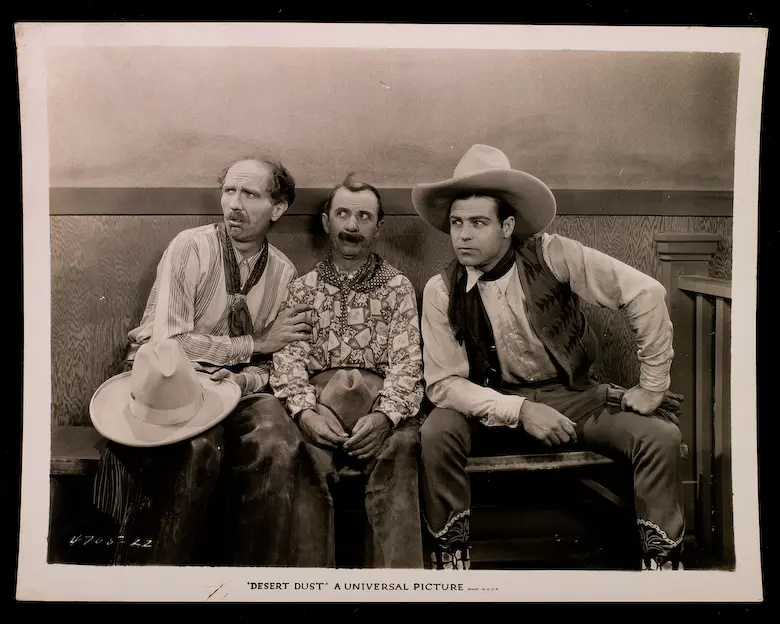
1) This film works because it captures the genuine camaraderie between Frank Fortune and his men, making the jail sequences feel like a precursor to the modern buddy-cop dynamic.
2) This film fails because the antagonist's motivations are paper-thin, providing little more than a generic 'rival' figure to move the plot forward.
3) You should watch it if you want to see the exact moment the Western genre began to codify its most recognizable tropes into a repeatable formula.
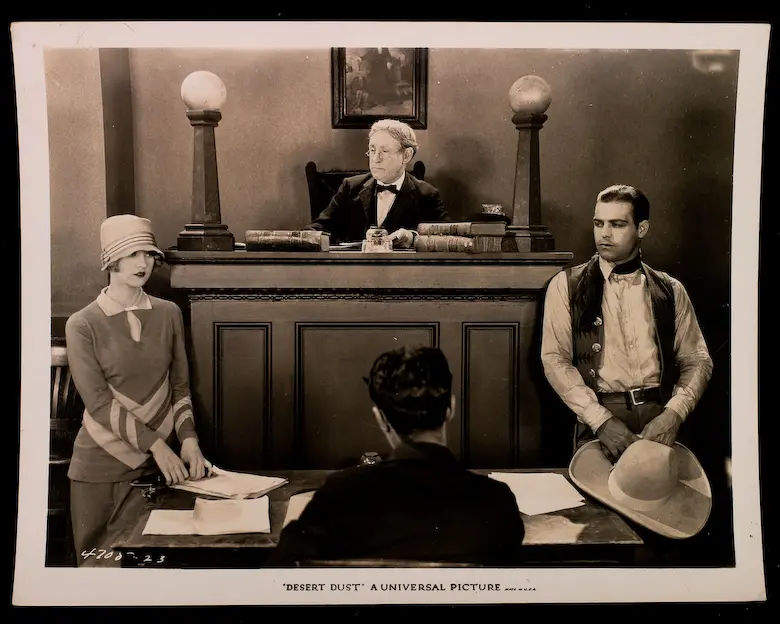
The plot of Desert Dust is deceptively simple. Frank Fortune, played with a surprising amount of restrained energy by Jimmy Phillips, is a man defined by his land. When he is thrown into jail alongside his two companions, the film shifts from an outdoor actioner to a confined character study. This transition is where the film finds its pulse. We see the frustration of the rancher not just through his words—or rather, his title cards—but through the physical restlessness of the actors.
The rivalry with the other ranchers feels personal, yet the script by William Berke and Gardner Bradford keeps the details of the feud somewhat vague. This is a common trait in 1920s Westerns, where the 'rival' is often a stand-in for progress or greed without needing much backstory. In contrast to a film like The Tavern Knight, which leans heavily into its historical setting, Desert Dust feels almost timeless in its simplicity. It is a story about men, dirt, and the law.
Jimmy Phillips isn't a name that resonates like John Wayne or even Tom Mix today, but in Desert Dust, he displays a groundedness that is refreshing. He doesn't play Frank Fortune as a superhero. He plays him as a man who made a mistake and is paying the price. His performance is physical, anchored by a heavy brow and a stiff posture that suggests a man who would rather be on a horse than in a conversation.
The supporting cast, including George Ovey and Ted Wells, provide the necessary levity. Ovey, in particular, manages to inject some humor into the jailhouse scenes. Without this levity, the film would have been a slog. The chemistry between the trio is the film's strongest asset. When they are fighting, it feels chaotic. When they are sitting in silence, it feels earned. It’s a far cry from the more theatrical performances found in The Gay Lord Quex.
William Berke, who would go on to have a prolific career in B-movies, shows early signs of his efficiency here. The pacing is brisk, perhaps too brisk. At times, the transition from the brawl to the sentencing feels like it’s missing a beat. However, Berke understands how to frame the Western landscape. He uses the horizon line effectively, making the jail cell feel even smaller by comparison to the vastness shown in the opening reels.
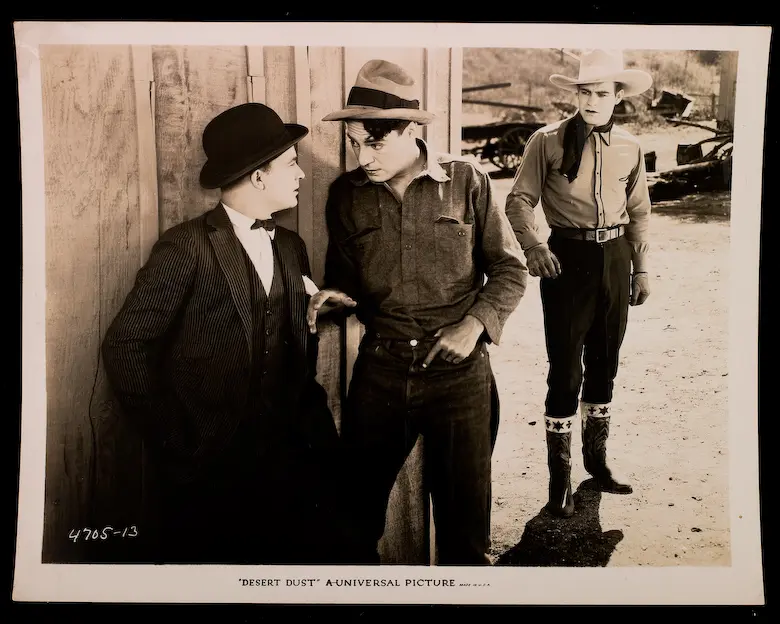
The cinematography doesn't reinvent the wheel. It lacks the expressionistic shadows of Umanità or the visual flair of Lederstrumpf. It is functional. The camera stays at eye level, capturing the action without much fuss. This lack of pretension is actually one of the film's strengths. It doesn't try to be art; it tries to be a Western.
If you are looking for a foundational example of the American B-Western, then yes, Desert Dust is worth a watch. It provides a clear look at how early filmmakers handled the 'wrongfully accused' trope. However, if you are looking for deep character arcs or innovative filmmaking, you will likely find it underwhelming. It is a historical curiosity rather than a cinematic essential.
Pros:
- Jimmy Phillips gives a solid, physical performance.
- The film moves quickly and doesn't overstay its welcome.
- The jailhouse scenes offer a unique perspective on the 'tough cowboy' archetype.
Cons:
- The antagonist is largely forgettable.
- The fight choreography is dated and lacks impact.
- The resolution feels rushed and somewhat unearned.
Technically, Desert Dust is a product of its time. The editing is functional, following the basic rules of continuity that were well-established by 1927. When compared to more high-budget productions like Number 17, the lack of resources is evident. The sets are sparse, and the locations, while authentic, aren't utilized to their full potential. Yet, there is a charm in this minimalism.
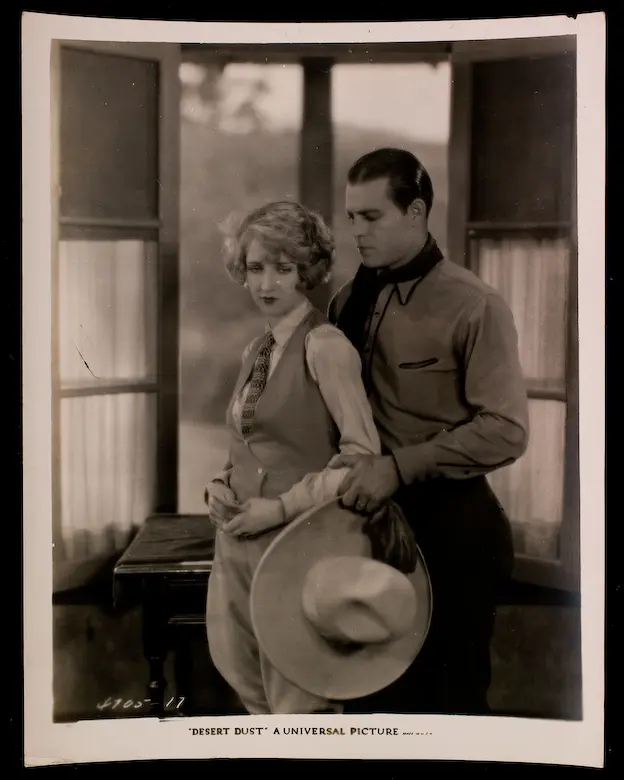
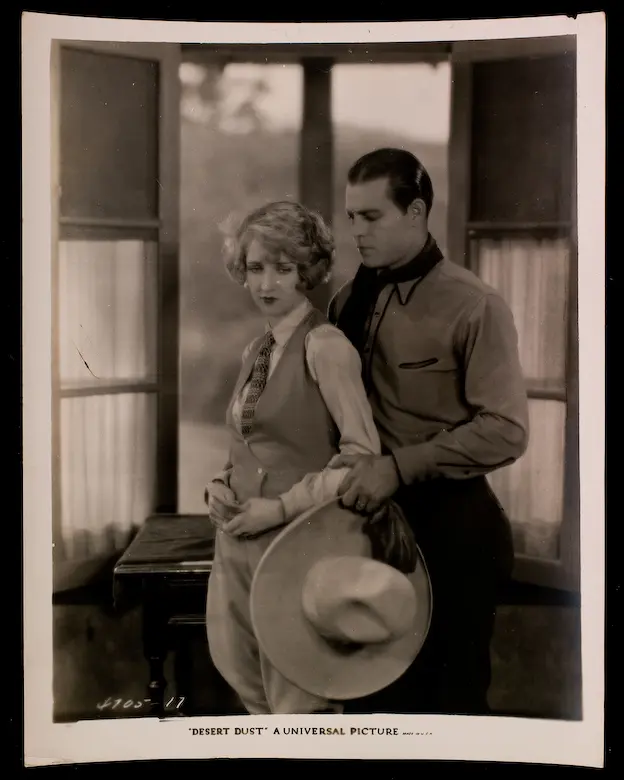
The film relies heavily on its actors' faces to convey the stakes. Lotus Thompson, playing the female lead, does what she can with a somewhat limited role. She represents the 'civilizing' influence that was a staple of the genre, much like the female characters in Wife Against Wife. Her presence gives Frank something to fight for, even if their romance is barely explored.
One surprising aspect of Desert Dust is how it treats the law. In many later Westerns, the Sheriff is either a hero or a villain. Here, the law is simply an obstacle. The jail is a place of temporary inconvenience, not a moral crucible. This reflects a more cynical, or perhaps just more realistic, view of frontier justice that would be smoothed over in the Hays Code era of the 1930s and 40s. It’s dry. Like the dust.
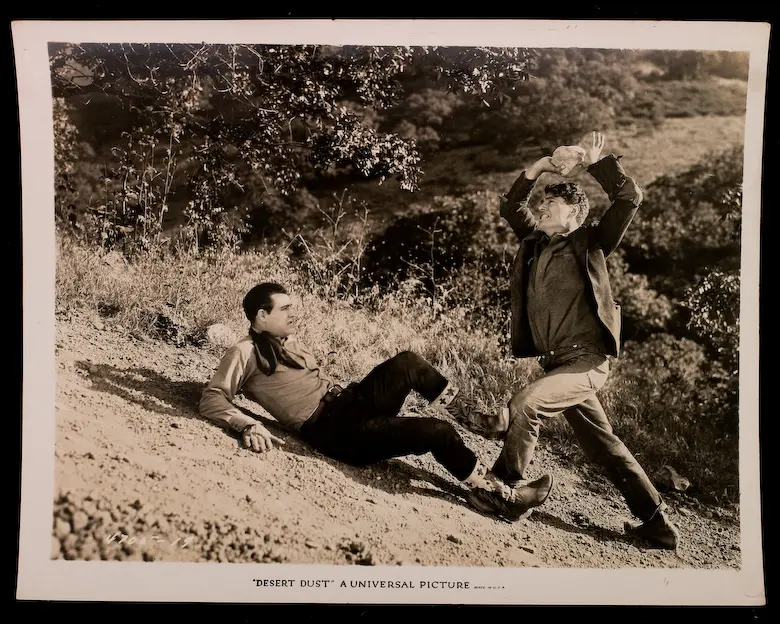
The fight scenes are choreographed with the grace of a falling piano. There is no stylistic flair here, just men swinging arms until someone falls down. While this might seem primitive compared to modern stunts, it carries a certain authenticity. This is how men who don't know how to fight actually fight. It’s messy, awkward, and brief.
Desert Dust is a functional, no-frills Western that serves its purpose but fails to leave a lasting impression. It is a solid C-grade effort from a team that knew how to make a movie on a budget. While it lacks the emotional weight of Bristede Strenge or the social commentary of The Man Who Stayed at Home, it remains a fascinating artifact. It isn't a masterpiece, but it isn't a failure either. It simply is. For the cowboy at heart, that might be enough.

IMDb 5.7
1935
Community
Log in to comment.