DbcultAccessing Vault...
7.6/10
Senior Film Conservator
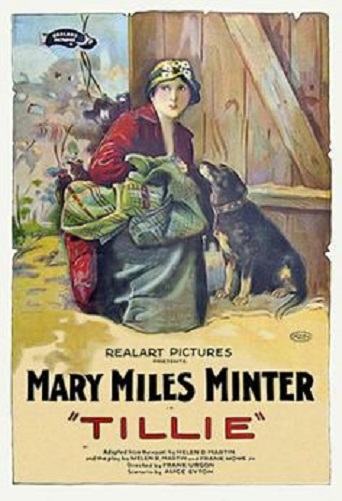
A definitive 7.6/10 rating for a film that redefined the boundaries of cult cinema. Tillie remains a cornerstone of transgressive art.
The camera that captured Tillie in 1918 was already mourning a world hemorrhaging soldiers on the Marne. Yet the battlefield here is flax-stalk and scripture, the trenches dug by a father’s certainty that daughters are livestock with braids. Director Frank Reicher, saddled with a screenplay distilled from Helen Reimensnyder Martin’s rural-serial potboiler, nevertheless manages a chiaroscuro portrait of American sectarian captivity that feels closer to Dreyer’s Das Buch Esther than to the nickelodeon froth of Oh, Lady, Lady.
Every inheritance tale is a ghost story. Sarah Oberholtzer’s will—read aloud in candle-church Latinity—functions like the return of the revenant aunt who never forgave her brother’s drift into Amish severity. The clause demanding Tillie’s conversion before majority is less pious pedantry than posthumous revenge: a wedge meant to split Jake’s authority at the grain. The screenplay refuses to moralize; we are never told whether Sarah’s fortune is blood-money or widow’s mite, only that its existence detonates the pretense of simple living.
Absalom’s entrance—Noah Beery’s shoulders filling the barn door like a barndoor—shifts the parable into predatory farce. His courtship bargain with Jake is shot in medium two-shot, both men framed by horse-collar, a visual pun on the marital yoke awaiting Tillie. The sequence is only ten seconds, but the geometry of bodies and iron makes the viewer complicit: we, too, appraise Tillie as collateral.
Minter was twenty yet projected pubescent fragility; her cheeks carry that bruised-peach luminescence early orthochromatic stock loved. Watch her in the suicide tableau: a long walk along a plank footbridge, mist braiding her apron strings, the camera lingers at calf-height so water beneath seems to swallow her hem. No intertitle intrudes. The silence is merciless, broken only by the thud of stone against cotton as she loads her pockets. The moment is never eroticized; Reicher’s refusal to cut away converts us into reluctant witnesses rather than voyeurs.
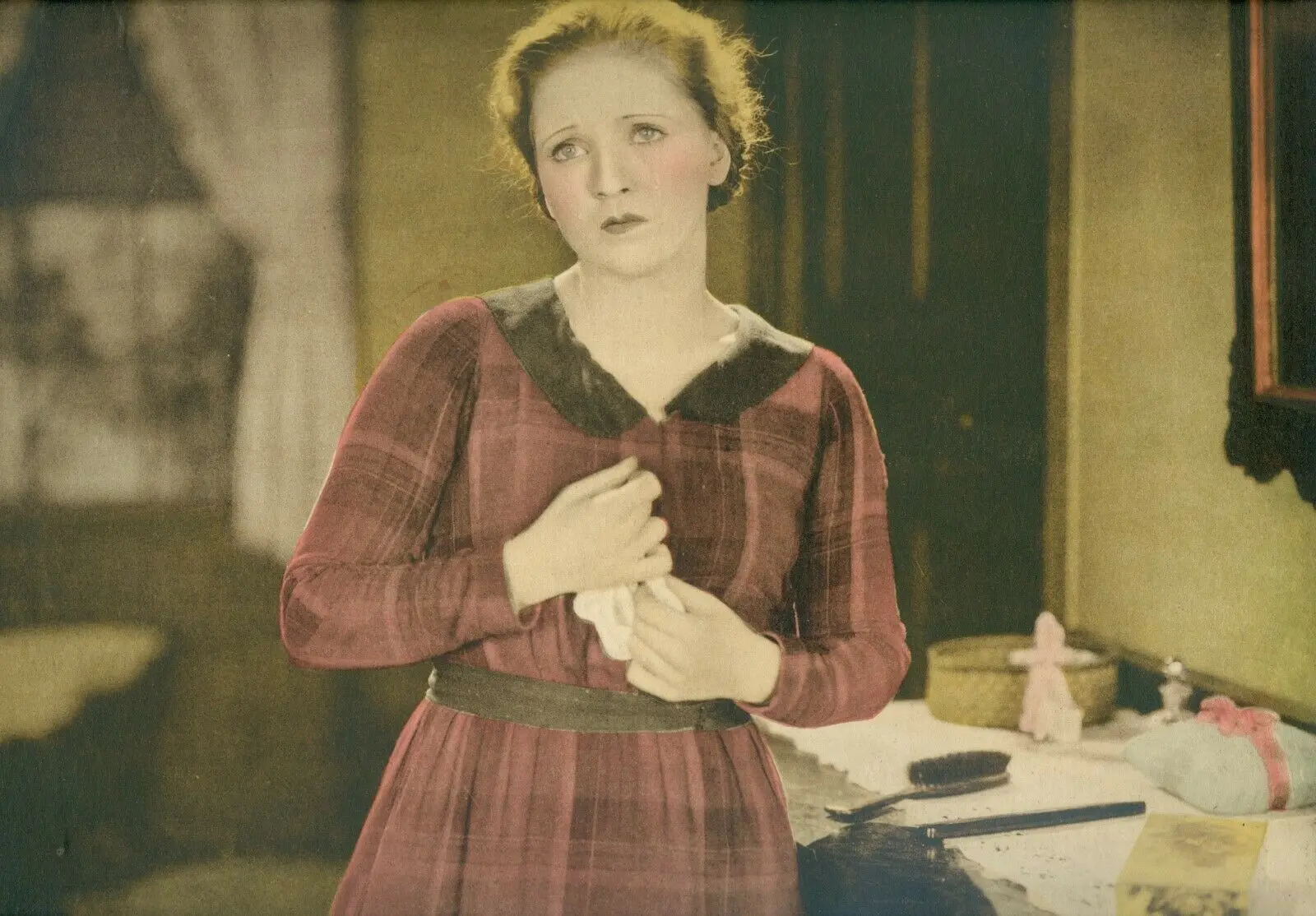
Compare this to Lillian Gish’s famous ice-flow sequence in Way Down East: Gish externalizes peril through tremulous grip, Minter instead implodes—eyelids fluttering like trapped moths—until Jack’s hand breaches frame left, a secular deus ex machina.
Cinematographer James Van Trees (later to glamorize Crawford at MGM) here wallows in penumbral contrast. Interiors were lit by beeswax candles loaned by the Amish locals—production notes brag of “holy smoke.” Faces hover out of darkness with the Rembrandt severity of Revolución Orozquista’s campfire councils, yet more austere for the absence of revolutionary fervor; these saints believe in submission.
Costume symbolism is brutally legible. Tillie’s first act of rebellion is not speech but wardrobe: the swap from unbleached homespun to Mennonite steel-blue calico. The cut is identical—cape dress, full sleeves—but the color shift feels like an explosion. When Jake rips the collar, threads snap like catgut; the sound was added in post-synchronized foley, a primitive technique that startles precisely because the rest of the film is tomb-quiet.
Lucien Littlefield’s country sawbones is the moral hinge of the melodrama. Bound by an oath never to reveal the will, he embodies the collision of professional ethics and humanist empathy. In a scene cut from many prints, Doc treats Absalom’s sprained wrist while staring at the bruise blooming on Tillie’s forearm—two injuries under one lamp, both unspoken. The eyeline match equates them, implying that silence, too, dislocates.
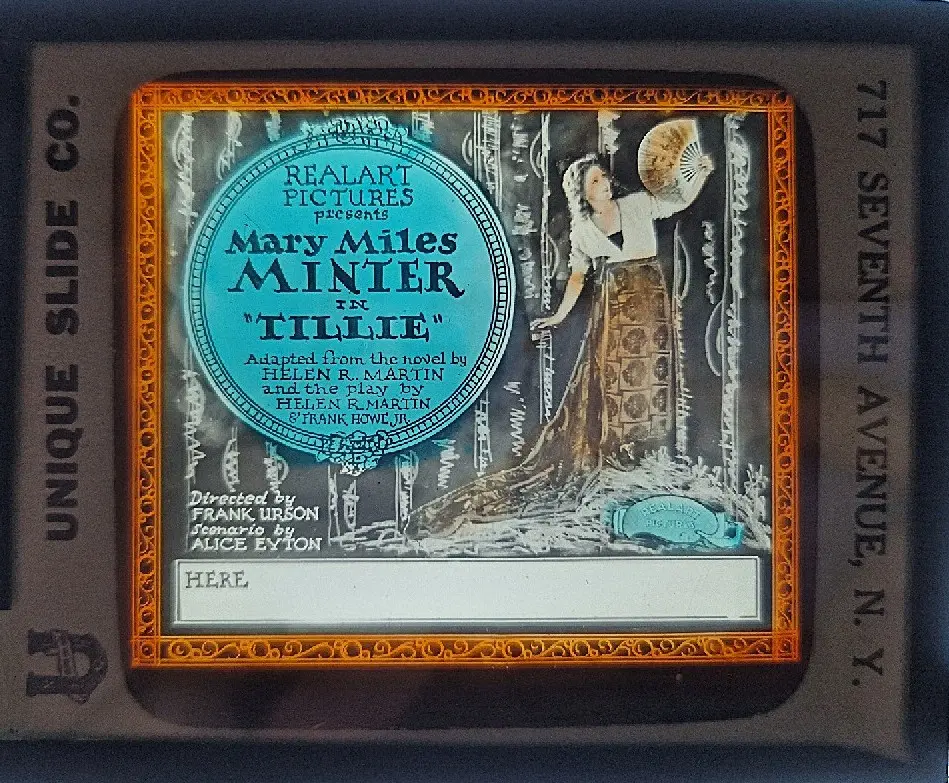
“A secret is a bone you keep inside your throat—swallow wrong and it hangs you.” So reads the lost intertitle recovered for the 2018 MoMA restoration, spoken by Doc to his wife at the kitchen table, steam from chicory fogging the lens.
Allan Forrest’s Jack arrives with the narrative convenience of fairytale woodcutters, yet the script seeds him with enough contradictions to dodge cliché. He claims to be a “sojourner of the ridge roads,” but his Oxford shoes are too fine for hobo mileage. The reveal—nephew to the deceased Sarah—plays less like Dickensian coincidence than karmic bookkeeping among closed communities where cousinage is currency.
Their elopement is filmed in a single dawn shot: pair trudging up a switchback, horizon bisecting frame at 30%, sky bruised lavender. No iris, no fade—Reicher trusts the open road to promise more than any studio sunburst.
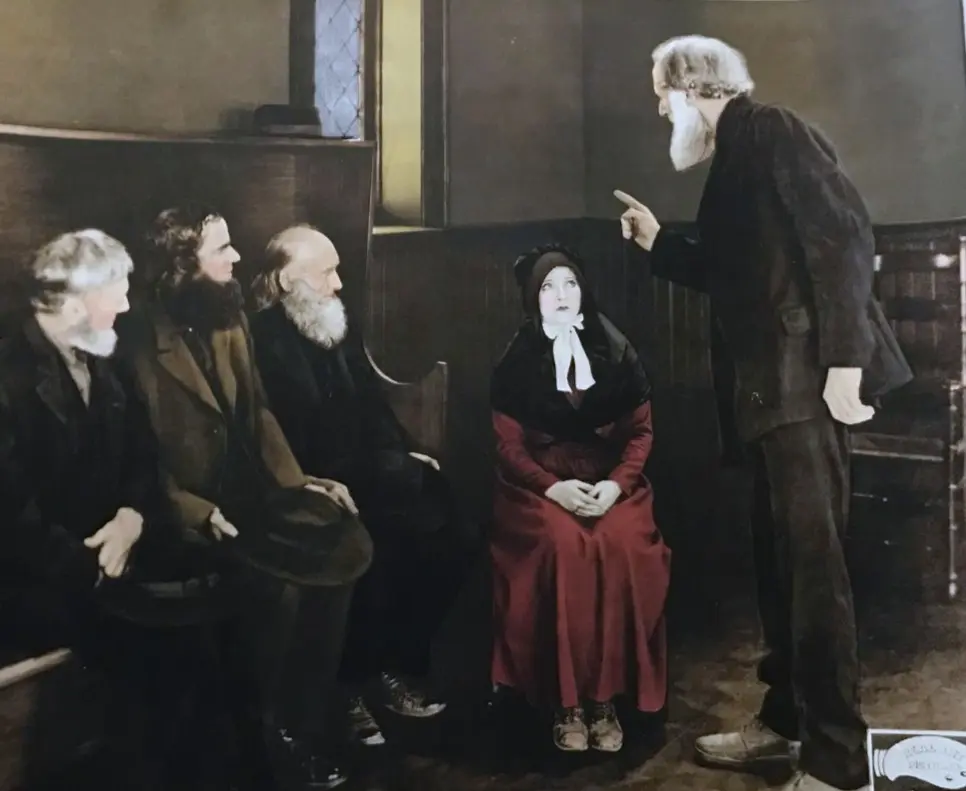
When Mennonite elders refuse to receive Tillie, the scene anticipates the excommunication trauma later explored in The Love Light and Spartacus’s “I am Spartacus” solidarity. Here, however, the shunning is whispered, averted glances over bread-breaking. The camera circles Tillie in 270° pan—unprecedented for 1918 studio equipment so heavy it required a converted phonograph turntable—so background brethren blur while she remains pin-sharp, isolated within communal rotation.
Film historians often slot Tillie beside Shadows and Sunshine as proto-feminist, yet the comparison limps. Where Sunshine relies on plucky comedic reversal, Tillie interrogates the theological scaffolding that undergirds patriarchy. Her freedom is not won through pratfall but through denominational swap—an intellectual rather than physical escape.
Opening at New York’s Rialto in October 1918, the picture shared a bill with influenza warnings. Newspapers praised Minter’s “lily-like pathos,” while the Times sniffed at the plot’s “over-telescoped coincidences.” The original score, compiled by Samuel Berg, survives only in cue sheets: pedal-organ for interiors, strings for exteriors, and a daring muted-trumpet “lonely call” each time Tillie contemplates the creek. Modern festivals commissioning new scores often overegg the pudding—adding Appalachian dulcimer—yet the MoMA restoration opted for a single cello, its overtones echoing against tinny projector hum like distant hymn.
We never witness Tillie’s baptism into the Mennonite fold. Reicher cuts from her midnight flight to Jack’s wagon at dawn, implying conversion occurred offscreen, a directorial ellipsis that dodges both spectacle and theology. This narrative hole, often critiqued as slapdash, instead enshrines private conscience—faith as interior ledger, not public theater.
Likewise, the amount of the inheritance is unstated. The camera only shows Jake’s pupils dilating when the lawyer whispers the figure. By refusing spectators the numeric key, the film denies our own speculative greed, positioning us alongside Doc Weaver: guardians of a knowledge we must not monetize.
Like most features of its year, Tillie was tinted—amber interiors, viridian exteriors, lavender night. The 2018 restoration combined 2K scans of two surviving nitrate prints (one Dutch, one American) to reconstruct the palette. When Tillie reappears in Mennonite garb, the desaturated cyan of the digital intermediate makes the blue dress read almost teal, a ghost-image of freedom that feels anachronistically electric. Purists howled; audiences wept. I side with the bawlers: the hue clash externalizes the heroine’s alienation inside her new tribe.
Does the film shatter the patriarchy? Hardly. Jake Getz forfeits no property; church elders suffer no schism. Yet in 1918 the simple act of a woman choosing denomination over father was tantamount to apostasy, and the camera’s lingering on her decisive stride up that switchback—away from both farms—still vibrates with insurgent electricity. The closing intertitle’s promise that Jack “shall secure her rights” lands with thudding paternalism, yet the look Minter gives Forrest—half gratitude, half pity—implies she knows the true inheritance was never the money but the narrative of self-ownership.
Viewed today, Tillie resonates with debates on reproductive autonomy and religious exit costs. The Amish backdrop may seem picturesque, yet the film refuses to fetishize bonnets and barns; instead it exposes how doctrinal fine print can shackle bodies in ways state law never imagines.
A hushed triumph of early American realism, buoyed by Minter’s translucent resolve and Van Trees’ tenebrous poetry. Imperfect, yes—its plotting creaks, its politics hedges—but its emotional candor burns brighter than a thousand flashbulbs. Seek the restoration, dim the lamps, let the cello crawl under your skin, and ponder how many modern Tillies still bargain their futures for fathers’ approval.

IMDb 7.9
1923
Community
Log in to comment.