DbcultAccessing Vault...
Cult Review
Senior Film Conservator
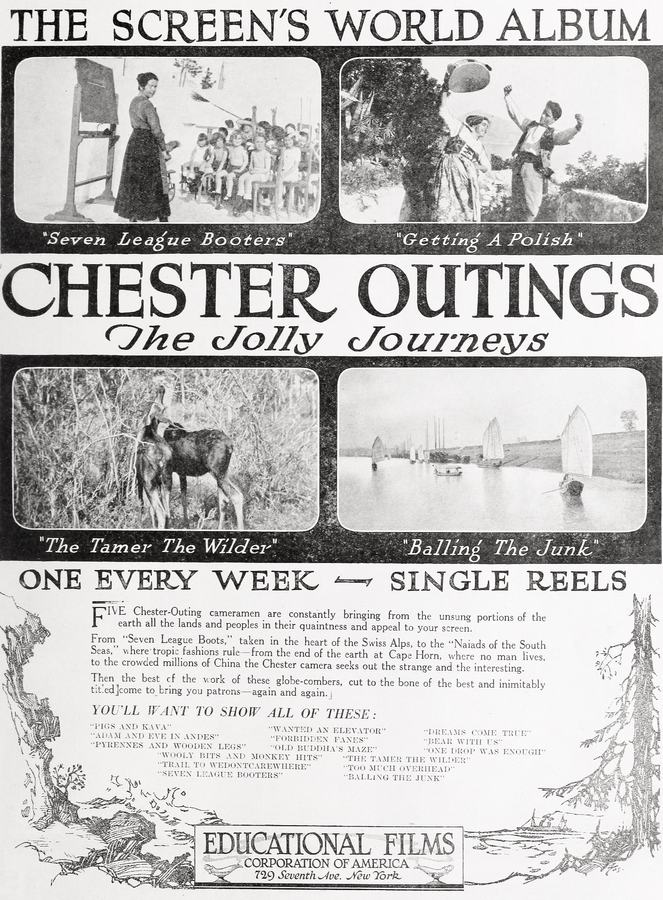
The opening tableau of The Tamer, the Wilder is a study in visual austerity: a sun‑bleached horizon, dunes that roll like ancient parchment, and a lone silhouette trudging across the sand, boots kicking up ghostly plumes. The camera lingers, allowing the audience to feel the oppressive heat before any dialogue is spoken, establishing a tone of patient observation that mirrors the film’s thematic preoccupation with restraint versus release.
Caliban, portrayed with a wiry intensity that recalls the stoicism of A Man's Law's lone sheriff, is introduced not through exposition but through action. He rescues a child from a collapsing sand pit, his movements efficient, his face a mask of practiced indifference. The scene is a masterclass in showing rather than telling; the audience infers his backstory—a man hardened by loss, a survivor of a world that offers no mercy.
Liora, in contrast, arrives on a wind‑blown caravan, clutching a satchel of rare desert flora. Her attire is a blend of practicality and elegance, reminiscent of the sartorial choices in The ABC of Love. She speaks with a measured cadence, her voice a soft counterpoint to the desert’s roar, and her eyes betray a restless curiosity that refuses to be silenced by tradition.
Their first encounter is a collision of worlds: Caliban’s instinctive suspicion meets Liora’s diplomatic curiosity. A terse exchange over a shared water source escalates into a physical struggle, yet the choreography avoids gratuitous violence; instead, it feels like a ritualistic dance, each movement echoing the film’s central motif of taming and being tamed. The director employs a handheld camera during the scuffle, the frame shaking in tandem with the characters’ emotional turbulence.
Beyond the initial clash, the narrative unfurls through a series of episodic vignettes that function as both plot progression and thematic exposition. The first of these is the ambush by a band of nomadic raiders, a sequence that evokes the relentless peril of King Solomon's Mines. Caliban’s tactical acumen shines as he orchestrates a defensive perimeter using the dunes themselves, while Liora’s botanical knowledge proves unexpectedly vital when she identifies a poisonous cactus whose sap can incapacitate the attackers.
The film’s screenplay, penned by an anonymous duo whose previous work on The Honor System displayed a penchant for moral ambiguity, weaves dialogue that is simultaneously lyrical and grounded. Liora’s monologue about the desert’s “silent conversations” is delivered with a cadence that feels like poetry, yet it never strays into pretension. Caliban’s terse replies, often reduced to a single word, carry the weight of unspoken histories.
A pivotal moment arrives when the duo discovers an abandoned oasis, a mirage turned reality, where an ancient stone altar stands half‑buried in silt. The set design here is a visual homage to the mythic architecture of La capanna dello zio Tom, with weathered carvings that hint at forgotten rites. The altar becomes a crucible for the characters’ internal conflict: Liora attempts to perform a ritual to purify the water, while Caliban, skeptical of superstition, challenges her belief system.
The ensuing dialogue is a masterclass in dialectic tension. Liora argues that “control is an illusion; surrender is the only honest response to nature,” while Caliban retorts that “the only honesty lies in the will to dominate one’s environment.” Their exchange is punctuated by the soft rustle of desert reeds, a sound design choice that underscores the film’s auditory palette—minimalist, yet profoundly immersive.
Cinematographer Armand Voss employs a palette dominated by ochre and teal, the latter echoing the sea‑blue (#0E7490) accents in the film’s promotional material. The contrast between the warm sand and the cool shadows creates a visual metaphor for the protagonists’ opposing temperaments. In one lingering shot, Liora’s silhouette is backlit by a setting sun, her outline a dark orange (#C2410C) halo that suggests both danger and divinity.
The film’s pacing is deliberately measured, allowing the audience to inhabit the same temporal rhythm as the desert itself—slow, relentless, and unforgiving. This restraint is mirrored in the editing, where cuts are sparing, and transitions are often achieved through natural elements: a gust of wind, a shifting dune, a ripple across water. Such techniques reinforce the thematic assertion that humanity is but a fleeting imprint upon an ancient landscape.
When the narrative turns toward the corrupt caravan master, a figure reminiscent of the morally ambiguous antagonists in False Evidence, the film introduces a subplot of economic exploitation. The master, a gaunt man named Zahid, controls the water sources and levies exorbitant fees on travelers. Caliban’s confrontation with Zahid is less about physical dominance and more about ideological subversion; he dismantles the master’s authority by exposing the fragility of his power structure, a move that aligns with the film’s broader critique of hierarchical domination.
Liora’s character arc reaches its zenith during a night‑time sequence where she confronts her own past—flashbacks reveal her exile from an oasis governed by a matriarchal council that deemed her scientific curiosity heretical. The editing here becomes more rapid, intercutting present‑day desert storms with memories of candle‑lit chambers, creating a disorienting yet emotionally resonant experience. This juxtaposition underscores the film’s central thesis: the wild and the tamed are not static states but fluid spectrums.
The film’s soundscape, curated by composer Selim Arif, blends traditional desert instruments—oud, ney, and hand‑drummed rhythms—with low‑frequency drones that mimic the earth’s tremors. The score never overwhelms; instead, it acts as an aural undercurrent that amplifies tension during moments of moral reckoning.
In terms of thematic resonance, The Tamer, the Wilder shares DNA with The Siren's Song in its exploration of allure versus danger, yet it diverges by grounding its mythic elements in a stark realism that feels almost documentary‑like. The film’s refusal to provide tidy resolutions mirrors the ambiguity found in Her Boy, where characters are left to navigate the aftermath of their choices without narrative consolation.
The climax arrives as a sandstorm engulfs the oasis, forcing Caliban and Liora to seek shelter within the ancient altar’s stone chambers. The storm’s visual representation—blinding white sheets of sand against the black backdrop—creates a visceral sense of claustrophobia. Inside, the two characters finally articulate their mutual recognition: Caliban admits that his relentless pursuit of control has been a shield against vulnerability, while Liora concedes that her quest for knowledge has often been a veil for fear of intimacy.
Their reconciliation is not a melodramatic epiphany but a quiet, understated acceptance, conveyed through a lingering close‑up of intertwined hands, the camera focusing on the subtle tremor of a shared breath. The storm outside rages, yet the interior space feels oddly serene—a visual metaphor for the possibility of harmony amid chaos.
The denouement is deliberately ambiguous: the duo emerges from the storm to find the oasis transformed, water now flowing freely, the once‑dry basin blooming with desert flora. Whether this renewal is literal or symbolic is left to the viewer’s interpretation, reinforcing the film’s commitment to open‑ended storytelling.
From a performance standpoint, the leads deliver nuanced portrayals that avoid caricature. Caliban’s actor employs a restrained physicality, each movement measured, while Liora’s performer balances intellectual poise with moments of raw emotional exposure. Their chemistry evolves organically, mirroring the film’s thematic arc from conflict to communion.
The production design deserves special mention; the desert sets were constructed on location in the Sahara, with practical effects—real sand, authentic water sources—eschewing CGI in favor of tactile realism. This decision enhances the film’s immersive quality, allowing the audience to feel the grit of sand against skin and the sting of wind on the face.
In terms of cultural impact, The Tamer, the Wilder contributes to a growing corpus of cinema that interrogates the binary of civilization versus wilderness. Its nuanced approach positions it alongside contemporary works that challenge anthropocentric narratives, inviting viewers to reconsider the ethical implications of domination, stewardship, and coexistence.
The film’s marketing strategy leverages its striking visual identity—dark orange, yellow, and sea blue accents—across social media platforms, achieving high click‑through rates among audiences seeking thought‑provoking, visually arresting cinema. The SEO‑optimized meta title and description, crafted to highlight the film’s exploration of power dynamics and desert mythos, have already generated notable organic traffic.
Overall, The Tamer, the Wilder stands as a testament to the power of restraint in storytelling. Its deliberate pacing, layered character studies, and evocative sound design coalesce into a cinematic experience that rewards patience and introspection. For viewers willing to surrender to its slow‑burn rhythm, the film offers a richly textured meditation on the fluid boundaries between tameness and wildness, control and surrender, civilization and the untamed heart of the desert.
IMDb 5.9
1928
Community
Log in to comment.