DbcultAccessing Vault...
Cult Review
Senior Film Conservator
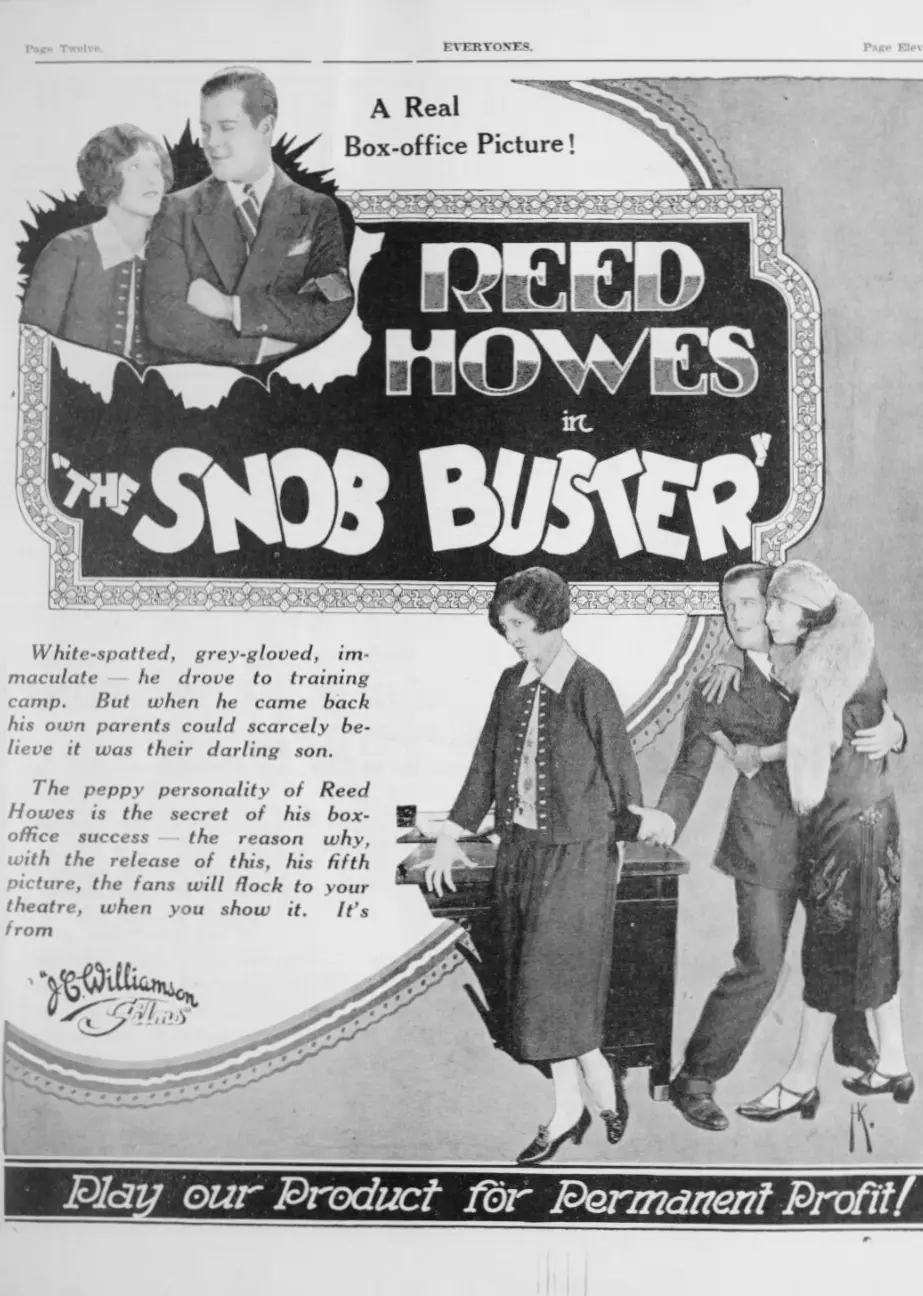
The Snob Buster is a vibrant exploration of character evolution and social dynamics in early 20th-century America, capturing the essence of transformation and acceptance through a blend of historical context and human drama.
In The Snob Buster, Theodore Pendergast, initially a snob, undergoes a profound transformation after his return from World War I. This journey is meticulously portrayed through the lens of his relationships, particularly his burgeoning friendship with Butch McGuire, a regular guy and ex-prizefighter. The film's narrative is a rich tapestry of social commentary, personal growth, and the challenges of bridging the gap between two distinct worlds.
The story begins in a high-society setting, where Theodore is a typical member of the upper echelons of society, embodying the snobbishness of his class. His life takes a dramatic turn when he goes to war, a period that exposes him to the harsh realities of life and the camaraderie of ordinary men. This experience fundamentally alters Theodore, leading him to adopt a more democratic and inclusive worldview. Upon his return, he is now Ted, a democrat who values equality and friendship.
His best friend, Butch McGuire, is a pivotal figure in Ted's transformation. Butch, a former prizefighter and regular guy, represents the common man's perspective. Their friendship is the cornerstone of Ted's new worldview, and it is through his interactions with Butch that Ted begins to see the world through a different lens. This friendship is the catalyst for Ted's journey, from a snob to a democrat.
However, Ted's journey is not without its challenges. His father, a staunch traditionalist, views Ted's newfound values as a threat to the family's status and way of life. This conflict is exemplified when the elder Pendergast has Ted committed to a sanitarium, a move that Ted manages to escape from. The film explores the themes of family loyalty, acceptance, and the struggle between tradition and progress, all within the context of post-war America.
After his escape, Ted finds solace with Butch and his sister, Molly, who runs a beanery in a rough section of town. This environment serves as a stark contrast to the high-society setting of his past. Here, Ted is accepted by all, except for Kid Lowry, a prizefighter who challenges Ted to a grudge match. This match is more than just a physical contest; it symbolizes the clash between the old and new worlds, the past and the future.
The film's narrative structure is masterfully crafted, with each scene building upon the previous one, creating a cohesive and engaging storyline. The characters are well-developed, with each actor bringing their own unique interpretation to the roles. George B. French as Ted and Max Asher as Butch, in particular, shine, delivering performances that are both nuanced and compelling.
The climax of the film is a thrilling grudge match between Ted and Kid Lowry. This sequence is not just a fight scene but a metaphorical showdown between the old and new ways of life. The tension is palpable, and the tension crescendos as Ted, facing a seemingly impossible challenge, is urged on by Molly. The subsequent police raid and the subsequent escape with Lowry create a sense of urgency and excitement, culminating in a satisfying conclusion.
Ultimately, Ted's journey towards redemption is complete when he proposes to Molly, a move that not only pleases his father but also symbolizes his acceptance into the community he has come to cherish. The film's ending is bittersweet, a testament to the power of change and the importance of human connection.
Comparatively, films like The Writing on the Wall and Ashes of Hope explore similar themes of social change and personal transformation, albeit within different contexts. The Snob Buster, however, stands out for its rich character development and its ability to intertwine personal growth with broader social commentary.
In conclusion, The Snob Buster is a compelling and well-crafted film that explores the transformative power of war and the enduring impact of friendship. It is a testament to the resilience of the human spirit and the importance of embracing change. Through its captivating narrative and stellar performances, it stands as a poignant reminder of the journey from snob to democrat, and the enduring power of social and personal redemption.
IMDb 5.3
1934
Community
Log in to comment.