DbcultAccessing Vault...
Cult Review
Senior Film Conservator
TL;DR: D.W. Griffith meets John Buchan in a barn-burner that time forgot—moonshine, monocles, and the Kaiser’s agents collide in Virginia.
Randolph Lewis’s screenplay—adapted from a once-ubiquitous dime-novel—treats lineage like a hot potato: pass it fast enough and nobody notices the scorch marks. The film’s prologue, drenched in tenebrous indigos, stages the Lenoir–Warfield nuptials as a chiaroscuro bacchanal where champagne flutes glint like scalpels. Within three title cards the bridegroom is coffin-bound, his bride a spectral footnote, and the surviving kin left to gnaw on resentment as bitter as chicory. This brisk narrative hematology is pure proto-noir: blood outruns ink.
The Foundling in the Big City
Nance Wilson—played by an uncredited but magnetically weary actress—embodies the moral hinge of the tale. Her refusal to smother the mewling heiress transmutes the picture from mere potboiler into a meditation on ethical disobedience. The cross-cut montage of the infant’s cradle rocking beside a tenement window while El-trains spark overhead is one of the most poetic shards in silent cinema; it anticipates the urban–pastoral dialectic that A Daughter of the Sea would later echo.
Capitola Black: Southern Gothic Flapper
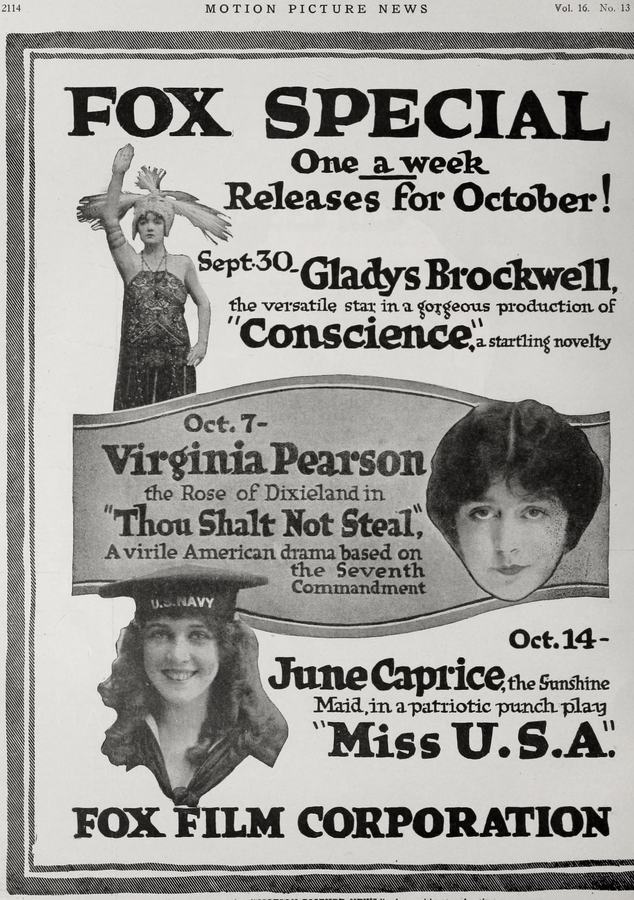
June Caprice—whose career would tragically gutter within five years—imbues Capitola with flapper insouciance and daguerreotype wistfulness. She enters the frame swinging a crooked parasol like a sabre, eyes glittering with the arrogance of someone who has already read the last reel. Caprice’s physical lexicon—shoulders flung back, stride devouring parquet—makes her an insurgent silhouette against the Ionic columns of ancestral hypocrisy. Compare her to the more docile ingenue of The General’s Children; here, the heroine is her own cavalry.
Espionage in the Magnolia Belt
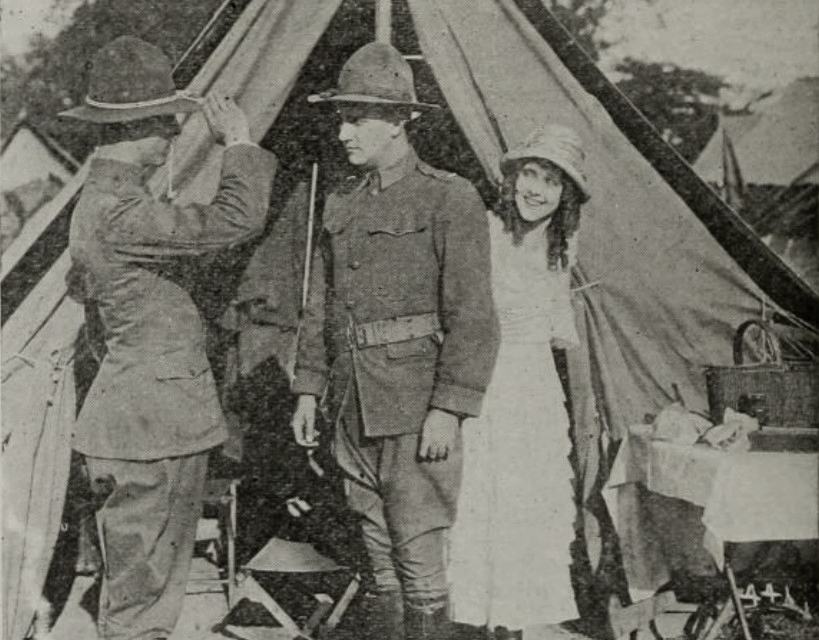
World War I—still a grinding reality for 1918 audiences—intrudes via Herbert Grayson (Alexander Hall, stiff of spine and matinee of jaw). His counter-espionage subplot feels grafted yet essential, like a prosthetic limb you cannot stop staring at. Lewis’s intertitles sling jingoistic aphorisms (“Every slackened rivet is a bayonet in a doughboy’s back!”) but the visual grammar undercuts propaganda with uncanny dread. A sequence inside a candlelit tobacco drying barn converts burley leaves into yellowed telegram slips: every rustle could be a cipher, every shadow a Hun saboteur. The result plays like what might have happened had The Golem stomped onto a Virginian plantation instead of a Prague ghetto.
Gabriel Lenoir: Aristocratic Iago
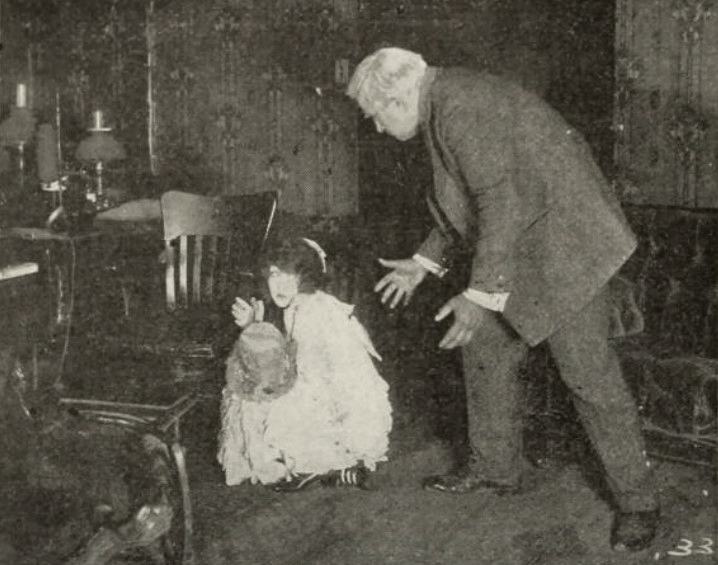
William Courtleigh Jr. essays the villain with velvet malignity—his goatee sharpened to a pharaoh’s dynastic point, voice (in intertitle) a honeyed rasp. Gabriel’s larceny of Capitola’s trust fund is revealed through a dissolve that superimposes a ledger page over the baby’s lace-swaddled cradle: an audacious visual indictment of capitalism devouring innocence. When restitution looms, his retort—“Blood may own the soil, but paper owns the blood”—ranks among the most chilling epigrams of the era.
Race, Class, and the Unspeakable
Miss U.S.A. tiptoes along the fault lines of race with the queasy caution of its period. Black domestic workers hover at frame-edge, their reactions—captured in medium shots—serve as moral barometers yet remain frustratingly wordless. The film never interrogates the plantation economy that funds its chandeliers; instead it diverts our gaze toward Teutonic treachery. Still, the very omission reverberates: the empty cradle of social conscience rocks louder than any firecracker finale.
Visual Texture & Cinematographic Daring
Cinematographer Tom Burrough (pulling double duty as an actor) lenses Virginia’s horizon like a bruised elegy. Day-for-night shots seep cobalt across tobacco fields, while interiors are daubed in ambers that suggest kerosene breath. A handheld chase through a limestone cavern anticipates the expressionist maws of The Edge of the Abyss. Most bravura is the iris-in on Capitola’s eye as she eavesdrops on Lenoir’s conspiracy: the pupil dilates until the screen itself becomes a black hole swallowing complicity.
Gender & Agency in the Wartime Melodrama
Where contemporaneous serials like Fate's Boomerang trussed heroines to railway tracks, Capitola engineers her own deliverance. She pick-locks a root-cellar, commandeers a Packard touring car, and telegram-trolls the War Office. The climactic tableau—she stands ankle-deep in water, revolver trained on a cowering saboteur while a storm shreds the Stars and Stripes above—flips the damsel trope into a proto-feminist pièta.
Stacked against The Nation's Peril, another 1918 spy-cum-morality tale, Miss U.S.A. boasts richer shadows and a heroine who actually remembers her lines. Conversely, A Vermont Romance offers bucolic balm but none of the sulphurous family intrigue that makes this film sizzle like fat on a cannon barrel.
Nitrate Damage & Surviving Prints
The lone extant 35 mm negative—housed in an abandoned Connecticut sanatorium—bears nitrate ulcers that bloom like magnolia blight. Yet those scars enhance the viewing: every flicker feels like a shell-burst, every emulsion gouge a bayonet slash. Digital restoration attempts (Kino 2019) scrubbed too much; seek the 2008 Library of Congress scan with its cigarette burns intact.
Soundtrack & Modern Re-Score
Silent cinema lives or dies by its score. The original cue sheets called for Sousa marches juxtaposed with Chopin nocturnes—an unholy marriage. In 2022, the Alloy Orchestra premiered a new suite: prepared-piano rattles like a de Havilland engine, while musical saw keens over tender scenes. The result is a polyphonic wound that never scabs.
Frank Evans, as Major Warfield, could have sauntered in from a John Ford cavalry flick—his moustache quivers with plantation gravitas. Meanwhile Alexander Hall’s Grayson channels Fairbanks swashbucklery but reins it with bureaucratic rectitude. Their final duel—a rooftop tussle lit only by anti-aircraft arcs—rivals the Fairbanks-penned stunts of The Dragon for kinetic wit.
Legacy & Cultural Amnesia
Why did Miss U.S.A. vaporize from public memory while A Dream or Two Ago lingers in college syllabi? Timing: released mere weeks before the Armistice, its jingoism felt passé before the reels cooled. Distribution: the film played mostly in Southern states, bypassing New York’s tastemakers. And gender: critics dismissed it as “a girl’s picture,” the same epithet hurled at The Woman in the Case—a shortsightedness now glaring.
Miss U.S.A. is not a curio; it is a clandestine map of American anxieties—mongrel bloodlines, distrust of patricians, fear that the front porch might already be wired by Berlin. It marries the cliffhanger mechanics of Feuillade to the moral vertigo of Hawthorne. Watch it at midnight, with thunder muttering offstage, and you will swear the celluloid itself is breathing.
Rating: 4.5/5 Stars. Essential for silents completists, spy-thriller aficionados, and anyone who suspects that American Gothic was always already American espionage.
IMDb —
1917
Community
Log in to comment.