DbcultAccessing Vault...
6.6/10
Senior Film Conservator
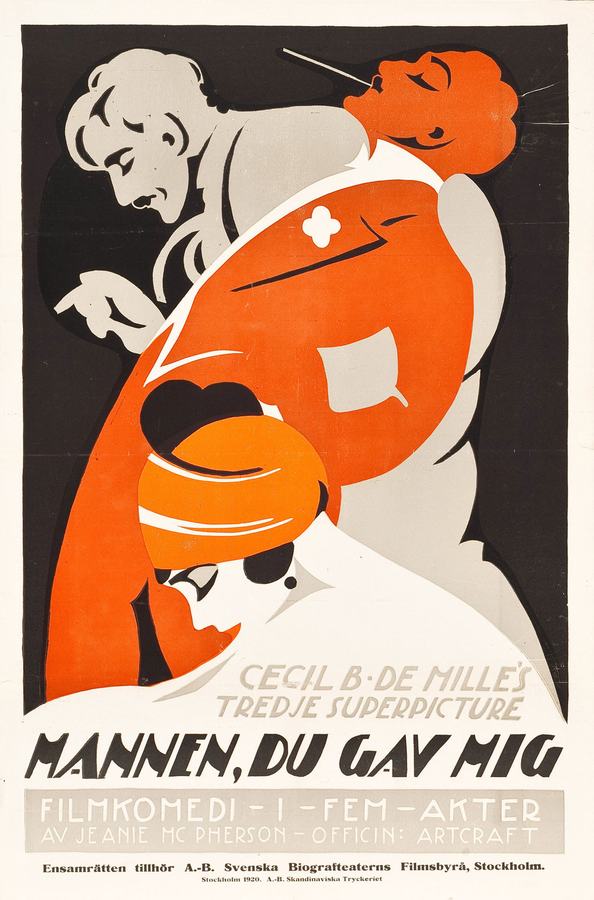
A definitive 6.6/10 rating for a film that redefined the boundaries of cult cinema. Don't Change Your Husband remains a cornerstone of transgressive art.
Cecil B. DeMille's 1919 silent provocation Don't Change Your Husband unfolds like a perfumed poison pen letter to bourgeois matrimony, its title dripping with irony that lingers long after the final iris-out. Through Gloria Swanson's luminous performance as Leila Porter, we witness a startlingly modern anatomy of marital discontent—where the pungent aroma of sautéed onions becomes a sensory manifestation of dying passion. James Porter (the magnificently frumpy Elliott Dexter) isn't merely negligent; he's a human industrial accident in a smoking jacket, forever trailing cigar ash and digestive discomfort through their art nouveau mansion. DeMille transforms domestic space into a battleground where crumb-strewn waistcoats and belched garlic fumes constitute acts of psychological warfare.
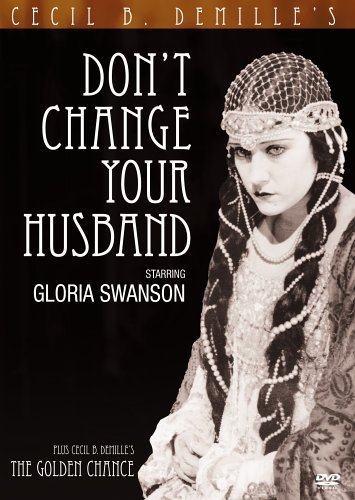
What elevates this beyond mere matrimonial melodrama is DeMille's subversive framing of James' metamorphosis. Post-divorce, his reformation isn't portrayed as moral awakening but as capitalist rebranding—a corporate takeover of the self. The film's most ingenious sequence cross-cuts between Leila's honeymoon disillusionment and James' self-reinvention montage: discarded onion rings in a trash bin juxtaposed with gleaming dental tools whitening his smile; crumpled shirts in a hamper intercut with bespoke tailors measuring his newly disciplined physique. This isn't redemption—it's hostile takeover. When the transformed James resurfaces at the charity ball, his sartorial perfection and confident waltzing suggest not inner growth but ruthless efficiency, raising terrifying questions about identity's malleability. Can virtue be tailored like a waistcoat, or is it merely performance?
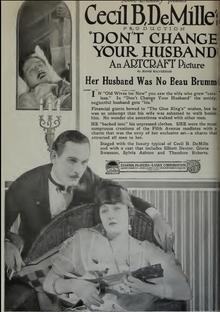

Swanson's genius lies in portraying discontent not through hysterics but through devastating stillness. Watch her early scenes: fingers stiffening around a soup spoon as James slurps; eyelids fluttering shut during his belches as if praying for deliverance; shoulders collapsing infinitesimally when he presents her with industrial glue stock certificates for her birthday. Her liberation upon meeting Schuyler manifests not as joy but as terrifying weightlessness—a woman unmoored from suffocation yet adrift in existential void. The film's radical proposition emerges in its final act: Leila's dilemma isn't about choosing between men but choosing herself. When she observes the reborn James from across the ballroom, Swanson lets us see the calculations behind her gaze—not romantic longing but cold assessment of recaptured stability. It's less a surrender to patriarchy than a strategic alliance.

Beyond its marital machinations, the film endures as a societal X-ray of post-WWI America. James' glue empire represents burgeoning industrialism's assault on domesticity—his factory's smokestacks literally visible from their garden, a constant reminder that productivity trumps intimacy. The onions he devours function as brilliant metaphor: root vegetables symbolizing immigrant laborers flooding American cities, their pungency offending delicate bourgeois sensibilities. DeMille slyly suggests that Leila's revulsion isn't just towards her husband but towards capitalism's grubby realities invading her sanitized world. In this reading, Schuyler represents speculative finance's false glitter—all surface and no substance, much like the precarious economy of 1919. The film's ambiguous resolution—Leila tentatively reuniting with James as Schuyler slinks into darkness—feels less like endorsement than grim pragmatism. Can one truly return to eating onions after tasting caviar? DeMille leaves us wondering whether contentment lies in lowering expectations or overhauling society.
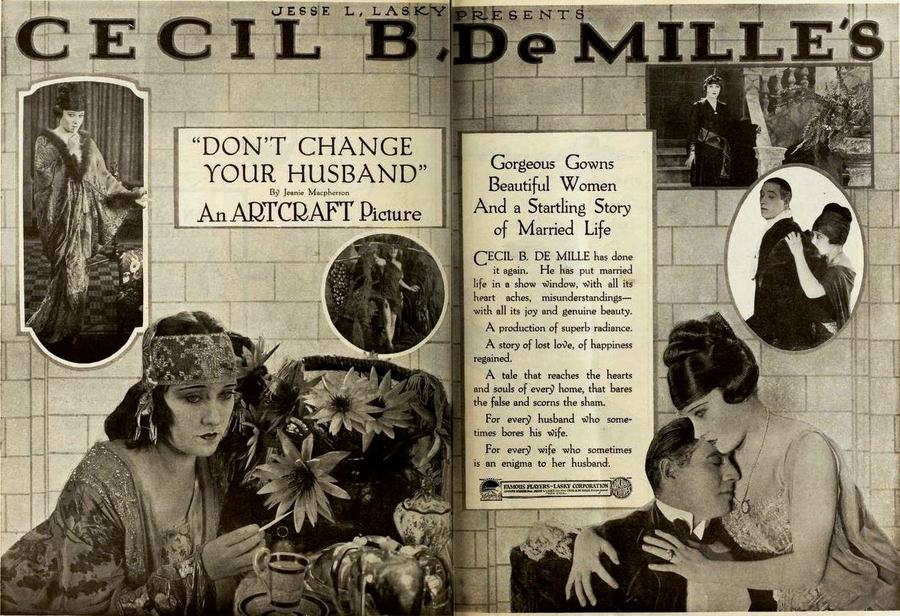
Screenwriter Jeanie Macpherson injects feminist critique into seemingly conventional scenarios. Note how Leila's divorce isn't motivated by grand passion but by accumulation of sensory offenses—a revolutionary concept when most screen marriages shattered over infidelity. James' worst crimes are domestic: using the butter knife for marmalade, wearing bedroom slippers to breakfast, his very breath declaring war on polite society. Macpherson understands how patriarchy weaponizes minor irritants into psychological imprisonment. Her genius peaks in the grocery scene: as Leila selects onions for James' dinner, the vegetable becomes a grenade she reluctantly arms. The ensuing meal—James masticating with bovine contentment while Leila's face tightens—culminates in silent cinema's most explosive non-violent act: a porcelain soup bowl cracking against the tablecloth as she declares divorce. No infidelity required—just the slow death of tolerance.
Alvin Wyckoff's cinematography tells parallel stories through texture and shadow. Leila's initial domestic prison shimmers with oppressive opulence—velvet drapes swallowing sound, marble floors reflecting her isolation like a funhouse mirror. Contrast this with Schuyler's modernist penthouse: all sharp angles and reflective surfaces where identities fragment. The film's visual crescendo occurs at the charity ball, a bravura ten-minute sequence without dialogue. Watch how Wyckoff isolates characters through light: James now illuminated like a Renaissance portrait in golden glow; Schuyler shrinking into cobalt shadows as his deceptions surface; Leila caught in liminal twilight between them. DeMille reserves his most devastating composition for the final shot: Leila's gloved hand hovering over James' reformed arm, the frame tightening until their eventual touch occurs just beyond view—a masterstroke of ambiguity that leaves moral judgment suspended like dust in projection beam.
Over a century later, the film's questions retain disturbing relevance. In our era of curated perfection and disposable relationships, James' transformation foreshadows today's self-reinvention industrial complex—his makeover predates reality TV makeover shows by eighty years. Leila's predicament anticipates contemporary discourse about emotional labor: why must women bear the burden of male self-improvement only after abandoning ship? The film's most radical notion—that marital happiness might require willful blindness to minor irritants—remains profoundly unsettling. As we watch Swanson's face in the closing moments, her smile never quite reaching her exhausted eyes, we confront an uncomfortable truth: sometimes the gilded cage feels safest when you've seen the abyss outside. DeMille and Macpherson crafted not a tidy moral fable but a gorgeously ambiguous trap—and we remain deliciously ensnared.
IMDb —
1923
Community
Log in to comment.