DbcultAccessing Vault...
5.4/10
Senior Film Conservator
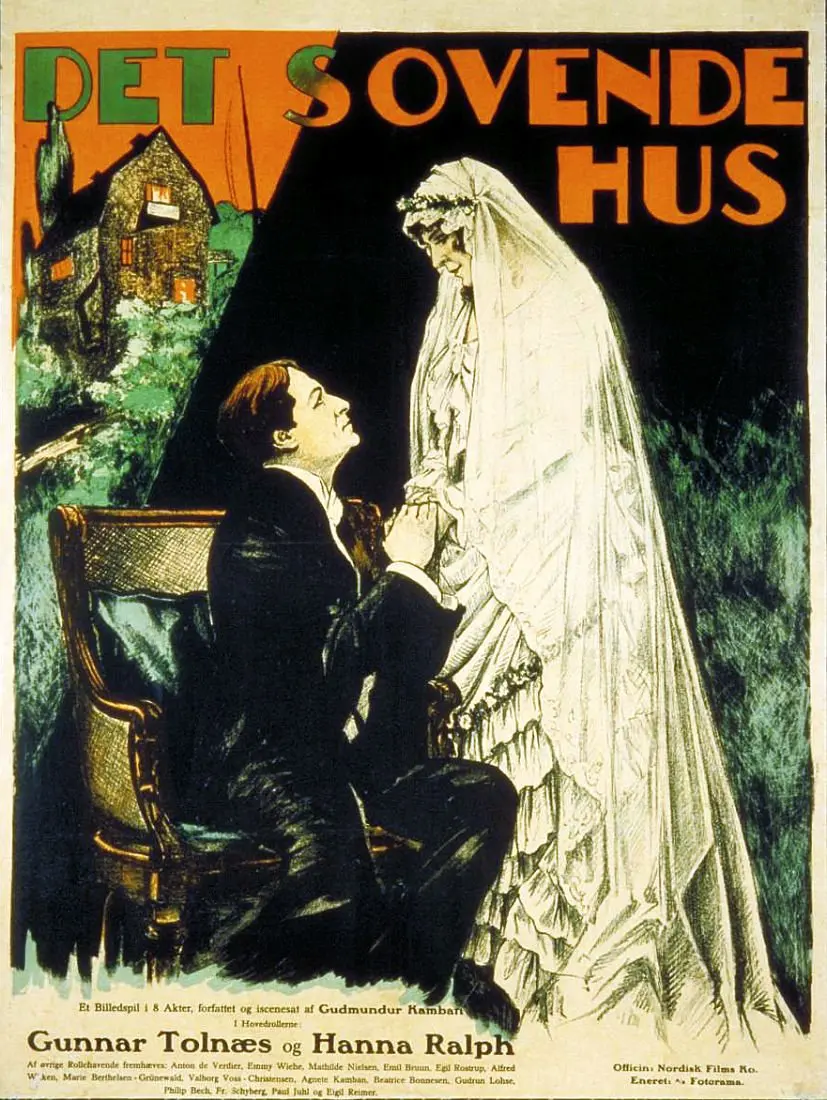
A definitive 5.4/10 rating for a film that redefined the boundaries of cult cinema. Det sovende Hus remains a cornerstone of transgressive art.
Short answer: yes, but with a significant caveat. "Det sovende Hus" is a compelling, if deeply melancholic, silent film that offers a rich, atmospheric experience for those willing to fully immerse themselves in its unique rhythm and period sensibilities.
This film is unequivocally for devotees of early cinema, particularly those who appreciate psychological dramas and gothic storytelling without the crutch of dialogue. It is emphatically not for viewers seeking fast-paced action, modern narrative conventions, or a light, easily digestible viewing experience.
"Det sovende Hus" is a Danish silent film that, despite its age, manages to weave a genuinely unsettling and emotionally resonant tale. Helmed by writer Guðmundur Kamban, the film plunges us into a world where the past is not merely prologue, but a living, breathing entity that refuses to rest. It’s a bold artistic statement, even for its era.
The story centers on Elara, portrayed with a delicate intensity by Maria Grünwald-Bertelsen, who inherits a grand, isolated estate. This house, known locally as 'The Sleeping House,' is less a dwelling and more a repository of forgotten sorrows. From the moment Elara steps through its imposing doors, the film establishes a pervasive sense of unease. It’s a testament to the directorial vision that this mood is sustained so effectively without a single spoken word, relying instead on the expressive power of its actors and the evocative cinematography.
The film works because its commitment to atmosphere is absolute. Every frame, every lingering shot of a shadowed corridor or a wind-swept window, contributes to the overarching sense of mystery and foreboding. The performances, particularly from Grünwald-Bertelsen and the formidable Mathilde Nielsen as the austere housekeeper Mrs. Lund, are masterclasses in non-verbal communication, conveying complex emotions through subtle gestures and piercing gazes.
This film fails because its pacing can be agonizingly slow by modern standards. While deliberate, it occasionally teeters on the brink of stagnation, demanding a patience that many contemporary viewers may not possess. The deliberate unfolding of its central mystery, while ultimately rewarding, requires significant investment.
You should watch it if you cherish silent cinema's unique ability to create immersive worlds through visual storytelling, and if you have an appreciation for psychological depth over overt plot mechanics.
The true triumph of "Det sovende Hus" lies in its unparalleled ability to conjure a specific, pervasive mood. This isn't just a story told; it's an emotion evoked. The film's aesthetic leans heavily into the gothic, utilizing stark contrasts between light and shadow to create a palpable sense of dread and isolation. One particular sequence, where Elara discovers a hidden diary tucked away in a dusty attic, is a masterclass in building tension. The camera lingers on her face, illuminated by a single shaft of light, as she slowly deciphers the tragic words, her expression shifting from curiosity to profound sorrow. It's a moment that speaks volumes without uttering a sound, a testament to the power of the medium.
The direction, while uncredited in specific online databases, demonstrates an acute understanding of visual storytelling. The framing is often exquisite, positioning characters within vast, imposing spaces that dwarf them, emphasizing their isolation and vulnerability. The use of close-ups is sparing but impactful, drawing the audience into the characters' internal struggles. This is particularly evident in scenes involving the enigmatic Dr. Brandt (Gunnar Tolnæs), whose subtle shifts in expression hint at a deeper knowledge of the house's secrets than he lets on.
Comparing it to other atmospheric silent films, one might draw parallels to the moody intensity of Die Hexe (1922) or the psychological complexity found in some early German Expressionist works. However, "Det sovende Hus" possesses a distinctly Danish sensibility—a quiet intensity, a grounded realism even amidst its supernatural undertones, that sets it apart. It’s less about overt horror and more about the creeping dread of inherited trauma.
The narrative, credited to Guðmundur Kamban, is surprisingly intricate for a film of its era. It avoids simplistic good-vs-evil archetypes, instead presenting characters burdened by circumstance and the weight of history. The central mystery surrounding Agnes (Emma Wiehe) and her tragic fate is slowly revealed through visual cues and the emotional reactions of the living, rather than expository dialogue. This forces the viewer to actively engage, piecing together the puzzle alongside Elara.
The cast of "Det sovende Hus" delivers performances that are nothing short of remarkable, especially considering the constraints of the silent era. Maria Grünwald-Bertelsen, as Elara, carries the emotional weight of the film with grace and conviction. Her transformation from an initially curious inheritor to a woman haunted by the past is subtly portrayed, her eyes conveying more than any monologue ever could. Her portrayal of Elara's growing obsession with Agnes's story is particularly compelling, demonstrating a profound understanding of psychological descent.
Mathilde Nielsen, as Mrs. Lund, is a formidable presence. Her stern demeanor and guarded expressions are perfectly suited to the role of a keeper of secrets. There's a moment where Mrs. Lund, observing Elara’s growing distress, offers a fleeting, almost imperceptible look of sympathy before reverting to her stoic mask. It’s a tiny detail, but it adds immense depth to a character who could easily have been a one-dimensional antagonist. This is where the true artistry of silent acting shines through—in the nuances that speak volumes.
Even the supporting cast, including Poul Juhl and Hanna Ralph, contribute to the film’s rich tapestry. Their interactions, though brief, are always purposeful, driving the narrative forward or deepening the film's pervasive sense of mystery. The collective effort ensures that the emotional stakes feel incredibly real, despite the absence of spoken words. It’s a testament to their craft that these characters feel so alive, so burdened by their circumstances, decades after their performances were committed to celluloid.
The cinematography of "Det sovende Hus" is arguably its strongest technical asset. The use of deep shadows, chiaroscuro lighting, and thoughtful compositions creates a visual language that is both beautiful and deeply unsettling. The house itself is filmed with a reverence that elevates it beyond mere setting; it becomes a character in its own right, its architectural details imbued with personality. The long, winding staircase, for instance, is often framed to appear endless, a metaphor for the inescapable past.
However, this visual artistry is married to a pacing that will test the patience of many modern viewers. The film unfolds with an almost dreamlike slowness, allowing moments to breathe, perhaps even to stagnate. While this deliberate pace is crucial for building the film's suffocating atmosphere, it also means that plot developments are few and far between, requiring a significant commitment from the audience. There are stretches where the narrative feels less like a river flowing and more like a still, deep pond, reflecting the sky but moving little.
This deliberate rhythm, while a stylistic choice, is perhaps the film's biggest hurdle for contemporary appreciation. Viewers accustomed to the rapid-fire editing and constant narrative propulsion of modern cinema might find themselves disengaged. It’s a film that demands you slow down, breathe with it, and allow its quiet dread to seep into your consciousness. This is not a passive viewing experience; it’s an active engagement with a different form of storytelling. It works. But it’s flawed.
The tone of "Det sovende Hus" is one of pervasive melancholy, tinged with a creeping sense of dread. It’s a gothic melodrama through and through, exploring themes of inherited guilt, the persistence of memory, and the psychological impact of secrets. The film doesn't shy away from the darker aspects of human nature, delving into betrayal, forbidden love, and the tragic consequences that ripple across generations.
One surprising observation is how modern the film's psychological depth feels. Despite its silent format, it explores the fragility of sanity and the power of obsession with a nuance that anticipates later psychological thrillers. Elara's gradual descent into a near-obsessive state, driven by the house's history, is portrayed with remarkable sensitivity. It’s a subtle horror, one that preys on the mind rather than relying on jump scares.
The film's exploration of the house as a living entity is also noteworthy. It's not just a backdrop; it's an active participant in the drama, its creaks and shadows seemingly conspiring to reveal its secrets. This personification of the setting is a hallmark of classic gothic literature and is executed here with impressive visual flair. The way the light shifts through the windows, casting long, spectral shadows, often feels like the house itself is sighing or whispering its ancient tales.
I strongly believe that the film's true genius lies not in its plot twists, which are somewhat predictable for seasoned genre fans, but in its unwavering commitment to emotional resonance and atmospheric immersion. It sacrifices narrative surprise for a deeper, more visceral experience of dread and sorrow. This is a bold choice that elevates it beyond a simple ghost story, making it a profound meditation on the burdens of the past.
"Det sovende Hus" is a testament to the enduring power of silent cinema, particularly its ability to create profound emotional and atmospheric experiences without a single spoken word. It is a slow, simmering psychological drama, rich in gothic grandeur and human sorrow. While its deliberate pacing will undoubtedly deter some, those who surrender to its unique rhythm will find themselves rewarded with a hauntingly beautiful and deeply resonant film.
For silent film aficionados, this is an essential viewing, a forgotten gem that deserves rediscovery. For others, it's an opportunity to step outside the conventions of modern storytelling and experience cinema in its rawest, most expressive form. It’s not an easy watch, but it is an enriching one, proving that some houses, even when silent, have the loudest stories to tell. Consider pairing it with another atmospheric classic like The Mysterious Miss Terry (1917) for a full immersion in the era's storytelling prowess. Ultimately, "Det sovende Hus" stands as a powerful, if challenging, piece of cinematic history.
IMDb 6
1936
Community
Log in to comment.