DbcultAccessing Vault...
6.6/10
Senior Film Conservator

A definitive 6.6/10 rating for a film that redefined the boundaries of cult cinema. Tides of Passion remains a cornerstone of transgressive art.
Tides of Passion is a silent film that delves into the intricate fabric of human emotions, set against the rugged backdrop of a Nova Scotia fishing village. The narrative unfolds with Charity Byfleet, a woman of tranquility and grace, who finds herself caught in the whirlwind of a passionate yet tumultuous love affair. Her marriage to William Pennland, a romantic and charismatic soldier of fortune, sets the stage for a narrative that is as poignant as it is dramatic.
William's journey is one of unbridled adventure, marked by a flirtation that would eventually culminate in a fateful encounter. When he is thrown overboard, the immediate impact of his survival is overshadowed by the subsequent events. Hagar Levanti, a beautiful woman of mixed heritage, plays a pivotal role in his recovery, her actions both a testament to her strength and a harbinger of the moral complexities that will unfold.
William's decision to marry Hagar, ostensibly to quell gossip, is a choice that carries with it the seeds of his eventual downfall. His heart remains with Charity, and when he finds himself caught between his love for Hagar and his unfulfilled promises to Charity, the situation becomes unmanageable. Hagar's choice to abandon William on a barren island, a decision driven by a mixture of self-preservation and loyalty, is a pivotal moment in the film. It is here that the true depth of William's despair is revealed, culminating in his untimely death.
Charity's arrival is a bittersweet interlude. Her presence at William's deathbed is a moment of solace, but it is also a harbinger of the storm that is yet to come. The revelation of Hagar's role in William's demise sets the stage for a confrontation that would test Charity's strength and resolve. Hagar's decision to abandon her newborn child, a move driven by a mix of fear and a desire to protect her and her newborn, adds another layer of complexity to the narrative. Charity's acceptance of Hagar, despite the truth, is a poignant moment of forgiveness and acceptance.
However, the truth cannot be concealed for long. Hagar's past actions, particularly her involvement in William's death, lead to her expulsion from Charity's home. The film's conclusion is a poignant exploration of the consequences of one's actions. Hagar's attempt to drown herself is a desperate act, a cry for help and a manifestation of her inner turmoil. Her rescue is a moment of grace, a fleeting moment of hope caught in the storm of events.
The film's visual storytelling, with its stark contrasts between light and shadow, captures the emotional turmoil of its characters. The cinematography is a blend of beauty and stark realism, reflecting the harshness of the Nova Scotia landscape and the emotional intensity of the narrative. The performances, particularly those of Mae Marsh and Laska Winter, are nuanced and compelling, bringing depth to their characters and their struggles.
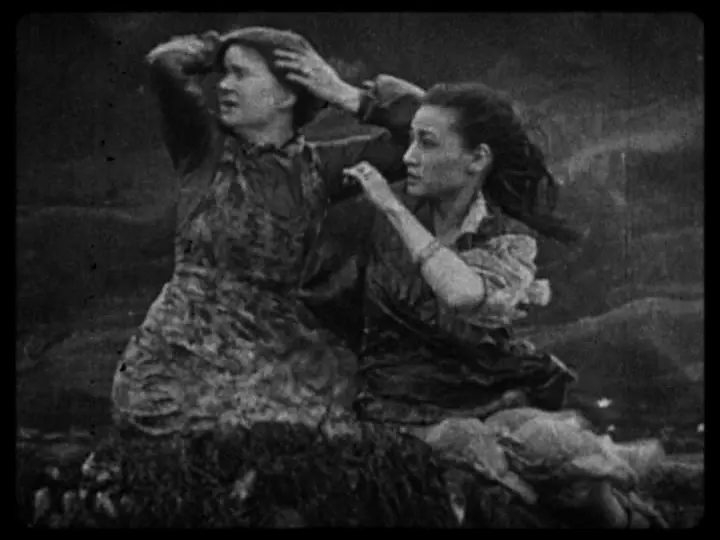
Set against the backdrop of early 20th-century Canada, the film explores themes of love, betrayal, and the moral complexities of human relationships. It is a tale of passion and survival, where the line between right and wrong is often blurred. The narrative is a commentary on the human condition, a reflection of the enduring power of love and the often harsh realities of life.
Technical Aspects: The film's silent format, with its reliance on visual storytelling, is a testament to the skill of its creators. The interplay of music and visuals, although not explicitly detailed, is likely a significant component of the film's impact. The use of natural settings, particularly the rugged coastline of Nova Scotia, enhances the film's authenticity and emotional resonance.
Comparative Analysis: When viewed alongside other works of the era, such as 'All Wet' or 'Unclaimed Goods', Tides of Passion stands out for its emotional depth and the complexity of its narrative. It offers a stark contrast to the more straightforward narratives found in films like 'Hello, Mars!' or 'Save the Ship', where the focus is more on adventure and escapism.
While the film's silent nature may limit its accessibility for modern audiences, its enduring themes and emotional power make it a significant work in the silent film era. It is a poignant reminder of the enduring power of storytelling, a testament to the enduring relevance of human emotions and the moral dilemmas that shape our lives.
Overall, Tides of Passion is a compelling and emotionally charged film, a testament to the enduring power of storytelling. It is a film that invites viewers to explore the depths of human emotion, to confront the moral complexities of love and survival, and to reflect on the lasting impact of our choices. It is a film that, despite its age, retains the power to captivate and resonate with audiences today.
Final Verdict: A powerful and emotionally resonant silent film, Tides of Passion is a must-see for fans of early cinema. Its exploration of love, betrayal, and the moral complexities of human relationships makes it a standout work in the silent film era. It is a film that invites viewers to reflect on the enduring power of storytelling and the impact of our choices on the world around us.

IMDb 5.9
1925
Community
Log in to comment.