DbcultAccessing Vault...
Cult Review
Senior Film Conservator
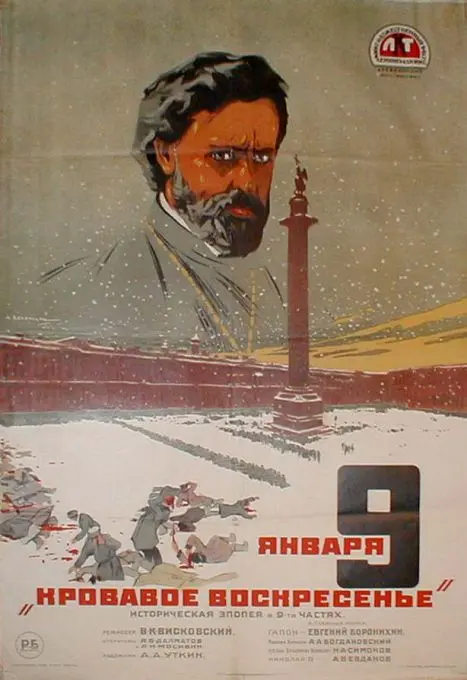
Set against the backdrop of pre-World War I Russia, Devyatoe Yanvarya (Ninth of November) is a powerful and haunting film that immerses viewers in the turbulent socio-political climate of early 20th century Russia. The narrative centers on the tragic incidents of the Ninth of November, 1905, when unarmed demonstrators, led by Father Georgy Gapon, marched peacefully towards the Winter Palace in St Petersburg to present a petition to Tsar Nicholas II. However, their peaceful intentions were met with violent suppression by the Imperial Guard, resulting in the loss of countless lives.
The film's director, through a masterful blend of historical accuracy and artistic expression, crafts a narrative that is as much about the human spirit as it is about historical events. The visuals are stark and evocative, capturing the cold, impersonal nature of the Imperial Guard's actions in contrast to the warmth and humanity of the demonstrators. The cinematography is particularly noteworthy, with long, unbroken shots that lend a sense of realism and urgency to the proceedings.
The performances are uniformly strong, with each actor bringing a depth and authenticity to their roles. Yevgeni Boronikhin, as Father Georgy Gapon, conveys the religious fervor and unwavering resolve of a man who believes in the power of peaceful protest. Tamara Glebova, as a young worker, captures the quiet strength and resilience of those who were caught up in the events. Nikolai Simonov and Alexei Bogdanovsky, as members of the Imperial Guard, provide a stark contrast, their expressions and actions betraying the psychological toll of their actions.
The film is particularly effective in its use of dialogue, which is both historically accurate and emotionally resonant. It not only serves to advance the plot but also to explore the psychological and emotional states of the characters. The tension builds incrementally, culminating in a powerful and emotionally charged climax that leaves a lasting impact on the viewer.
The historical context of the film is crucial to its impact. The Tsarist regime in Russia was characterized by a brutal and repressive form of governance. The events of the Ninth of November were a turning point in Russian history, marking a shift towards more open political discourse and eventually leading to the abdication of Tsar Nicholas II during the February Revolution of 1917. By focusing on this pivotal moment, the film provides a nuanced and critical perspective on the political and social conditions of the time.
One of the strengths of Devyatoe Yanvarya is its ability to balance historical accuracy with artistic expression. The film is not just a historical reenactment but a profound exploration of human emotions and the complexities of political power. It challenges viewers to consider the moral and ethical implications of violence and the impact of political decisions on individual lives.
For comparison, Algeria, a film that deals with colonial oppression, shares some thematic similarities with Devyatoe Yanvarya. Both films use historical events to explore broader themes of power, resistance, and the human condition. However, Devyatoe Yanvarya offers a more intimate and personal portrayal, focusing on the individual experiences of those caught up in the events.
Another film that might be of interest is The Common Law (1923). While not directly related to the events of the Ninth of November, this film also deals with themes of social injustice and the struggle for equality. Both films offer a glimpse into the complex social and political dynamics of their respective times.
In conclusion, Devyatoe Yanvarya is a film that demands to be seen. It is a powerful and emotionally resonant exploration of a pivotal moment in Russian history. Through its compelling narrative, strong performances, and evocative visuals, it offers a lasting and thought-provoking viewing experience. Whether you are a history buff or a fan of powerful, emotionally charged cinema, Devyatoe Yanvarya is a film that is not to be missed.
IMDb 5.1
1929
Community
Log in to comment.