DbcultAccessing Vault...
Cult Review
Senior Film Conservator
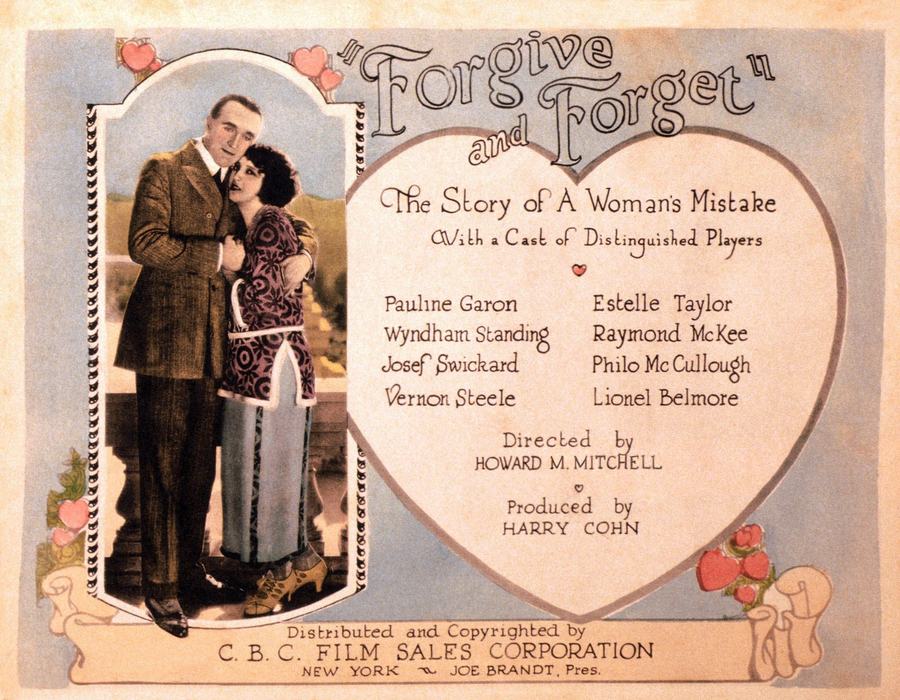
The year 1923 served as a pivotal junction in the evolution of American silent cinema, a period where the primitive techniques of the previous decade began to yield to a more sophisticated, psychologically dense form of storytelling. In the midst of this transition, Forgive and Forget emerges as a fascinating artifact of domestic anxiety and moral reckoning. Directed with a keen eye for the claustrophobia of the upper-middle-class drawing room, the film navigates the treacherous waters of infidelity and the subsequent rot that spreads when secrets are weaponized by the unscrupulous.
At the heart of this storm is Estelle Taylor. Her performance as Mrs. Cameron transcends the typical histrionics associated with the silent era. There is a quiet desperation in her gestures, a subtle flickering of the eyelids that communicates more than any intertitle ever could. Taylor manages to imbue a character caught in the throes of an extramarital indiscretion with a profound sense of humanity, making her plight feel less like a morality play and more like a lived tragedy. Unlike the more whimsical characters seen in Getting Mary Married, Taylor’s portrayal is grounded in a heavy, almost modern realism.
The chemistry—or perhaps more accurately, the lack thereof—between her and Wyndham Standing, who plays her husband, provides the necessary friction to drive the plot forward. Standing’s performance is one of stiff-upper-lip dignity, a stoicism that acts as a foil to the burgeoning chaos around him. When he is accused of murdering Ronnie Sears, played with a tragic vulnerability by Vernon Steele, the film shifts gears from a domestic drama into something far more noir-adjacent, predating the genre's official birth by nearly two decades.
Philo McCullough’s Blake is a masterclass in silent film villainy. He doesn’t twirl a mustache; instead, he occupies the frame with a predatory stillness. Blake represents the existential threat to the Victorian-era values that still lingered in the 1920s—the idea that one’s private life could be bought and sold. His role as the roommate of the lover adds a layer of parasitic voyeurism that is deeply unsettling. The blackmail sequences are shot with a focus on tight spaces, emphasizing the feeling of being trapped, a technique we might also observe in the tension-filled scenes of The Iron Heart.
The screenplay, penned by John Stone and Charles Furthman, is remarkably tight for the era. It avoids the episodic nature of films like Edgar, the Detective, opting instead for a relentless forward momentum. The writers understand that the audience's investment lies not just in the 'whodunit' aspect, but in the 'will they survive the social fallout' aspect. This focus on the social consequences of sin aligns the film more closely with the thematic weight found in A Woman's Awakening.
Visually, Forgive and Forget utilizes a palette of deep shadows and stark highlights to mirror the moral ambiguity of its characters. The use of lighting to isolate Mrs. Cameron in her moments of guilt is particularly effective. It lacks the pastoral beauty of The Spirit of Romance, choosing instead a more urban, gritty aesthetic that reflects the corruption of the characters' souls. Even the sets, though opulent, feel cold and uninviting, reinforcing the theme that wealth is no shield against the consequences of one's actions.
The pacing of the film is exemplary. While many silents of this period suffer from an over-reliance on repetitive intertitles, this production trusts its actors to carry the narrative weight through expression and blocking. There is a specific rhythm to the editing that builds toward the climax—a rhythm that feels far more sophisticated than the slapstick energy of Pop Tuttle's Movie Queen or the lightheartedness of The Garter Girl.
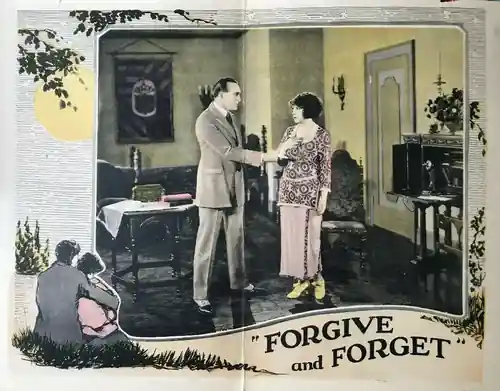
The final act, involving Blake’s confession and subsequent death, is a bravura piece of filmmaking. The physical height from which Blake falls serves as a potent metaphor for the moral heights from which all the characters have, in some way, descended. It is a resolution that satisfies the Hays Code-adjacent sensibilities of the time while still maintaining a sense of tragic inevitability. The death is not celebrated; it is presented as the only possible conclusion to a life lived in the pursuit of others' misery.
Comparing this to the stark realism of The Italian, one sees a different facet of the immigrant or outsider experience—Blake is an outsider not by birth, but by his refusal to adhere to the social contract. His fall is a expulsion from the garden of polite society, a society that Mrs. Cameron and her husband must now attempt to navigate with the heavy burden of their shared history. It is a much darker resolution than the romantic escapades found in Flirting with Fate.
To understand Forgive and Forget, one must look at the works of its contemporaries. While European cinema was experimenting with expressionism in films like Der Eid des Stephan Huller - II or the emotional depth of En Søns Kærlighed, American cinema was perfecting the art of the 'society drama.' This film is a prime example of that perfection. It manages to balance the sensationalism of a murder trial with a genuinely moving exploration of a marriage under siege.
The inclusion of Lionel Belmore and Josef Swickard in supporting roles provides a sturdy foundation for the lead actors. These veterans of the screen bring a gravitas that helps ground the more melodramatic elements of the plot. Their presence ensures that the world of the Camerons feels populated and real, rather than a mere stage for the central conflict. This ensemble approach is reminiscent of the structural integrity found in Prima Vera, where every character serves a distinct thematic purpose.
In the broader landscape of 1920s film, Forgive and Forget stands as a testament to the power of the domestic thriller. It eschews the grand scale of westerns like The Range Pirate or the high-seas adventure of Lucky Carson in favor of an internal, psychological landscape. The real 'range' being explored here is the range of human emotion—from the heights of passion to the depths of betrayal.
Reflecting on the film nearly a century later, its power remains largely undiminished. While the social mores regarding divorce and infidelity have shifted radically, the core themes of blackmail and the search for redemption are timeless. The film asks a difficult question: can one truly 'forgive and forget' when the cost of a mistake is a human life? The title itself is an irony; the characters may attempt to forgive, but the audience knows they will never truly forget the shadow that Blake cast over their lives.
The technical execution, from the blocking of the actors to the use of close-ups during the trial, demonstrates a mastery of the medium. It doesn't rely on the gimmicks of a A Model Messenger, but instead invests in the emotional truth of its scenes. For students of silent cinema, this is an essential text, illustrating the high-water mark of the pre-talkie era's dramatic capabilities. It is a film of sharp edges and soft hearts, a paradox captured in silver nitrate that continues to resonate with anyone who has ever harbored a secret or sought a second chance.
Ultimately, Forgive and Forget is a somber reminder of the fragility of reputation. In a world before the internet, your name was all you had, and the film treats the potential loss of that name with the gravity of a death sentence. It is this high-stakes emotional environment that keeps the viewer engaged from the first frame to the final, tragic fall. It is a work of significant artistic merit, deserving of a place alongside the better-known classics of the Roaring Twenties.

IMDb 6
1911
Community
Log in to comment.