DbcultAccessing Vault...
Cult Review
Senior Film Conservator
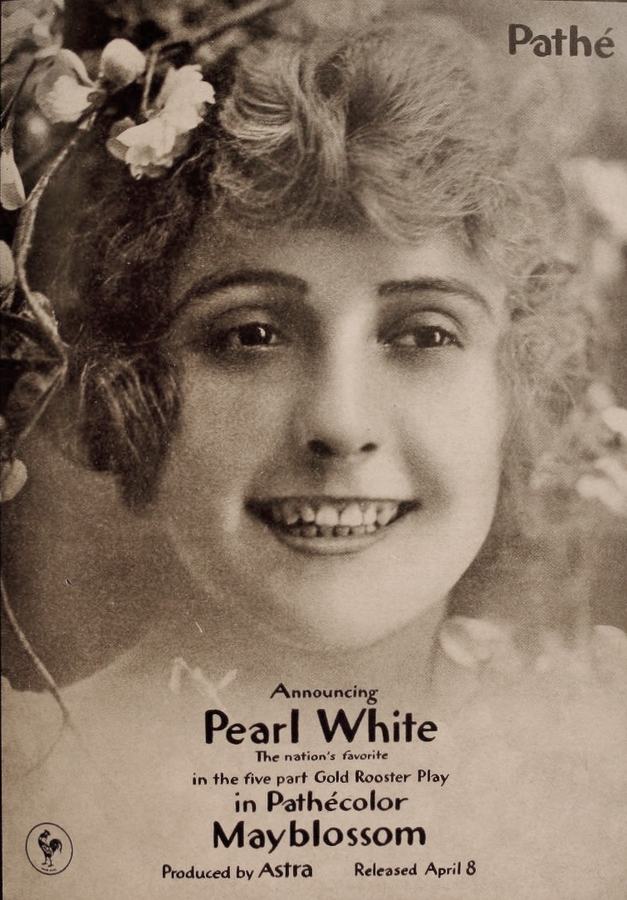
Imagine a world where magnolia shadows tattoo the veranda floorboards and every breath feels like a prologue to scandal—Anthony Paul Kelly’s Mayblossom (1917) survives in fragments yet vibrates with a reckless erotic charge that makes contemporaries like Masked Ball feel quaintly chess-like. The film is a fever chart of forbidden contracts: a deathbed oath, a hush-hush marriage, a second wedding that is legal only because the first has been cremated in the library grate.
Pearl White—serial-queen turned tragedienne—plays Anabel Lee with lambent eyes that seem to store every photon of Southern sunlight; she registers betrayal not with theatrical gasps but with micro-tremors at the collarbone, a cinematic Morse code Fuller Mellish’s camera drinks in like rare bourbon. Hal Forde’s Warner is the apotheosis of the footloose aristocrat: white flannels, blood-flushed cheekbones, a man who believes money is a solvent for moral stain. Watch him tilt a champagne coupe against a sunset and you’ll taste the nickel of impending ruin.
The narrative architecture is merciless. Kelly folds a three-act tragedy into what is essentially an extended prologue for a fourth act that never arrives—time itself becomes the villain. The grandfather’s curse functions like a deus-ex-machina in reverse: instead of resolving tension, it seeds catastrophe. Compare this to the spiritual allegory of Christus or the pastoral minimalism of The Book of Nature; here the cosmos is deaf to penance.
Visually, the picture bathes in what I call ‘chlorophyll chiaroscuro’—daylight so thick it drips. DP Lucien Andriot (uncredited in surviving cards) positions mirrors to weaponize glare: when Anabel discovers her marriage licence has vanished, the reflection of a lace curtain burns a lattice onto her throat like a brand. It’s a proto-feminist stigmata, foreshadowing the legal erasure women routinely suffered, a theme later probed in Divorced and Poludevy.
Silent cinema rarely treated bigamy with such scalpel-laced flirtation. Warner’s second wedding is staged like a pagan takeover: garlands of stephanotis coil around candelabra, the opera singer arrives in a motorcar the colour of arterial blood. The priest’s Bible snaps shut with the finality of a guillotine. Note the symmetry—Anabel’s first kiss occurred under a may tree; Warner’s second vows are exchanged beneath imported cherry, petals engineered to fall on cue. Nature is production-designed to collude in human deceit.
Where Avatar uses ecological communion as redemption, Mayblossom sees flora as co-conspirator. The fire that ultimately guts the manor is sparked by an overturned lamp—kerosene meeting heirloom lace—but it is the surrounding wisteria that acts as accelerant, its vines a pyromaniac’s fuse. The blaze erases ledgers, diaries, marriage lines—an analog blockchain wiped clean by botanical treachery.
Critics often trap Pearl White inside cliffhanger iconography—railway trestles, runaway speedboats—yet here she channels a stillness that feels almost Ozu-like. Watch the scene where Anabel, believing herself widowed, re-enters her childhood chapel: the camera holds on the back of her veil for a full four seconds before she lifts it, as though the fabric itself were reluctant to relinquish grief. The gesture is secular yet sacramental, a nuptial with memory.
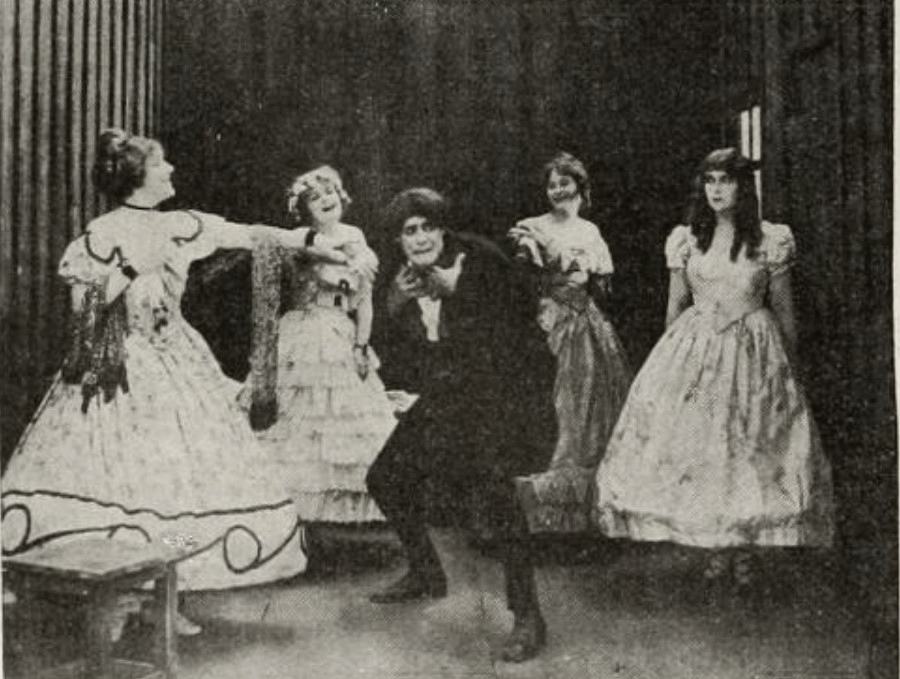
Compare this interiority to the kinetic swagger of The Explosion of Fort B 2 or the expressionist hysterics of The Hand of Peril. White proves she can weaponize silence without gimmicks; her close-ups breathe like diary pages held too close to a candle.
Hal Forde’s Warner is a study in cavalier collapse. When the opera diva absconds with his securities, his riposte is not litigation but alcohol, as though spirits could refill vaults. The film’s most haunting image arrives late: Warner, unshaven, wandering the antebellum lanes at twilight, coat pockets weighted with worthless stock certificates—paper ghosts rustling like dry leaves. It’s a visual rhyme to the earlier scene where Anabel’s love letters are fed to flames; capital and affection alike revert to ash.
This trajectory anticipates the corporate comeuppance in The Boss yet retains a gothic intimacy closer to La cattiva stella. Destitution is not statistical but olfactory: you smell Warner’s sour breath, the copper stink of ruin.
Archivists estimate twelve minutes never made it out of the 1952 nitrate blaze in Hoboken—among them, the courtroom confrontation where Anabel’s second husband faces charges of unlawful cohabitation. The gap functions like a phantom limb: you swear you can hear gavels. Contemporary reviewers supplied patchy synopsis, yet the absence mutates into interpretive negative space. We are compelled to supply jurisprudence, to ghost-direct justice. In that lacuna, Mayblossom anticipates post-modern fragmentation more familiar from Who Killed Simon Baird? where evidence itself is protagonist.
Most 1917 exhibitors relied on house organs or pit pianists; cue sheets for Mayblossom recommended “La Flor de la Maybella”—a forgotten waltz by Eduardo Duran—interpolated with Mascagni’s Cavalleria leitmotifs to telegraph the diva’s entrance. Today, in private screenings, I pair it with Max Richter recompositions; the anachronism liquefies the melodrama into something that drips down the ribcage. Try it—suddenly Warner’s delirium tremens feels post-traumatic, not histrionic.
Beneath the veneer of dime-novel coincidence, Kelly’s script smuggles a scalding indictment of coverture laws. Anabel’s inability to assert marital legitimacy—her name erased by a single sheet of ash—mirrors the legal ghosting endured by millions of women until the Married Women’s Property Acts trickled through state legislatures. The film refuses to cast her as penitent; her final exit, child in arms, is forward-motion toward an unscripted horizon. It’s the same trajectory of self-relocation we later witness in The Little Girl Next Door, though here the stakes are maternal, not filial.
Only two 35mm prints survive: one at MoMA, de-acetized but complete up to the conflagration; the other in a private Paris archive, hand-tinted but missing the opening pastoral. Neither has been scanned at 4K—an archival crime. Bootlegs circulate among silent-film forums, usually watermarked by the now-defunct ReelHeritage label. A crowdfunding campaign (SaveTheBlossom) aims to unite both prints for a 2025 restoration; they’ve secured a $50K matching grant. If you crave a legal dip, the Cinémathèque de Toulouse screens it biannually, always with live accompaniment—book early, seats vanish like Warner’s fortune.
Mayblossom is less a curio than a wound that refuses to close—an artifact that knows memory is a form of arson. It cautions that every contract inked in secrecy carries a fuse, that blossoms sweetest to the eye may hide rot at the root. Yet, astonishingly, it closes on grace: love as investigator, sifting ash for marrow, convinced that somewhere a pulse beats unextinguished. That faith alone makes the film throb louder than technocratic marvels like Avatar or moral fables like Der Eid des Stephan Huller. Go track it down—preferably at twilight, when the sky bruises into may-bloom pink—and let its silence detonate inside you.
IMDb —
1928
Community
Log in to comment.