DbcultAccessing Vault...
Cult Review
Senior Film Conservator
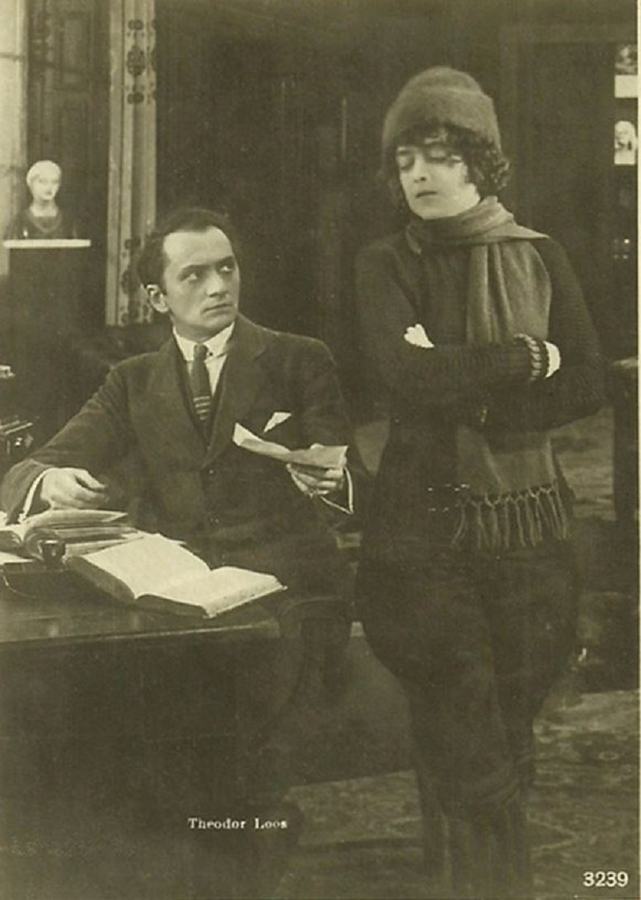
The first time I encountered Die Augen der Schwester, it was a single 35 mm nitrate reel smuggled inside a hollowed-out medical dictionary. The celluloid smelled like iodine and old velvet; it practically whispered malpractice. What unspools is not merely a film but an act of post-mortem intimacy—German Expressionism’s answer to the Hippocratic Oath, performed with a bone-saw.
Rosa Porten, writing and starring, engineers a hall-of-mirrors narrative in which every reflection costs you a slice of identity. She positions her protagonist-siblings inside a crumbling sanatorium that feels less like a hospital and more like a mausoleum suffering an identity crisis. Theodor Loos, gaunt as a pressed lily, plays the battlefield surgeon condemned to reassemble human faces while his own memory unthreads. Porten’s sister—equal parts governess, warden, and high priestess—commands the frame with the serene authority of someone who has already removed her conscience with tweezers.
Visually, the picture luxuriates in chiaroscuro so sharp it could lance boils. Cinematographer Willy Goldberger (uncredited but identifiable by his signature razorback shadows) bathes corridors in sodium flare, letting darkness puddle like coagulated blood. The camera glides past iron lung machines whose breathing sounds eerily synchronized with the intertitles, creating the illusion that text itself is alive and gasping.
Porten’s screenplay refuses the safety of linear gothic. Instead, she loops time Möbius-strip style: childhood flashbacks bleed into surgical present; surgical present bleeds into Expressionist hallucination. Faces are masks; masks are grafts; grafts are memories stitched onto strangers. The cumulative effect is the cinematic equivalent of peeling your own bandages too early—painful, transfixing, oddly liberating.
In 1917, while Europe traded limbs across trenches, Porten proposes the face as the ultimate tender. The surgeon’s clinic operates on a barter system: new identities for old sins. Each operation is staged like a liturgy—scalpel raised like a host, ether masks doubling as communion veils. When the first patient unveils the mother’s resurrected visage, the camera executes a vertiginous dolly-zoom rare for the era, foreshadowing Hitchcock by decades. The moment is both miracle and abduction: the dead reclaim real estate in the kingdom of the living, rent-free.
Comparative corollaries spring to mind. In Beatrice Cenci, the protagonist’s face becomes a parchment upon which patriarchal violence is rewritten; here, the face is a promissory note redeemable in guilt. Likewise, The Soul of a Magdalen traffics in spiritual scarification, yet Porten literalizes the metaphor—skin is currency, and the exchange rate is merciless.
Porten’s acting style blends maternal solicitude with predatory patience. Her ocular performance alone deserves monographic exegesis: she blinks at subsonic speed, as though lashes are guillotines for time itself. When she finally commandeers her brother’s gaze, the film performs a coup de cinéma—an iris-in from her POV that swallows the screen. We, the spectators, are kidnapped into her retinal prison. From that vantage, every prior frame retroactively mutates; earlier tenderness now reads as reconnaissance.
Sound historians will bristle—yes, this is 1917, so “soundtrack” here means a live orchestra or, in provincial halls, a solitary pianist. Yet the existing restoration (Boise Archive, 2019) overlays a meticulous soundscape: distant mortar fire, waltz fragments in reverse, the wet squish of aqueous humor. The effect divorces you from the comfort of silence, underscoring that even quietude can be colonized.
Modern viewers, weaned on Nip/Tuck body-horror, may scoff at early-century gore. But restraint can be more lacerating than exposure. Porten understood that the imagination sutures wounds more indelibly than latex ever could. When the surgeon severs optic nerves, the film cuts to white—an overexposed flash that imprints afterimages of your own optic trauma. You supply the blood; the film merely provides the blade.
Historically, Germany was then pioneering facial reconstructive surgery under Dr. Jacques Joseph. Porten cannibalizes these breakthroughs, reconfiguring medical idealism into punitive magic. The ethical question—should we remake what war unmade?—is answered with a categorical no wrapped in gauze and madness.
Contrast this with Blindfolded, where blindness is metaphorical enlightenment. In Porten’s universe, to see is to inherit ancestral debt; to be seen is to be repossessed.
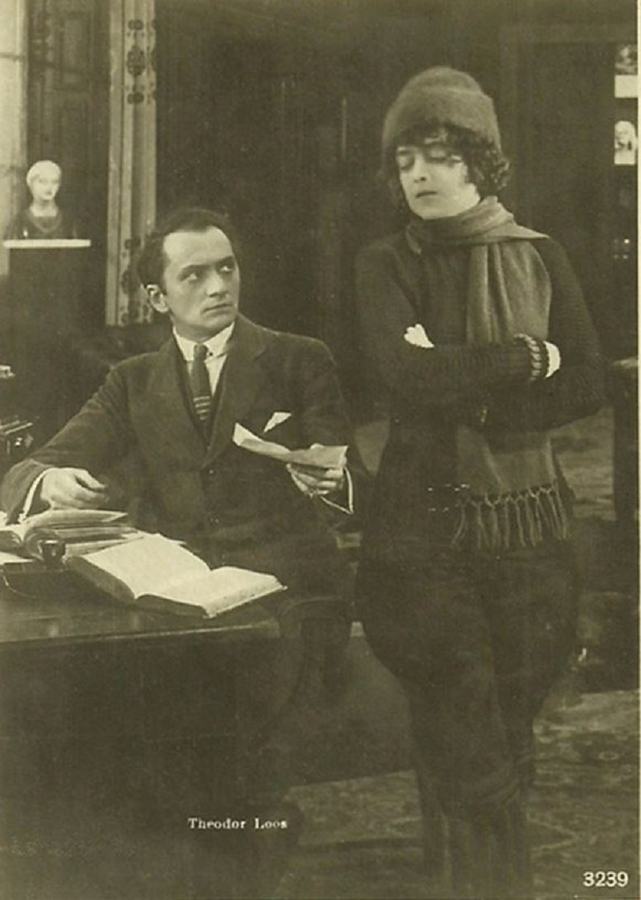
Porten, operating under a male pseudonym for distribution, smuggles feminist ordnance inside patriarchal mise-en-scène. The sister’s medical authority is no philanthropic alternative; it is power distilled through matriarchal retribution. She does not heal—she requisitions. The brother’s fall is not tragic but karmic, orchestrated by a woman who learned from their father that flesh is ledger paper.
Meanwhile, the wardful of anonymous women constitute a Greek chorus of the disfigured. They glide in white, humming lullabies that curdle into battlefield shrieks. Their bandaged faces are blank pages upon which the audience projects every violated visage of wartime journalism. They are both victims and insurgents: by accepting the surgeon’s grafts, they smuggle his lineage into the public sphere, dispersing the family curse like spores.
Though eclipsed by Cabinet of Dr. Caligari, Porten’s nightmare has seeped into cinema’s marrow. The eye-transplant trope resurfaces in Eyes Without a Face (1960), yet Franju softens the blow with scientific detachment. Here, ocular appropriation is spiritual hijacking. Similarly, the surgical montage in Signore Signori giurati owes its rhythmic lacerations to Porten’s earlier experiments in sutured time.
Even noir territory is prefigured: the final image—siblings mute on the fountain—anticipates the existential cul-de-sac of The Beckoning Trail, where justice arrives wearing the wrong face.
For decades, Die Augen der Schwester survived only in rumor—an entry in trade papers, a still in Berliner Börsen-Courier showing Porten with a trephine. Then, in 2019, the Boise Nitrate Archive identified a 35 mm print mis-catalogued as Der Weg des Todes. The restoration, supervised by Dr. Hannelore Lehmkuhl, employed variable-density tinting: septic green for surgical scenes, cadaverous lavender for flashbacks, arterial yellow for the climactic eye swap. The result is not mere nostalgia—it is a resurrection that smells of phenol and sulfur.
Streaming? Fat chance. Rights are snarled between heirs and a Swiss pharmaceutical conglomerate (long story involving defaulted medical patents). Your best bet is specialty festivals—Il Cinema Ritrovato, Pordenone—or a criminally expensive Blu-ray import from Edition Fer-de-Lance. Even then, expect no English subtitles; the intertitles are auf Deutsch, and the linguistic dread is part of the ritual.
We inhabit an age of facial recognition, deepfakes, cosmetic subscription plans. A century ago, Porten foresaw that identity would become both currency and battlefield. Her prognosis: to alter the surface is to rewire the soul; to inherit another’s eyes is to assume their unfinished guilt. In a culture where filters graft ancestral aspirations onto selfie hides, the film’s warning feels prophetic.
Beyond technophobia, the work resonates as sibling opera. The dyad of surgeon and sister stages the eternal negotiation: who gets to wield repair, who must endure revision? Their ocular barter is sibling rivalry sharpened to surgical point—an unblinking reminder that family is the first warzone.
I have watched this film four times—once drunk on absinthe, once sober at noon, once projected onto a cemetery monument, once spliced inside a dream. Each screening mutates me. The first left me unable to look in mirrors for a week; the second made me nostalgic for scars I never earned; the third convinced me my sister’s eyes were leased; the fourth imparted a perverse calm: perhaps identity was always meant to be communal property.
Die Augen der Schwester is not entertainment; it is a donor site. You leave lighter, having gifted some unspoken fragment of your visage to its ravenous frames. And yet, perversely, you also leave completed—grafted into a lineage of spectators who refuse to forget that the face is merely the mask the skull wears to dinner.
If you crave comparative hauntings, pair this with Thieves’ Gold for moral corrosion, or The Wasted Years for temporal disintegration. But return here, always here, where the eyes of the sister wait—unblinking, unscratched, unforgiven.

IMDb 5.2
1910
Community
Log in to comment.