DbcultAccessing Vault...
Cult Review
Senior Film Conservator
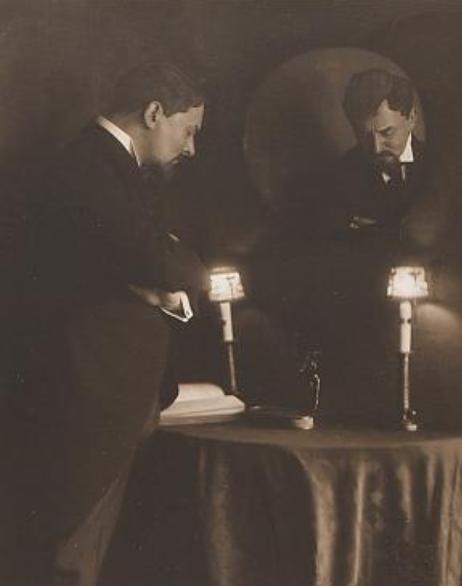
In the annals of cinematic history, certain films defy easy categorization, lingering in the mind long after the credits roll, their narratives weaving a complex tapestry of human experience and the inexplicable. Such is the enduring power of Die Doppelnatur, a German masterpiece that, even decades after its initial release, continues to provoke, to unsettle, and to fascinate. Penned by the visionary Balduin Grosser, this isn't merely a crime thriller; it's a profound meditation on the nature of perception, the burden of artistic genius, and the terrifying possibility that the future might not only be foreseen but actively painted into existence. It's a film that asks us to question the very fabric of reality, challenging the boundaries between the tangible and the prophetic.
At its core lies the breathtaking performance of Else Ruttersheim as Elara Vane, a reclusive artist whose work transcends mere aesthetic beauty, delving into the raw, often brutal, subconscious. Ruttersheim imbues Vane with a captivating blend of fragility and formidable intensity, her eyes often betraying a soul burdened by visions no ordinary mind could comprehend. Her latest creation, a sprawling, multi-panel canvas titled "The Obsidian Shroud," becomes the film's unsettling focal point. This isn't just a painting; it's a character in itself, evolving, shifting, and most disturbingly, reflecting a series of heinous crimes that begin to plague the city. Each brushstroke, each darkly rendered figure, seems to echo a real-world atrocity, turning Vane's studio into a chilling oracle.
The narrative's anchor in the realm of the tangible comes in the form of Willy Godlewski's Detective Anton Kessler. Godlewski masterfully portrays Kessler as a man of logic and order, initially dismissive of the artistic community's eccentricities and certainly of any notion of supernatural foresight. His skepticism, however, gradually erodes under the relentless, uncanny accuracy of Vane's canvas. Kessler’s journey from a hardened, cynical investigator to a man grappling with existential dread is one of the film's most compelling arcs. He represents the audience's own initial disbelief, slowly being chipped away by irrefutable, horrifying coincidences. The scenes where Kessler meticulously compares police photographs to Vane’s burgeoning masterpiece are fraught with a tension that is almost unbearable, a testament to Godlewski’s nuanced performance and Grosser’s meticulous screenplay.
Adding another layer of intrigue and moral ambiguity is Karl Waldschütz as Viktor Thorne, a powerful art collector and former mentor to Elara Vane. Waldschütz’s portrayal is subtly menacing, his character a shadowy figure whose motives are perpetually unclear. Is he merely an opportunistic patron, or does he harbor a deeper, more sinister connection to Vane's prophetic art and the unfolding crimes? Thorne’s presence casts a long shadow, suggesting that the darkness depicted on the canvas might not be purely abstract, but rooted in human malevolence and ambition. His interactions with both Vane and Kessler are charged with unspoken history and veiled threats, highlighting the intricate web of relationships that bind the characters to the painting's grim prophecy.
Balduin Grosser’s screenplay is an intricate marvel, balancing the cerebral with the visceral. He constructs a world where the line between artistic expression and preternatural insight is not merely blurred but obliterated. The dialogue is sharp, often philosophical, yet never loses its grounding in the escalating tension of the crime procedural. Grosser doesn't shy away from the unsettling implications of his premise, exploring the moral quandaries faced by an artist whose creations inadvertently condemn, or perhaps even inspire, acts of violence. The film’s pacing is deliberate, allowing the dread to slowly seep into the viewer’s consciousness, building to a climax that is both inevitable and shocking. It’s a masterclass in psychological suspense, proving that true horror often lies not in jump scares, but in the slow, creeping realization of an inescapable fate.
The visual language of Die Doppelnatur is as compelling as its narrative. Drawing heavily on the aesthetics of German Expressionism, the film utilizes stark contrasts of light and shadow, distorted perspectives, and claustrophobic framing to enhance its pervasive sense of unease. The city itself becomes a character, a labyrinth of dark alleys and imposing architecture that mirrors the labyrinthine depths of the human psyche. The cinematography, with its emphasis on deep focus and chiaroscuro lighting, transforms every scene into a living tableau, echoing the very artistry of Elara Vane. The painting, "The Obsidian Shroud," is rendered with terrifying detail, its evolving imagery a character in its own right, its ominous tones and fragmented figures a constant, visual reminder of the impending doom. It is a testament to the film's artistry that the painting feels as alive and impactful as any of the human performers.
Thematically, Die Doppelnatur delves into profound questions. Is art merely a reflection of reality, or does it possess the power to shape it? What is the artist's responsibility when their vision becomes a harbinger of destruction? The concept of 'Doppelnatur' – the dual nature – permeates every aspect of the film: the dual nature of art as beauty and terror, of humanity as creator and destroyer, of foresight as a gift and a curse. This philosophical depth elevates the film beyond a simple mystery, inviting viewers to ponder the very essence of fate and free will. It's a narrative that explores the psychological burden of prophecy, not from a mystical perspective, but from a deeply human one, focusing on the torment of those who see what is to come but are powerless to stop it, or worse, are implicated by their very sight.
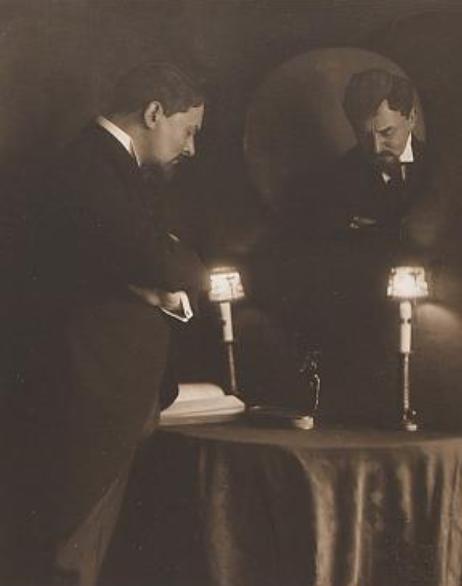
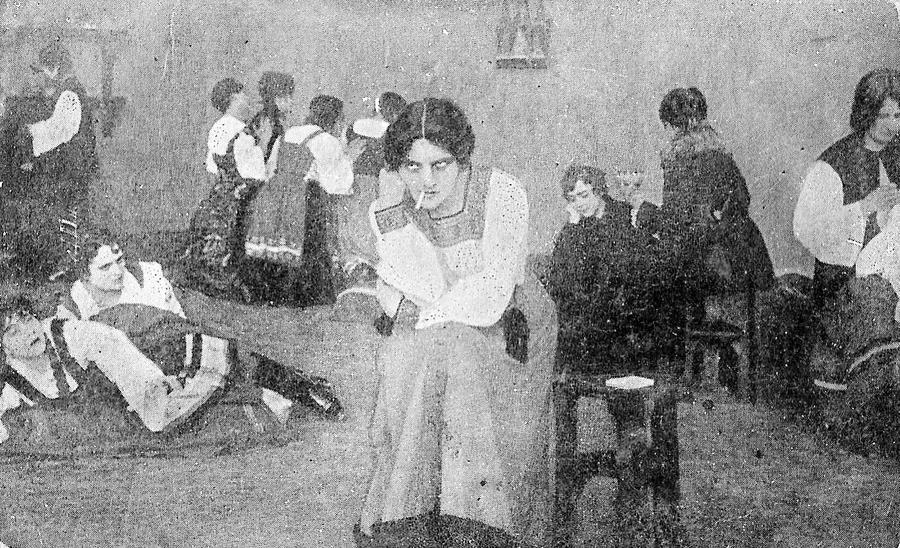
When considering films that explore the lives and struggles within the artistic community, Die Doppelnatur stands in fascinating contrast to works like Marga, Lebensbild aus Künstlerkreisen. While 'Marga' offers a more traditional, perhaps romanticized, glimpse into the daily lives and emotional entanglements of artists, 'Die Doppelnatur' plunges headfirst into the darker, more existential crises that can arise from profound creative talent. It explores the idea that artistic genius can be a double-edged sword, a conduit for both sublime beauty and terrifying truths. Here, the artist isn't just creating; she's channeling, and the implications are far more dire than any personal drama could convey. The film posits that true artistic insight might come at a cost far greater than mere suffering for one’s craft.
The psychological intensity and the relentless pursuit of truth in Die Doppelnatur bring to mind the gripping tension found in The Third Degree. While 'The Third Degree' focuses on the literal interrogation and pressure applied to extract confessions, 'Die Doppelnatur' presents a more abstract, yet equally potent, form of interrogation: the relentless questioning of reality itself, forced upon its characters by the painting's prophetic accuracy. Detective Kessler, in particular, undergoes a metaphorical 'third degree' as his rational mind is subjected to the inexplicable, forcing him to confront uncomfortable truths about the limits of human understanding. The film masterfully builds a sense of claustrophobic dread, not through physical confinement, but through the inescapable grip of fate and the weight of premonition.
Moreover, the film's intricate layering of secrets and the slow unveiling of a hidden truth evoke comparisons to the complex narratives of mystery thrillers like The Black Box. Both films excel at constructing a labyrinthine puzzle, where each piece of information, each clue, opens up further questions rather than providing immediate answers. However, where 'The Black Box' might rely on technological marvels or meticulous deduction, 'Die Doppelnatur' grounds its mystery in the deeply unsettling, almost mystical connection between art and impending doom. The painting itself acts as the 'black box,' holding encrypted messages that only a select few are capable of deciphering, and even then, at great psychological peril. The suspense isn't just about 'who did it,' but 'how did she know,' and 'can it be stopped?'
The unsettling, almost supernatural quality of the prophetic painting also draws parallels, albeit subtly, with films that explore more esoteric or mystical themes, such as Voodoo Vengeance. While 'Die Doppelnatur' eschews overt supernaturalism for a more psychological and existential dread, the painting's power to foretell and perhaps even influence events lends it an aura akin to a cursed artifact or a conduit for dark forces. It’s not about spirits or curses in the traditional sense, but the sheer, inexplicable power of art to transcend its medium and touch upon the fabric of destiny. The terror comes from the idea that the universe itself might be communicating its grim intentions through an artistic medium, rather than through overt magical means, making the foreknowledge all the more chilling because it seems to defy scientific explanation.
The film's exploration of an individual's struggle against an overwhelming, mysterious force, an 'unwelcome' truth that disrupts their world, can also be seen in conversation with films like The Unwelcome Mrs. Hatch. In that film, a character's return shakes up established social order, much like Elara Vane's painting shatters the comfortable rationalism of Detective Kessler's world. The painting itself becomes an 'unwelcome' revelation, forcing characters to confront uncomfortable realities they would rather ignore. It's the intrusion of the extraordinary into the ordinary, a disruption that compels a re-evaluation of everything previously held as true. The film forces its characters, and by extension, its audience, to confront the possibility that some truths are too vast, too terrifying, to be easily assimilated.
Even the concept of a 'strange bird' – an anomaly, an outsider – as encapsulated by a title like Der fremde Vogel, finds resonance within Die Doppelnatur. Elara Vane, with her visionary art and her unsettling gift, is undeniably a 'strange bird' within her society, an individual whose unique perspective sets her apart and makes her both revered and feared. Her art, too, is a 'strange bird,' an anomaly that defies logical explanation, a piece of creation that seems to possess a life and purpose beyond its maker. This sense of otherness, of something profoundly unusual operating within a seemingly mundane world, is a powerful undercurrent throughout the entire narrative, contributing to its pervasive sense of disquiet and mystery.
Ultimately, Die Doppelnatur is more than a mere cinematic experience; it is an intellectual challenge, a psychological journey, and a profound artistic statement. It asks us to consider the very fabric of reality, the power of art, and the terrifying implications of knowing too much. Grosser, Ruttersheim, Godlewski, and Waldschütz coalesce to create a film that is visually stunning, intellectually stimulating, and emotionally devastating. Its legacy is cemented not just by its innovative plot, but by its unflinching gaze into the abyss of human nature and the enigmatic interplay between fate and artistic creation. It is a film that demands multiple viewings, each revealing new layers of meaning, new shades of dread, and new insights into the enduring mystery of its 'dual nature.' A truly unforgettable piece of cinema that continues to resonate with unsettling power, long after its final, chilling frame.
IMDb 6.8
1934
Community
Log in to comment.