DbcultAccessing Vault...
Cult Review
Senior Film Conservator
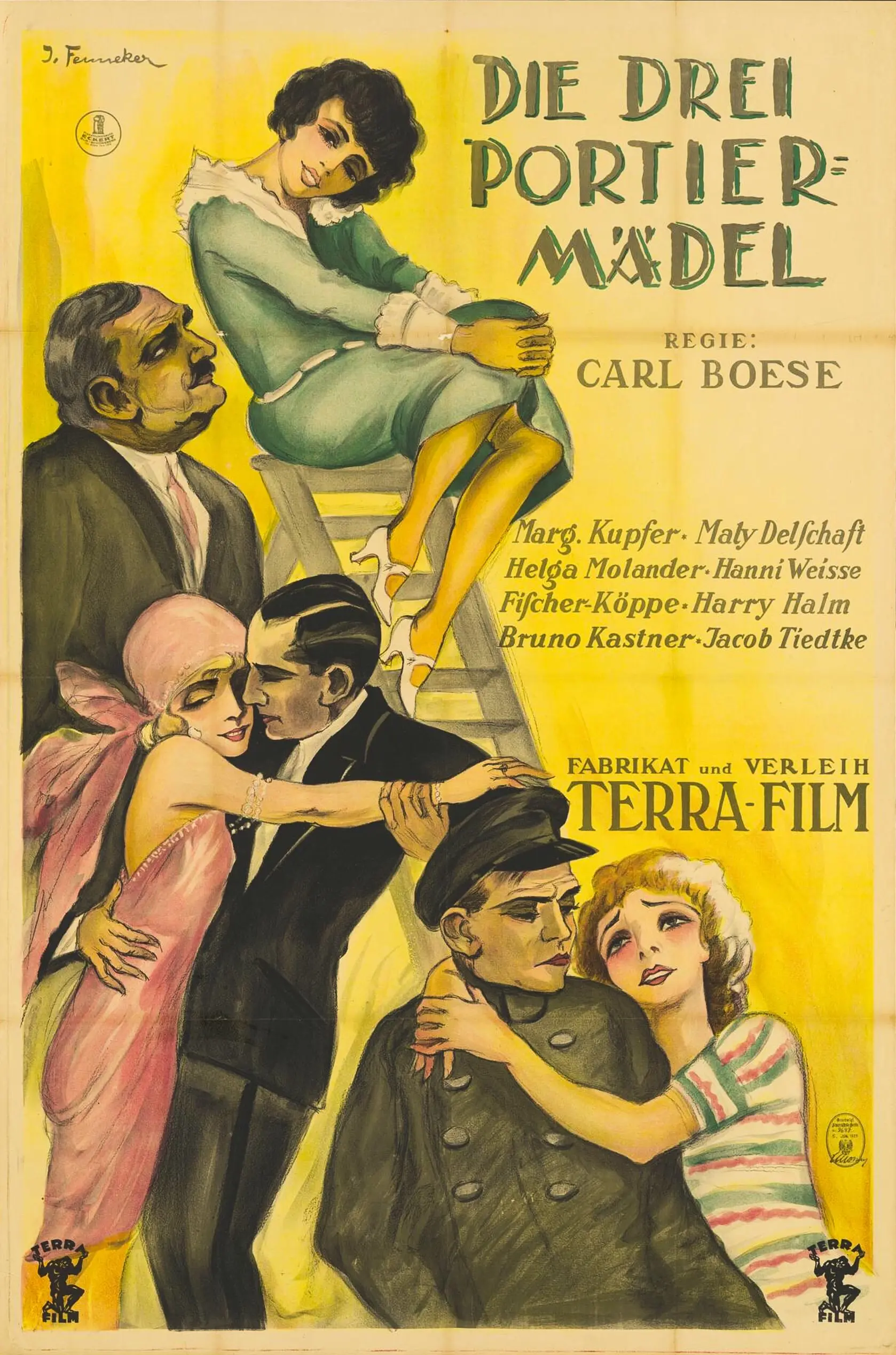
Is 'Die drei Portiermädel' worth watching today? Short answer: yes, but with significant caveats that speak to its specific historical context and narrative ambition. This film is an intriguing curio for silent film enthusiasts and those fascinated by early 20th-century German cinema, yet it may test the patience of viewers accustomed to modern pacing and storytelling conventions.
It's a film best suited for cinephiles eager to explore the foundational narratives of romantic comedy and social commentary from a bygone era, particularly those who appreciate the visual storytelling inherent in silent cinema. Conversely, it is decidedly not for audiences seeking fast-paced plots, explicit dialogue, or films that strictly adhere to contemporary dramatic structures.
"Die drei Portiermädel," or "The Three Porter Girls," is a delightful, if somewhat sprawling, example of early German cinema that attempts to weave together multiple romantic plots with a subtle undercurrent of social commentary. Directed by Wilhelm Thiele, though uncredited in some records, this 1928 production showcases the late silent era's flair for melodrama, farce, and character-driven narratives.
The film centres on a working-class family, specifically the three daughters of a janitor, each navigating their own romantic and professional lives. This premise alone sets the stage for a classic exploration of class divides and aspiration, themes that resonated deeply in post-WWI Germany.
The intertwining narratives, while occasionally veering into the convoluted, ultimately coalesce into a charming, if somewhat predictable, resolution. It’s a film that asks its audience to lean into its period sensibilities, rewarding those who do with a glimpse into a world both familiar and strikingly different from our own.
Early in the viewing experience, it becomes clear that "Die drei Portiermädel" operates on a distinct set of principles. Understanding these helps in appreciating its strengths and recognizing its limitations.
This film works because... it possesses an undeniable charm, driven by energetic performances and a genuinely engaging, if at times farcical, exploration of love across social strata. The comedic timing, particularly in the escalating misunderstandings, is often quite effective, showcasing a sophisticated grasp of silent film's visual humor.
This film fails because... its narrative complexity occasionally becomes its undoing. The sheer number of romantic entanglements and mistaken identities, while entertaining, can lead to moments of narrative fatigue, and some plot resolutions feel overly convenient, sacrificing deeper emotional resonance for a tidy ending.
You should watch it if... you have a keen interest in silent cinema, enjoy lighthearted romantic comedies with a historical flavour, or are studying the social landscape depicted in Weimar-era German films. It offers a valuable window into the popular entertainment of its time.
In silent cinema, the burden of conveying emotion, character, and plot falls squarely on the actors' physical expressions and gestures. "Die drei Portiermädel" benefits immensely from a capable ensemble cast, each bringing a distinct energy to their roles.
Maly Delschaft as Annie, the central romantic figure, delivers a performance that balances innocence with a burgeoning assertiveness. Her transition from a humble photographer's assistant to the wife of a wealthy man is portrayed with a believable blend of awe and apprehension. Her reactions to Brandstetter's misinterpretations are particularly well-executed, conveying her confusion and eventual indignation without a single spoken word.
Bruno Kastner, as the wealthy Mr. Brandstetter, embodies the well-meaning but easily misled suitor with a certain aristocratic charm. His initial infatuation and subsequent jealous rage are broad, as was typical for the era, but always sincere, preventing the character from becoming a mere caricature. His portrayal provides a solid anchor for the film's primary romantic arc.
Perhaps the most compelling performance, and certainly the most heartbreakingly relatable, comes from Margarete Kupfer as the mother. Her desperate attempts to conceal her true social standing from her new, affluent son-in-law are fraught with a palpable anxiety. The scene where she awkwardly pretends a vacationing neighbour's apartment is her own is a masterclass in silent comedic tension, tinged with a deep, human vulnerability. It’s a performance that transcends mere comedy, offering a poignant look at class shame.
Harry Halm, as the chauffeur Franz, brings a mischievous energy to his role, particularly in the film's opening sequence where his clumsy deception sets much of the plot in motion. His romantic pursuit of Martha and his subsequent jealousy are portrayed with a youthful exuberance that is infectious, though sometimes bordering on the overtly theatrical.
While not every performance reaches the same heights, the collective effort ensures that the emotional beats, whether comedic or dramatic, land with sufficient impact. The actors understand the exaggerated yet precise nature of silent film acting, utilizing their bodies and faces to tell a story that today’s audiences might find overly expressive, but which was essential for its time.
Though Wilhelm Thiele's directorial credit is often debated, the film exhibits a confident hand in its visual storytelling. The cinematography, while not groundbreaking, is competent, effectively establishing the differing social milieus – from the modest, bustling janitor's building to the elegant, spacious apartments of the wealthy.
The use of close-ups is judicious, often employed to highlight key emotional reactions or to underscore a moment of misunderstanding, such as Brandstetter's bewildered expression when he misconstrues Franz and Annie's familial familiarity. The camera work consistently serves the narrative, guiding the viewer's eye through the complex web of relationships without relying on elaborate tracking shots or highly stylized compositions.
One particularly effective visual moment is the sequence where Brandstetter drowns his sorrows at a party, only to serendipitously encounter Amelie and Martha. The chaotic, festive atmosphere of the party stands in stark contrast to his earlier domestic woes, and the visual confluence of these characters from different narrative threads is cleverly orchestrated, demonstrating a subtle directorial flair for bringing disparate elements together.
The film also makes effective use of intertitles, which, while plentiful, are generally concise and serve to advance the plot or clarify dialogue without over-explaining. They are integrated smoothly, acting as essential bridges in the silent dialogue, rather than intrusive interruptions.
The pacing of "Die drei Portiermädel" is typical of late silent cinema: it begins with a brisk, almost farcical energy, slows down to develop the romantic entanglements and social anxieties, and then accelerates again towards its climactic resolutions. This ebb and flow can feel deliberate to a modern viewer, but it allows the various subplots sufficient room to breathe.
The tone is predominantly that of a light romantic comedy, albeit one with dramatic undertones concerning social status and infidelity. It skillfully navigates between genuine moments of pathos, especially concerning the mother's predicament, and outright slapstick, such as Franz's initial deception. This tonal balance is one of the film's quiet strengths, preventing it from becoming either too sentimental or too frivolous.
The silent language here is not just about the absence of spoken dialogue, but about how the entire cinematic apparatus — gesture, expression, set design, and editing — works in concert to communicate. The film’s reliance on visual cues for irony, character motivation, and plot twists is a testament to the sophistication silent filmmakers achieved. It's a pleasant diversion. But it’s flawed.
Beyond the romantic frolics, "Die drei Portiermädel" offers a fascinating, if sometimes superficial, commentary on class in Weimar Germany. The premise itself, with a janitor's daughters aspiring to or accidentally stumbling into higher social circles, is fertile ground for such themes.
The mother's intense shame about her social condition and her elaborate charade to impress Brandstetter is perhaps the most direct and poignant exploration of this. It speaks volumes about the societal pressures and perceived divides of the era. This isn't just about personal pride; it's about the very real implications of social standing on one's acceptance and respectability.
The different fates of the three sisters — Amelie's entanglement with a wealthy but unfaithful employer, Annie's marriage into money, and Martha's love for a chauffeur — represent various facets of working-class women navigating a world still heavily structured by class. While the film ultimately embraces a somewhat idealistic view of love conquering all, it doesn't shy away from depicting the initial friction and judgment that arises from these distinctions.
Compared to other films of its era, like the more overtly critical Komödianten, "Die drei Portiermädel" delivers its social observations with a lighter touch, embedding them within the fabric of its romantic comedy. It suggests that while class lines are present and impactful, they are not insurmountable, especially when love and genuine human connection are at play. This might be seen as either a hopeful message or a slightly naive one, depending on your perspective.
Absolutely, for the right audience. If you approach "Die drei Portiermädel" with an understanding of silent film conventions and an appreciation for period-specific storytelling, you will find a film rich in charm and historical insight. It's a testament to the enduring appeal of human stories, even when told through the lens of a century-old medium.
It serves as an excellent example of how silent films tackled complex narratives with a blend of humor, drama, and social observation. The film is a valuable piece of cinematic history, offering insights into the popular entertainment of the late 1920s and the social fabric of Germany at the time. Its slightly convoluted plot is a small price to pay for the genuine enjoyment it offers.
"Die drei Portiermädel" is a charming, if imperfect, relic of the silent era that offers more than just historical curiosity. It's a film that, despite its narrative excesses and period-specific pacing, delivers genuine warmth, humor, and a surprisingly nuanced look at social aspirations. While it won't appeal to everyone, those willing to immerse themselves in its unique silent language will find it a rewarding experience. It's not a forgotten masterpiece, but it is a thoroughly enjoyable and valuable piece of cinematic heritage that deserves to be seen, appreciated for its era, and understood within its historical context. Definitely worth a watch for the discerning cinephile.
IMDb 6.1
1933
Community
Log in to comment.