DbcultAccessing Vault...
Cult Review
Senior Film Conservator
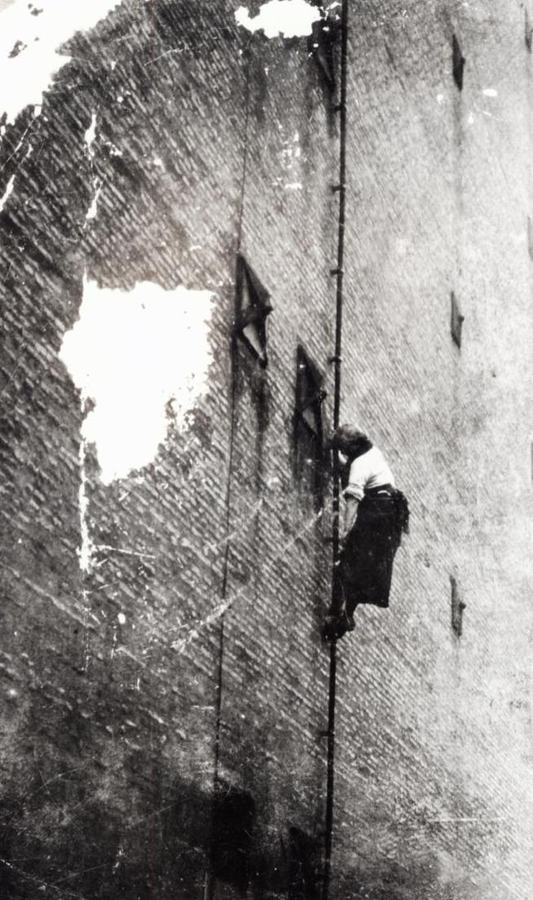
There are silences that roar louder than any orchestra, and For barnets skyld weaponizes that paradox until the final frame quivers.
Shot on orthochromatic stock that turns human skin into lunar marble, the film opens with a static tableau worthy of a Hammershøi interior: slate-grey walls, a child’s porcelain rabbit upturned on a rug, the audible crack of a father’s heart even before we see his face. Director Emilie Sannom—also the scenarist—trusts chiaroscuro more than intertitles; words arrive like uninvited guests, brief and embarrassing.
Sannom and cinematographer Alfred Johansen shoot childhood as though it were a crime scene. Low-angle shots peer up at adult torsos, making every grown-up a colossus armed with belt or decree. The camera lingers on door-handles placed just out of Agnes’s reach—visual thesis that the world is scaled for ownership, not wonder. When Karen first lifts the child onto her hip, the horizon line evens out; suddenly the architecture of oppression becomes navigable. It is one of those wordless miracles that remind you silent cinema was never mute—only speaking a language we have forgotten to read.
Elna From’s governess carries a backstory only hinted: the scar on her clavicle shaped like Denmark itself, the way she folds bed-linen as if swaddling her own lost chance at motherhood. Watch her pupils in close-up: they swell each time Agnes makes a sound—any sound—like nightflowers sensing moon. Skjerne’s captain is not a villain but a man colonized by protocol; his shoulders sag inside an officer’s coat that no longer fits, a metaphor for empire and fatherhood alike.
Yet the film belongs to Karen Caspersen, eight years old during principal photography, whose silence is the most eloquent performance I have encountered on pre-1920 film. She communicates via breath—an indrawn gasp when the ventriloquist’s dummy turns its head, a measured exhale as snowflakes dissolve on her palm. When she finally sings, the camera dolly-zooms (yes, a primitive Vertigo shot achieved by pushing the camera on a tea-trolley) until her face fills the universe.
Unlike contemporaneous melodramas such as Evangeline or The Price, which treat children as MacGuffins of virtue, For barnets skyld interrogates the legal fiction that offspring are biological property. The Danish title translates to “For the Child’s Sake,” a phrase brandished by every character to justify opposing actions—an ideological Rorschach blot.
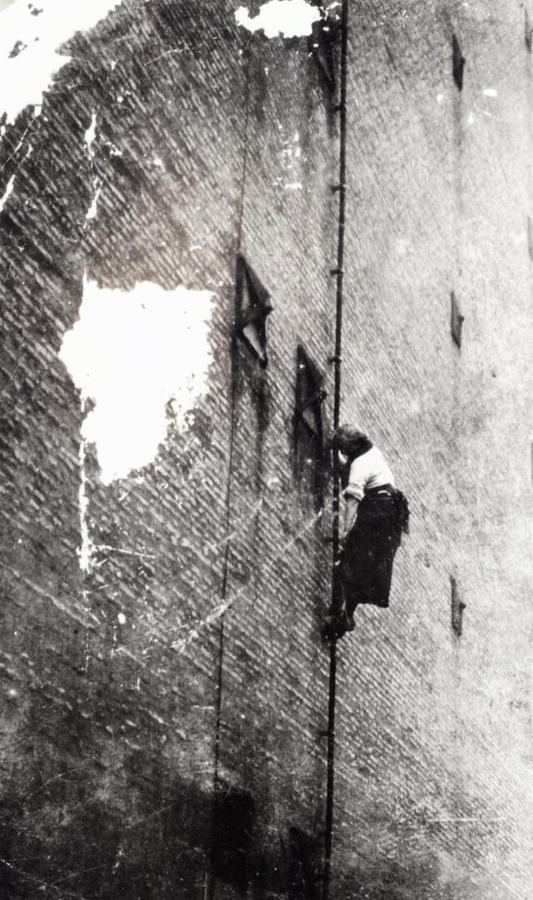
Sannom’s script offers no courtroom finale; the only jury is the viewer, sequestered in the dark. Notice how intertitles shrink as the narrative progresses: from verbose moral platitudes to single verbs—“Run.” “Choose.”—as though language itself were being starved into submission.
Critics often liken the film’s snow-blinded exteriors to Samson’s biblical palettes, yet the chill here is not divine wrath but human failure. Where The Spy externalizes tension through chase montage, Sannom internalizes it: ice forming on a windowpane becomes a timer counting down to moral frostbite.
Meanwhile, the decadent aunt Maren anticipates the courtesans of La dame aux camélias, but her hedonism is not punished by consumption; instead she is condemned to witness joy she cannot monetize—a fate crueler than death in a capitalist purgatory.
The sole surviving 35 mm print, recovered in a Reykjavik church basement in 1987, was restored by the Danish Film Institute in 4K, revealing textures previously smothered: the herringbone pattern of Karen’s coat, the ghost-image of a missing brooch on Agnes’s dress. The tints—amber for interiors, cerulean for night exteriors—follow a schema annotated on the negative in Sannom’s own hand. Streaming platforms have not yet secured global rights; your best bet is archival Blu-ray via the DFI boutique label, region-free but limited to 3,000 copies.
In an age where smart-cribs monitor REM sleep and parenting blogs monetize every milestone, the film’s interrogation of surveillance-as-care feels almost prophetic. Karen’s crime is not abduction; it is the radical act of granting a minor agency over her own narrative. One hundred and nine years after its premiere, the question Sannom poses—whose life is it, anyway?—still detonates in the mind long after the lights rise.
Watch it alone, preferably during a storm when electricity flickers. When Agnes sings, you may find your own voice cracked, throat raw with the recognition that every adult was once a child who learned to speak only to be told when to remain silent.
A near-perfect crystallization of cinematic empathy—raw, frost-bitten, yet glowing with the hard-won warmth of shared humanity. 9.7/10
IMDb —
1916
Community
Log in to comment.