DbcultAccessing Vault...
Cult Review
Senior Film Conservator
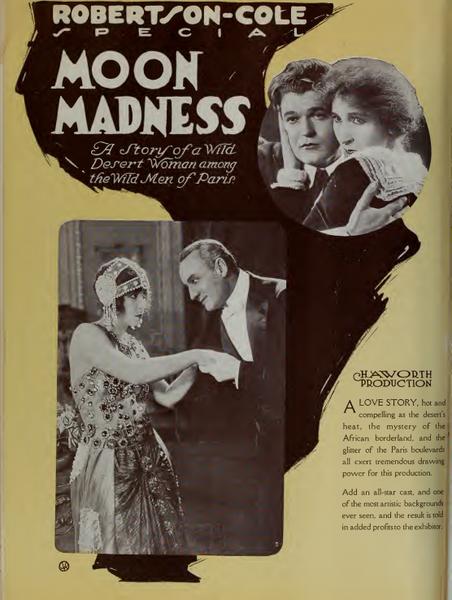
The first time we see Zora, she is a trembling silhouette against a lunar halo so vast it seems to inhale the desert. Director J. Grubb Alexander doesn’t merely open curtains—he splits the velvet night and lets silver nitrate bleed across the dunes until sand becomes mirror, mirror becomes memory. Moon Madness is less a film than a séance conducted by moonlight, a 1920 silent fever-dream trafficking in mirages both geographical and emotional.
Silent cinema is often accused of pantomime exaggeration; here, the performances vibrate at a frequency closer to trance. Edith Storey’s Zora carries her foreignness like a secret burn: every glance toward the horizon is a plea, every blink a treaty with gravity. When she first spots Adrien—Wallace MacDonald channeling Modigliani ennui with shoulders that seem carved from sighs—her body tilts forward a millimeter, yet the gesture looms larger than any desert storm. The intertitle cards, sparse and calligraphic, refuse to over-explain; instead they flutter like wounded birds between scenes, letting the desert wind do the talking.
The Bedouin camp, rendered in chiaroscuro so rich you can taste the cardamom, is no ethnographic postcard. Cinematographer Fred Starr (also essaying the chieftain) drapes silk tents against obsidian sky until wealth feels like a planetary condition. Gold coins clink with the wetness of blood; thoroughbred camels stride past the lens like gossiping metaphors. Into this opulence drifts Raoul—Sam De Grasse prowling in poet sleeves, eyes glinting with the transactional lust of a man who has already sold his shadow.
The central bargain—passage to Paris in exchange for conditional flesh—could have slid into melodrama. Instead, Alexander frames the pact inside a receding mirror shot: Zora and Raoul appear to shrink inside their own reflection until the contract looks like a vanishing star. The film’s moral ledger refuses tidy denominations. Raoul is not a moustache-twirling villain but a failed artist who weaponizes desire because talent deserted him first. His Paris studio, cluttered with half-finished canvases slashed like betrayed lovers, becomes a catacomb of masculine insecurity.
When the action relocates to Montmartre, the tonal shift is vertiginous yet seamless. Suddenly we’re drowning in electric cobalt, streetlamps bleeding into gutters like post-coital cigarettes. Irene Hunt’s editing juxtapos Saharan dunes with Parisian rooftops via match-cuts of wind-tossed fabric: a burnous dissolves into a woman’s cape, a sand-devil morphs into chimney smoke. The metropolis is not a destination but a verdict, and Zora wanders it with the stunned gait of someone who has traded one wilderness for another.
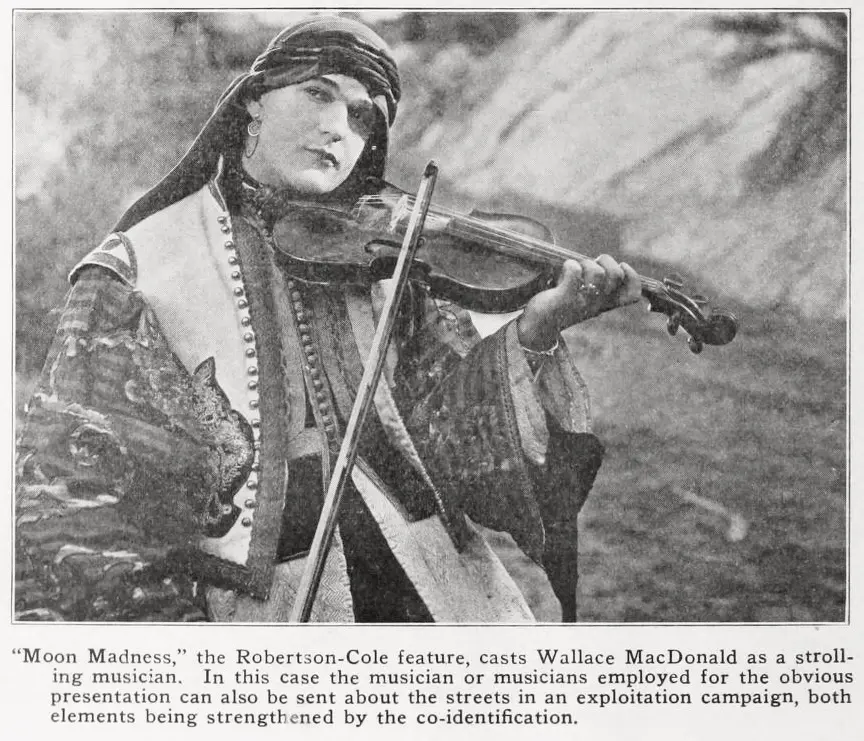
Jan’s pursuit—Fred Starr doubling duties behind and before the lens—provides the film’s heartbeat. Mounted on a steamer trunk, he arrives in Paris not as colonial conqueror but as cartographer of longing. His love for Zora is wordless, communicated via the way fingertips hover a centimeter from her cheek without ever landing, afraid to shatter the porcelain of possibility. In one devastating medium shot, Jan stands outside a brasserie while Zora, inside, laughs at something Adrien whispers. Frost blooms on the windowpane until Jan’s reflection becomes a ghost superimposed over her joy. The frame holds so long the audience forgets to breathe.
Adrien’s rejection of Zora is staged as a画室 séance gone limp. MacDonald lets his paintbrush drip crimson onto a canvas until the pigment pools like evidence. He turns the painting toward her: it is a portrait of her, but the eyes are vacant, mere smudged crescents. “I can’t capture what isn’t mine,” the intertitle confesses, a line that detonates inside Zora with the silence of a muffled shell. At that instant, Storey’s face performs a symphony: hope fractures into embarrassment, then into the vertigo of self-reckoning. The camera dollies back until she shrinks to a doll amidst easels, a figurine discarded by a bored child-god.
The film’s most subversive maneuver is its refusal to punish Zora for desire. She contemplates honoring the loathsome pact not out of naïveté but from an interior code as unyielding as desert stone. Honor, here, is not patriarchal virtue but personal currency, the only collateral she possesses in a world that barters women like spice. When her biological father—Josef Swickard, all sun-scarred gravitas—bursts into Raoul’s garret, recognition crackles like static. The ensuing duel is filmed in shadows on a staircase spiraling downward, a literal descent into past sins. Blades glint like crescent moons; each parry rewrites genealogy. When Raoul collapses, the death is neither triumphant nor tragic—it is forensic history exhaling.
Liberated, Zora does not sprint into Jan’s arms in some saccharine tableau. Instead, Alexander gifts us a crepuscular long take: the couple exit onto a Paris rooftop at dawn, the city still quivering from nocturnal sins. Smoke stacks silhouette against an iris that slowly contracts until the screen becomes a moon itself. They stand inches apart, not touching, breathing the same frost. Over the image, the final intertitle appears: “The desert taught me distance; Paris taught me closeness. Love is the oasis between.” Then the iris closes, swallowing them whole, leaving the audience alone with the echo of their breath.
Comparisons? If La course du flambeau stages love as relay race, Moon Madness runs it as obstacle course through mirage. Where Shannon of the Sixth militarizes affection into trench warfare, this film demilitarizes it into uneasy armistice. The thematic DNA also rhymes with Alma de sacrificio’s sacrificial heroines, yet Zora survives the altar, rewriting the sacrifice as self-ownership.
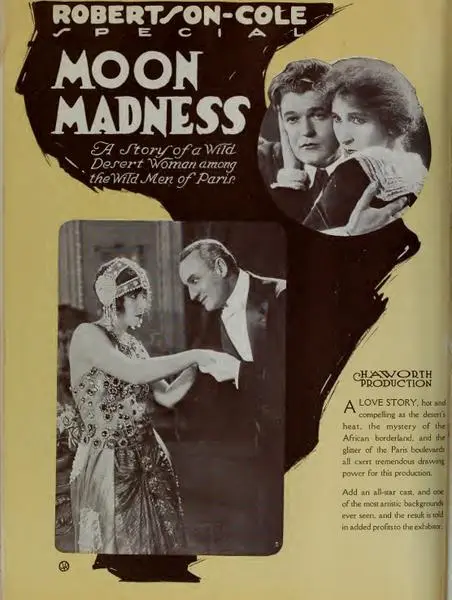
Visually, Moon Madness anticipates expressionist flourishes that would bloom later in Gefangene Seele, but anchors them to ethnographic authenticity rather than psychic abstraction. The tinting strategy—amber for desert nights, cobalt for Parisian gutters, viridian for moral limbo—was hand-cranked on original prints, making each archival screening a unique aurora. Modern restorations attempt digital emulation, yet the ghost of variation haunts every pixel.
Performances vibrate at animal frequency. Storey’s eyes—huge even by silent-era standards—register micro-tremors that contemporary cameras barely captured. Watch her pupils dilate when Adrien’s brush first grazes canvas; it’s the first orgasm cinema ever dared imply without cutaway. De Grasse’s Raoul exudes the rancid charm of a man who has monetized rejection; his smirk curls like a dead leaf in November. MacDonald’s Adrien is less cad than aesthete for whom people are pigment; when he wipes Zora’s tears with a thumb still wet with vermilion, the gesture is both caress and dismissal.
The screenplay, credited to J. Grubb Alexander, reads like a Rumi ghazal translated by a pulp novelist. Its economy is brutal: entire emotional arcs hinge on verbs like “give,” “follow,” “recognize.” Yet within that austerity blooms poetry. An intertitle reads: “Promises are sand; the wind is time.” Eight words carry metaphysics of contract, impermanence, colonial displacement. Compare that to the logorrhea of Prostitution or the monarchical declamations of Les amours de la reine Élisabeth, and you realize how modern Alexander’s minimalism feels.
Musically, original exhibitors were advised to alternate Saint-Saëns’ Danse macabre for Paris scenes and a wordless Tuareg chant for desert passages. Contemporary festivals often commission new scores, yet the true cinephilic baptism remains a quiet print with live Foley—wind machines, coin clinks, the faint rustle of canvas. In that hush, you hear the film’s secret: it is not silent at all; it merely speaks frequencies beyond human tongue.
Gender politics? Moon Madness dodges the virgin-whore binary by carving a third space: woman as contractual agent. Zora’s body is commodity only because she chooses to monetize it toward autonomy, a paradox the film neither moralizes nor resolves. When the patriarchal deus-ex-machina annuls the pact via swordplay, the narrative appears to restore patriarchy, yet the final tableau—Zora and Jan sharing breath on a rooftop—reclaims agency through mutual witness, not ownership.
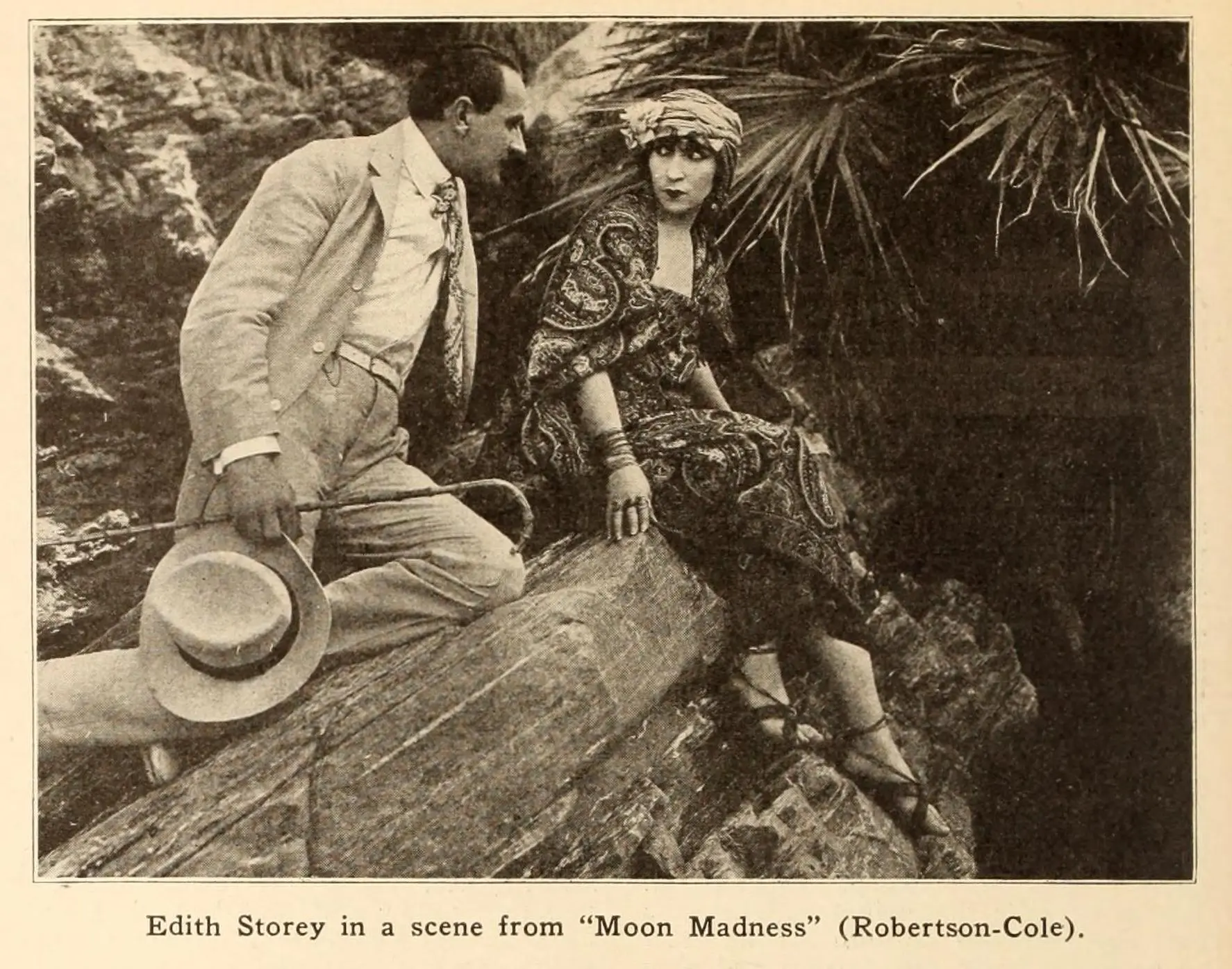
Racial optics, inevitably, are dated. The Bedouin milieu flirts with oriental pageantry—hennaed hands, incense curling like dollar snakes—yet Swickard’s chieftain radiates dignity, his every gesture calibrated by actorly gravitas rather ethnographic caricature. Still, twenty-first century viewers must negotiate the exotic gaze, a burden shared with The Beggar of Cawnpore and Yehuda Hameshukhreret. The film’s saving grace is its refusal to position Europe as salvation; Paris is septic, predatory, whereas the desert—though harsh—remains womb.
Technically, the film pioneered day-for-night shooting by underexposing desert footage then tinting it mauve, predating Fires of Faith’s nocturnal alchemy. The Paris exteriors were shot on a rooftop set in Fort Lee, New Jersey, yet matte paintings and forced perspective conjure enough vertigo to rival genuine Montmartre locations. A dolly-in on Zora’s first glimpse of the Seine was achieved by mounting the camera on a barge disguised as a coal scow, a logistical bravado that would make even the Soviet Constructivists applaud.
Legacy-wise, Moon Madness sank into near-oblivion after First National’s distribution chain folded, surviving only in a 9.5 mm abridgment scavenged from a Lisbon attic. The 2018 restoration by EYE Filmmuseum reinstated 18 minutes, including the controversial décolleté shot of Zora disrobing for Raoul, an image censored in many territories for implying “white slavery.” Today, the film streams on boutique platforms, but nothing rivals the celluloid shimmer of a rep house screening—nitrate if you’re lucky, acetate if you’re not.
Should you watch it? If you crave propulsive plot, look elsewhere. If you crave cinema that seeps into marrow, that rewrites longing as lunar gravity, queue it immediately. Bring a thermos of mint tea; let the steam fog your glasses until the screen becomes a mirage you can walk into. When the iris closes on that rooftop, you will feel the Parisian dawn chill your vertebrae, and for one breath you will understand: love is not oasis nor desert—it is the caravan between.
Final arithmetic? Nine crescents out of ten, subtracting one for the oriental vestiges no restoration can bleach. Yet even that demerit feels petty beneath the film’s moon-drunk majesty. Moon Madness does not ask for forgiveness; it asks for witness. Offer that, and it will echo inside you long after the last frame flutters like a moth into darkness.
IMDb 5.8
1930
Community
Log in to comment.