DbcultAccessing Vault...
Cult Review
Senior Film Conservator
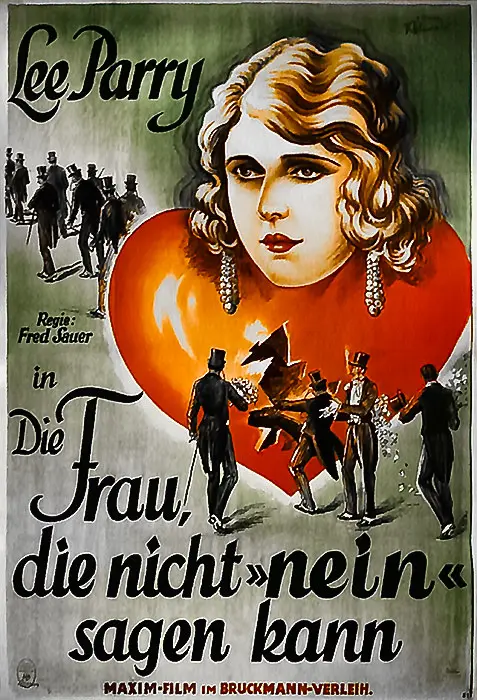
Short answer: Yes, but only if you appreciate the nuanced social anxieties of the Weimar Republic. This film is for the patient cinephile who enjoys character-driven silent farce; it is not for the viewer looking for the high-octane expressionism found in films like Söhne der Nacht, 1. Teil: Die Verbrecher-GmbH.
This film works because it utilizes Lee Parry's expressive physicality to turn a simple comedic premise into a profound study of social claustrophobia.
This film fails because the third act retreats into conventional melodrama, softening the sharp satirical edges established in the first hour.
You should watch it if you want to see a young Gustav Fröhlich and Hans Albers before they became the definitive faces of German cinema in the 1930s.
Lee Parry anchors the film with a performance that is surprisingly modern. Unlike the broad, theatrical gestures often associated with the era, Parry uses micro-expressions to convey the terror of social obligation. There is a specific scene early in the film where she is cornered at a garden party; her eyes dart between three different suitors, and you can see the exact moment her resolve crumbles.
It is a performance defined by what she doesn't do. By refusing to assert herself, she becomes a mirror for the men around her. This creates a fascinating, if uncomfortable, viewing experience. You want to scream at the screen for her to speak up, which is exactly the reaction the director intends. It is a visceral portrayal of the 'politeness trap' that many women of the 1920s found themselves in.
Compared to the more aggressive female roles in La p'tite Lili, Parry’s character is a victim of her own upbringing. She is the antithesis of the 'New Woman' of Berlin, making her a tragic figure despite the comedic trappings. The film doesn't just mock her; it mourns the loss of her identity under the weight of 'yes.'
Gustav Fröhlich, shortly before his iconic turn in Metropolis, provides a grounded romantic lead. He plays the one man who seems to recognize the protagonist's plight, yet he too is bound by the rules of the game. Their chemistry is subtle. In a moment of quiet reflection by a lake, the lack of intertitles allows their body language to tell the story of two people trapped by etiquette.
Hans Albers, who would later become a massive star, shows early signs of his screen-commanding presence here. He plays his role with a certain arrogance that serves as the perfect foil to Parry’s indecision. When he enters a room, the frame seems to shrink. It is a stark contrast to the more ensemble-driven feel of a film like Bismarck.
The conflict isn't just about who she will marry, but whether she can exist as an individual. The film uses these male figures to represent different paths—security, passion, or social standing. None of them, however, offer her the one thing she needs: the permission to say no. It’s a dark undercurrent for a film often labeled as a comedy.
The cinematography in Die Frau die nicht nein sagen kann is sophisticated for 1927. The use of depth of field in the interior scenes creates a sense of being trapped. Often, we see Parry in the foreground while the men who are pressuring her loom in the soft focus of the background. This visual storytelling is far more effective than any dialogue could be.
There is a recurring motif of doors and windows. Characters are constantly entering and exiting her space, emphasizing her lack of privacy and agency. It reminds me of the spatial tension in Hands Up, though used here for psychological rather than physical stakes. The camera doesn't just observe; it participates in her suffocation.
The pacing, however, is where the film occasionally stumbles. Some of the comedic set pieces go on for one beat too long. A sequence involving a misplaced letter feels redundant, especially when compared to the tighter editing found in contemporary American shorts like Smith's Baby. It’s a minor gripe in an otherwise technically proficient film.
Yes, Die Frau die nicht nein sagen kann is worth watching for its sharp social commentary and the early performances of German cinema legends. While the plot follows a traditional farce structure, the psychological depth provided by Lee Parry elevates it above standard silent comedies. It offers a unique window into the gender politics of the late 1920s that remains surprisingly relatable today.
Pros:
Cons:
To understand this film, one must understand the Berlin of 1927. It was a city of extreme contrast. While many films of the time focused on the gritty reality of the streets, like Northern Lights or the urban chaos of Not Built for Runnin', this film looks at the upper-middle class. It critiques the very people who were likely sitting in the theater seats.
The film suggests that the 'polite' society of the Weimar Republic was built on a foundation of lies and forced compliance. Every time the protagonist says 'yes' when she means 'no,' she is contributing to the collective delusion of her social circle. It’s a brutal observation hidden inside a light comedy. The film is a bit of a mess, but a fascinating one.
One of the most surprising observations is how the film handles the concept of 'consent' without ever using the word. The protagonist's inability to say no is played for laughs, but there is a lingering sense of tragedy. It forces the audience to question the morality of the men who take advantage of her silence. This is far more complex than the simple moralizing of God's Country and the Law.
Die Frau die nicht nein sagen kann is a significant, if overlooked, piece of German cinema. It works. But it’s flawed. The film’s greatest strength is its lead actress, who manages to make a frustrating character deeply sympathetic. While the plot beats are familiar to anyone who has seen a romantic farce, the underlying social critique gives it a sharp, lasting bite.
"A hauntingly quiet rebellion against the noise of social expectation, anchored by a performance that transcends the limitations of its time."
If you are looking for a film that captures the specific, anxious energy of the late silent era, this is a must-watch. It may not have the epic scale of The Battle of Ballots, but its intimate stakes feel much more personal. It is a reminder that the most difficult word to say is often the most necessary one.
IMDb 4.8
1934
Community
Log in to comment.