DbcultAccessing Vault...
6.5/10
Senior Film Conservator
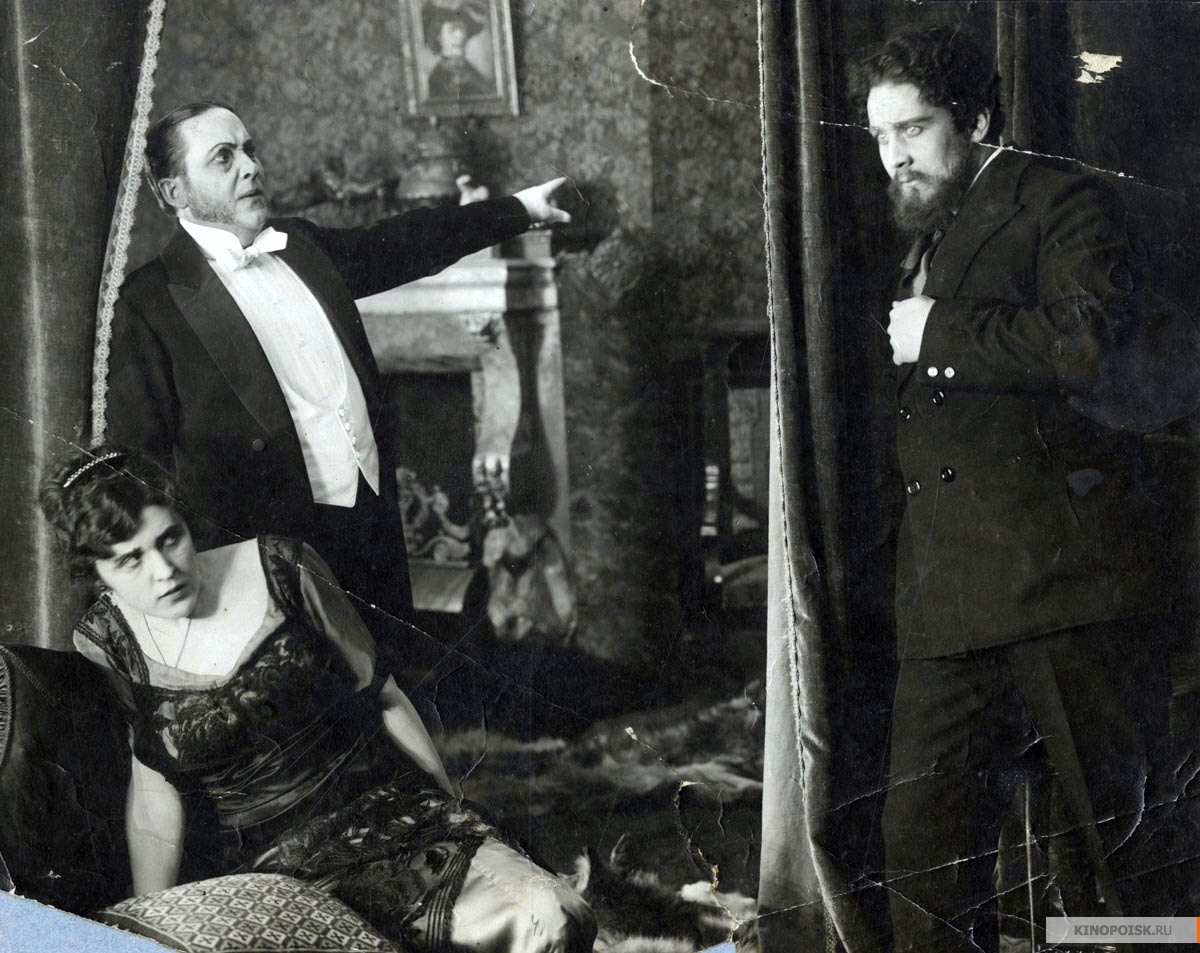
A definitive 6.5/10 rating for a film that redefined the boundaries of cult cinema. Peterburgskiye trushchobi remains a cornerstone of transgressive art.
A city devours its children—then burps up poetry.
In the flicker of a hand-cranked projector one senses the chill of 1915 Petrograd seeping through the nitrate: breath condensing on the lens, boots squelching in thawed manure, the metallic scrape of a tram bell like a guillotine descending on last night’s dreams. Peterburgskiye trushchobi is less a narrative than a frost-bitten mosaic, a gutter-level Comédie Humaine shot on brittle stock that ought to have disintegrated with the Provisional Government, yet here it lingers—restored, resurrected, raising its bruised eyes to ours.
Vladimir Gardin, co-writer and shadow-auteur, stages decay as sacrament. Note the tracking shot that slides past a wallpaper seam: the pattern once sang of fleurs-de-lis, now it peels like a leper’s scab revealing newspapers dated 1904—yester-year’s triumphs recycled as insulation. Compare this to the opulent mildew of Camille’s boudoir or the sooty baroque of Les misérables; here poverty is not a backdrop, it is a protagonist—voracious, articulate, capable of out-acting the entire ensemble.
Nikolay Gorich’s ruined nobleman carries the stooped grace of a Velázquez courtier exiled into a world without canvas. When he mutters, "I pawned my soul to a second-hand book dealer," the line crackles with the self-mockery of a man who once toasted the Romanovs in Crimean champagne. Olga Preobrazhenskaya’s seamstress, by contrast, has cheekbones sharp enough to slice bread; her close-ups evoke Sienese madonnas trapped inside a bureaucric purgatory. Watch how she measures silence—counting heartbeats between the tick of a cheap clock—before surrendering to Ivan Mozzhukhin’s anarchist poet, whose eyes blaze like censers swung by deacons of doom.
Adapted from Vsevolod Krestovskiy’s serialized novel, the script amputates subplots the way a frostbitten doctor amputates toes—swiftly, without chloroform. Gone are the editorial asides on Slavophilism; instead we get crystalline moments: a child trading a copper kopeck for a story about winged horses, an old soldier scrubbing medals in his own urine to feign valour, a bureaucrat’s wife who kisses her mirror because no one else will. Each vignette lands like a snowflake on the sleeve—unique, ephemeral, yet part of the same blizzard.
Scholars hunting for pre-Soviet montage need look no further. In one bravura sequence Gardin cross-cuts between a loan shark’s ledger, a priest swinging incense, and a stray dog licking blood from cobblestones. The triptych foreshadows the dialectical thunder of 1812’s battle cadence, yet operates on emotional, not ideological, logic—cinema as synaptic fire rather than propaganda piston.
Contemporary screenings employ a commissioned score—piano, harmonium, whispered chants of Old-Believer hymns—but the true soundtrack is olfactory: the vinegar tang of chemical restoration, the ghost of kerosene that clings to the ties of the projectionist. One imagines the original 1915 audience reeking of wet wool and revolutionary pamphlets, their breath forming a communal cloud that rose toward the tin ceiling like collective supplication.
Lidiya F. Ryndina plays a consumptive flower-seller whose coughs arrive in iambic pentameter. In her death scene she requests violets "the color of a bruise," and when none can be found, she pins a handkerchief dyed in beet juice to her coat, transforming absence into art. Vladimir Maksimov’s police chief, all mutton-chop and arterial hypocrisy, stalks the mise-en-scène like a predatory gargoyle; his final collapse on a staircase of frozen refuse feels oddly cathartic— tyranny unraveling in a scarf of its own snot.
Unlike the moral didacticism of The Love Route, the film treats its women as cartographers of survival. They barter sex for firewood, yes, but they also trade gossip, stitch revolutionary flags inside coat linings, and teach children to spell "bread" in four languages. The male gaze is present—this is 1915—but the camera sometimes hesitates, allowing a heroine to stare back, unsettling the audience with the accusation of complicity.
Social mobility here resembles a Möbius strip. The aristocrat dons a porter’s coat only to discover the coat once belonged to his own runaway valet; the urchin steals a grammar book and learns conjugations that will never save her from the orphanage. Compare this ouroboros to The Master Mind’s belief in self-made men; here nobody is self-made, only self-unmade.
Cinematographer Yevgeni Slavinsky paints with whatever photons he can arrest: winter’s anemic sun ricocheting off gilt cupolas, candle-grease lamps smearing amber halos over debauchery, the sudden magnesium flare of a police camera documenting arrests. Note the chromatic pivot midway: the palette desaturates to pewter as hope hemorrhages, only for a final crimson scarf to ignite the frame—an inverted Deus ex Machina that reminds us history has no saviors, only accessories.
Surviving prints hail from a 1924 Georgian archive, water-logged, fused like sedimentary rock. The restoration team employed enzymes to separate layers, then grafted missing frames using outtots discovered mislabeled as Joseph in the Land of Egypt. The result: ghostly tram wires vanish, faces re-appear, yet scratches remain—scars insisted upon by historians who argued that to erase them is to erase the Gulag of time itself.
About twenty minutes are forever lost: a dream sequence rumored to feature angels with pigeon wings, a chess match played with bread crusts. Rather than reconstruct with digital guesswork, curators elected to leave black leader. The void becomes a canvas upon which the viewer projects her own urban nightmares—an invitation that feels radical in our age of algorithmic completion.
Is it exploitative to aestheticise destitution? The film anticipates the question. During a marketplace scuffle a camera is knocked sideways; for seconds it records boots, mud, a dead sparrow—no artistry, only entropy. That unscripted wobble punctures the voyeuristic bubble, forcing us to confront the raw contract: we watch, therefore we are implicated.
Where The Three of Us domesticates poverty into melodrama, Trushchobi refuses catharsis. Its DNA shares more with It Is Never Too Late to Mend’s carceral gloom, yet surpasses it through polyphonic sorrow. Dickensian yes, but without the safety-net of deus-ex-machina inheritances; Dostoevskian certainly, though filtered through the female gaze that the author seldom entertained.
Watch how the bureaucratic sadism prefigures Kafka, how the casual disposal of bodies anticipates Ranson's Folly’s nihilistic shootouts. Even the film’s title cards—written in a font resembling stamped passports—feel proto-Brechtian, reminding us that identity itself is a bureaucratic fiction.
Money here is not gold but heat: a lump of coal buys confessions, a candle stub purchases a bedtime story. The film’s true currency is visibility—who gets seen, who remains a silhouette. In that sense it prefigures our surveillance age, where to be poor is to be pixelated into oblivion.
We close on a freeze-frame: a child’s mitten protruding from a snowbank, fingers curled as if still clutching hope. Fade to white. Not the white of innocence but of erasure. The projector clicks off, yet the image refuses to thaw. Hours later you’ll find yourself checking coat pockets for that mitten, half-expecting it to be there, damp and accusatory.
Verdict: Essential. Not as antique curiosity, but as living wound. The film does not speak to our era; it grabs us by the scruff and drags us into its own, forcing recognition that the slums of Petersburg are merely yesterday’s name for the gig-economised underbed of every modern metropolis. Watch it, shiver, then go outside and smell the salt of your own city’s thaw. If you feel nothing, consider yourself fortunate—you have, for a moment, forgotten how precarious your footing on the ice truly is.
IMDb —
1919
Community
Log in to comment.