DbcultAccessing Vault...
Cult Review
Senior Film Conservator
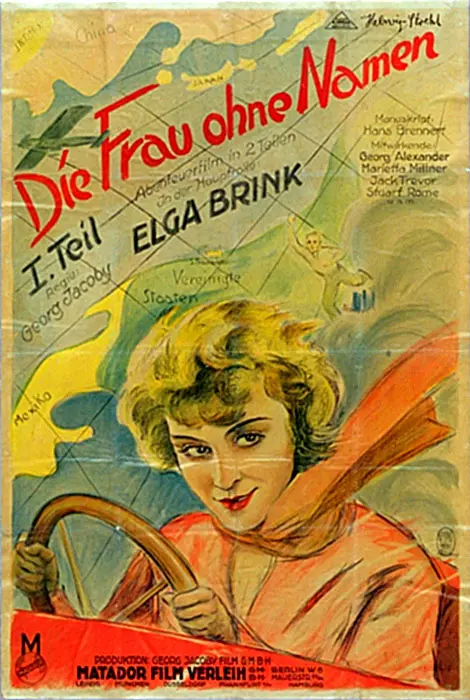
Is Die Frau ohne Namen - 1. Teil worth watching today? Short answer: yes, absolutely, but with crucial caveats that define its unique appeal. This film is a fascinating window into early 20th-century European cinema, offering a rich, if sometimes ponderous, narrative that demands a specific kind of engagement.
It is unequivocally for cinephiles, historians, and those with a genuine appreciation for the art of silent storytelling. Conversely, it is decidedly not for viewers seeking fast-paced plots, modern narrative conventions, or a purely passive viewing experience. Approach it with patience, and you'll find layers of artistry.
The narrative of Die Frau ohne Namen - 1. Teil is a masterclass in early cinematic melodrama, centering on the profound human struggle for self-reclamation. We are introduced to a young woman, found adrift in the urban labyrinth of a European city still reeling from the scars of the Great War. Her memory is a blank slate, a terrifying void that renders her a stranger to herself. Compassion arrives in the form of Dr. Richter, who, in an act of profound human kindness, grants her a provisional identity: 'Maria'.
Maria’s subsequent journey is less a physical quest and more an internal excavation. Her past, however, is not content to remain buried. Fleeting images, fragmented sounds – a haunting melody, the grandeur of an unknown estate, the chilling whisper of betrayal – begin to pierce the veil of her amnesia. These are not merely random recollections; they are breadcrumbs leading her to the unsettling conclusion that her memory loss is no cruel twist of fate, but the deliberate act of unseen forces.
“The film deftly uses the amnesia trope not as a cheap plot device, but as a profound exploration of identity's fragility in a world rebuilding itself.”
As Maria, portrayed with compelling vulnerability by Nien Soen Ling, tentatively steps onto the path of self-discovery, her actions ripple outwards. Unbeknownst to her, she awakens the very shadows that sought to erase her. These are figures from a forgotten life, powerful and sinister, whose continued peace hinges on Maria remaining nameless and memory-less. The first part of this gripping serial culminates in a moment of both triumph and terror: Maria uncovers a vital clue, a piece of her past that is simultaneously a key to her identity and a direct threat to her life. This revelation positions her squarely in the crosshairs of her shadowy adversaries, leaving audiences on a precipice of anticipation for the next installment.
Absolutely, Die Frau ohne Namen - 1. Teil holds significant value for modern viewers, particularly those interested in the historical progression of filmmaking. It offers a unique opportunity to understand the narrative techniques and emotional power of silent cinema without the aid of spoken dialogue, relying instead on visual storytelling, expressive acting, and musical accompaniment.
This film works because of its ambitious narrative scope, the compelling central performance, and its ability to build genuine suspense through visual cues. It fails because its pacing can feel glacial by contemporary standards, and some of its melodramatic flourishes might strike modern audiences as overly theatrical. You should watch it if you appreciate historical cinema, complex character studies, and the challenge of interpreting a story through non-verbal communication. It’s an exercise in cinematic archaeology, rewarding those willing to dig.
The direction in Die Frau ohne Namen - 1. Teil, while undeniably a product of its era, showcases a remarkable understanding of visual storytelling. The director, working with Hans Brennert's script, had the formidable task of conveying complex emotions and intricate plot points without dialogue. This necessitated a reliance on clear, often exaggerated, facial expressions and body language, as well as meticulous mise-en-scène. For instance, the recurring motif of Maria’s bewildered gaze, often framed against the chaotic backdrop of the city, perfectly encapsulates her internal disorientation.
Pacing, however, is where modern sensibilities might clash with historical intent. Silent films, particularly those serialized like this one, often adopted a slower, more deliberate rhythm. Scenes are allowed to breathe, expressions linger, and intertitles provide exposition in measured doses. This can feel like a test of patience for viewers accustomed to rapid-fire editing and constant narrative propulsion. There are moments, particularly in the initial exposition of Maria's amnesia, where the film feels less like a surging river and more like a gently meandering stream.
“The deliberate pacing is not a flaw, but a feature, demanding a different kind of audience engagement. It asks you to lean in, to observe, to interpret.”
Yet, within this measured pace, moments of genuine tension and dramatic urgency are expertly crafted. The sequence where Maria first catches a glimpse of her pursuers, albeit fleetingly, is a masterclass in building dread through subtle shifts in lighting and the quickening tempo of the cuts. It works. But it’s flawed. This delicate balance between contemplative storytelling and bursts of melodrama defines its unique rhythm, a rhythm that rewards attentive viewing.
The cast of Die Frau ohne Namen - 1. Teil delivers performances that are, by necessity, larger than life, yet surprisingly nuanced. Nien Soen Ling, as the eponymous woman without a name, carries the emotional weight of the film with remarkable grace. Her portrayal of amnesia is not merely vacant; it’s a palpable struggle, a constant oscillation between confusion, fear, and a burgeoning determination. One can observe this particularly in her early interactions with Dr. Richter, where her eyes convey a desperate plea for understanding, even as her memory fails her.
Georg Alexander, as the benevolent Dr. Richter, provides a steady, grounding presence. His performance is less about grand gestures and more about conveying quiet compassion through his posture and empathetic glances. It’s a subtle counterpoint to Ling’s more expressive agony. The supporting cast, including Stewart Rome and Magnus Stifter, lean into the archetypes demanded by the genre – the shadowy antagonist, the concerned confidante – but manage to imbue their characters with enough specific menace or warmth to feel distinct.
“Watching Nien Soen Ling navigate Maria’s internal turmoil without a single spoken word is a stark reminder of the raw power of physical acting.”
However, the acting style, with its emphasis on broad gestures and emotive facial expressions, can sometimes feel alien to modern audiences. It’s a theatricality born of necessity, a direct translation of stage performance to the nascent cinematic medium. While effective for its time, moments might border on the melodramatic, eliciting a chuckle rather than a gasp from contemporary viewers. This isn't a critique of the actors' skill, but rather an observation on the evolving language of performance.
The visual aesthetic of Die Frau ohne Namen - 1. Teil is a crucial element in its storytelling. The cinematography, though lacking the sophisticated camera movements of later eras, is highly effective in establishing mood and conveying information. Shot compositions are often deliberate, using depth and framing to highlight Maria's isolation or the looming threat around her. The use of chiaroscuro, particularly in scenes involving the shadowy antagonists, is particularly striking, creating a sense of foreboding that transcends the limitations of black and white film.
The production design deserves special mention. The film successfully recreates the atmosphere of a post-war European city, from the bustling street scenes to the more intimate, yet often opulent, interiors. The attention to detail in costumes and sets anchors the fantastical elements of the plot in a tangible reality. For instance, the contrast between the modest, almost clinical setting of Dr. Richter’s home and the grand, forgotten opulence hinted at in Maria’s fragmented memories, visually reinforces her journey between two starkly different worlds.
“The film’s visual language is its true voice, speaking volumes through shadows, sets, and the subtle dance of light across actors’ faces.”
One surprising observation is the film’s subtle use of everyday objects as narrative shorthand. A forgotten locket, a specific piece of furniture, even a newspaper headline, are all employed to propel the plot forward or hint at deeper mysteries. This economical visual storytelling, born of necessity, is something modern blockbusters could learn from. It encourages active viewing, forcing the audience to piece together clues alongside the protagonist, fostering a deeper sense of immersion.
Beyond its melodramatic surface, Die Frau ohne Namen - 1. Teil delves into potent themes that resonate even today. The most prominent is, of course, the fragility and importance of identity. In a post-war landscape where societal structures were being redefined and personal histories often shattered, the idea of a 'woman without a name' would have held particular poignancy for contemporary audiences. Maria's struggle to reclaim her past is a metaphor for a continent grappling with its own fractured memory.
The film also touches upon themes of class, deception, and the hidden machinations of power. The implication that Maria's past is not merely forgotten but actively suppressed by powerful forces speaks to a pervasive anxiety about social control and the vulnerability of the individual against entrenched interests. This isn't just a personal drama; it's a commentary on the societal anxieties of its time.
“The film’s exploration of identity feels remarkably modern, predating countless narratives that would tackle similar existential questions.”
While not as overtly political as some of its contemporaries, the undercurrents of social commentary are undeniable. The contrast between the kindness of the common doctor and the sinister machinations of the unseen elite is a clear, if subtle, statement on moral authority. It’s a film that asks us to consider what it truly means to know oneself, and what forces might conspire to prevent that knowledge.
When placed alongside other films of its era, Die Frau ohne Namen - 1. Teil holds its own. It shares the melodramatic sensibilities of many German silent films, yet avoids some of the more overt expressionistic flourishes seen in works like The Cabinet of Dr. Caligari, opting instead for a more grounded, albeit dramatic, realism. Its serialized nature puts it in conversation with adventure serials, but with a psychological depth that elevates it beyond mere escapism.
It's less overtly comedic than something like Toddles and more focused on suspense and personal drama than a straightforward Western like The Stampede. Its narrative ambition and character focus align it more closely with dramatic features of the time, demonstrating a growing sophistication in narrative construction.
Die Frau ohne Namen - 1. Teil is more than just a historical curiosity; it’s a robust, emotionally resonant silent drama that stands as a testament to the storytelling capabilities of early cinema. While its pace and performance style demand a particular kind of engagement from the modern viewer, the rewards are substantial. It’s a film that asks you to invest, to interpret, and to appreciate the artistry of a bygone era. For those willing to meet it on its own terms, it offers a compelling mystery, a poignant character study, and a fascinating glimpse into the nascent language of film. Don't dismiss it as merely 'old'; embrace it as foundational. It’s a worthwhile watch for the dedicated cinephile, offering a rich, if challenging, experience that continues to resonate with themes of identity and human vulnerability. Highly recommended for those with an adventurous spirit and an appreciation for cinematic history.
IMDb —
1924
Community
Log in to comment.