DbcultAccessing Vault...
5.1/10
Senior Film Conservator

A definitive 5.1/10 rating for a film that redefined the boundaries of cult cinema. Redeeming Love remains a cornerstone of transgressive art.
In the annals of early cinema, few narratives articulate the perennial struggle between spiritual aspiration and carnal temptation with the poignant resonance found in 'Redeeming Love'. This isn't merely a tale; it's a moral allegory painted with broad, dramatic strokes, a profound exploration of human fallibility and the transcendent power of unwavering faith. The film, brought to life through the pen of L.V. Jefferson and Gardner Hunting, weaves a compelling tapestry of love lost, lives transformed, and the ultimate triumph of grace.
At its heart lies the fraught relationship between Naomi Sterling, portrayed by the evocative Helen Jerome Eddy, and John Bancroft, brought to earnest life by Thomas Holding. Their initial connection is one of youthful ardour, yet it quickly becomes a crucible for their differing life philosophies. Naomi, a woman drawn to the glittering, ephemeral delights of the world, finds herself increasingly alienated by Bancroft's zealous, almost evangelical, efforts to guide her toward a more righteous path. His continual preaching, though born of love, inadvertently creates a chasm between them, pushing her further into the arms of worldly allure. This narrative device beautifully sets up the central conflict: the sincere, if sometimes heavy-handed, pursuit of spiritual purity versus the seductive pull of material indulgence.
The film doesn't shy away from depicting the consequences of such a divergence. Naomi's journey from a lover of 'frivolous things' to the notorious 'gambling queen' is a rapid descent, fuelled by the intoxicating influence of Hugh Wiley, a charismatic, yet utterly unscrupulous, gambler from a nearby city. Wyndham Standing embodies Wiley with a chilling blend of charm and menace, making his character a truly compelling antagonist. Naomi's transformation is not merely one of circumstance but also of ambition; her singular goal becomes the accumulation of wealth, a bulwark against the inevitable fading of beauty and popularity. This pragmatic, albeit cynical, approach to life reveals a deep-seated vulnerability, a fear of irrelevance that drives her further into the shadowy world of chance and deceit. It's a stark commentary on the ephemeral nature of worldly success and the societal pressures placed upon women of the era, where beauty and status often dictated one's perceived worth.
While Naomi plunges into the opulent, yet morally ambiguous, world of gambling, Bancroft dedicates himself entirely to spiritual work. He rises through the ranks, becoming a celebrated evangelist, a pillar of the community, and is eventually entrusted with the sacred combination to the vault of the great tabernacle he presides over. This elevation of Bancroft's spiritual standing serves as a powerful counterpoint to Naomi's worldly accumulation, setting the stage for their inevitable, and dramatically charged, collision. The contrast between their parallel ascensions – one spiritual, one material – is a masterful narrative stroke by writers Jefferson and Hunting.
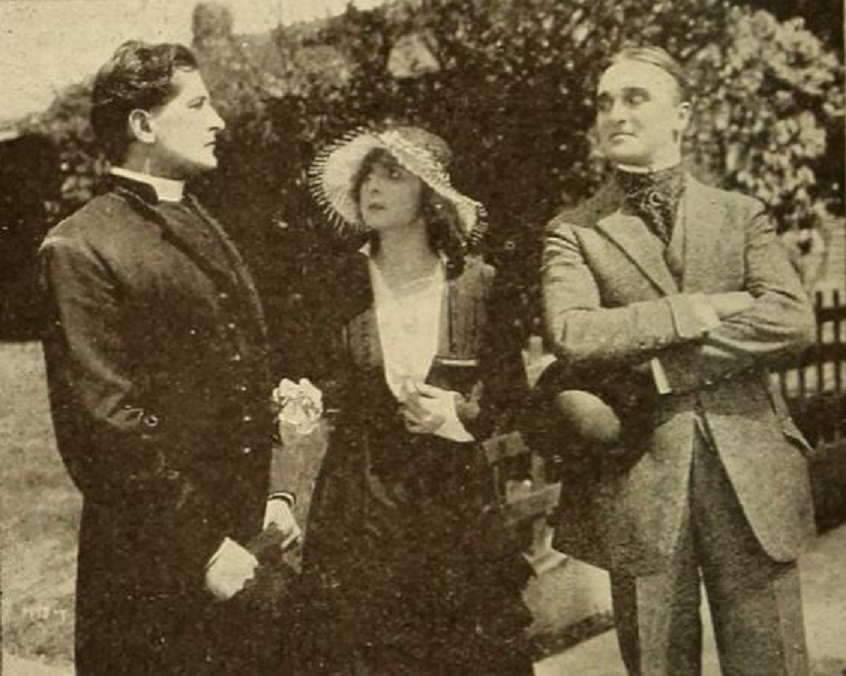
Hugh Wiley, ever the opportunist, seizes upon this dichotomy. Learning of Bancroft's newfound trust and the valuable combination, he concocts an elaborate, nefarious scheme. His genius lies in his ability to exploit Naomi's past hurt and present vulnerability. He cunningly inflames her mind against Bancroft, falsely asserting that the evangelist spurned her due to her 'life' – a lie designed to rekindle old wounds and manipulate her into becoming an unwitting accomplice in his grand larceny. Wiley's plan is meticulously crafted: Naomi is to lure Bancroft to her gambling palace under a pretense, where he will be overpowered, the combination stolen, and the tabernacle looted by Wiley and his confederate, McCarthy (Don Bailey). But Wiley's villainy doesn't end there; he orchestrates a simultaneous public disgrace for Bancroft, arranging for the tabernacle's executive board and the police to be informed of the minister's presence in a gambling den, timing the raid to coincide with the robbery. It’s a plot so intricate and morally reprehensible that it elevates Wiley beyond a simple villain to a symbol of pure, unadulterated avarice and manipulative cunning. The sheer audacity of his plan provides a thrilling tension, reminiscent of the elaborate schemes found in crime dramas like The Frame-Up, where intricate deceptions form the core of the conflict.
The dramatic confrontation in Naomi's apartment is the film's undeniable emotional core. Here, the forces of temptation and spiritual fortitude clash head-on. Despite the opulent, sin-laden environment, Bancroft's spiritual power proves unyielding. He is too strong, too rooted in his faith, to succumb to Naomi's allure, even when she is acting under duress. His unwavering conviction, his genuine love and concern for her soul, pierces through her hardened exterior. In a truly pivotal moment, his spiritual power wins the repentance of his temptress. Helen Jerome Eddy's portrayal of Naomi's dawning realization and subsequent remorse is particularly powerful, marking a profound shift in her character arc. It is a testament to the enduring human capacity for change, a theme also explored in narratives of moral transformation such as The Man Who Came Back, where characters confront their past and strive for a better future.
Wiley, witnessing his carefully constructed web of deceit unravel and sensing his prey slipping away, abandons subtlety. He springs upon Bancroft from behind, violently seizing the combination while McCarthy alarms the authorities as planned. The scene is a masterclass in tension, highlighting the abrupt shift from psychological manipulation to brute force. However, Wiley underestimates the depth of Naomi's newfound spiritual exaltation. In a moment of clarity and profound devotion, she spirits Bancroft away through a secret passage, a physical manifestation of her own spiritual escape from the clutches of sin. Her subsequent frantic rush to the tabernacle, though tragically too late to prevent the robbery, sets the stage for her ultimate, defining act of sacrifice. This selfless act, replacing the stolen money with her own 'ill-gotten hoard' before the bewildered police and board officials arrive, is not merely a plot resolution; it is the powerful culmination of her journey, a tangible demonstration of her spiritual rebirth. The irony of using her ill-gotten gains for a righteous purpose adds a profound layer of moral complexity and poetic justice to the narrative, underscoring the film's central message of redemption.
Naomi's sacrificial act is depicted as a moment of profound spiritual exaltation, where she finally grasps the immensity of Bancroft's love and the transformative power of his unwavering faith. This realization elevates her beyond a mere 'gambling queen' to a figure of genuine moral courage. Her journey from worldly ambition to spiritual clarity is the narrative's greatest strength, offering a compelling portrait of human transformation. The film, through Helen Jerome Eddy's nuanced performance, suggests that true wealth lies not in material possessions but in spiritual integrity and selfless love.
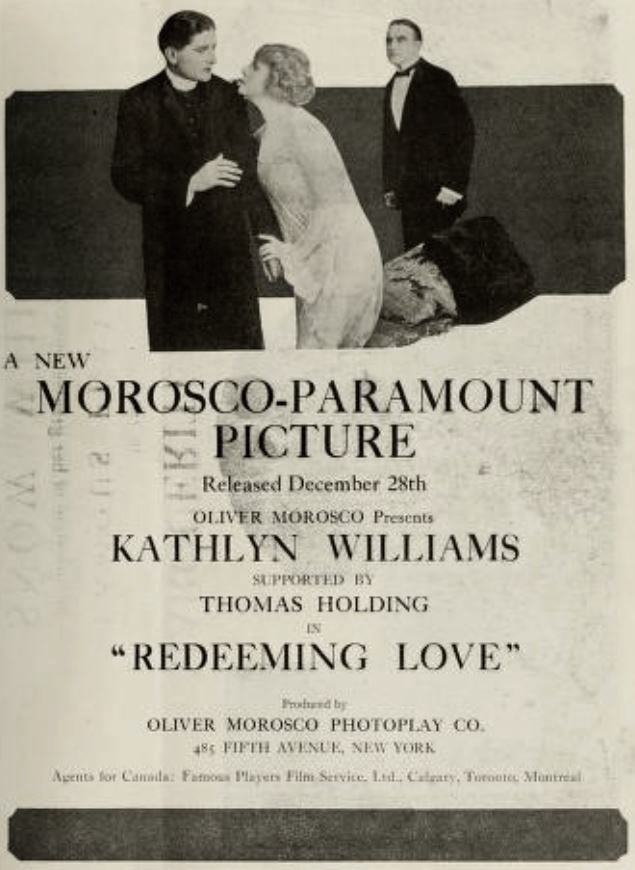
Meanwhile, Wiley's fate serves as a stark counterpoint to Naomi's redemption. In a fitting end to his life of deceit and greed, he attempts to double-cross McCarthy for the loot. This act of betrayal leads to a catastrophic automobile wreck, resulting in his immediate demise. His death is not merely a convenient plot device but a moral consequence, a clear demonstration of the wages of sin and the self-destructive nature of avarice. The narrative ensures that justice, in its most karmic form, is served, reinforcing the film's underlying moral framework.
'Redeeming Love' stands as a powerful example of early cinematic storytelling, utilizing melodrama to explore profound moral and spiritual questions. The performances, particularly from Helen Jerome Eddy and Thomas Holding, imbue their characters with a depth that transcends the often-simplistic archetypes of the era. Wyndham Standing's portrayal of Wiley is equally memorable, offering a compelling villain whose machinations drive much of the plot's tension. The writers, L.V. Jefferson and Gardner Hunting, crafted a script that is both dramatically engaging and thematically rich, ensuring its message resonates long after the final frame.
The film's exploration of redemption, forgiveness, and the clash between spiritual and material values remains remarkably relevant. It reminds us that even in the darkest corners of human experience, the light of faith and selfless love can ignite a transformative change. Much like other social dramas of its time, such as The Dawn of a Tomorrow, 'Redeeming Love' offers not just entertainment, but a moral lesson, presented with a dramatic flair that captivates and provokes thought. It’s a compelling testament to the power of narrative to explore the complexities of the human spirit and the enduring quest for meaning and salvation.
In a world often consumed by fleeting pleasures and material pursuits, 'Redeeming Love' serves as a timely reminder of the profound strength found in spiritual conviction and the boundless capacity for redemption that resides within the human heart. It is a film that, despite its age, continues to speak to the universal truths of love, sacrifice, and the eternal struggle between good and evil, leaving an indelible mark on its audience and cementing its place as a significant work in the history of silent cinema.
IMDb —
1919
Community
Log in to comment.